
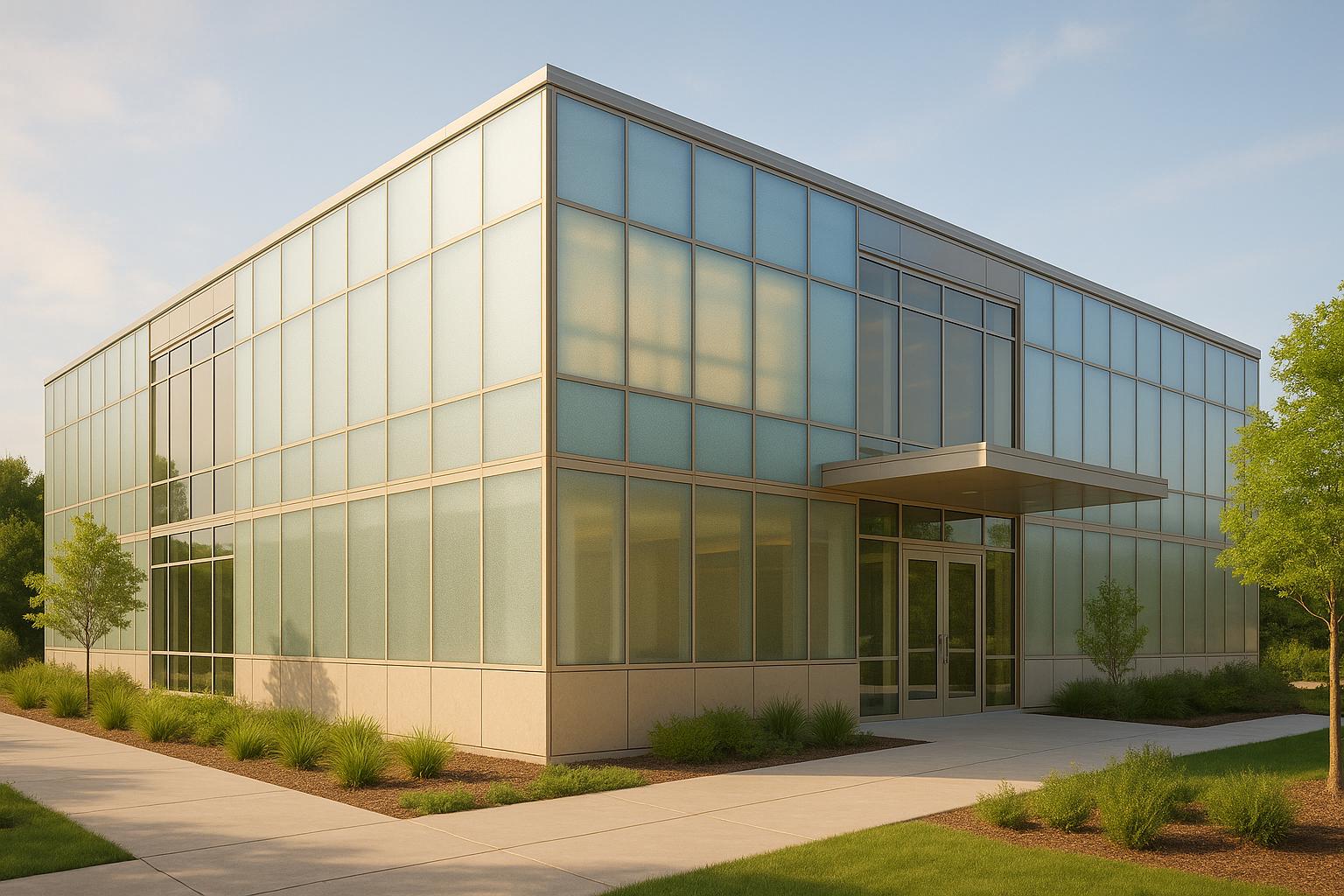
Aerogel is redefining insulation in architecture with its ultra-low thermal conductivity and space-saving properties. This lightweight material, made of up to 99.98% air, offers 4x the efficiency of fiberglass and significantly reduces energy waste in buildings. Here’s why it’s gaining traction:
- Thermal Performance: Aerogel’s R-value of 10.3 per inch outperforms traditional materials like fiberglass (R-3.8 per inch) while requiring 50–80% less thickness.
- Energy Savings: Homes using aerogel insulation report up to 20.9% lower energy use, with window heat loss cut by 39.1%.
- Durability: Fire-resistant, moisture-repellent, and long-lasting, aerogel maintains performance even under harsh conditions.
- Cost: While aerogel costs $2–$10 per square foot (compared to fiberglass at $0.34–$1.50), its efficiency may offset the upfront expense in high-performance projects.
Aerogel is ideal for projects prioritizing energy efficiency, space constraints, and long-term savings. However, its high cost makes it better suited for premium applications, while fiberglass and mineral wool remain budget-friendly alternatives.
1. Aerogel
Thermal Performance
Aerogel stands out for its impressive thermal insulation capabilities. With a thermal conductivity ranging between 0.013–0.025 W/mK, it outperforms traditional materials like fiberglass and foam, which typically fall between 0.030–0.040 W/mK. Controlled tests highlight this advantage, showing Pyrogel achieving 0.02 W/mK, with similar results from GORE Thermal Insulation. This means aerogel can deliver up to four times the efficiency of conventional insulation materials. Such performance also translates into significant space-saving benefits.
Thickness and Space Efficiency
One of aerogel’s standout features is its ability to provide top-tier insulation with a fraction of the thickness required by traditional materials. For instance, achieving the same insulation quality requires only about one-third the thickness. To put this into perspective, using aerogel insulation can reduce the insulated diameter of a pipe from 18.625 inches to 14.225 inches – a reduction of roughly 24%. In high-temperature scenarios, this reduction can reach up to 40%.
Tom Lyons, a team leader at Wood PLC, underscores its importance in offshore applications:
"Weight and space are serious concerns offshore and nowhere is this more important than in the FLNG business. Aerogels such as Cryogel® insulation are lightweight and generally more compact, making them ideally suited for FLNG."
Kacey Sutton, a modular construction specialist at KBR, further emphasizes:
"In modularization, the reduction of weight and space required for items is almost an unmeasurable value… every square inch and pound are of the utmost importance in the overall picture."
This combination of space efficiency and thermal performance is further enhanced by aerogel’s resistance to fire and moisture, making it a versatile option despite its premium price tag.
Fire and Moisture Resistance
Aerogel performs exceptionally well in harsh conditions, offering both thermal insulation and fire protection in a single material. Certain formulations achieve nonflammable ratings, such as UL-94 V-0 classification, with a limiting oxygen index as high as 52.8%. These properties allow aerogel to withstand extreme temperatures, including flames nearing 1,832°F (1,000°C). Additionally, its hydrophobic yet breathable nature allows water vapor to pass through while preventing liquid water absorption. Even in moist conditions, it maintains thermal conductivities between 0.0176 and 0.0187 W·m⁻¹·K⁻¹, with moisture absorption rates staying around 1%.
Cost
While aerogel comes at a higher upfront cost, its efficiency and durability can offset this expense. Its lightweight and compact design reduce costs associated with support structures, shipping, and installation. Moreover, aerogel can be removed and reused multiple times without losing its performance. Hai Minh Dong, a mechanical engineering associate professor at the National University of Singapore, highlights its potential:
"The ability to decrease building energy demand overall by using highly effective aerogel-based insulation materials made from environmental waste is essential."
2. Fiberglass
Thermal Performance
Fiberglass is a popular choice for insulation in architectural projects, largely because it strikes a balance between performance and affordability. Its R-values range from R-2.9 to R-3.8 per inch, offering sufficient thermal resistance for standard building needs. However, fiberglass has a higher thermal conductivity compared to materials like aerogel. This means achieving the same level of insulation requires significantly more fiberglass. Studies show that aerogel is about four times as efficient, making fiberglass less effective by comparison.
For example, a 5mm sheet of aerogel outperforms a fiberglass-insulated wall by 15.1% in thermal efficiency under equivalent conditions. This performance gap highlights the challenges fiberglass faces in terms of space and design, which we’ll explore next.
Thickness and Space Efficiency
One of fiberglass’s biggest drawbacks in modern building design is the space it requires. To match the thermal performance of aerogel, fiberglass needs 50% to 80% more thickness. This extra bulk affects usable interior space and limits design flexibility. Achieving desired thermal conditions with fiberglass often means using thicker or multiple layers, which can lead to heavier constructions and more complex design details.
On the other hand, aerogel insulation provides a sleeker alternative without compromising on performance. In fact, studies show that buildings using aerogel insulation consume 6% less energy annually compared to those insulated with fiberglass. This advantage makes aerogel an attractive option for projects where space efficiency is crucial.
Cost
Despite its limitations, fiberglass remains a cost-effective option in the insulation market. It typically costs between $0.30 and $1.50 per square foot, significantly less than aerogel, which ranges from $1.50 to $4.00 per square foot. However, fiberglass’s lower efficiency can lead to higher material usage and increased labor costs during installation.
The long-term cost picture is more nuanced. Aerogel’s superior efficiency has led to its growing popularity and a gradual reduction in price. As Pacor Inc. explains:
"Aerogel insulation, four times more efficient than fiberglass, has seen reductions in cost as it gains traction in various markets and should be the insulation of choice for most applications."
Still, the higher upfront cost of aerogel may not always justify its use. For instance, one analysis found that the ~15% savings in heating and cooling costs with aerogel might not offset the price difference for all applications.
Installation costs also vary. Fiberglass is generally easier to handle and install, but it requires careful precautions to avoid health risks from airborne particles. Additionally, its thicker application can increase labor and installation time, adding to overall project costs.
3. Mineral Wool
Thermal Performance
Mineral wool offers unique thermal characteristics when compared to other insulation materials. Its thermal conductivity falls between 0.03 and 0.04 W/(m·K), which is less efficient than aerogel. To achieve similar insulation levels, mineral wool typically needs to be applied in thicker layers. Studies show that aerogel-enhanced insulation can reduce cooling loads by 8% compared to rock wool. Additionally, a ½-inch layer of aerogel insulation can cut energy loss through walls by 13.3% and through windows by an impressive 39.1% when compared to standard mineral wool applications. These differences directly influence how much material is required and the overall efficiency of the insulation.
Thickness and Space Efficiency
One drawback of mineral wool is the extra thickness needed to match the insulating power of thinner materials like aerogel. This can be a significant issue in projects where space is tight, such as retrofits or compact construction designs. In such cases, aerogel’s slim profile offers a clear advantage.
Fire and Moisture Resistance
Mineral wool is widely recognized for its excellent fire resistance. For instance, stone wool can withstand temperatures as high as 1,800°F and provide fire protection for up to four hours. Glass mineral wool, while slightly less heat-resistant, performs well at temperatures up to about 1,100°F. However, mineral wool’s performance can degrade when exposed to moisture, as it tends to absorb water. In contrast, aerogel maintains its insulating properties even in damp conditions. These factors not only impact performance but also influence the overall cost of a project, which we’ll explore next.
Cost
Mineral wool is priced between $0.80 and $1.50 per square foot, making it an economical choice for large-scale projects. On the other hand, aerogel costs more, ranging from $1.50 to $4.00 per square foot, but offers better long-term energy savings. For projects where upfront costs are a key consideration, mineral wool remains the more budget-friendly option. However, the trade-off lies in its lower efficiency and space requirements.
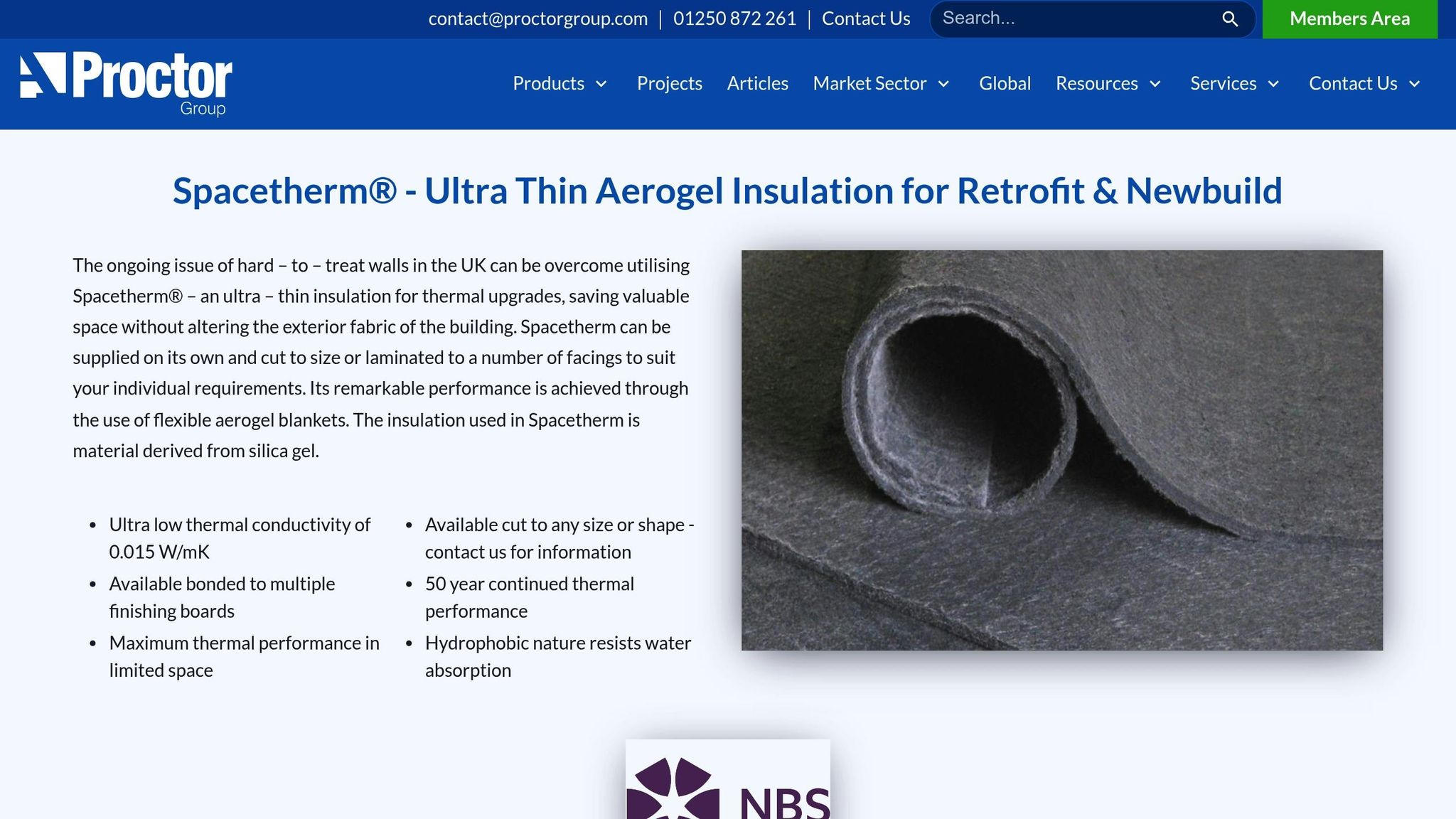
Spacetherm: Aerogels In Building Refurbishment
sbb-itb-593149b
4. Foam-Based Insulation (Polyurethane, Polystyrene)
When comparing foam-based insulation to options like aerogel, fiberglass, and mineral wool, it becomes clear that each material has its own strengths and weaknesses in terms of performance and cost.
Thermal Performance
Foam-based materials such as polyurethane and polystyrene have thermal conductivity values ranging from 0.03 to 0.05 W/(m·K). While this is effective, aerogel-enhanced materials outperform them, with thermal conductivity values below 0.02 W/(m·K), classifying them as super-insulators. In fact, aerogel provides 2–8 times more insulation for the same thickness compared to polyurethane foam.
Moisture impacts these materials differently. Spray polyurethane foam experiences some changes in thermal performance when exposed to humidity, while polystyrene foams are more stable under similar conditions. Aerogel composites, on the other hand, show varied responses to moisture and temperature depending on how they are manufactured.
Thickness and Space Efficiency
One of aerogel’s standout features is its ability to deliver the same level of insulation with much less thickness – about 50–80% less than foam-based materials. This makes aerogel especially appealing for modern architectural designs where space efficiency is critical.
Fire and Moisture Resistance
Fire safety remains a challenge for foam-based insulation. Polystyrene foam is flammable and requires a chemical fireproofing agent, Hexabromocyclododecane (HBCD), which has raised environmental and health concerns. Polyurethane foams have improved somewhat by using non-CFC gases as blowing agents, reducing their impact on the ozone layer. However, these materials still fall short of aerogel’s natural fire resistance.
Aerogel offers exceptional fire resistance without needing additional coatings. Its hydrophobic properties also protect against moisture and corrosion, maintaining both insulation and operational integrity. Moreover, aerogel can withstand high temperatures without deforming, cracking, or sagging. While polystyrene foam does have the advantage of being waterproof and providing solid sound and temperature insulation, its fire safety limitations often make it less desirable for architectural use.
Cost
Foam-based insulation is generally more affordable than aerogel. PIR foams cost around $12–15 per cubic foot (approximately 400–500 EUR/m³). Aerogel, however, comes at a premium, with material costs ranging from $2–10 per square foot, plus $1–5 per square foot for installation. Insulating a 2,000-square-foot home with aerogel can cost anywhere from $6,000 to $30,000. For comparison, commercial aerogel sheets are priced at about $4 per square foot, while bulk fiberglass batting costs as little as $0.34 per square foot.
While aerogel’s upfront costs are higher, its superior insulation can lead to significant energy savings over time, potentially offsetting the investment. This makes it particularly attractive in scenarios where long-term energy efficiency is a priority. With the building sector responsible for nearly 40% of global energy use, the choice between cost and efficiency becomes critical. Aerogel’s ability to deliver up to four times the efficiency of some traditional materials makes it a compelling option for those focused on long-term performance. These trade-offs between cost and performance highlight the need for careful consideration when selecting insulation materials.
Benefits and Drawbacks
When deciding between aerogel and more traditional insulation materials, architects and builders need to carefully assess the pros and cons of each option.
Aerogel’s Performance Comes with a Price Tag
Aerogel is known for its impressive efficiency and space-saving properties. With a thermal conductivity of just 0.013–0.015 W/(m·K), it can reduce insulation thickness by 50%–80%. This translates to energy loss reductions of 13.3% through walls and 39.1% through windows. However, this high performance comes at a cost.
Aerogel insulation ranges from $2 to $10 per square foot, with installation adding another $1 to $5 per square foot. For a 2,000-square-foot home, total costs can range anywhere from $6,000 to $30,000. In contrast, traditional materials like fiberglass batting cost as little as $0.34 per square foot, making them far more budget-friendly for many projects.
Safety and Durability Factors
One of aerogel’s standout features is its natural resistance to fire. Unlike foam-based insulations that often require chemical treatments, aerogel resists combustion on its own. Advanced formulations can even achieve a limiting oxygen index (LOI) of 63%. It also holds up well under high temperatures, maintaining its shape and insulation properties without cracking or sagging. Its hydrophobic nature further protects it against moisture damage.
That said, handling aerogel requires proper personal protective equipment (PPE). The material can irritate the skin and respiratory system, and some formulations containing titanium dioxide (TiO₂) are classified as potentially carcinogenic if inhaled.
| Factor | Aerogel | Fiberglass | Mineral Wool | Foam-Based |
|---|---|---|---|---|
| Thermal Conductivity | 0.013–0.015 W/(m·K) | 0.030–0.040 W/(m·K) | 0.030–0.040 W/(m·K) | 0.030–0.040 W/(m·K) |
| R-Value per Inch | 10.3 | 3.1–4.0 | 3.1 | 4.0–6.3 |
| Thickness Required | 50%–80% less | Standard | Standard | Standard |
| Fire Resistance | Excellent (natural) | Good | Good | Varies (may need treatment) |
| Moisture Resistance | Excellent | Fair | Good | Variable |
| Cost ($/sq ft) | $2–10 + installation | $0.34–1.50 | $1.00–2.50 | $2.00–4.00 |
| Safety Concerns | PPE required; respiratory irritant | Skin/lung irritant | Skin/lung irritant | – |
Considering Long-Term Value
While aerogel’s upfront costs are steep, its energy-saving potential offers significant long-term benefits. Homes insulated with aerogel can cut energy consumption by up to 50%. On average, energy efficiency measures cost about $24 per saved megawatt-hour, making them 2–8 times more cost-effective than traditional power generation methods.
Aerogel’s slim profile is another advantage, especially in space-constrained projects. By conserving interior space, it can add value in high-demand real estate markets, partially offsetting its higher material costs. On the other hand, traditional insulation materials are better suited for projects with tight budgets and sufficient space for thicker insulation layers.
Ultimately, aerogel shines in projects where space efficiency, fire resistance, and long-term energy savings outweigh its initial expense. For standard construction needs, however, fiberglass, mineral wool, or foam-based options provide a more economical solution. The decision depends entirely on the project’s priorities and constraints.
Conclusion
Aerogel delivers insulation performance that surpasses traditional materials by a wide margin. It’s four times more efficient than fiberglass, providing similar results with just a third of the thickness.
Its slim profile also brings unique design benefits. For example, in historic renovations, aerogel’s thin layer helps preserve architectural facades while slashing energy consumption by as much as 50%, and it can cut window heat loss by 39.1%.
That said, the cost of aerogel remains a significant hurdle – it’s nearly 30 times more expensive than conventional options. This restricts its use to high-end projects where the combination of performance and space-saving features can justify the price tag.
Aerogel naturally resists fire and repels moisture, offering safety and durability without the need for chemical treatments. This sets it apart from foam-based insulations like polyurethane or polystyrene, which often require added treatments for similar properties.
These characteristics make aerogel a standout choice for projects where performance and space efficiency are top priorities. It’s particularly well-suited for luxury homes, commercial buildings with strict energy standards, and retrofits where space is limited. For more budget-conscious projects without tight spatial constraints, materials like fiberglass and mineral wool remain practical alternatives.
As one industry expert puts it:
"Aerogel Blanket is a high performance insulation blanket composed of silica aerogel, which is the lowest thermal conductor in the world…the perfect choice for those in need of the best insulation performance with minimum thickness while achieving minimum energy consumption."
Looking ahead, advancements in manufacturing and reductions in production costs could make aerogel a more affordable option for mainstream construction. For now, it remains a premium solution, ideal for projects where exceptional thermal performance, space efficiency, and long-term energy savings outweigh the higher upfront cost.
FAQs
How does the cost of aerogel compare to its energy-saving benefits in architectural projects?
Aerogel insulation comes with a higher initial price tag, usually between $3,230 and $4,306 per home. Despite the upfront cost, it has the potential to cut energy use by as much as 60% over ten years, translating into noticeable savings on utility bills. Though the investment might feel significant at first, the long-term energy savings and reduced carbon footprint make it a smart option for contemporary building projects.
What makes aerogel insulation ideal for architectural designs with limited space?
Aerogel insulation stands out as a smart option for designs where space is limited. Its lightweight composition and outstanding thermal properties deliver effective insulation with only a thin layer. This means architects can preserve more usable space while maintaining energy efficiency.
Thanks to its slim profile, aerogel insulation is especially useful in urban settings or projects where space is at a premium. It provides a sleek, modern alternative to the bulkiness of traditional insulation materials.
How does aerogel’s resistance to fire and moisture improve its performance in various environments?
Aerogel stands out for its fire resistance, making it a reliable material for thermal insulation. It can endure extremely high temperatures without losing its shape or effectiveness. This feature not only improves fire safety but also ensures steady insulation performance, even in harsh conditions.
On top of that, aerogel’s moisture resistance prevents it from absorbing water. This means it retains its insulating properties even in humid or damp settings. Its resilience against moisture also minimizes wear and tear over time, offering a dependable and long-lasting solution for a variety of architectural uses.
