
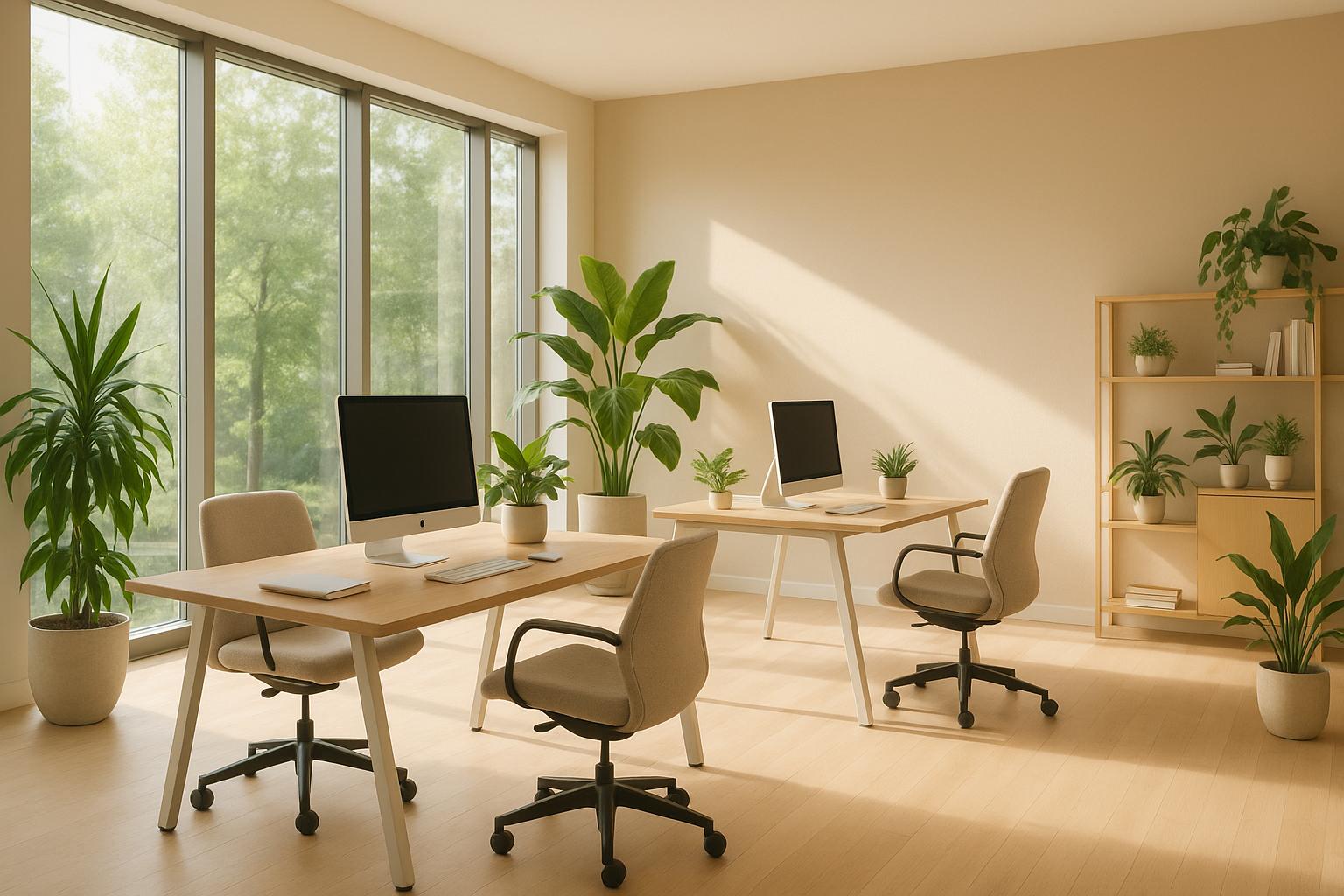
The WELL Building Standard focuses on creating indoor spaces that prioritize human health and well-being. Unlike other certifications, WELL emphasizes how design, operations, and behaviors directly impact occupants’ physical and mental health. It is built around 10 core concepts: Air, Water, Nourishment, Light, Movement, Thermal Comfort, Sound, Materials, Mind, and Community. These concepts address everything from air quality and lighting to mental health and inclusivity.
Key highlights:
- Founded by Delos in 2013, officially launched in 2014, and overseen by the International WELL Building Institute (IWBI).
- By 2024, WELL-certified spaces spanned 5 billion square feet across 130 countries with over 21,000 certified projects.
- Certification involves meeting mandatory preconditions and optional optimizations for higher levels (Silver, Gold, Platinum).
- The process includes registration, documentation, on-site performance verification, and ongoing compliance.
WELL-certified spaces improve productivity, reduce absenteeism, and enhance satisfaction. For instance, workplaces report a 30% increase in employee satisfaction and a 26% boost in well-being scores. The standard also complements other certifications like LEED, with a 25% overlap in criteria.
From offices to airports, WELL transforms spaces using strategies like advanced air filtration, circadian lighting, biophilic design, and sound management. These principles are applicable to various building types, making WELL a practical guide for healthier interiors.
The 10 WELL Building Standard Concepts
Complete List of WELL Concepts
The WELL Building Standard includes 10 key concepts: Air, Water, Nourishment, Light, Movement, Thermal Comfort, Sound, Materials, Mind, and Community.
This framework takes a holistic view of health, emphasizing how various environmental factors work together to support human well-being, rather than addressing them in isolation.
How Each Concept Improves Health
Each concept contributes uniquely to improving the health and comfort of building occupants:
- Air: Focuses on improving indoor air quality by removing pollutants, which supports both respiratory and cognitive health.
- Water: Ensures access to clean, high-quality water to promote hydration and overall health. Even a 3–4% drop in hydration can lead to a 25–50% decline in performance. This concept also tackles water contamination and encourages sustainable water use.
- Nourishment: Encourages healthier eating habits by improving access to nutritious food and providing information on nutrient quality. Behavioral cues are also incorporated to promote better dietary choices.
- Light: Enhances lighting to improve visual comfort, mood, and circadian rhythms. This includes guidelines for window performance, light levels, and task-specific illumination, all aimed at boosting energy and mood.
- Movement: Reduces sedentary behavior by integrating design features that encourage physical activity. This concept helps occupants incorporate movement into their daily lives.
- Thermal Comfort: Maintains stable and comfortable indoor temperatures to support productivity. Studies show that productivity drops by 15% in overly hot environments and 14% in cold ones.
- Sound: Improves acoustic environments by minimizing disruptive noise, creating spaces that are more comfortable and conducive to focus.
- Materials: Promotes the use of safer, non-toxic materials, improving indoor air quality and enabling informed product choices.
- Mind: Addresses mental health by incorporating design elements that reduce stress and offering access to mental health resources. This is especially critical, as individuals with depression lose an average of 4.8 workdays and experience 11.5 days of reduced productivity over a three-month period.
- Community: Creates inclusive spaces that encourage health equity and foster engagement. This concept supports diverse populations and helps cultivate a sense of belonging among occupants.
Changes from 7 to 10 Concepts
The transition from WELL v1 to WELL v2 introduced refinements to better align with health research and outcomes.
WELL v1 originally included seven concepts: Air, Water, Nourishment, Light, Fitness, Comfort, and Mind. These provided a solid starting point for addressing health through building design.
WELL v2 expanded the framework to 10 concepts. The term "Fitness" was updated to "Movement" to emphasize daily activity. "Comfort" was divided into two separate concepts: Thermal Comfort and Sound. Additionally, new concepts – Materials and Community – were introduced.
These updates offer more precise strategies for designing healthier environments and reflect advancements in health-related research and practices.
How WELL Certification Works
How the Standard is Organized
The WELL Building Standard is structured in a way that simplifies understanding and implementation. At the top are the 10 Concepts, which were previously outlined.
Each concept is made up of Features, which are specific strategies aimed at improving health outcomes. For instance, the Air concept includes features like ventilation effectiveness, air filtration, and controlling microbes and mold.
These features are further divided into Parts, which represent individual strategies or specific requirements within a feature. Finally, each part includes detailed Requirements that outline exactly what needs to be achieved. This step-by-step hierarchy helps teams move from broad health goals to actionable steps. Within this framework, the standard differentiates between essential requirements and optional enhancements.
Required vs Optional Elements
The standard’s requirements fall into two main categories.
Preconditions serve as the foundation for all WELL projects. These are mandatory and ensure that every certified space meets basic health and safety standards. They establish the minimum requirements for occupant health.
Optimizations, on the other hand, are optional and allow projects to earn extra points by going beyond the basics. This gives teams the flexibility to focus on improvements that align with their goals, budget, and the needs of the occupants.
This system provides a clear roadmap: every project must meet the essential preconditions, while optimizations offer multiple ways to achieve higher certification levels, such as bronze, silver, gold, or platinum.
Getting WELL Certified
Once the structure and requirements are clear, the next step is navigating the certification process. This involves four key stages: registration, documentation, performance verification, and final certification.
Registration and Planning: Projects start by paying a $3,000 enrollment fee along with a program fee of $0.16 per square foot. The program fee starts at $8,000 and is capped at $101,000. Early involvement of WELL Accredited Professionals can help guide the process.
Documentation Submission: Teams need to submit detailed documentation for each feature they aim to achieve. This includes architectural drawings, mechanical plans, letters of assurance from qualified professionals, narratives explaining compliance, and policy documents. The documentation process is split into two stages: intent-stage documentation for precertification and implementation-stage documentation for final certification.
Performance Verification: This step involves on-site evaluations conducted by a WELL Performance Testing Agent. The process includes measuring environmental conditions, taking photographs of implemented features, and analyzing data from monitoring equipment.
Ongoing Compliance: Certification isn’t a one-time achievement. Projects must undergo periodic recertification and submit annual reports to maintain their status. These reports include data and maintenance documentation.
An example of a successful approach comes from CBRE Limited in August 2018. They highlighted the importance of early stakeholder engagement by incorporating base building requirements and operational responsibilities into their lease agreements. This proactive strategy ensured a smoother certification process and ultimately led to their success.
Achieving WELL certification requires careful planning and attention to detail to meet its rigorous health standards. With over 74,000 locations certified across 137 countries, the process has been fine-tuned to offer clear guidance while maintaining high standards.
Benefits of Using the WELL Building Standard
Health and Work Performance Improvements
WELL-certified spaces have been shown to enhance both well-being and productivity. Research indicates that workplaces with WELL certification see a nearly 30% increase in employee satisfaction, a 10-point rise in median productivity, and a 26% improvement in overall well-being scores.
Employees working in these spaces report a 10% improvement in mental health, a 2% boost in physical health, and experience 12% fewer Sick Building Syndrome complaints along with 6% fewer musculoskeletal issues compared to traditional office environments.
"It’s exciting to see that, for the first time, researchers have published rigorous longitudinal research that provides a holistic view of the tremendous benefits of WELL Certification. This study shows unequivocally how WELL, with its people-first approach, supports wide-ranging benefits for occupants and organizations alike, creating significant improvements in all-important areas of occupant satisfaction and health, well-being and productivity."
- Rachel Hodgdon, President and CEO, International WELL Building Institute (IWBI)
Healthy workplace designs also contribute to a 47% rise in employee engagement and add about $6,500 per employee annually through improved air quality. Considering that employee salaries and benefits typically make up 90% of a business’s operating costs, while rent and utilities only account for 10%, these productivity gains deliver an impressive return on investment.
Impact on Design Choices
WELL certification transforms interior design by emphasizing spaces that promote human health. Offices with WELL certification report higher satisfaction levels across several key areas: 18% for sunlight access, 12% for lighting, 10% for air quality, 17% for acoustical privacy, and 11% for thermal comfort.
These benefits push designers to prioritize natural light, implement circadian lighting systems, and integrate advanced air purification and ventilation. Spaces are thoughtfully balanced with collaborative zones and quiet areas for focused work. Material choices often lean toward locally sourced and ethically produced furnishings, avoiding items that could harm indoor air quality. Biophilic elements, such as greenery and natural textures, are also a priority, with occupants reporting a 16% increase in satisfaction from their connection to the outdoors.
Space planning evolves under WELL principles, incorporating fitness and wellness areas, spaces for quiet reflection, and facilities for preparing healthy meals – going beyond the traditional focus on work-centric layouts.
WELL vs Other Green Building Standards
The WELL Building Standard stands apart from other green certifications by placing a strong emphasis on occupant health. Here’s how it compares to other popular standards:
| Standard | Primary Focus | Cost per sq ft | Health Outcomes | Design Flexibility | Certification Approach |
|---|---|---|---|---|---|
| WELL | Human health and wellness | $0.50 average | Direct health metrics and occupant surveys | High – adaptable to various space types | Performance-based with on-site testing |
| LEED | Environmental sustainability | $0.05 average | Indirect, via environmental quality | Moderate – structured point system | Documentation-based with some inspections |
| BREEAM | Environmental performance | $0.10–$0.30 typical | Limited health focus | Moderate – category-based scoring | Assessment-based certification |
WELL certification costs more – averaging $0.50 per square foot compared to LEED’s $0.05. This higher investment reflects its hands-on, performance-driven approach, which includes thorough on-site testing and verification.
"The true north of LEED is about conservation of resources for the good of the planet. The north star of WELL is about enhancing human health and wellness."
- Rachel Gutter, IWBI chief product officer
Interestingly, there’s a 25% overlap between LEED and WELL standards, and pursuing dual certification is encouraged. Many projects aim for both, addressing both environmental sustainability and human health. WELL’s focus on measurable health impacts sets it apart, inspiring significant changes in how spaces are designed and operated. Its requirement for ongoing monitoring and periodic recertification ensures that these benefits are maintained over time.
sbb-itb-593149b
Course preview: Introduction to the WELL Building Standard
Using WELL in Real Interior Projects
By applying WELL’s core principles, these projects illustrate how thoughtful design choices can lead to healthier, more engaging interior spaces.
Methods to Meet WELL Requirements
Meeting WELL standards involves implementing specific design strategies across all ten concepts.
Air quality enhancements rely on advanced filtration and real-time monitoring systems. For example, the International WELL Building Institute’s New York headquarters integrates sensors into its operations, automatically adjusting ventilation as needed.
Lighting design emphasizes natural light and circadian rhythm support. Successful layouts position workspaces within 20 feet of windows and utilize adjustable task lighting that minimizes glare and flicker.
Ergonomic solutions often include height-adjustable desks and sit-stand workstations. CBRE’s Toronto offices combined these features with acoustic upgrades to improve overall comfort.
Sound management uses strategic planning and sound-absorbing materials to minimize noise in focus areas.
Material selection prioritizes low-VOC products. At Cundall’s London offices, nearly zero VOC levels were achieved by choosing low-emission paints, furnishings, and finishes.
Water quality is addressed with robust filtration systems and well-placed hydration stations.
Biophilic design elements – like living walls, plant-filled dividers, and acoustic screens with integrated greenery – connect occupants with nature while also improving air quality.
These strategies form the foundation for the inspiring project examples outlined below.
Real Project Examples
The American Society of Interior Designers (ASID) headquarters in Washington, D.C., was the first project worldwide to achieve WELL Platinum certification. Research by Cornell University after the project’s 2017 completion revealed measurable boosts in job satisfaction and perceived productivity.
"Showing the many ways design can positively affect the health and well-being of employees while increasing the efficiency of resources."
- Randy W. Fisher, CEO, ASID
In Chicago, Vitality’s Corporate Office earned WELL Gold certification through a collaboration between geniant + Eastlake Studio and JLL. A WELL workshop aligned the design with HR policies, focusing on key areas like Light, Sound, Nourishment, and Movement.
"We were brought into the fold early in the schematic design stage to carry out the feasibility study for the WELL certification. At that time, the client told us that, as a global health and well-being company committed to making people healthier, they’d like their return-to-work strategy to center around creating a space where people wanted to be."
- Uma Patwardhan, JLL’s senior sustainability project manager
Nicole Tabata, architect and director at geniant + Eastlake Studio, highlighted the detailed approach to meeting WELL standards:
"There were things that changed about the design early in the design process that helped us meet these requirements. That continued all the way through to construction drawings and specifications. We selected light fixtures that had certain color rendering index, glare requirements, flicker requirements, so it came down to the little details as well."
- Nicole Tabata, architect + director, geniant + Eastlake Studio
At San Francisco International Airport, Harvey Milk Terminal 1 became the first airport terminal to achieve WELL Core Certification at the Platinum level. It features a cutting-edge air quality monitoring system with real-time sensors that track indoor and outdoor air quality, identify pollution sources, and optimize ventilation.
In the Netherlands, EDGE Technologies‘ headquarters achieved WELL Platinum certification under WELL v2. The space integrates wellness features like fitness areas, a meditation room, and optional bi-weekly massages or naps. Low-VOC materials were used throughout to ensure superior air quality.
WELL for Different Space Types
WELL standards can be tailored to a variety of environments, enhancing health and well-being across different space types.
Office spaces are the most common application, with projects like Three Garden Road in Hong Kong showcasing how existing buildings can achieve Platinum certification. This office complex added wellness-focused amenities such as a fitness center, garden, healthy dining options, and classical music concerts.
Healthcare facilities see significant benefits from WELL certification, focusing on circadian lighting to improve sleep patterns and emotional well-being. Enhanced air quality in these spaces can also reduce infection risks, while stress-relieving design elements promote mental wellness.
Mixed-use and public spaces, like airports, demonstrate how WELL principles can improve experiences in high-traffic areas. San Francisco International Airport’s Terminal 1 is a prime example, maintaining high air quality and comfort standards while serving thousands of daily visitors.
Residential projects prioritize healthy living environments with improved air filtration, natural lighting, and non-toxic materials. While full certification is less common due to cost, many homeowners draw on WELL principles for smaller-scale improvements.
WELL standards are adaptable to various building types and budgets. Projects can pursue certification at Silver, Gold, or Platinum levels, or simply use WELL concepts as a guide without formal certification. This flexibility makes wellness-oriented design accessible while delivering meaningful health benefits.
Conclusion
The WELL standard redefines interior design by focusing on human health and well-being. The spaces we inhabit influence everything from our daily routines to our productivity and long-term health.
Studies demonstrate the impact of WELL certification, with findings like a reduction in Sick Building Syndrome complaints, fewer musculoskeletal problems, and a nearly 30% boost in workplace satisfaction, alongside a 26% rise in well-being scores after implementation. By addressing ten core concepts – ranging from air quality and lighting to nourishment and mental health – WELL creates environments that support both physical and mental wellness. These design strategies not only improve individual well-being but also offer measurable benefits for businesses.
For organizations, the numbers speak volumes: a 50% drop in absenteeism, a 27% decrease in staff turnover, and productivity gains valued at $6,500 per employee annually, thanks to improved ventilation alone.
WELL’s influence continues to grow, with tens of thousands of certified projects worldwide as of February 2024. This expansion highlights a global understanding that sustainable design must prioritize people’s well-being alongside environmental goals.
From corporate offices to healthcare facilities and homes, WELL provides a science-backed framework for creating healthier spaces. Projects can aim for Silver, Gold, or Platinum certification or simply use WELL principles as a guide for better design.
Rachel Hodgdon, President and CEO of IWBI, emphasizes this point:
"This peer-reviewed study provides robust evidence that WELL can have a transformative effect on employee health, productivity and creativity – an imperative that organizations globally are not just recognizing, but actively prioritizing."
Incorporating WELL principles doesn’t just meet design standards – it creates spaces where people can thrive, making a meaningful impact on both personal and organizational success.
FAQs
What makes the WELL Building Standard different from certifications like LEED, and what are its key benefits?
The WELL Building Standard is all about creating indoor spaces that support human health and well-being. It establishes benchmarks for key areas such as air quality, water, lighting, nourishment, fitness, comfort, and mental health. The goal? To design environments that boost productivity, satisfaction, and overall wellness for the people who use them.
On the other hand, LEED focuses on environmental sustainability. It aims to improve energy efficiency, conserve resources, and minimize a building’s ecological footprint. While there’s some overlap between the two, their priorities differ: WELL zeroes in on enhancing the health and experience of occupants, whereas LEED takes a broader approach, addressing the environmental impact of buildings.
What are the health and productivity benefits of WELL-certified spaces?
WELL-certified spaces are crafted to support better health, comfort, and overall well-being. People working or living in these environments often experience fewer health complaints, such as reduced symptoms of Sick Building Syndrome and fewer musculoskeletal issues.
These spaces are also linked to increased satisfaction and productivity. Research highlights impressive outcomes, including a 30% rise in occupant satisfaction and a 26% improvement in perceived well-being. By focusing on essentials like air quality, lighting, and ergonomics, WELL-certified spaces provide environments where individuals can truly thrive.
How can existing buildings meet WELL Building Standard requirements without major renovations?
Adapting existing buildings to meet the WELL Building Standard doesn’t always require major overhauls. In fact, practical and budget-friendly updates can make a big difference. For example, improving lighting quality, upgrading ventilation systems, and enhancing air quality are all effective ways to promote healthier, more comfortable spaces for occupants.
Additionally, targeted energy efficiency updates – like optimizing HVAC systems or adding insulation – can help meet WELL standards while also boosting energy performance. By focusing on these manageable adjustments, buildings can align with WELL principles without the need for extensive structural changes.
