
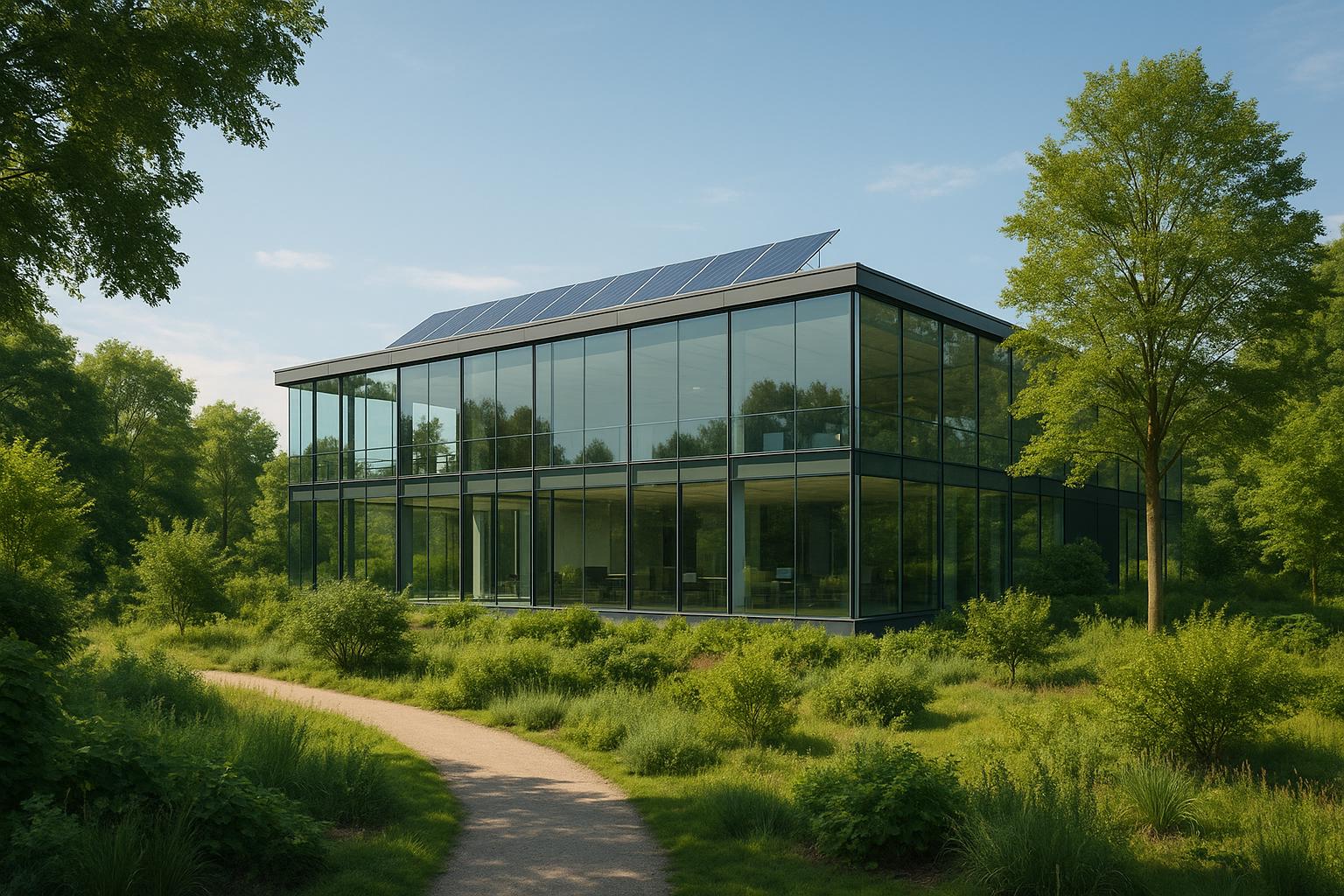
Norman Foster is known for integrating eco-conscious principles into his architectural designs, long before they became a global priority. His projects, like the Reichstag in Berlin and 30 St Mary Axe in London, showcase energy-efficient systems and reduced carbon footprints. Foster also emphasizes reusing materials, as seen in Apple Park, where 98% of materials from older structures were recycled.
Compared to conventional construction, which often prioritizes cost and speed over long-term environmental impact, his methods focus on energy savings, material efficiency, and occupant well-being. While his designs may involve higher upfront costs, they deliver lower maintenance expenses, reduced emissions, and healthier spaces for users.
Key Takeaways:
- Foster’s buildings cut emissions drastically (e.g., Reichstag reduced CO₂ by 94%).
- Advanced designs like The Gherkin use 50% less energy than typical skyscrapers.
- Materials are reused or sourced sustainably to lower environmental impact.
- His architecture prioritizes natural light, air quality, and user comfort.
While traditional methods are faster and cheaper initially, they often lead to higher long-term costs and environmental harm. Foster’s approach offers a forward-thinking alternative to address global challenges in construction.
Norman Foster: Building on the green agenda
1. Norman Foster’s Green Design Approach
Norman Foster has redefined architectural practices by integrating environmental principles into every stage of his projects, from initial design to final execution. His work consistently produces energy-efficient, high-performing buildings that set new standards for sustainability.
Energy Efficiency
One of the most striking examples of Foster’s commitment to energy efficiency is the Reichstag in Berlin, completed in 1998. This iconic building operates on renewable biofuel and features a co-generation system that stores surplus heat as hot water in an underground aquifer. This stored energy can later heat the building or power a cooling system for chilled water. Such innovative engineering has slashed the building’s carbon dioxide emissions by an impressive 94%.
Another standout project is 30 St Mary Axe – better known as "The Gherkin" – in London. Its unique spiraled façade and advanced ventilation system reduce energy consumption by 50% compared to conventional skyscrapers. Foster further incorporates passive solar heating and natural ventilation into his designs, significantly cutting down energy use across his projects.
Beyond energy systems, Foster also rethinks the materials used in construction to minimize environmental impact.
Material Sourcing
Foster’s approach to material sourcing is rooted in thorough carbon impact assessments. His firm prioritizes long-term environmental benefits over short-term costs, conducting in-depth environmental analyses and materials research with dedicated in-house teams.
The Hearst Tower in New York exemplifies this philosophy. Completed in 2006, its diagrid structural system reduced steel usage by 20% compared to traditional designs. Timber construction is another key focus, as seen in projects like Chesa Futura, Maggie’s in Manchester, and the Acciona Building in Madrid. The Acciona Building, which repurposed an industrial structure and extensively used timber, was showcased at COP26 as a project aligned with the goals of the Paris Agreement.
Apple Park in California further highlights Foster’s dedication to material recycling. By reusing 98% of materials from 24 existing buildings, the project achieved carbon neutrality. Additionally, the planting of 10,000 trees on-site contributes to carbon absorption.
Foster + Partners employs a Responsibility Framework to ensure material choices always align with environmental goals.
Environmental Impact
Foster’s designs go beyond energy efficiency and material innovation by addressing the full lifecycle emissions of a building. His methodology measures a building’s carbon footprint from design and construction to eventual refurbishment, aiming to minimize its environmental impact at every stage.
The Reichstag transformation is a prime example. Beyond its 94% reduction in carbon dioxide emissions, the building achieved a dramatic decrease in overall greenhouse gas emissions – from 90% to just 4%. Its glass dome not only floods the parliamentary chamber with natural light but also harnesses solar energy, while vegetable oil powers its co-generators.
Apple Park features one of the world’s largest solar roofs, and the Copenhagen Towers project incorporates renewable energy systems powered by solar and biomass, along with extensive green roofs. These efforts are critical in a construction industry where concrete and steel alone contribute roughly 15% of global carbon emissions.
Occupant Wellbeing
Foster’s designs don’t just focus on environmental impact – they also prioritize the well-being of the people who use these spaces. By maximizing natural light, fresh air, and connections to the outdoors, his buildings create healthier environments for occupants.
"As humans, our connection to nature and biodiversity is central to our physical and mental health."
This philosophy is evident in projects like the Hearst Tower, where heating and air-conditioning systems rely on outside air for cooling and ventilation for much of the year, cutting energy use by 25% compared to similar office buildings. Similarly, the Willis Faber and Dumas Headquarters respects its historic surroundings while enhancing both environmental performance and occupant experience. By blending sustainability with human-centered design, Foster’s work sets a benchmark for what modern architecture can achieve.
2. Conventional Architectural Methods
For decades, traditional architectural practices have shaped the construction industry. While these methods often prioritize cost savings and quick construction, they tend to overlook long-term environmental consequences and the well-being of building occupants. Compared to more sustainable approaches, these conventional methods reveal significant limitations.
Energy Efficiency
Many conventional buildings operate like sealed boxes, circulating refrigerated air that not only consumes large amounts of energy but also fails to create healthy indoor environments. These buildings often lack proper insulation, leading to higher energy demands for heating and cooling throughout their lifespan. Unlike modern designs that drastically cut energy use, traditional projects rely heavily on outdated systems and artificial lighting, with minimal integration of natural light. This inefficiency is especially pronounced in urban areas, where buildings are responsible for consuming about 75% of global primary energy and emitting 50% to 60% of the world’s greenhouse gases.
The inefficiencies in conventional energy systems are just one part of the problem. Material sourcing practices also contribute to their environmental shortcomings.
Material Sourcing
Traditional construction methods often rely on environmentally harmful practices, such as mining and processing nonrenewable materials. These methods deplete finite resources, adding to environmental degradation. In contrast, sustainable designs, like the innovative diagrid structure of Foster’s Hearst Tower, reduce material use – saving 20% of steel compared to conventional designs. Additionally, traditional construction rarely incorporates renewable materials or plans for recycling. This leads to significant waste generation, unlike sustainable projects where materials are reused or repurposed. For instance, 97% of the materials from the demolition of 270 Park Avenue in New York were recycled, reused, or upcycled.
Environmental Impact
The combined inefficiencies in energy use and material sourcing amplify the environmental damage caused by conventional architectural methods. Globally, the built environment accounts for 40% of carbon emissions. Traditional construction contributes to this through resource depletion, high energy usage, waste production, and significant carbon output. Moreover, these methods often disrupt natural habitats, reduce biodiversity, and harm ecosystems. Unlike sustainable designs, which consider a building’s entire lifecycle, conventional practices fail to address embodied carbon or monitor operational performance.
Occupant Well-Being
Conventional design also falls short when it comes to creating comfortable, healthy spaces for occupants. These methods often produce static, uniform environments that lack connection to nature, leaving occupants dissatisfied. In fact, only about 40% of people in U.S. commercial buildings are satisfied with their thermal environment. Traditional designs rarely include features like water recycling systems, improved air quality measures, or access to natural light and outdoor spaces. Considering that people spend around 90% of their time indoors, poor indoor environments – often filled with pollutants like volatile organic compounds and formaldehyde – can significantly harm health, productivity, and overall quality of life.
While conventional methods may prioritize short-term benefits, their inefficiencies highlight the stark contrast between traditional practices and the more thoughtful, sustainable strategies championed by forward-thinking architects like Foster.
sbb-itb-593149b
Pros and Cons
Norman Foster’s sustainable design philosophy and traditional architectural approaches each bring their own set of benefits and challenges. Understanding these differences is crucial for architects, developers, and clients aiming to make informed decisions about their projects.
| Aspect | Norman Foster’s Sustainable Design | Conventional Architectural Methods |
|---|---|---|
| Energy Efficiency | 30 St Mary Axe consumes only half the energy of typical office towers; the Reichstag achieved a 94% reduction in CO₂ emissions | Established systems allow quick implementation; lower upfront engineering costs |
| Environmental Impact | Prioritizes lifecycle carbon assessments and integrates renewable energy | Faster construction with readily available materials and contractors |
| Initial Costs | Startup costs are 2–6% higher but recouped within six months to two years | Lower initial investment with predictable budgets |
| Long-term Economics | Offers 8–12% lower maintenance costs, 10–40% energy savings, and 5% higher rental premiums | Standardized processes with minimal R&D expenses |
| Occupant Well-being | Enhances productivity by up to 10% with better indoor environmental quality | Familiar systems like traditional HVAC and lighting ensure comfort |
| Technical Complexity | Utilizes advanced automation and integrated control systems | Easier maintenance with widely available expertise |
These comparisons highlight the trade-offs between the two approaches. Foster’s designs deliver long-term benefits that often justify the higher initial costs.
That said, his methods are not without challenges. Critics argue that Foster sometimes prioritizes technology over local architectural traditions. One critique notes:
"The spirit of Foster’s architecture is technology, where he depends on the appearance of innovation in his architecture without making an effort to change anything"
Additionally, sourcing sustainable materials and implementing advanced technologies can be difficult due to limited availability and the need for specialized expertise.
Conventional methods, on the other hand, excel in predictability, speed, and lower upfront costs. However, these benefits come at the expense of higher energy consumption and increased greenhouse gas emissions over a building’s lifecycle.
From a financial perspective, sustainable designs often prove advantageous in the long run. For example, buildings with Green Star certification consume significantly less energy and produce 62% fewer greenhouse gas emissions compared to average buildings. Predictive maintenance systems in these structures also reduce breakdowns by 70–75% and downtime by 35–45%.
Foster himself acknowledges the broader environmental stakes:
"We are, however well intentioned, setting out to erode the natural world which is central to our survival"
Despite his vision, Foster has admitted the limitations of his role:
"I have no power as an architect, none whatsoever. I can’t even go on to a building site and tell people what to do"
Conclusion
Norman Foster’s approach to sustainable design emphasizes the importance of addressing climate change and urban development with a long-term perspective. The numbers speak for themselves: buildings are responsible for 40% of global energy use and 36% of greenhouse gas emissions, while 75% of the European building stock is energy inefficient. Foster’s projects prove that sustainable architecture can deliver impressive environmental results without sacrificing visual appeal. This shift in performance also strengthens the economic argument for sustainable design.
From a financial standpoint, the benefits of green architecture are hard to ignore. The global market for green buildings surpassed $0.5 trillion in 2023 and is expected to exceed $1 trillion within the next decade. These structures are not only environmentally beneficial but also cost-effective, operating 14% cheaper, using 25%–35% less energy, and offering a return on investment in just three to five years. Smart building technologies further enhance this potential, with energy savings of up to 70% achievable in three years. Foster envisions cities transformed into healthier, more resilient environments that meet both ecological and social needs.
In his 2019 sustainability manifesto, Foster pushed the boundaries of architectural norms by focusing on reducing carbon throughout a building’s entire lifecycle, expanding beyond traditional energy efficiency practices.
This combination of proven environmental impact and economic viability positions Foster’s sustainable designs as more than an option – they are a necessary evolution in architecture to confront the climate crisis. Reflecting his forward-looking mindset, Sir Norman Foster once remarked:
"As an architect, you design for the present, with an awareness of the past, for a future which is essentially unknown"
FAQs
What makes Norman Foster’s sustainable design approach more environmentally friendly compared to traditional architecture?
Norman Foster’s design philosophy is all about reducing the impact on the environment while embracing forward-thinking, eco-conscious practices. His projects make the most of natural light, rely on energy-efficient and recycled materials, and incorporate systems like water recycling to cut down on resource use. Foster also places a strong emphasis on climate resilience, ensuring that his buildings can adapt to shifting environmental conditions while steadily reducing energy consumption and carbon emissions.
This approach stands in contrast to more conventional architectural methods, offering a vision that not only supports sustainability in the long run but also creates spaces that are healthier and more efficient for people to live and work in.
What are some examples of energy-efficient systems used in Norman Foster’s designs?
Norman Foster is known for weaving energy-efficient systems into his architectural designs, aiming to minimize environmental impact while promoting sustainability. A standout feature in many of his projects is the use of double-skin facades, which enhance insulation and help conserve energy – The Gherkin is a prime example of this approach. Beyond that, Foster integrates natural ventilation systems, high-performance materials, and water recycling technologies to optimize resource use and improve overall efficiency.
His commitment to eco-friendly architecture extends to the incorporation of renewable energy sources like solar panels and wind turbines. These elements showcase his dedication to sustainable design and his forward-thinking approach to modern building practices.
Why are the upfront costs of Norman Foster’s sustainable designs higher, and how do they provide value over time?
The upfront costs of Norman Foster’s designs tend to be higher, mainly due to the use of advanced materials, state-of-the-art technologies, and energy-efficient systems. These elements can increase the initial project budget by about 2%–7%.
That said, these initial expenses are often offset over time. Foster’s approach leads to substantial energy savings, lower operational costs, and a smaller environmental footprint. By focusing on sustainability, his designs not only support eco-friendly goals but also deliver financial benefits in the long run, proving to be a smart investment for both the planet and your budget.
