
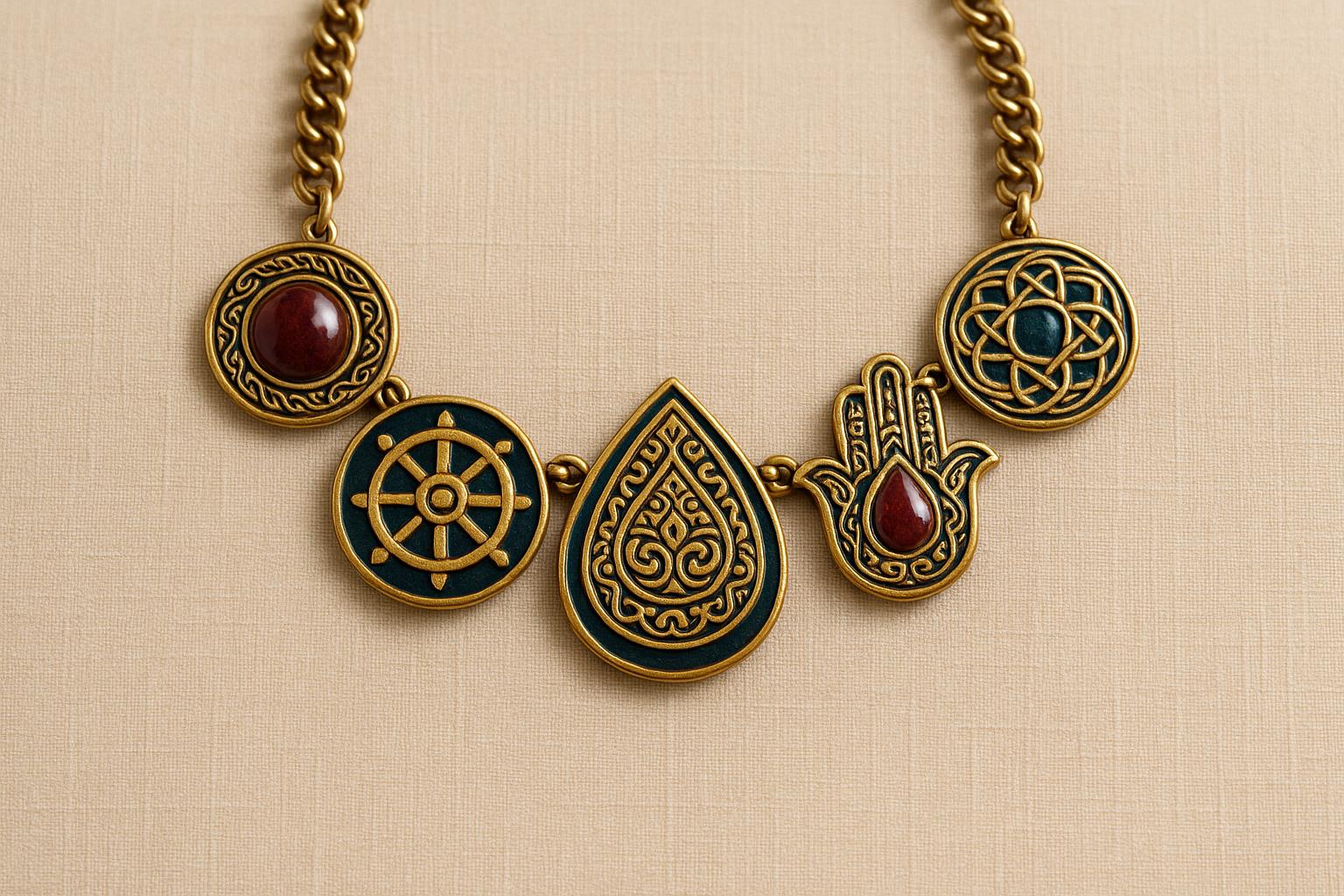
Statement jewelry isn’t just about bold designs – it’s a way to tell stories and connect with history. Symbols like the Egyptian Ankh, Hamsa Hand, and Native American motifs carry deep meanings tied to life, protection, and spirituality. In the U.S., these symbols are reimagined in modern designs, blending heritage with personal expression. Whether it’s a necklace with a protective talisman or beadwork reflecting identity, these pieces are more than accessories – they’re connections to the past and reflections of individuality. Ethical practices and respect for origins are key to preserving the significance of these designs in today’s fashion.
History of Navajo Jewelry-making, Episode 3: The meaning behind traditional stones and shells
Common Symbols and Their Original Meanings
Symbolic jewelry carries with it layers of history and meaning, often rooted in ancient traditions. By understanding these symbols, we can better appreciate their significance in modern statement pieces. Each one tells a story, bridging the past with the present. Let’s dive into some of the most iconic symbols found in today’s jewelry and uncover their fascinating origins.
Egyptian Ankh: The Key to Eternal Life
The ankh is one of the most recognizable symbols from ancient Egypt, with origins tracing back to the First Dynasty around the 30th to 29th century BC. Often called the "key of life" or "key of the Nile", this cross-like symbol with a loop at the top represented both earthly existence and the promise of eternal life.
"The ankh encapsulates multiple themes: life, duality, and the union of heaven and earth… The Egyptians believed that the afterlife was as meaningful as the present one and the ankh provided the key to the gates of death and what lay beyond." – Adele Nozedar
In ancient Egyptian art, gods were frequently depicted holding the ankh, symbolizing their power to grant and sustain life. The symbol also appeared on everyday objects like mirrors and fans, embedding its meaning into daily life. Later, Coptic Christianity adopted the ankh as a variation of the Christian cross, symbolizing eternal life through Christ. By the 1960s, the ankh gained popularity in Western culture, representing African identity, Neopagan beliefs, and even finding a place in the goth subculture.
Hamsa Hand and Evil Eye: Guardians of Protection
The Hamsa Hand and Evil Eye are two of the most enduring symbols of protection, with histories that span thousands of years. The Evil Eye tradition dates back to ancient civilizations as early as 3000 BCE, while the Hamsa has been cherished across various cultures for its protective qualities. Known as the Hand of Fatima in Islamic traditions and the Hand of Miriam in Jewish culture, the Hamsa is believed to ward off negative energy and bring blessings. In Sunni Islam, its five fingers are thought to represent the Five Pillars of Islam.
The Evil Eye, often depicted as a blue and white talisman, is believed to deflect harmful intentions and reflect negativity back to its source. It’s not uncommon to see these two symbols combined in jewelry – for instance, a Hamsa with an Evil Eye at its center offers an added layer of spiritual protection.
Native American Motifs: Nature and Spirit
Native American jewelry is deeply symbolic, reflecting a profound connection to nature and spirituality. Each design carries meanings passed down through generations, often rooted in oral traditions. The Thunderbird, for example, symbolizes strength, protection, and renewal, bridging earth and sky. Feathers hold a sacred place as symbols of prayer, honor, and strength, believed to carry messages to the spirit world.
Animal motifs are also common. Bears symbolize wisdom, while wolves represent family and loyalty. Another iconic figure, Kokopelli – the hunchbacked flute player – is associated with fertility, joy, and abundance. Revered as a deity, Kokopelli is linked to childbirth, agriculture, and music.
These symbols, rooted in nature and spirituality, continue to tell stories that resonate far beyond their origins.
African Beadwork: A Language of Identity
African beadwork is much more than decoration – it’s a form of symbolic communication. Each bead and color carries meaning, reflecting social status, virtues, marital roles, or tribal identity. Among the Maasai of East Africa, for instance, colors hold specific meanings: red signifies bravery and strength, blue represents energy and the sky, white symbolizes peace and purity, and green stands for health and the land.
Bead patterns often mark rites of passage. Young women may receive specific beads when they come of age, while married women wear designs that reflect their roles as wives and mothers. Elders, adorned with the most intricate beadwork, signify wisdom and respect within the community. These vibrant traditions continue to inspire modern jewelry designs, blending heritage with contemporary style and keeping the stories alive.
Modern Interpretations of Symbols in U.S. Jewelry Design
American jewelry designers are taking traditional symbols and reimagining them for today’s world, blending heritage with contemporary style. This shift shows how timeless meanings can evolve to fit modern aesthetics while still holding onto their roots. These fresh takes on symbolism are shaping the way jewelry is designed and worn in the U.S.
Updating Symbols for Modern Styles
Today’s designers are breathing new life into ancient symbols, updating them with minimalist and modern twists. Take the cross, for instance – it’s no longer confined to its classic forms. Now, you’ll find it represented with clean, geometric shapes or intricate filigree, giving it a sleek, modern appeal.
The Hamsa hand, a symbol deeply rooted in Middle Eastern and North African traditions, has also found a new look. It’s now featured in delicate pendants or bold statement rings, crafted in materials like platinum, white gold, rose gold, and champagne gold. These design choices make it both meaningful and stylish for today’s wearers.
For those who prefer subtlety, sacred symbols are being incorporated into designs in understated ways. This allows people to carry a quiet reminder of their beliefs without making overt religious statements. Such designs resonate with individuals who value personal expressions of faith through their jewelry.
"Religious jewelry allows people to carry their faith close while expressing their personal style through wearable art." – Bhindi.com
Combining Elements from Different Origins
American designers are increasingly blending symbols from various cultures to create jewelry that celebrates global connections. This trend reflects both the multicultural fabric of American society and the growing exchange of design ideas worldwide.
For example, Eastern and Western influences come together in striking ways. Lotus flowers or mandala patterns – hallmarks of Eastern design – are paired with the clean, minimalist lines of Western aesthetics. The result? Jewelry that feels both exotic and familiar to American consumers.
Designers are also drawing inspiration from nature, incorporating ocean waves, celestial motifs, and animal imagery from diverse traditions. Sterling silver often serves as a base material, enhancing the beauty and meaning of these cross-cultural designs.
Traditional techniques like granulation, filigree, and cloisonné are being revived and adapted for modern designs. Bella Jewels, for example, creates pieces inspired by ocean and celestial themes, blending craftsmanship with contemporary style. Folklore and mythology also play a role, with symbols and mythical creatures from different traditions coming together in single pieces, weaving multiple stories into one design.
Personalization and Meaningful Jewelry
As symbolic jewelry evolves, personalization has become a key focus, allowing wearers to tell their own stories. This trend has reshaped how Americans approach symbolic jewelry, with many opting for designs that reflect their unique journeys and identities.
Modern technology, like 3D printing and laser engraving, has opened up endless possibilities for customization. Consumers can now merge personal elements with cultural symbols to create jewelry that feels deeply personal.
Family heritage often plays a significant role in these creations. People are incorporating family crests, monograms, or elements from heirlooms into new designs, adding layers of personal history to their jewelry. Many also choose to blend symbols from multiple faiths or cultural backgrounds, crafting pieces that reflect their personal spiritual paths rather than sticking to a single tradition.
This personalization movement isn’t new – it echoes the 1980s and ’90s, when Black Americans popularized nameplate necklaces as statements of identity and pride. Today’s trend builds on that legacy, using jewelry as a medium for self-expression and cultural celebration.
"Contemporary jewelry design has transcended the realm of mere ornamentation, embracing a deeper significance, weaving symbolism and meaning into every facet of its creation." – Asherah Jewellery
The result is jewelry that tells a story. These pieces go beyond aesthetics, expressing heritage, identity, and individual narratives through carefully chosen symbols and designs. It’s a way for Americans to honor their roots while creating something that’s entirely their own.
sbb-itb-593149b
Respect and Ethical Considerations
Modern design often draws inspiration from ancient symbols, but it’s crucial to approach these reinterpretations with respect for their origins. As symbolic jewelry gains traction in American fashion, designers and consumers carry the responsibility of honoring cultural heritage and sourcing materials responsibly. The line between celebrating a culture and exploiting it can be thin, so understanding the roots of these symbols is essential.
Appreciation vs. Appropriation
Cultural appreciation is about learning from and respecting another culture, while appropriation happens when cultural elements are used without permission or understanding, often for personal or financial gain.
"Cultural appreciation is where you investigate other cultures to understand them better, to create a better cross-cultural relationship."
– Rohin Kickett, Ballardong Noongar artist
The distinction lies in mutual respect and exchange. Dr. Khayree Williams, Director of Austin Community College’s Truth, Racial Healing & Transformation Campus Center, explains that "the most important part of cultural exchange – and what best distinguishes it from appropriation is that exchange is mutual". This means sharing your culture while genuinely learning about others.
Context is critical when incorporating cultural symbols. Take the Seminole tribe’s patchwork designs, for example. Without understanding their historical significance, the designs lose their meaning. The Ah-Tah-Thi-Ki Museum emphasizes this, noting, "for the Seminoles the patchwork design is diluted and becomes less meaningful when others wear or create it without an understanding of its history".
Here are a few steps to approach cultural symbols respectfully:
- Research thoroughly: Understand the symbol’s history, meaning, and role within its culture.
- Engage with the community: Listen to voices from the culture to gain authentic perspectives.
- Examine your intentions: Are you honoring the culture or merely using it for aesthetic appeal?
- Support original artisans: Whenever possible, purchase directly from creators within the culture, ensuring they benefit from their heritage.
Ethical Sourcing of Materials
Equally important is ensuring that the materials used in jewelry are sourced responsibly. The jewelry industry has long faced challenges related to environmental harm and labor exploitation, making ethical sourcing a priority for both designers and consumers.
Ethical sourcing focuses on three main areas:
- Human rights protection: This includes banning child labor, ensuring fair wages, and providing safe working conditions. Experts stress that "ethical sourcing ensures that no human rights are violated during the mining and production processes".
- Environmental responsibility: Jewelry makers are increasingly sourcing from mines that follow strict environmental regulations, use eco-friendly technologies, and rehabilitate mined areas.
- Supporting local artisans: Buying from artisans not only preserves traditional craftsmanship but also creates economic opportunities. This approach "reinforces the cultural significance of jewelry while empowering individuals".
For consumers aiming to make ethical choices, here are some actionable tips:
- Look for certifications: Trusted organizations like Fair Trade, the Responsible Jewelry Council, or the Kimberley Process can help verify ethical practices.
- Opt for recycled materials: Choosing recycled gold or silver reduces the demand for new mining, cutting down on environmental impact.
- Consider vintage or second-hand jewelry: Pre-owned pieces often carry historical significance and reduce the need for new resources.
- Research brands: Ask retailers about their sourcing practices and environmental commitments.
Conclusion: The Lasting Appeal of Symbolic Jewelry
Jewelry has always been more than mere decoration – it’s a storyteller, a bridge to the past, and a connection to cultural roots. This timeless role explains why symbolic jewelry continues to hold a special place in the hearts of modern American wearers.
Symbolic jewelry speaks a visual language that transcends words. Each piece reflects personal style, values, and individuality while linking the wearer to traditions that span centuries. Today’s designers honor these traditions while reimagining them into luxurious, contemporary creations.
The Evolving Legacy of Symbolic Jewelry
Cultural symbols in jewelry have a remarkable ability to adapt and inspire. They breathe new life into designs while preserving their original meanings. Thanks to globalization, we now see a fusion of diverse cultural influences that reflect our interconnected world. At the same time, designers draw deeply from regional traditions, creating jewelry that feels both modern and rooted in heritage.
Luxury brands exemplify this evolution. Cartier’s Egyptian-inspired motifs, David Yurman’s Celtic designs, Alex and Ani’s symbolic charms, and John Hardy’s Balinese influences demonstrate how cultural symbols have become a canvas for global creativity. These pieces reflect the blending of traditions while maintaining their cultural essence.
Today’s designs blur the line between art and adornment. By using regional materials and reviving traditional craftsmanship, creators enhance the aesthetic appeal and cultural significance of their work.
Personal Connection Through Jewelry
While these evolving designs shape the jewelry market, their appeal goes far beyond trends. Symbolic jewelry resonates on a deeply personal level, acting as both a cultural emblem and a reflection of individual identity. It offers a tangible connection to one’s heritage, a reminder of the present, and a way to express personal beliefs.
Jewelry often serves as a silent storyteller, carrying memories, traditions, and emotions. Pieces adorned with meaningful symbols can evoke pride, solidarity, and belonging. They often commemorate life’s milestones, transforming simple adornments into cherished keepsakes of personal and cultural history.
Modern designs also celebrate national and regional heritage, incorporating motifs that honor a culture’s history and traditions. This creates a bridge between generations, fostering a sense of continuity. As one expert aptly put it:
"By choosing jewelry that reflects our history and cultures, we not only honor those who came before but also pass on a legacy of appreciation and respect to future generations" – thedappledwood.com
Symbolic jewelry strikes a rare balance – it’s universal yet deeply personal. Ancient symbols provide a powerful medium for self-expression, connecting wearers to a broader human experience. Whether celebrating heritage, marking achievements, or expressing beliefs, these pieces carry profound meaning.
In a world increasingly focused on sustainability and personalization, symbolic jewelry offers something more: authenticity and purpose. As Shaun Middleton so beautifully stated:
"Jewelry is so much more than a simple accessory – it is a rich and complex expression of our cultural identities, personal stories, and shared heritage" – Shaun Middleton
This enduring connection ensures that cultural symbols in jewelry will continue to captivate future generations, preserving the stories and traditions that define us as individuals and as a collective humanity.
FAQs
How can I make sure the statement jewelry I buy is ethically made and honors its cultural significance?
To make sure your statement jewelry is created ethically and honors its cultural roots, start by digging into the brands you shop from. Focus on companies that openly share their sourcing practices and prioritize fair labor standards. Certifications like Fair Trade or compliance with ethical guidelines can serve as reliable markers of responsible practices.
Also, consider brands that work directly with artisans or communities connected to the cultural elements in their designs. This approach not only supports traditional craftsmanship but also ensures those cultural symbols are used with respect and understanding. By taking these steps, you can align your purchases with your values and support a more ethical and respectful industry.
How are modern jewelry designers reimagining traditional cultural symbols in contemporary styles?
Modern jewelry designers are finding clever ways to merge heritage-rich symbols with sleek, modern designs. Iconic motifs like the Egyptian Ankh, Celtic knots, Greek key patterns, and Adinkra symbols are being reimagined using contemporary materials and minimalist styles, aligning them with today’s fashion sensibilities.
This fusion doesn’t just bring these symbols into the spotlight – it offers wearers a chance to celebrate their heritage and express personal identity through jewelry that feels both timeless and current.
How can I customize statement jewelry to represent my cultural heritage and personal story?
To design statement jewelry that tells your story and honors your heritage, think about including symbols, patterns, or materials that hold special meaning for you. This might mean drawing from traditional designs, incorporating family crests, or using elements tied to your cultural roots.
Collaborating with a skilled designer or jeweler can bring your vision to life. They can help you merge heritage-inspired touches with modern design, creating a piece that’s not only deeply personal but also a stylish expression of who you are. It’s jewelry that doesn’t just accessorize – it celebrates your identity.
