
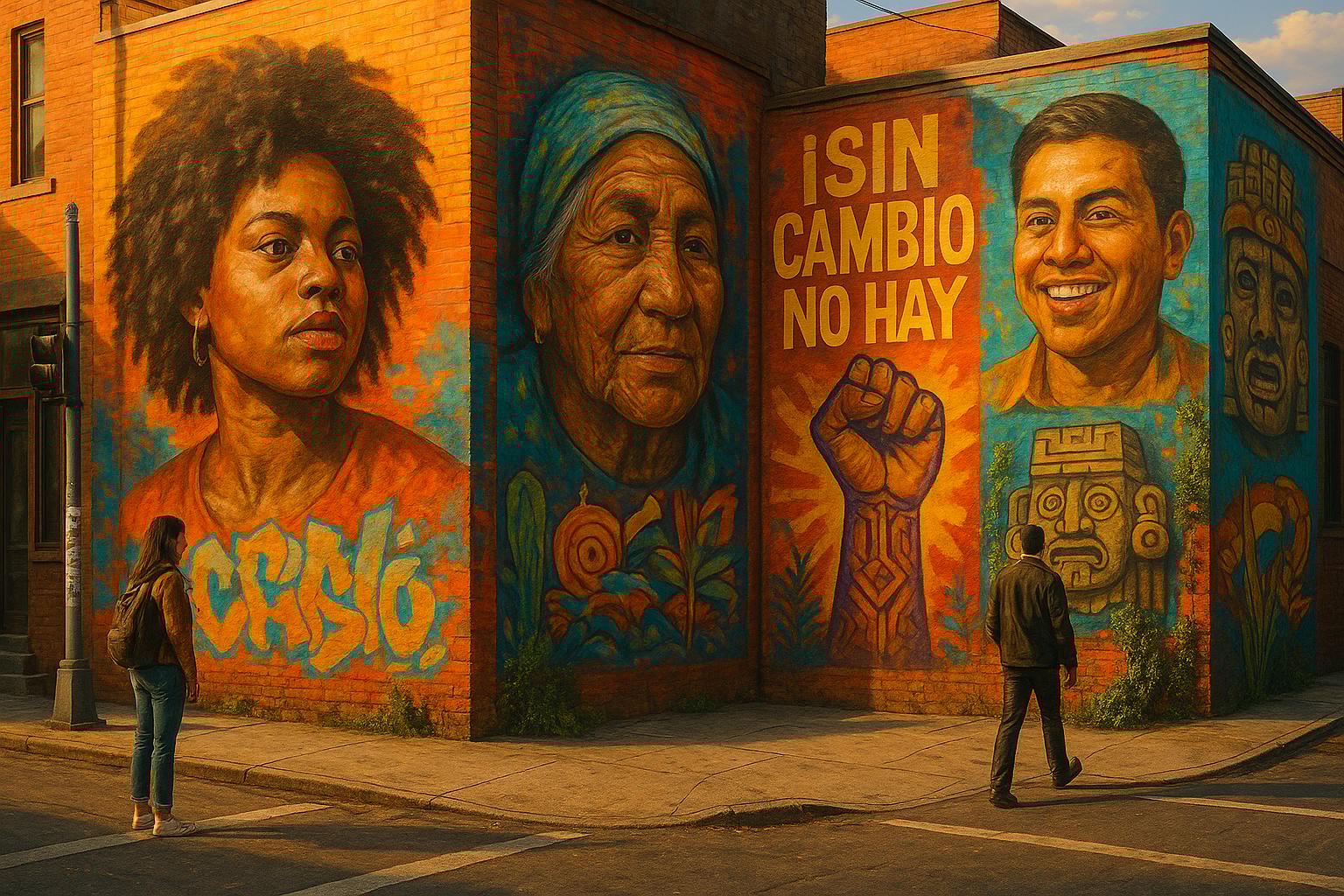
Street art is more than paint on walls – it tells the stories of communities. From murals celebrating local icons to graffiti addressing social issues, it reflects the identity, struggles, and dreams of neighborhoods. Here’s what you need to know:
- Street art is public and accessible: It uses varied materials like spray paint, stencils, and mosaics to share messages.
- It amplifies local voices: Marginalized communities use it to highlight social challenges and preserve their history.
- A tool for change: Street art sparks conversations, documents movements, and even revitalizes neighborhoods.
- Global and local connections: Art in U.S. cities often ties into worldwide struggles, showing how shared challenges transcend borders.
Next time you see a mural, take a moment to look closer – it’s a window into the community’s story.
How Does Urban Art Impact Culture? – The Geography Atlas
How Street Art Shows Local Identity
Street art acts as a visual diary, capturing the essence of a neighborhood’s experiences. When artists paint on walls, they’re not just adding decoration – they’re telling stories of struggles, victories, and daily life. This form of expression offers locals a sense of connection and gives visitors a window into the heart of a community.
The bond between street art and local identity is undeniable. Artists draw inspiration from their surroundings, using colors, symbols, and themes that hold meaning for the area. The result? A visual language that resonates deeply with the community while offering outsiders a glimpse into its unique character.
History and Social Issues in Street Art
Neighborhood walls often serve as canvases for local history and social commentary. A striking example can be found in Syracuse, New York. The Near West Side, shaped by decades of redlining and the construction of the Interstate 81 viaduct, uses graffiti on an abandoned building to reclaim space. This art symbolizes resilience and defiance against systemic neglect.
In 2017, census data revealed that 35% of Syracuse’s population lived below the poverty line, with redlined communities bearing the brunt of this economic hardship. This reality seeps into the art itself. Murals in Kirk Park on Syracuse’s South Side reflect pride and a sense of belonging, fostering unity even amidst challenges.
Street art also serves as a record of social movements. The George Floyd mural in Minneapolis became a powerful symbol of the Black Lives Matter movement, turning a site of tragedy into a place of remembrance and activism. Similarly, in Seattle’s Pioneer Square, artists from diverse backgrounds painted murals on walls and plywood, responding to the political and social upheaval surrounding Black Lives Matter and the COVID-19 pandemic.
Global events often find their way into U.S. street art as well. In 2013, Brazilian artist Paulo Ito created a mural of a crying boy holding an empty plate with "The Hunger Games" written above it, criticizing Brazil’s government for prioritizing World Cup spending over addressing poverty. Murals like this connect local communities to global struggles, showing how art transcends borders.
Beyond documenting history, street art amplifies voices that are often silenced in official narratives.
Giving Voice to Underrepresented Communities
Street art doesn’t just archive – it advocates. It’s a tool for marginalized communities to express themselves when other platforms fail. As Street Buddha puts it:
"Street art provides a powerful voice to marginalized communities that often go unheard. Artists from these communities use their work to draw attention to social injustices, discrimination, and systemic oppression, bringing critical issues to the forefront of public consciousness."
This accessibility is what makes street art so impactful. Unlike galleries or academic articles, murals and graffiti are free for all to see. They transform activism into something democratic – messages that anyone passing by can absorb.
This visibility becomes crucial when official channels fall short. For instance, in Washington, D.C., Mayor Bowser’s Black Lives Matter mural appeared supportive, but D.C.’s BLM Chapter criticized it for failing to address their policy demands, like defunding the police. Independent street art allows communities to express their authentic stance, even when it clashes with institutional narratives.
Sometimes, this freedom faces direct opposition. In Chicago’s Bridgeport neighborhood, Gabriel Villa was commissioned to paint a mural addressing over-policing. However, his work was painted over by government-sanctioned Graffiti Blasters for allegedly referencing "gang imagery and violence". These incidents highlight the ongoing tension between community expression and institutional control.
Los Angeles graffiti artist Ismael Illescas captures the essence of this struggle:
"Where these [people] are marginalized, ostracized, and invisibilized, graffiti is a way for them to become visible."
Street art also celebrates the diversity within communities. Artists often draw from their cultural heritage, personal struggles, and triumphs, creating murals that reflect the layered identities of modern neighborhoods. This creates a tapestry of voices coexisting on walls, showcasing the complexity of community life.
The impact of street art goes beyond individual expression. As Angeline Rivera from The Science Survey remarks:
"Sometimes, it’s about protest, and sometimes, it’s about hope, but it always asks you to pause and look a little closer at the world around you. It’s like saying, ‘We’re here, and our stories matter!’"
This blend of protest and hope makes street art more than just a record of problems – it envisions solutions and builds pride. Murals celebrate local culture and history, fostering unity while ensuring that marginalized voices remain an integral part of the neighborhood’s story.
How to Read and Understand Street Art
Street art speaks through its colors, symbols, and placement, offering a glimpse into stories that often escape official historical accounts. It acts as a visual map of a community, connecting viewers to its narratives and fostering a deeper sense of belonging. When you approach street art with curiosity, you begin to uncover layers of meaning that go far beyond the surface.
As Ismael Illescas puts it:
"The graffiti that we see up in the streets may seem like an insignificant tag or scribble to some people, but there’s a lot of meaning behind it. There needs to be a recognition that graffiti is actually a visual representation of someone’s identity, and it’s also potentially their starting point to a very meaningful artistic career."
This perspective lays the groundwork for identifying the key elements that make each piece unique.
What to Look for in Street Art
When you encounter a mural or graffiti, take a closer look at the images, symbols, and words used. Artists often draw from their cultural roots, incorporating indigenous designs, traditional patterns, or iconic figures to reflect their community’s identity. Personal touches, like signatures, tags, or recurring motifs, provide insight into the artist’s individuality. The location of the piece also carries weight – a mural on a neglected building might convey something entirely different from one on a bustling community center. Even color choices tell a story: vibrant tones might celebrate pride and unity, while darker shades could reflect social challenges.
A great example of this is Shepard Fairey’s 1998 "Obey Giant" sticker campaign. With its bold and simple design, it encouraged viewers to question the norms of public space. Street art frequently explores themes like community pride, activism, and the impact of neighborhood transformation.
Learning Local Stories
To truly appreciate street art, it’s important to understand the historical, political, and local contexts woven into each piece. Start by researching the neighborhood’s history online using search terms like "local history", "local history society", or "local studies library". Libraries, museums, and archives can provide access to photos, documents, and even oral histories that deepen your understanding. Conversations with local artists and residents can also reveal hidden meanings behind the art.
In many cities, street art acts as a living record of community experiences. It commemorates significant events, honors traditions, and captures urban evolution. For example, Philadelphia’s Mural Arts Program has created around 4,000 murals, each shaped by extensive community input to ensure the artwork reflects authentic local stories. Similarly, Denver’s RiNo (River North) Art District showcases a growing movement, increasingly featuring work by underrepresented groups – such as female, Black, Indigenous, and LGBTQ artists – mirroring the evolving values of the community.
By immersing yourself in these narratives, you’ll gain a richer understanding of the art and the people it represents.
Recording What You See
Street art is fleeting – it can be painted over, altered, or fade with time – so documenting it is vital. Take high-quality photos that capture the artwork in its environment, focusing on both the intricate details and the broader setting. Record the exact location, date, and time, and add written notes about its condition, the surrounding area, and even external factors like weather or lighting. Revisiting the same spot over time can help you track changes and see how the community’s stories evolve.
Don’t just focus on the artwork itself; the context of its surroundings often provides valuable clues about its meaning.
As Jana Novak, Co-owner of Denver Graffiti Tour, explains:
"You have to think of it as a voice for the voiceless. It is an inherently political medium. It always has some sort of message to it, and that’s the most important thing to understand."
sbb-itb-593149b
Street Art as Community Conversation
Street art has a unique way of sparking conversations within communities. It transforms ordinary walls into platforms for discussing important local issues. Unlike traditional forms of communication, street art reaches people where they live and work, drawing attention to matters that directly affect their lives.
What sets street art apart is its ability to merge activism with public dialogue. It’s not just about beautifying neighborhoods; it’s about challenging people to see their surroundings – and the issues within them – differently. The immediacy of street art often ignites raw and genuine discussions. While mainstream media may sidestep sensitive topics, street art confronts them head-on. Artists tackle issues like housing inequality, environmental crises, mental health, and LGBTQ+ rights, bringing these topics directly to the streets and the people most impacted by them.
Street Art vs. Official Public Art
Street art and official public art take very different approaches to engaging with communities and addressing social issues. The table below highlights some key distinctions:
| Aspect | Street Art | Official Public Art |
|---|---|---|
| Creation Process | Independent, often unsanctioned | Commissioned, legal, committee-approved |
| Content Approach | Tackles controversial topics | Focuses on consensus-building and aesthetics |
| Community Voice | Amplifies marginalized perspectives | Reflects broader input through formal channels |
| Risk Factor | Subversive, challenges authority | Safe, supports existing narratives |
| Longevity | Temporary, often removed or painted over | Permanent, protected installations |
| Funding | Grassroots or self-funded | Backed by government or institutions |
Street art’s bold and rebellious nature often allows it to address topics that official public art may avoid. For instance, while a city-funded mural might celebrate local heritage or promote unity, street art often dives into deeper socio-political conversations. That said, official public art has its own strengths, particularly in fostering inclusivity through participatory projects. These initiatives often include extensive community input, ensuring diverse voices shape the final outcome and fostering stronger connections among residents.
Building Awareness and Support
Street art doesn’t just raise awareness – it mobilizes communities. A great example of this is Baltimore’s 2013 Wall Hunters project. Artists painted murals on abandoned homes, each featuring a QR code linking to information about the property owners and elected officials. The effort led to the demolition of two buildings and prompted the city to allocate $22 million for addressing 1,500 vacant properties. This project showcased how street art can bring together artists, community organizers, and social media to drive real change.
Another powerful example is the Los Angeles Poverty Department, which uses performance art to tackle social justice issues on Skid Row. By involving unhoused individuals in their performances, they’ve brought the challenges of displacement and inequality in California to a global audience. These projects highlight how street art reflects local struggles while connecting to broader social issues.
"Art activism is a means of getting a community engaged and involved through dynamic imagery." – Ross Knight, Photographer
Communities can actively support street art as a tool for social awareness in several ways. Commissioning murals that reflect local values helps neighborhoods shape their own narratives while supporting local artists. Providing spaces for artists to showcase their work also fosters ongoing conversations about community challenges.
Youth involvement is another powerful way to build long-term investment. When young people participate in mural projects, they not only develop artistic skills but also gain a deeper connection to their community’s issues and aspirations. These projects teach teamwork, respect for public spaces, and civic responsibility.
The Not A Crime Campaign offers a compelling example of how street art can address global issues on a local level. By working with communities worldwide to create murals advocating for education equality and human rights, the campaign demonstrates how art can bridge local and global movements.
For street art to thrive as a community tool, partnerships between local organizations, government, and residents are essential. These collaborations can transform neglected spaces into vibrant hubs of dialogue and connection. When communities recognize street art as a democratic space for diverse voices, it becomes much more than decoration – it becomes a powerful force for social change and community growth.
Street Art in City Development
Over the past twenty years, cities across the United States have completely reimagined their relationship with street art. What was once dismissed as vandalism is now celebrated as a tool for revitalizing neighborhoods and boosting local economies. This shift highlights how street art can reflect the character of a community while sparking meaningful change. It’s a fascinating evolution that underscores the connection between street art and the transformation of urban spaces.
From Crime to Art
The transition from criminalizing graffiti to embracing street art represents a major cultural change in urban policy. Cities that once spent millions removing graffiti now actively commission murals and invest in local artists to tell their community’s story.
This change required a shift in perspective – recognizing that street art could help solve the very problems it was previously blamed for. For instance, commissioned murals have been shown to increase foot traffic by 30% and reduce graffiti vandalism by up to 40%. In some cases, vandalism drops by as much as 95% when murals are thoughtfully placed. These artworks foster a sense of pride and ownership within the community, which naturally discourages destructive behaviors.
Philadelphia is a standout example of this transformation. The city’s Mural Arts Program, which began as an anti-graffiti initiative, has grown into the largest program of its kind in the country, with over 3,600 murals created to date. This program now addresses broader goals, such as engaging local youth and revitalizing neighborhoods.
"Art is a necessity, not a luxury, and it should be accessible for everyone." – Evan Meyer, Co-founder and CEO of Beautify
Cities have also embraced creative solutions like legal walls and street art festivals, offering artists legitimate outlets for their work while channeling their creativity toward projects that benefit the community.
Community Impact and Authenticity
While city-sponsored mural programs have brought resources and recognition to street art, they’ve also raised questions about maintaining the art form’s original authenticity. Can institutional support coexist with the raw, grassroots spirit that defines street art? It’s a delicate balance.
From an economic perspective, the shift has been transformative. In 2022, nonprofit arts and culture organizations contributed $151.7 billion to the economy, supporting 2.6 million jobs and generating $29.1 billion in tax revenue. Street art tourism has also grown by 30% in recent years.
Some cities have managed to balance official backing with community authenticity through targeted funding programs. These initiatives have broad public support: 86% of Americans believe arts and culture improve their community’s quality of life, and 79% see them as essential to local businesses, the economy, and job creation. Beyond the financial benefits, these investments deepen the cultural conversation within communities.
Tracking Neighborhood Transformation
Street art doesn’t just beautify neighborhoods – it drives real, measurable change. One way to track its impact is through property values. Murals have been shown to increase surrounding property values by up to 15%. For example, in Bushwick, NYC, home prices rose nearly 35% between 2010 and 2020 as the area became a hub for street art. Similarly, street art can increase foot traffic by up to 25%, as seen with a Los Angeles coffee shop whose mural boosted both pedestrian activity and sales.
To gauge the impact of street art in your own neighborhood, keep an eye on new businesses opening near murals, changes in pedestrian activity, and the evolving layers of artwork that reflect ongoing community conversations. Social media engagement can also provide clues about how the area is transforming.
Philadelphia offers a great example of how to measure these changes. Through its Cultural Fund, the city allocates $3.6 million annually to support over 260 arts organizations. They track metrics like tourism revenue, small business growth, and community engagement to assess the program’s success.
One mural might seem like a small addition, but it often signals much larger shifts in a neighborhood’s identity and development. By noticing these early changes, residents can play an active role in shaping their community’s future.
"Street art projects are playing an increasingly important role in promoting regenerative economy. They not only transform the aesthetics of cities but also generate jobs, attract investments, and promote sustainability." – Giovane Pasa, CEO of Artery Global
Conclusion: Street Art Shows Who We Are
Every mural, tag, and installation tells a story far deeper than the layers of paint – it captures the essence of a neighborhood, the struggles of the overlooked, and the dreams shared by a community.
As you walk through any city, street art becomes an open gallery, offering a raw and immediate reflection of the people who live there. It’s a visual language that transcends barriers, creating connections that traditional art forms often struggle to achieve.
But street art doesn’t just reflect – it shapes. It plays a role in building cultural narratives, showing that it’s not only a mirror of society but also a catalyst for change. These works transform public spaces into platforms where communities can voice their struggles, celebrate their roots, and imagine their futures.
Perhaps its greatest strength lies in giving a voice to those who are often ignored. Researcher Ismael Illescas puts it best:
"In a city where these youth are marginalized, ostracized, and invisibilized, graffiti is a way for them to become visible".
This visibility not only fosters pride but can spark meaningful social change.
The next time you come across street art – whether it’s a towering mural in Wynwood, Miami, or a small tag tucked away in your neighborhood – take a moment to truly see it. Look at the themes, the colors, the symbols. Consider the historical and cultural references woven into the piece.
Street art reminds us that culture is a collective effort. It ensures that every community, no matter how small or overlooked, has a voice in public spaces. In a world often divided, these shared visual experiences create bridges, sparking conversations that help us understand one another better.
So whether you’re strolling through familiar streets or exploring a new city, remember: the art on the walls isn’t just decoration. It’s a testament to human creativity, resilience, and the stories that bind us together. Supporting street art means embracing one of the most inclusive forms of public expression.
FAQs
How does street art help revitalize neighborhoods and support local economies?
Street art has a knack for breathing new life into neighborhoods, transforming forgotten corners and neglected walls into stunning, colorful spaces. These bursts of creativity don’t just beautify an area – they draw people in. More visitors mean more foot traffic, creating a lively atmosphere that often benefits local businesses.
But it doesn’t stop there. Street art can inspire a sense of pride among residents, making neighborhoods feel more inviting and connected. Over time, this visual transformation can even lead to rising property values. With increased attention and appeal, areas often see more investment, spurring economic growth and even opening up new job opportunities. By combining artistic expression with community improvement, street art becomes much more than decoration – it’s a catalyst for positive change.
How does street art give marginalized communities a voice?
Street art offers a dynamic way for marginalized communities to voice their stories, challenges, and viewpoints. By turning public spaces into their canvas, artists bring attention to issues like social injustice, inequality, and human rights. These bold, visual messages often connect deeply with a broad audience, making complex topics impossible to ignore.
Beyond raising awareness, street art gives these communities a sense of empowerment. It allows them to reclaim shared spaces while celebrating their identities. Through colorful murals and thought-provoking graffiti, this art form not only starts important conversations but also encourages understanding and builds connections both locally and beyond.
What should I look for to understand the meaning behind street art?
To grasp the layers of meaning within street art, begin by looking closely at the symbols and imagery it showcases. These often speak to social, political, or community-driven themes. The location of the artwork is another key clue – it often ties the piece to the local community, its history, or even specific events. Delving into the artist’s intent and the cultural background can further illuminate the relationship between the art and the values, challenges, or identity of the area. All of these aspects together underscore street art’s role as a dynamic form of cultural expression.
