
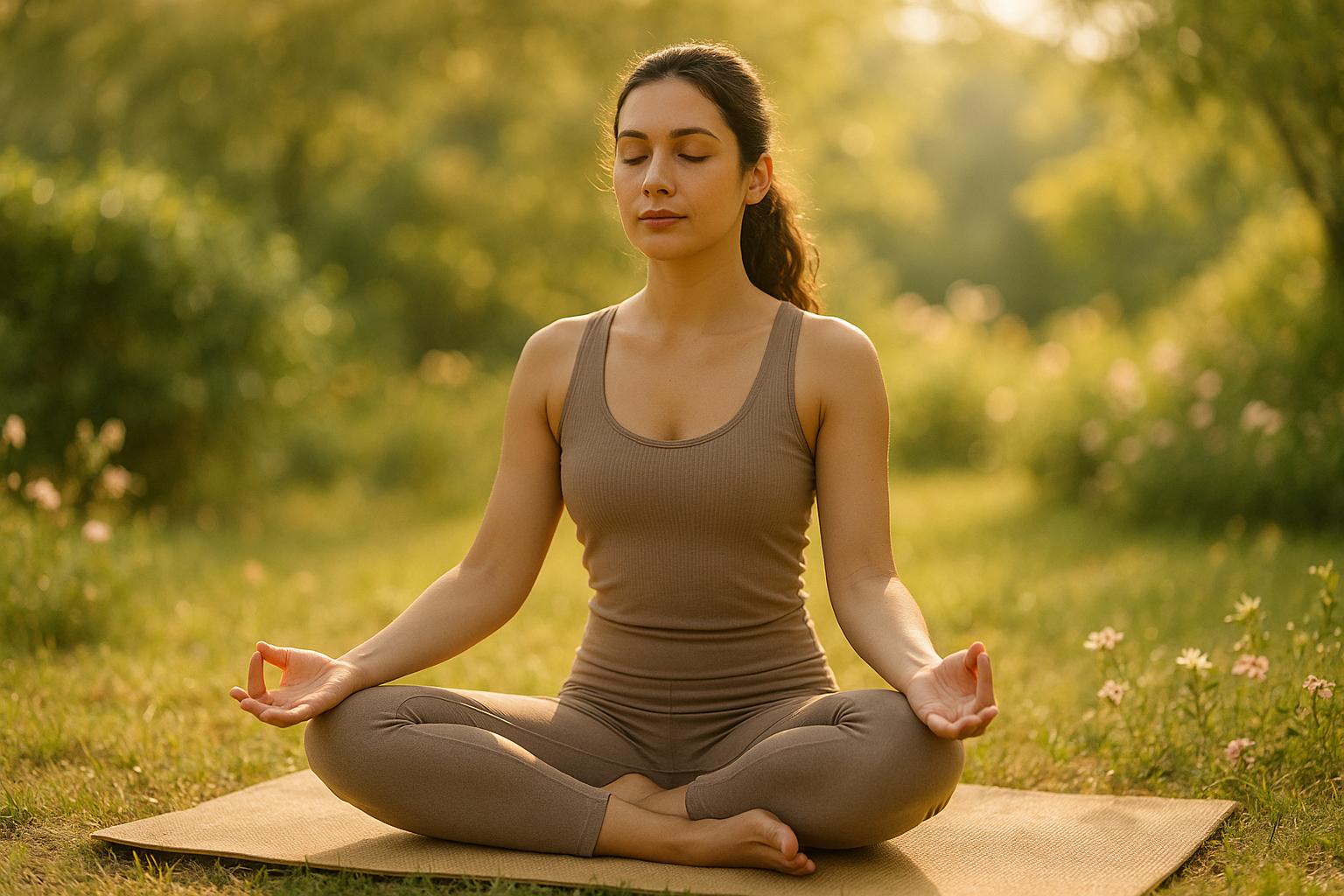
Mindful yoga blends movement, breathwork, and mindfulness to sharpen focus, reduce stress, and improve emotional balance. Unlike typical yoga, it emphasizes awareness over perfecting poses, helping you stay present and clear-headed. Here’s why it matters:
- Brain Benefits: Regular yoga thickens areas like the hippocampus and prefrontal cortex, improving memory, focus, and decision-making.
- Stress Relief: Yoga lowers cortisol levels, activates the relaxation response, and boosts GABA, a neurotransmitter linked to calmness.
- Emotional Control: Mindful breathing and movement enhance self-awareness and help regulate emotions.
- Daily Impact: Even short sessions can improve mood, sleep, and resilience.
Start small with breathwork, simple poses, and a clear intention. Consistency is key – just 10 minutes a day can lead to noticeable changes in your mental clarity and overall well-being.
DIAMOND MIND YOGA – Yoga for Mental Clarity & Focus
The Science Behind Yoga and Cognitive Benefits
Building on earlier discussions about mental clarity, this section delves into how yoga can reshape the brain, improving cognitive function in the process.
How Yoga Affects the Brain
Yoga doesn’t just relax the body – it actively changes the brain. These changes occur in regions responsible for memory, focus, and emotional control, such as the hippocampus, amygdala, prefrontal cortex, and default mode network (DMN).
For instance, a 2018 study revealed that long-term yoga practitioners had a larger left hippocampus compared to non-practitioners. Since this part of the brain is critical for verbal memory, this could explain why many yoga enthusiasts report better memory and learning abilities.
Another study from 2012 focused on seven Hatha yoga practitioners who had been practicing for an average of 5.6 years, with sessions lasting 45 minutes or more, three to four times a week. Advanced imaging showed these individuals had higher gray matter volume in brain areas like the frontal, limbic, temporal, and occipital lobes.
The prefrontal cortex, often called the brain’s "executive center", also benefits significantly. Yoga practitioners exhibit increased cortical thickness in this area, particularly in the middle and superior frontal gyri. These regions are tied to decision-making, attention, and working memory, all of which are essential for mental clarity.
Yoga also influences the default mode network (DMN), a system active during rest and mind-wandering. An overactive DMN is associated with rumination and mental chatter, so yoga’s ability to regulate this network contributes to a calmer, more focused mind.
These neurological changes form the foundation for yoga’s ability to reduce stress and sharpen mental focus.
Stress Reduction and Mental Focus
Yoga’s stress-relieving effects go beyond mere relaxation – it fundamentally alters how the body and brain respond to stress. This happens through both top-down (intentional relaxation) and bottom-up (body-to-brain signaling) processes.
Dr. Vanika Chawla, a psychiatrist at Stanford, explains:
"Yoga is proposed to exert its benefits through top-down and bottom-up processes facilitating bi-directional communication between the brain and body. Yoga can counteract the harmful physical effects of stress and lead to changes in the body, brain, and mind that increase resilience and adaptability."
Yoga also balances two key stress response systems: the autonomic nervous system (ANS) and the hypothalamic-pituitary axis (HPA). This balance allows the brain to operate efficiently without being overwhelmed by stress.
Neuroscience researcher Claudia Metzler-Baddeley elaborates:
"With meditation and deepening the breath, you switch from sympathetic to parasympathetic nervous activity. So, you’re triggering the relaxation response."
This shift is critical for mental clarity. When the body is stuck in "fight, flight, or freeze" mode, higher-level thinking takes a backseat. Yoga helps reverse this, freeing up mental energy for clearer, more focused thought.
Additionally, yoga increases levels of gamma-aminobutyric acid (GABA), the brain’s primary inhibitory neurotransmitter. GABA helps calm excessive neural activity, acting as a natural stabilizer. A 12-week yoga program demonstrated that higher GABA levels were linked to improved mood and reduced anxiety.
One particularly intriguing study showed that reductions in salivary cortisol (a stress hormone) and improvements in mood mediated the link between yoga practice and better cognitive performance, particularly in working memory and mental flexibility.
Mindful Yoga vs. Regular Exercise
While both yoga and traditional exercise offer health benefits, yoga’s mindfulness component sets it apart when it comes to cognitive improvement. The table below highlights key differences:
| Aspect | Mindful Yoga | Regular Exercise |
|---|---|---|
| Primary Focus | Integrating mind-body awareness | Building physical strength and endurance |
| Nervous System Response | Activates the parasympathetic system (rest and digest) | Activates the sympathetic system (fight or flight) |
| Movement Quality | Slow, controlled movements with pose holding | Fast, repetitive movements |
| Metabolic Effect | Supports balanced metabolism | Boosts metabolism, sometimes leading to muscle breakdown |
| Breathing Emphasis | Central to practice, focusing on regulation | Secondary to physical movement |
| Cognitive Benefits | Improves self-awareness and emotional control | Primarily physical, with some cognitive perks |
| Stress Response | Strengthens parasympathetic regulation | May temporarily elevate cortisol during intense activity |
Yoga’s emphasis on mindfulness and breath regulation is a game-changer. As Dr. Natalie Nevins notes:
"The purpose of yoga is to build strength, awareness and harmony in both the mind and body."
Research comparing mindfulness meditation – a core element of yoga – with physical exercise found that mindfulness practices had stronger and more lasting effects on vitality. This suggests that yoga meets psychological needs in ways that traditional exercise cannot.
Interestingly, yoga practitioners show less activation in the dorsolateral prefrontal cortex during working memory tasks compared to non-practitioners. This reduced activation indicates more efficient brain function, allowing similar performance with less effort – an outcome linked to better emotional and cognitive regulation.
Heather Mason, a yoga researcher, sums it up well:
"Yoga can shift the whole mind-body complex. It’s a long road but it has that power. I think that’s probably why it’s been practiced for thousands of years."
Key Elements of a Mindful Yoga Sequence
A mindful yoga sequence designed to sharpen mental clarity revolves around two key pillars: breathwork and meditation. These practices not only anchor you in the present moment but also create a seamless connection between mind and body.
The Role of Breathwork and Meditation
Breathwork and meditation act as the foundation for mindfulness during yoga practice. The breath serves as a bridge, translating thoughts into physical sensations and grounding you in the here and now. Through intentional breathing, also known as pranayama, you can quiet mental chatter and enhance focus.
"Breath, a constant and rhythmic companion, is your most immediate and tangible link to the present moment." – Winding Road Yoga
One of the best things about breathwork is its accessibility. Unlike some meditation techniques that may require years to fully master, conscious breathing delivers noticeable benefits quickly. Practices that combine breathing exercises with mindfulness can help you relax while boosting your ability to concentrate.
Here are some effective breathwork techniques to try:
- 4-7-8 Breathing: Inhale for 4 counts, hold for 7, and exhale for 8. This method activates the parasympathetic nervous system, encouraging deep relaxation.
- Alternate Nostril Breathing: By alternating breaths through each nostril, this technique helps balance the brain’s hemispheres, promoting mental harmony.
- Box Breathing: Inhale, hold, exhale, and pause – all for equal counts. This rhythmic pattern can help clear a cluttered mind.
- Bhramari Pranayama (Bumblebee Breath): During exhalation, create a soft humming sound. Research suggests this practice reduces stress and enhances focus.
These techniques lay the groundwork for incorporating mindfulness into your yoga practice.
It’s important to note the difference between breathwork and traditional meditation. Breathwork involves actively altering your breathing patterns, while meditation often focuses on observing the breath without interference. When combined, these practices create a powerful synergy that supports mental clarity and emotional balance.
"Mindfulness is considered one of the core components of the meditation process, which includes two key elements, namely sustaining focus on the immediate experience and demonstrating acceptance of the experience." – Maria Komariah
Before advancing to yoga poses tailored for mental clarity, mastering these breathing techniques will ensure a solid foundation for your mindful practice.
sbb-itb-593149b
How to Create Mindful Yoga Sequences
Building on the earlier discussion of mindfulness and its cognitive benefits, let’s explore how to design a yoga sequence that promotes mental clarity. By setting an intention, creating a thoughtful sequence, and staying present, you can transform your practice into a deeply mindful experience. These steps also integrate principles of mindful breathwork to enrich your routine.
Setting an Intention for Practice
An intention is the heart of your yoga session. It provides purpose and direction, shifting the focus from physical movement to a mindful journey. Unlike goals, which are about reaching an endpoint, intentions are about how you approach the practice itself.
"Setting intentions guides mindful practice." – Sama Yoga House
Take a moment to reflect on your current state and what you’d like to focus on. Your intention might be as simple as a single word like peace or gratitude, or it might be more specific, such as letting go of fear or listening to my body.
Here are some tips for crafting meaningful intentions:
- Focus on the positive: Instead of framing your intention as something to avoid, like “I don’t want to feel stressed,” reframe it as something to embrace, like “I aim to find calm within myself.”
- Make it personal: Choose an intention that resonates with your current life circumstances. For instance, if you’ve been feeling scattered, you might go with, “I will stay present with each breath.”
- Keep it simple: A clear, concise intention is easier to revisit throughout your practice.
Once you’ve chosen your intention, take a moment to state it – either silently or aloud – at the start of your session. Visualize how this intention feels in your body, letting it guide your movements and mindset.
"When we ask our minds to consider what these intentions might be, then we are giving time to that which is truly important to us." – juliemontagu
Building Your Yoga Sequence
With your intention in mind, structure your practice into distinct phases. A well-rounded sequence prepares your body, challenges your focus, and concludes with integration. Think of it as a journey with three stages: warm-up, peak poses, and cool-down.
Warm-Up (5–10 minutes):
Begin with gentle movements to awaken your body and connect with your breath. Start in a Constructive Rest position – lying on your back with knees bent and feet flat on the floor – to center yourself and set your intention. Move into a Supine Twist to loosen your spine, holding each side for 30–60 seconds. Follow with Cat-Cow stretches to sync movement with breath and establish a mind-body connection.
Peak Phase (15–25 minutes):
This is where you introduce more challenging poses that demand focus and balance. Start with Hands and Knees Balance (opposite arm and leg extensions) to build stability, then move into Plank pose for 30–60 seconds, staying present with any discomfort. Downward-Facing Dog serves as both a strength-building pose and a chance to reconnect with your breath – hold for 1–2 minutes, focusing on the grounding sensation of your hands on the mat. Add standing poses like Warrior 2 and Extended Triangle to strengthen your body while sharpening your awareness. Tree Pose is another excellent choice, as it challenges both physical and mental balance.
"Asana works to steady the mind by focusing on physical sensation, breath, or Drishti (gaze)." – Jivana Heyman
Cool-Down (5–10 minutes):
Allow your body and mind to absorb the benefits of your practice. A Supported Shoulderstand Variation – using a wall or bolster – can help activate the parasympathetic nervous system, promoting calm. Finally, end with Corpse Pose (Savasana) for at least 5 minutes, giving yourself time to settle into the mental clarity you’ve cultivated.
When designing your sequence, choose a yoga style that aligns with your goals. For instance, Vinyasa’s flowing movements can quiet mental chatter, Hatha encourages deeper concentration through longer holds, and Iyengar emphasizes precise alignment. Creating a quiet, distraction-free space can also help signal to your mind that it’s time to turn inward.
Staying Present During Practice
The real magic of yoga lies in the ability to stay present. Mindful awareness transforms physical movements into a form of meditation, allowing you to deepen your mental clarity.
Anchor Yourself with Breath and Senses
If your mind starts to wander, bring your focus back to your breath or the physical sensations of your practice. Feel the texture of your mat beneath your hands, notice the light in the room, or tune into the sounds around you.
"Mindfulness is more about bringing your attention back to the object of focus – your breath, bodily sensations, external object, or visualization – than trying to force your attention to remain locked in one direction." – Shawn Radcliffe
Tune into Your Body
Pay close attention to your body’s signals as you move. Notice which muscles are engaged, where you feel tension or ease, and how your body responds to each posture. This internal awareness enhances your mindfulness.
Work with Your Mind’s Natural Flow
It’s normal for your mind to drift. Instead of getting frustrated, simply acknowledge the distraction and gently guide your focus back to your breath, body, or intention.
"Feeling an adjustment is concentration. Feeling the adjustment ripple through your body is meditation." – Donald Moyer
Respond to Your Body Without Judgment
Whether you’re feeling discomfort, fatigue, or strong emotions, listen to your body with kindness. If a pose feels too intense, modify it or take a break. The goal is not to force your way through but to honor your body’s needs in the moment.
Adding Mindful Yoga to Daily Routines
Once you’ve established your mindful yoga sequence, the next step is weaving it seamlessly into your daily routine. The goal is to make yoga feel like a natural and manageable part of your life. Start small, stay consistent, and tailor your practice to fit your day-to-day rhythm.
Making Yoga a Daily Habit
When it comes to yoga, consistency matters more than how long you practice. Even brief sessions can help ease stress, boost flexibility, build strength, and sharpen mental focus.
Start Small and Pair It with Existing Habits
Kick off with just 5 to 10 minutes each day. Link yoga to something you already do – like stretching after brushing your teeth or doing a few desk poses before diving into emails. These small steps can help you build momentum.
Set a Schedule
Block out time for yoga in your calendar and set reminders. Treat it like any other important commitment to make it a non-negotiable part of your day.
Create a Yoga-Friendly Space
Dedicate a corner of your home to yoga. Keep your mat unrolled and props nearby as a visual cue to practice. Even a small, welcoming space can make a big difference.
Incorporate Yoga Throughout Your Day
Busy schedule? No problem. Try deep breathing during your commute, gentle neck rolls between meetings, or mindful stretches while watching TV. These quick, intentional moments can help keep yoga principles alive, even on hectic days.
Tracking Progress and Adjusting Practice
Tracking your yoga journey can help you see progress and make adjustments along the way. Unlike traditional fitness goals, yoga often leads to subtle shifts in mental clarity, emotional balance, and stress levels.
Keep a Practice Journal
Use a notebook or an app to log your sessions. Jot down the length of your practice, the poses you worked on, and how you felt mentally and physically. Over time, you’ll start to notice patterns and gains.
Tune into Internal Changes
Pay attention to how you feel before and after your practice. For example, morning yoga might help you focus better at work, while evening sessions could improve your sleep.
Adapt to Your Schedule
Life gets busy, and that’s okay. On hectic days, focus on simple breathing exercises or gentle stretches. When you have more time, dive into a longer sequence. As Kat Farrants, Founder of Movement for Modern Life, puts it:
"The answer to getting the motivation to do yoga every day is to just do what feels good to you."
Stay Flexible in Your Approach
Remember, some days just rolling out your mat and taking a few deep breaths is enough. Adjusting your practice to fit your life ensures it remains meaningful and sustainable.
Long-Term Benefits of Regular Practice
When practiced consistently, mindful yoga offers benefits that go far beyond the mat. Over time, these small, daily efforts can lead to profound changes in both mind and body.
Stronger Mental Resilience
Regular yoga helps you stay calm under pressure by encouraging mindfulness and presence. These skills carry over into everyday life, making it easier to handle challenges with grace.
Sharper Cognitive Skills
The combination of movement, breathwork, and mindfulness can lead to noticeable improvements in focus, memory, and decision-making.
Better Emotional Balance
As T.K.V. Desikachar once said:
"The success of yoga does not lie in the ability to perform postures but in how it positively changes the way we live our lives and our relationships."
Yoga helps you manage emotions, energy, and stress more effectively, improving how you navigate daily life.
Physical Benefits
While mental clarity is often a primary goal, yoga also strengthens your body. Regular practice improves flexibility, balance, and posture while reducing pain and boosting energy levels.
A Deeper Connection to Yourself
Over time, yoga fosters a stronger mind-body connection. You’ll become more attuned to your body’s needs, whether it’s rest, movement, or nourishment. This awareness supports overall well-being.
Integrating mindful yoga into your daily routine is a personal journey that evolves over time. Even small, consistent efforts can lead to meaningful changes, both on and off the mat.
Conclusion and Key Takeaways
Mindful yoga offers a powerful way to improve both mental clarity and emotional well-being by blending movement with mindfulness. Through focused breathing, intentional poses, and staying present, this ancient practice addresses many of the mental challenges we face today.
Summary of Benefits
Studies highlight how mindful yoga positively impacts the brain and body. For instance, it can boost GABA levels by 27%, which is linked to better mood and reduced anxiety. MRI scans also show structural changes in the brain that enhance learning and memory. These combined effects make it easier to focus, process information, and stay mentally sharp throughout the day.
Emotionally, mindful yoga fosters self-awareness and acceptance, which contributes to improved mood and overall well-being. As Jon Kabat-Zinn describes:
"awareness that arises through paying attention, on purpose, in the present moment, and being non-judgmental of oneself"
This kind of awareness creates a pause between stressful situations and your reactions, helping you respond thoughtfully rather than out of habit. By integrating movement, breathing, and meditation, mindful yoga provides a balanced approach to nurturing both the mind and body.
Getting Started with Mindful Yoga
You don’t need prior experience or perfect flexibility to begin. Simple poses like Child’s Pose, Mountain Pose, and Easy Pose are great starting points for building mindfulness and physical awareness.
Start small. A daily practice of just 10-15 minutes can lift your mood and ease anxiety. Begin with basic breathwork, such as deep abdominal breathing. Even a few minutes of this can calm your nervous system and provide a sense of peace you can tap into anytime.
Set up a dedicated space for your practice. Keeping your mat visible acts as a gentle reminder to stay consistent. Remember, regular short sessions are more effective than sporadic longer ones.
You can also bring mindfulness into everyday activities. Practice yogic breathing during your commute, pause mindfully before answering a call, or do light stretches between tasks. As B.K.S. Iyengar said:
"Yoga is a mirror to look at ourselves from within"
Even these small moments of self-reflection can make a difference.
Be patient as you build this habit. When your mind wanders during practice, gently bring your focus back to your breath or body. This act of returning to the present moment is at the heart of mindful yoga and becomes easier over time.
FAQs
How does mindful yoga benefit key areas of the brain like the hippocampus and prefrontal cortex?
Mindful yoga has been found to benefit brain health by positively affecting the hippocampus – a key player in memory and learning – and the prefrontal cortex, which handles decision-making, concentration, and emotional balance. Studies indicate that practicing yoga regularly can boost neuroplasticity in these regions, enhancing cognitive abilities and building resilience against stress.
Yoga also strengthens the connectivity and activity of the prefrontal cortex, making it easier to manage emotions and alleviate anxiety. With consistent practice, this can lead to sharper mental clarity, better focus, and a deeper sense of calm.
How can I fit mindful yoga into a busy daily schedule?
Incorporating mindful yoga into a busy day doesn’t have to be complicated. Begin with short, manageable sessions – a 10- to 15-minute morning routine with gentle stretches and deep breathing can help you start the day feeling centered. If mornings are too hectic, try fitting in a quick 5-minute stretch or mindfulness pause during lunch or after work.
Mindfulness doesn’t have to be limited to yoga poses either. You can bring awareness into everyday moments, like focusing on your breathing while stuck in traffic or fully engaging in the rhythm of a walk. Even brief moments of mindfulness and movement can boost mental clarity and ease stress, no matter how packed your schedule is.
Is mindful yoga suitable for beginners or those with limited flexibility?
Mindful yoga is a fantastic option for beginners or those who may not feel very flexible. It focuses on gentle movements, paying attention to your breath, and staying present, making it accessible for people with different physical abilities.
With regular practice, mindful yoga can gradually enhance flexibility, ease stress, and encourage relaxation. Its emphasis on self-compassion and steady progress means it’s something anyone can enjoy and benefit from, no matter their experience or physical condition.