
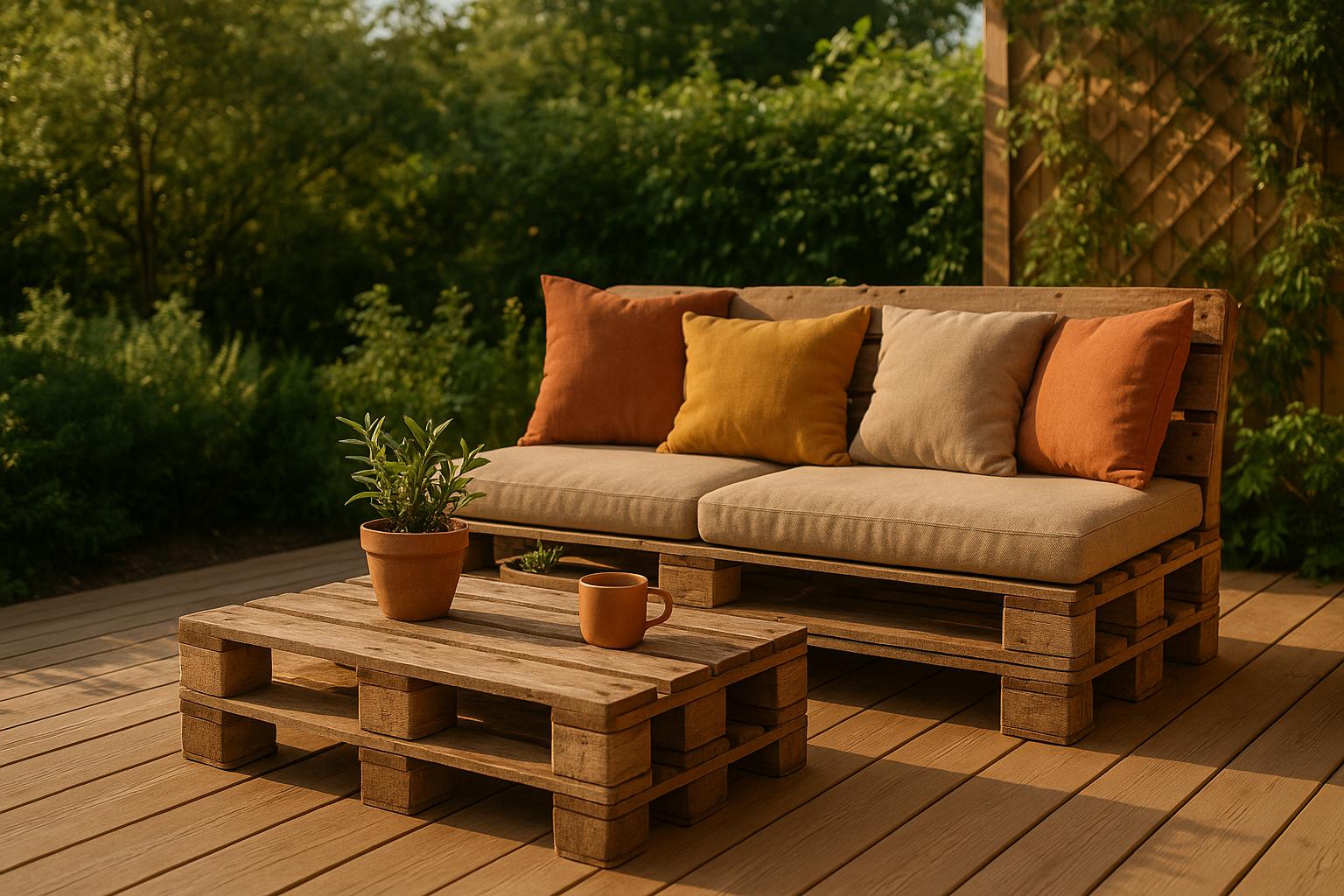
Want affordable, personalized outdoor furniture? Pallet furniture might be your perfect solution. This guide covers everything you need to know about creating outdoor furniture from recycled pallets, including safety tips, tools, sourcing materials, and step-by-step project ideas.
Key Takeaways:
- Why pallets? They’re cheap (often free), eco-friendly, and easy to customize for small or large spaces.
- Safety first: Only use pallets marked "HT" (heat-treated). Avoid "MB" (methyl bromide) or painted ones due to chemical risks.
- Tools you’ll need: A saw, drill, sandpaper, screws, and protective gear like gloves and masks.
- Popular projects: Start with a simple patio seat, move to a coffee table, and eventually try a sectional sofa.
- Durability tips: Use outdoor-grade screws, weatherproof finishes, and design for drainage to extend furniture life.
DIY pallet furniture is budget-friendly, environmentally conscious, and allows you to craft pieces tailored to your space and style. Whether you’re working with a tiny balcony or a sprawling backyard, this guide will help you build outdoor furniture that lasts.
DIY PALLET FURNITURE | How To Build A Pallet Patio Set | Backyard Make over | Under € 125!!!
Tools, Materials, and Safety Guidelines
Having the right tools and materials from the start makes your project safer and more efficient. Here’s a closer look at what you need to build pallet furniture effectively and safely.
Tools You’ll Need to Get Started
To begin, you’ll need a few basic tools: a saw, electric drill, screws, sandpaper, and either sealant or stain. A reciprocating saw works well for quick pallet disassembly, but if you prefer a more hands-on approach, a pry bar and hammer can help separate pieces manually.
Power tools like an electric sander and drill speed up the sanding and assembly process, while a measuring tape and pencil ensure precise cuts. And don’t forget your personal protective equipment (PPE). Dust masks, hearing protection, safety glasses, and work gloves are essential. Sanding pallet wood generates a lot of dust, and power tools can be noisy. For stronger joints, consider reinforcing your pallets with metal or wooden panels, securing them with screws.
Choosing Materials for Long-Lasting Results
The type of fasteners you use can make or break your outdoor furniture. Standard screws designed for indoor use won’t hold up outside. Moisture, temperature changes, and UV rays can cause them to rust or weaken over time.
Opt for fasteners made for outdoor conditions. Stainless steel screws are the best choice for weather resistance, while hot-dipped galvanized screws offer a more affordable option. Make sure your screws are long enough to hold joints securely without sticking out. Coarse-threaded, UV-resistant screws are particularly durable.
Picking the right fasteners isn’t just about durability – it also aligns with the eco-friendly practice of reusing pallets. However, not all pallets are created equal. Studies show that 10% of tested shipping pallets contained E. coli, and 3% tested positive for Listeria. Recycled pallets might have been exposed to water, pests, or chemicals, and some are treated with substances to resist mold and insects. Even engineered wood and cardboard pallets can contain formaldehyde. To reduce risks, source pallets from trusted locations like grocery stores, clean them thoroughly with a bleach water solution, and sand and seal all surfaces.
Safety Tips for Working with Pallets
Always wear gloves, safety glasses, and a dust mask, and make sure you’re working in a well-ventilated area.
Before starting your project, inspect each pallet carefully. Check for protruding nails, splinters, or signs of chemical treatment. Sort pallets based on their condition:
| Condition | Use Case |
|---|---|
| Good | Ready for use or minor fixes |
| Splintered | Sand down or repurpose |
| Broken | Recycle or use as firewood |
Handling pallets properly can help you avoid injuries. For example, the safest way to move a pallet is to stand it on its edge and slide it across the floor. Avoid walking on pallets or tossing them around, and separate unsafe pallets from those ready for immediate use. When stacking pallets, limit manual stacks to eight high. For taller stacks, use a forklift or other equipment.
Take extra care during disassembly and cutting. Use the right tools and techniques to prevent accidents. When sanding, always wear protective gear – dust from treated wood can be hazardous if inhaled. Once your furniture is built, apply wood preservatives, sealants, and insect repellents to shield it from weather and pests. Design your pieces with drainage in mind to prevent water pooling, which can lead to rot and shorten the lifespan of your furniture.
Following these guidelines will not only make the construction process safer but also ensure your finished furniture is built to last.
Step-by-Step Projects: Building Popular Pallet Outdoor Furniture
These projects highlight the practicality of using repurposed materials while introducing you to designs that gradually increase in complexity. Each one allows you to refine your skills and create functional, stylish outdoor furniture.
How to Build a Pallet Patio Seat
This beginner-friendly project can easily be completed over a weekend. Gather two pallets of similar size, along with a measuring tape, screws, sandpaper, and personal protective equipment (PPE).
Start by checking that your pallets are safe for use. Look for the "HT" stamp, which indicates heat-treated wood. Avoid pallets marked "MB" (methyl bromide) or brightly colored ones, as they may contain harmful chemicals. As GardenBenches.com advises:
"Ensure your pallets are safe for home use – avoid those marked with ‘MB’ (methyl bromide) or brightly coloured pallets, which may contain harmful chemicals."
Sand the surfaces thoroughly to remove splinters and prepare the wood for finishing. For the base, place one pallet horizontally to serve as the seat foundation. If it feels unstable, reinforce it by attaching 2×4 pieces underneath with 3-inch screws. Pre-drill holes to prevent the wood from splitting.
To create the backrest, position the second pallet vertically at the rear of the seat. Secure it at a comfortable angle (typically 100–110°) using metal brackets or wooden braces. Once assembled, apply two coats of outdoor wood stain or paint, allowing each coat to dry fully. Add weather-resistant cushions for extra comfort and style.
When you’re ready for a slightly more advanced project, try crafting a deck chair.
Making a Wooden Deck Chair
A deck chair requires more precision but results in a durable and comfortable piece. For this project, you’ll need two pallets, cedar planks for armrests, and square 4×4 posts for the legs. The seat should measure about 42″ wide × 30″ deep, with the backrest around 42″ wide × 36″ high.
Start by sanding all surfaces, paying special attention to areas that will come into contact with skin. Remove any nails and fill large cracks with wood filler. Cut the leg posts to size – two pieces at 16 inches for the front legs and two at 24 inches for the back legs. The difference in length creates a comfortable seating angle.
Test-fit all parts to ensure stability. Attach the seat pallet to the legs, reinforcing the underside with 2×4 chunks for added support. Use 4-inch screws to secure the legs, drilling at multiple angles for strength. Next, align the backrest pallet with the seat and back legs, securing it with metal brackets. Finish by attaching cedar planks as armrests.
Building a Pallet Coffee Table
A pallet coffee table is both functional and stylish, offering storage and a flat surface. In 2023, Dabbling & Decorating shared their experience of building a wheeled pallet coffee table for their Vermont porch in just one weekend.
Choose pallets marked "HT" and gather one or two, depending on your desired size. For smaller spaces, a single pallet may suffice. If resizing is needed, carefully disassemble the pallets using a pry bar or hammer, taking care not to damage the boards. Sand all pieces thoroughly.
Decide on your design – stack pallets for height and storage or use separate legs for a sleeker look. For a table around 48″ × 24″, assemble the pallets using wood glue and 3-inch screws, reinforcing corners with brackets for added stability.
To make the table mobile, install locking caster wheels rated for at least 100 pounds each. Apply multiple coats of outdoor stain or paint, followed by a polyurethane sealant for protection. For a polished finish, consider adding a custom-cut glass top. As Dabbling & Decorating noted:
"Adding a glass top was the finishing touch that made the table not only more functional, but also porch-ready. Since pallet wood can be slightly uneven, the glass provides a stable, flat surface that’s ideal for setting down drinks or decor."
Building a Sectional Sofa or Corner Seating
Modular seating is a fantastic choice for larger outdoor spaces, offering flexibility for different occasions. Start by measuring your area and deciding on a layout. L-shaped configurations are great for corners, while U-shaped designs encourage conversation in open spaces. Each seat section typically requires one pallet, with additional pallets for backrests.
Prepare the pallets by sanding and inspecting them to ensure consistency. Build each seating module separately to allow for easy reconfiguration. Reinforce the seat bases with 2×4 supports for added durability.
Connect the modules using heavy-duty brackets or custom wooden joints. For the backrests, cut pallet sections to a uniform height and angle them slightly backward for comfort. Apply a consistent finish across all pieces with outdoor stain or paint, and complete the look with weather-resistant cushions.
The table below provides a quick overview of the materials, costs, and time involved for each project:
| Project | Pallets Needed | Estimated Cost | Build Time | Skill Level |
|---|---|---|---|---|
| Patio Seat | 2 | US$15–25 | 4–6 hours | Beginner |
| Deck Chair | 2 | US$35–45 | 6–8 hours | Intermediate |
| Coffee Table | 1–2 | US$25–35 | 3–5 hours | Beginner |
| Sectional Sofa | 4–8 | US$60–120 | 12–16 hours | Advanced |
sbb-itb-593149b
Design Ideas and Customization Options
Once you’ve mastered the basics, it’s time to elevate your pallet furniture with thoughtful design choices. By customizing your pieces, you can reflect your personal style while ensuring they remain practical and durable. A key part of this process is protecting your furniture from weather damage and incorporating features that boost both comfort and functionality. Here’s how you can achieve that.
Weatherproofing and Finishing Methods
Outdoor furniture faces its share of challenges, from relentless sun exposure to high humidity or rain. Protecting your pallet furniture requires a plan tailored to your local climate. For example, intense UV rays can cause fading, while moisture can lead to wood warping or decay.
Start by choosing the right wood sealant. There are three main types: natural oils, clear coats, and all-in-one stains. While clear finishes like spar varnish and exterior-grade polyurethane offer protection, they can degrade in direct sunlight unless they include UV-blocking agents. On the other hand, water-based acrylic finishes provide better sun resistance but may require complete removal when refinishing.
Outdoor oil finishes are another option. They penetrate the wood deeply, making them ideal for beginners, though they need yearly reapplication. To ensure your furniture stays sturdy, use water-resistant adhesives like Titebond II or III or Gorilla Glue, paired with outdoor-specific hardware to prevent rust.
Temperature also plays a role in applying sealants. For the best results, apply them when temperatures are between 60–80°F. Seal all surfaces, paying close attention to end grains by using wood epoxy to block moisture. Let everything dry completely in a well-ventilated area before exposing your furniture to the elements.
Lindsay Schleis, VP of Business Development at Polywood, highlights the importance of protection:
"Just like we keep our cars in a garage to protect them, outdoor furniture must also be protected to maintain its value and longevity."
Regular upkeep is essential. Plan to reapply finishes every one to two years and clean your furniture regularly to remove debris that can trap moisture and accelerate wear.
Adding Practical Features
Transforming simple pallet furniture into multi-functional pieces can enhance its usability. For instance, storage features are a popular upgrade. A repurposed pallet coffee table, for example, can be given a fresh coat of paint and cedar planks, along with hidden compartments for storing outdoor cushions, gardening tools, or games.
Mobility is another practical addition. Adding outdoor-friendly caster wheels makes it easy to reposition furniture as needed. Integrated planters can also bring a touch of greenery to your setup, serving as natural accents on patios or decks. A DIY pallet gardening table, for instance, can double as an elevated workspace with storage space below for tools and supplies.
Convenience features like built-in drink holders, cup holders, phone slots, or small storage cubbies can make your furniture even more functional. Cushion attachment systems using snaps, ties, or Velcro strips ensure seating stays secure, even on windy days. For added durability, opt for marine-grade fasteners and outdoor fabrics treated with water-repellent sprays.
Small touches can make a big difference. Silicone or rubber furniture pads can prevent scratches on your deck and elevate the furniture slightly to improve airflow and minimize moisture buildup. These details not only prolong the life of your furniture but also protect your outdoor surfaces.
Layout Ideas for U.S. Outdoor Spaces
Outdoor spaces in the U.S. vary widely, from cozy apartment balconies to expansive backyard patios. For areas designed for socializing, consider arranging sectional pieces in U-shapes or L-configurations to encourage conversation. Place coffee tables within easy reach of seating to enhance convenience.
Leave at least 36 inches of walking space around furniture groupings to ensure smooth traffic flow. If space is limited, dual-purpose pieces that combine seating and storage can maximize functionality.
Weather conditions should also guide your layout decisions. In warmer climates, position seating to take advantage of natural shade or add pergolas and umbrellas for extra comfort. For regions with colder seasons, plan for off-season storage by ensuring furniture can be easily moved or stacked in protected areas.
When designing your layout, think about accessibility. For instance, place furniture with built-in storage near areas where you frequently need cushions, games, or entertaining supplies. This thoughtful planning ensures your setup remains practical and enjoyable throughout the year.
Sarah Jameson, Marketing Director at Green Building Elements, underscores the importance of preparation:
"To be durable and long-lasting, proper care and maintenance are still the best way to make the most out of your investment."
Pallet Furniture vs. Store-Bought Outdoor Furniture
When choosing between DIY pallet furniture and store-bought outdoor pieces, it’s essential to weigh factors like cost, durability, and maintenance. Each option comes with its own set of advantages and challenges that can influence your satisfaction and how well the furniture meets your needs. Below is a detailed comparison to help you make an informed decision.
Comparison Table: Cost, Durability, and Maintenance
Here’s a breakdown of the key differences:
| Factor | Pallet Furniture | Store-Bought Furniture |
|---|---|---|
| Initial Cost | $40–$350 for a complete patio set | $200–$2,000+ depending on quality |
| Material Costs | Pallets: Free; Cushions/fabric: $100–$240 | All materials included in the purchase price |
| Annual Maintenance | High – requires regular sealing and staining | Low to moderate – occasional cleaning and touch-ups |
| Durability | Depends on wood quality and construction | Engineered for heavy use with commercial-grade materials |
| Weather Resistance | Needs regular UV oil treatment | Built-in weather protection with quality materials |
| Customization | Unlimited design freedom | Limited to available styles and colors |
Store-bought furniture offers a range of materials, each with its own pros and cons. Metal furniture, for instance, is highly durable but can rust without proper coating. Plastic options require minimal upkeep but may fade over time. Wood-based pieces, though often made from high-quality materials, still demand regular care to maintain their appearance.
Crystal Collins, Executive Relationship Manager at Ongweoweh, highlights the environmental benefits of pallet recycling:
"We make pallet recycling second nature with our streamlined programs. Not only do they promote sustainability, but we also help businesses unlock additional revenue streams for pallets at the end of their lifecycle."
This perspective underscores the eco-friendly advantages of DIY pallet projects.
When to Choose Pallet Furniture Over Other Options
Opting for pallet furniture can be a smart choice if you’re looking to save money, explore creative designs, or reduce your environmental footprint.
- Budget-Friendly: If your budget is under $500, pallet furniture is a cost-effective alternative to expensive store-bought sets.
- Creative Freedom: DIY projects allow you to tailor dimensions, colors, and styles to your exact preferences – something store-bought furniture can’t offer.
- Eco-Conscious Living: Upcycling pallets helps minimize waste. A study from Virginia Tech shows a dramatic drop in landfilled wood pallets, from over 178 million in 1998 to just 25 million by 2016. Repurposing pallets reduces the need for new lumber and helps lower carbon emissions.
- Time and Effort: Building pallet furniture takes time and effort. If you enjoy hands-on projects and can dedicate a few weekends, the process can be highly rewarding.
- Temporary Needs: For renters or those planning to move soon, pallet furniture can serve as an affordable, temporary solution. However, if you’re looking for a long-term setup, investing in durable store-bought furniture may be a better option.
- Skill Level: While many pallet projects are beginner-friendly, achieving a polished look requires patience and attention to detail. Store-bought furniture provides consistent quality but comes at a higher price.
Conclusion and Key Takeaways
Building your own pallet furniture offers a blend of creativity, sustainability, and cost-effectiveness that store-bought options just can’t match. Throughout this guide, we’ve shown how DIY pallet projects can transform your outdoor space, all while being budget-friendly – typically costing between $40 and $350 for a complete patio set.
One standout benefit of DIY pallet furniture is the ability to customize it. As Makers Manual puts it:
"One of the most significant benefits of making your own furniture is the ability to customize it to your exact specifications".
This means you can design pieces that perfectly suit your space, style, and needs – something mass-produced furniture simply can’t offer.
The eco-friendly aspect of pallet furniture is another major win. Engineered wood pallets, for example, can be reused 10 to 12 times and boast an 85% recycling rate, far exceeding the 5 to 7 uses and 70% recycling rate of traditional wood pallets. By upcycling pallets, you’re not just creating furniture; you’re contributing to a circular economy and reducing landfill waste.
When selecting pallets, prioritize safety. Look for those marked "HT" (heat-treated) and steer clear of ones labeled "MB" or painted in bright colors, as they may contain harmful chemicals. Beyond the environmental and practical benefits, the process of building your own furniture is a rewarding experience, allowing you to develop new skills and take pride in your creations.
Whether you’re designing a cozy balcony retreat or an expansive outdoor entertainment area, pallet furniture offers flexibility and adaptability. It’s a great way to create outdoor spaces that reflect your personal style while aligning with eco-conscious values.
FAQs
How do I make sure the pallets I use for outdoor furniture are safe and chemical-free?
When selecting pallets for your projects, look for stamps like HT (heat-treated) or KD (kiln-dried). These markings indicate that the wood hasn’t been exposed to harmful chemicals. Steer clear of pallets marked MB (methyl bromide), as this chemical is toxic and unsafe.
For peace of mind, it’s wise to get pallets from trustworthy suppliers. Also, avoid using pallets that are heavily stained or show signs of damage. Before putting them to use, give the wood a good cleaning with a non-toxic disinfectant to eliminate bacteria or residue. This step ensures your outdoor furniture will be both safe and long-lasting.
How can I maintain and weatherproof pallet furniture to make it last outdoors?
To make sure your pallet furniture weathers the outdoors, start by treating it with a waterproof sealant or an outdoor wood finish. This helps shield the wood from moisture and UV rays, which can cause damage over time. Pay extra attention to sealing the end grains and any areas that come into contact with the ground – these spots are particularly prone to rot and swelling. For an extra layer of protection, you can apply wood epoxy to vulnerable areas.
Regular upkeep is just as important. Clean your furniture occasionally using a mild soap or a vinegar solution to clear away dirt and grime. Steer clear of harsh chemicals, as they can harm the wood. To further prolong its life, consider covering the furniture or moving it to a sheltered spot during harsh weather conditions.
What are some creative pallet furniture ideas for small outdoor spaces?
For smaller outdoor areas, smart, space-efficient designs are the way to go. Think about incorporating furniture that serves more than one purpose, like a bench with hidden storage or a coffee table that can double as extra seating. Wall-mounted or vertical pallet shelves are another clever option to make use of vertical space, keeping the floor clear and open.
To make the space cozier and more stylish, add cushions, throw pillows, or weather-resistant fabrics. Using slim or narrow pallets can help fit tighter spots, and a fresh coat of paint or stain can tie everything together with your outdoor decor. These simple ideas can transform even the smallest outdoor space into a functional and welcoming retreat.
