
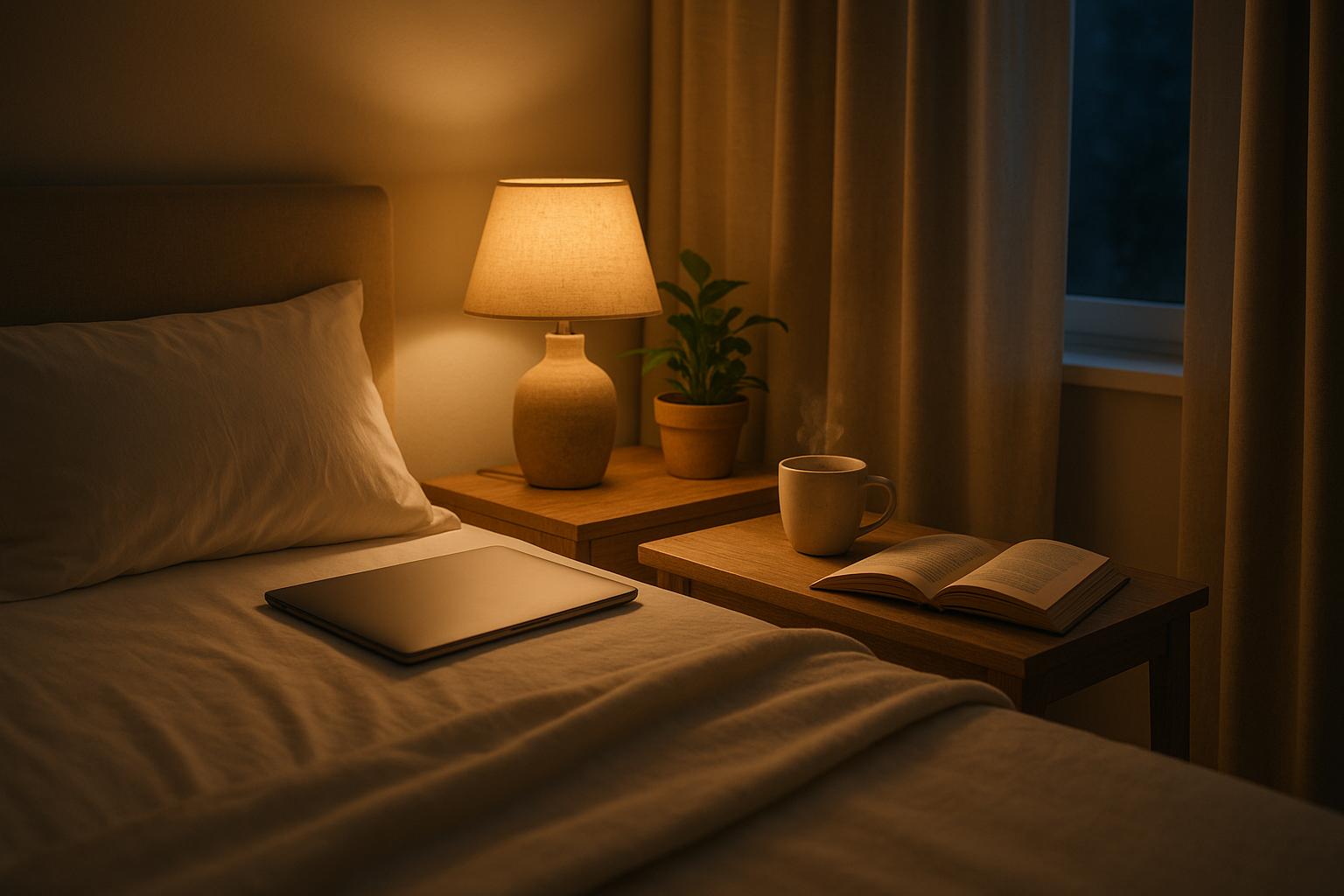
Want better sleep? Start a digital detox before bed. Screens disrupt your natural sleep cycle by suppressing melatonin and overstimulating your brain. Here’s how to unplug and improve your nightly routine:
- Set a digital curfew: Turn off devices at least 1 hour before bedtime.
- Make your bedroom tech-free: Charge devices outside and use alternatives like analog alarms or white noise machines.
- Create a relaxing routine: Replace screen time with reading, journaling, or yoga.
- Start small: Begin with 30 minutes of screen-free time and gradually increase.
Poor sleep affects your health, mood, and productivity. A bedtime digital detox helps restore your natural rhythm and sets you up for restful nights. Ready to unwind? Let’s dive into the details.
Nighttime Digital Detox Routines for Deep Sleep
Step 1: Set a Digital Curfew
A digital curfew means setting a specific time each evening to turn off all screens – phones, tablets, laptops, TVs, and gaming devices. This helps create a clear boundary between screen time and sleep time.
Dr. Nusheen Ameenuddin, a Pediatrician at the Mayo Clinic, explains the importance of this practice:
"We recommended having families turn off devices at least an hour before bedtime."
Giving yourself this 60-minute buffer allows your brain to wind down and lets natural melatonin production kick in without interference from blue light.
How to Choose Your Curfew Time
The best curfew time depends on your schedule, evening activities, and when you plan to go to bed. For instance, if your bedtime is 10:30 PM, aim for a curfew around 9:30 PM.
Consider your work commitments. If you often work late or bring tasks home, try to tackle the most important ones earlier in the evening. This way, you’re not rushing to finish something right before your curfew.
Factor in family routines. Dr. Megan Moreno, an Adolescent Health Expert at UW Health, highlights the importance of a unified approach:
"One thing I’ve seen from patients in clinic and in some of our research studies is that if there’s a digital curfew, it’s going to work best if everyone in the family follows it."
When everyone in the household follows the same rule, it reduces temptation and peer pressure.
Be flexible when necessary. Dr. Ameenuddin advises against rigid rules:
"I would say it’s completely fine to be flexible when needed. There shouldn’t just be a rigid set of rules. It’s more like guidelines."
Special occasions, unexpected work demands, or other disruptions may require adjustments. Just aim to return to your usual curfew the next night.
Tips for Sticking to Your Curfew
Once you’ve set your curfew, the challenge is sticking to it. Here are some practical strategies to help:
- Set a quiet alarm about 15 minutes before curfew. This gives you time to wrap up what you’re doing and ease into disconnecting.
- Use built-in tools like Apple’s Screen Time or Android’s Digital Wellbeing features. These allow you to set app or device limits that activate automatically at your chosen time.
- Turn off notifications during your wind-down period. This removes the temptation to check every buzz or alert.
- Switch your phone to black and white mode in the evening. A grayscale display is less visually engaging and can help reduce scrolling.
- Log out of social media apps before curfew. The added step of logging back in can deter mindless browsing.
- Charge devices outside the bedroom. This physical separation makes it easier to avoid late-night scrolling and reinforces the idea of a tech-free sleep space.
- Plan screen-free activities like reading a book, journaling, or taking a relaxing bath as alternatives to being online.
If starting with a full hour feels overwhelming, ease into it. Begin with a manageable curfew, maybe 30 minutes before bed, and gradually extend it as the habit takes hold. The key is consistency – focus on building a routine rather than aiming for perfection right away.
Step 2: Make Your Bedroom a Tech-Free Zone
Taking your digital curfew a step further, turning your bedroom into a tech-free sanctuary can work wonders for your sleep. Studies reveal that about 75% of children and 70% of adults use electronic devices in their bedrooms or even in bed. Those glowing screens and constant notifications? They’re often the culprits behind disrupted sleep.
Dr. Daniel Jin Blum, a Sleep Expert and Clinical Psychologist, highlights just how crucial this step is:
"Technology-free wind-down routines promote better sleep onset and reduce nighttime awakenings."
Clear Out the Electronics
Start by moving all your devices to a designated charging spot outside the bedroom. Instead of relying on your phone for alarms, go old-school with an analog clock. You can set up a charging station in a shared space like the kitchen, living room, or hallway. This keeps your devices powered up but out of sight – and out of mind – while you sleep.
If you use your phone for white noise, switch to a standalone white noise machine. Options like the Yogasleep Dohm or the budget-friendly Restnature White Noise Machine (priced at $20) are great alternatives.
Sleep expert Sarah Bossio adds:
"I recommend white noise, which is the same tone or frequency emitted consistently, such as a fan."
If you absolutely must keep a device in your room, tuck it away in a drawer or cabinet. The key is to remove visual reminders and make it harder to slip back into old habits.
Tackle Tech-Related Habits
Once you’ve removed devices, it’s time to address any lingering tech dependencies. Here’s how to handle common challenges:
- Work emergencies: Set clear boundaries with colleagues about your availability during wind-down and sleep hours. Share an alternative way to reach you for urgent matters, so you can stick to your tech-free zone.
- Family communication: Explain your tech-free policy to family members and arrange a backup plan for real emergencies. This ensures they can still reach you without disrupting your sleep routine.
- Entertainment cravings: Swap out TV or streaming time with screen-free activities like reading, journaling, or flipping through a magazine.
- FOMO (Fear of Missing Out): Remind yourself that most notifications can wait until morning. Reward yourself for keeping your bedroom tech-free – it’s a small but meaningful way to reinforce the habit.
Dr. Samantha Domingo, a Clinical Health Psychologist, underscores the science behind this approach:
"Limiting screen exposure before bed reduces blue light that suppresses melatonin and disrupts circadian rhythms."
sbb-itb-593149b
Step 3: Build a Relaxing Bedtime Routine
When you set technology aside before bed, it opens the door to activities that genuinely help you unwind. A regular bedtime routine sends a clear message to your brain: it’s time to shift gears and prepare for sleep.
Dr. David Rosen, a Sleep Medicine Physician, puts it simply:
"A bedtime routine can help create habits that tell your brain it is time to get ready for bed."
Screen-Free Activities to Help You Relax
Instead of scrolling through your phone or watching TV, try activities that calm your mind and body. Here are some great options:
- Read a physical book. Skip the backlit e-readers and grab a paper book. Choose something light and soothing, like fiction, poetry, or even a magazine.
- Journal your thoughts. Writing down worries, plans, or things you’re grateful for can help clear mental clutter.
- Stretch or do yoga. Spend 10–15 minutes on gentle stretches or yoga, paired with mindful breathing, to release tension.
- Take a warm bath or shower. A warm soak or shower can help lower your body temperature, signaling your body that it’s time to sleep.
- Get creative. Activities like knitting, doodling, or coloring can calm your mind without overstimulating it.
- Do puzzles or simple games. Solve a crossword or piece together a puzzle to lightly engage your brain without overdoing it.
Paul E. emphasizes the impact of unplugging:
"Shutting down your electronics one hour before going to bed will improve the quality of your sleep and the quality of your next day!"
Repeating these activities in the same order every night can amplify their calming effects.
Establish a Routine That Works for You
The key to making these activities effective is consistency. Stick to the same bedtime – even on weekends – and follow a sequence of two or three relaxing activities. Over time, this builds a powerful association between your routine and sleep.
Here’s an example of a simple nightly routine:
- Change into pajamas.
- Enjoy a light snack or a cup of non-caffeinated tea (steer clear of heavy meals and alcohol).
- Take a warm bath.
- Spend 20 minutes reading.
- Wrap up with some journaling.
As you move through your routine, dim the lights, ensure your bedroom is cool and tidy, and consider playing soft, ambient sounds in the background.
Dr. Rosen points out an important truth:
"Sometimes my patients will tell me my guidance about a bedtime routine is not telling them anything new. I always respond by stressing there is a difference between understanding a concept and really internalizing it as a part of your behavior. We all understand that exercise is important, but that doesn’t negate how hard it is to establish and maintain a habit of exercising regularly."
The takeaway? Focus on creating the habit, not on being perfect from the start. Consistency is what makes the difference.
Step 4: Fix Problems and Adjust Your Routine
Getting a good night’s sleep often means fine-tuning your approach to a digital detox. Let’s face it, cutting back on screen time can be tough. Studies reveal that about 61% of people admit they’re hooked on the internet and their devices. Common hurdles include habits like mindless device checks, fear of missing out (FOMO), work obligations, family duties, and even withdrawal symptoms such as irritability, anxiety, or restlessness.
To make this easier, establish clear boundaries for work and family time to reduce interruptions. Replace those automatic device-checking habits with offline activities like journaling or solving puzzles.
Dr. Cameron Gordon, Associate Professor of Psychology at Middle Tennessee State University, suggests looking at this process differently. Instead of seeing it as a struggle, think of it as a chance to reconnect with what truly matters:
"If a ‘detox’ feels like a battle from the moment you put your phone down, reframe the experience as ‘an invitation to spend seven days getting in touch’ with yourself, your surroundings, your loved ones, whatever you wish to be in better contact with."
Ease into the process rather than making drastic changes. Start small – cut back on screen time by 30 minutes before bedtime, then gradually work up to an hour or more.
Once you’ve identified the challenges, consider using tools to help you transition smoothly into your digital detox.
Use Transitional Tools When Needed
If going completely offline feels overwhelming, transitional tools can make the process more manageable. For example, blue light filters and night mode can help minimize the impact of screens on your sleep. Blue light (wavelengths of 450–495 nm) can suppress melatonin production, which is crucial for sleep. Dr. Steven Lockley, a neuroscientist at Harvard-affiliated Brigham and Women’s Hospital, explains:
"Special photoreceptors in the eye detect light to control our circadian rhythms."
Research has shown that blue light filter apps can improve sleep efficiency, particularly for people in their 30s, though results may vary. Simple adjustments like dimming your screen’s brightness, using red or orange reading lamps, and setting reminders to power down devices a couple of hours before bed can make a big difference.
Julie Corliss, Executive Editor of Harvard Heart Letter, offers this advice:
"If you want to block stimulating blue light that could interfere with sleep, avoid screen use as much as possible after dusk – especially within two to three hours of bedtime."
If you must use devices before bed, steer clear of stimulating content like breaking news, horror movies, or competitive games. Instead, choose calming options such as nature documentaries or soothing music.
The good news? Resistance to these changes usually fades after a week or two as new habits start to stick.
Conclusion: The Benefits of a Bedtime Digital Detox
Did you know that American adults spend over 11 hours a day engaging with media and check their smartphones an astonishing 96 times daily? This constant interaction with screens disrupts sleep patterns and triggers dopamine surges, which can lead to anxiety, depression, and feelings of inadequacy. Clearly, our nighttime habits need a reset.
Cutting back on screen time before bed can bring some major perks. It helps restore your natural circadian rhythm, improves sleep quality, reduces stress, and promotes emotional balance. Experts like Dr. Michael S. Valdez and Tim Kleinknecht highlight that even taking just an hour or two off from screens before bedtime sends a clear signal to your body that it’s time to wind down.
The good news? You don’t need to overhaul your entire routine overnight. Start with small, manageable steps. As the Newport Institute puts it:
"The most effective way to do a digital detox is by taking small steps to create boundaries between yourself and your devices that benefit your emotional and physical health."
With 77% of college students already recognizing the need to limit phone use, even simple changes – like setting a 30-minute tech curfew or keeping your bedroom device-free – can lead to better sleep, less anxiety, and overall improved well-being. Think of it as a gift to your future self: a calmer mind and a healthier lifestyle, all starting with a mindful digital detox.
FAQs
How does blue light from screens impact melatonin and sleep quality?
Blue light emitted by screens can disrupt your body’s ability to produce melatonin, the hormone responsible for regulating sleep. This interference can make falling asleep more difficult and may negatively impact the quality of your rest.
To support better sleep, aim to cut back on screen time at least an hour before going to bed. If avoiding screens isn’t an option, consider using blue light-blocking glasses or enabling blue light filters on your devices.
What are some practical tips for starting a digital detox before bedtime?
To ease into a digital detox, try cutting back on screen time little by little. Start by powering down your devices 10 to 15 minutes earlier each night. Gradually increase this time each week until you’re unplugging at least an hour before bed. This gradual shift can help rewire your habits and promote better sleep.
Instead of scrolling or watching TV, fill that extra time with soothing activities like reading a favorite book, practicing meditation, or doing some light stretches. These simple swaps can not only enhance your sleep but also make your evenings feel more serene.
What are some good activities to replace screen time before bed?
Swapping out screen time before bed for calming activities can make a big difference in how well you sleep. Try picking up a book, jotting down your thoughts in a journal, or enjoying some soothing music to ease into the evening. Gentle stretches, deep breathing exercises, or even simple crafts like knitting can also help create a smooth, peaceful shift toward bedtime. The goal is to engage in relaxing, screen-free activities that signal your mind and body it’s time to wind down.
