
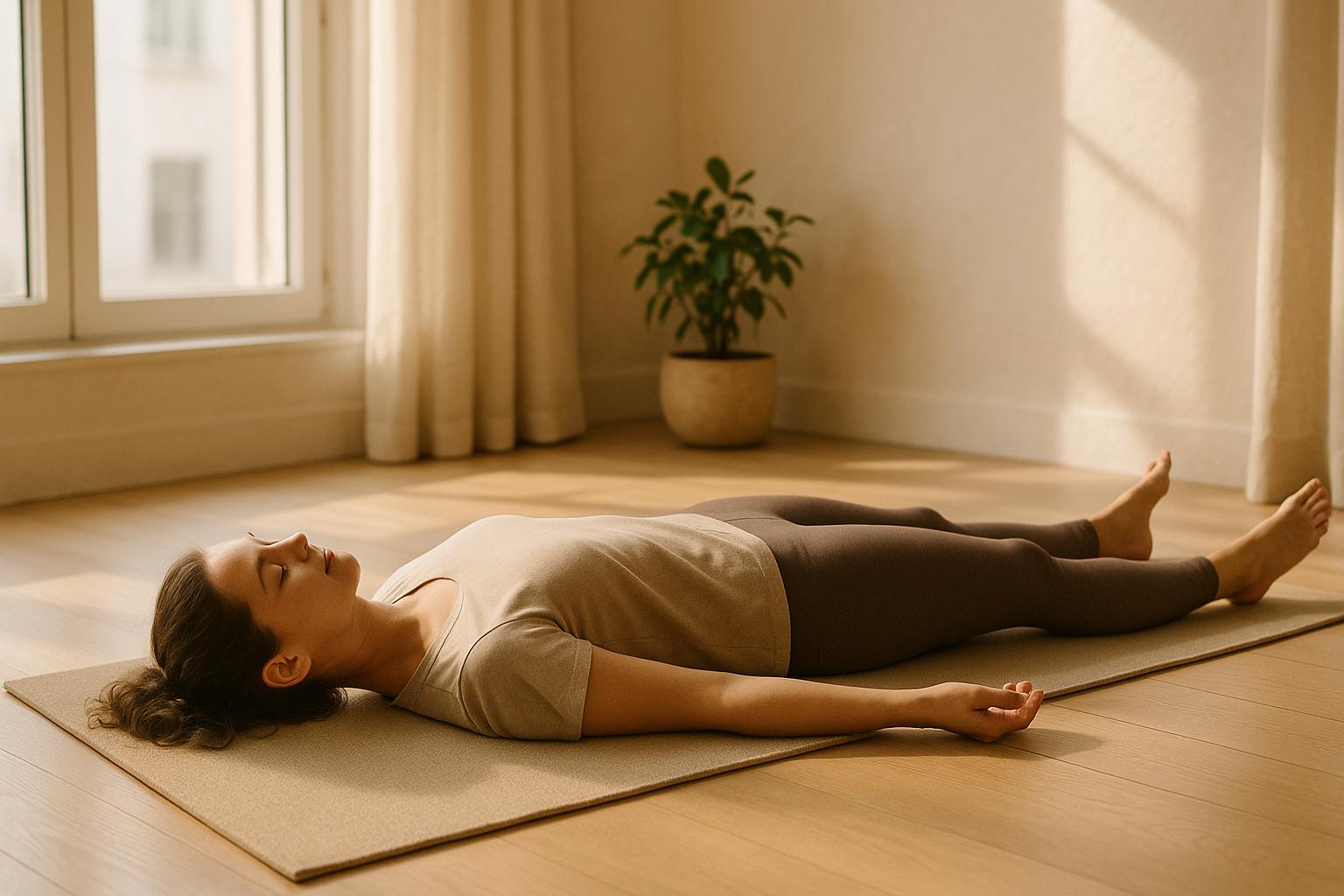
Body scan meditation is a simple practice that helps you focus on different parts of your body to relieve stress, improve sleep, and reduce anxiety. By paying attention to physical sensations – like tension or warmth – you can reconnect with your body and manage discomfort better. Here’s how to get started:
- What It Is: A meditation technique where you gradually focus on each part of your body, from head to toe.
- How It Helps: Reduces stress, eases chronic pain, improves sleep, and enhances mindfulness.
- Getting Started: Find a quiet space, wear comfortable clothes, and use guided resources if needed.
- Step-by-Step: Start with your breath, focus on each body part, handle distractions gently, and end with full-body awareness.
This practice doesn’t require special tools – just consistency. Even 5–10 minutes a day can make a difference. Ready to try? Let’s dive into the details.
Body Scan Meditation – Jon Kabat-Zinn
Preparing for Your Body Scan Meditation
Getting ready for a body scan meditation is about more than just sitting down and closing your eyes. Creating the right environment and preparing your mindset can make your practice more effective and enjoyable. Start by organizing a space that supports relaxation and focus.
Create a Quiet and Comfortable Space
You don’t need an elaborate setup for your meditation – a cozy corner in your home can work just as well as a dedicated room. Look for a quiet spot where you can minimize interruptions. Comfort is key, so consider using a supportive cushion or a comfortable chair for your practice.
"You can create your own peaceful refuge, no matter where you live." – Yaotunde Obiora
Adding natural touches like plants or soft lighting can enhance the sense of calm. Keep the area tidy to reduce mental clutter and distractions. Think about the textures, scents, and overall ambiance of your space – these details can subtly influence your experience. Soft blankets, extra cushions, or a soothing scent from essential oils like lavender or eucalyptus can make your space feel more inviting.
Set the Right Environment
Your surroundings directly affect how easily you can relax. Wear loose, breathable clothing that allows for unrestricted movement and comfort. Lighting also plays an important role – natural light is ideal, but if you’re meditating in the evening, use lamps, candles, or twinkle lights to create a warm, calming glow. Avoid harsh overhead lighting, as it can feel distracting or uncomfortable.
To minimize noise, use curtains or room dividers to block out external sounds. If complete silence isn’t an option, try soft background sounds like nature recordings or white noise to mask distractions.
"When curating your meditation space, all that you need is to surround yourself with whatever is in your home that you connect to in a calming way." – Jeremiah Brent, Interior Designer
Before starting, silence your phone and other devices to avoid interruptions. Aromatherapy can also enhance your session – lavender, chamomile, or peppermint oils are great options for encouraging relaxation.
Use Guided Resources if Needed
If you’re new to body scan meditation, guided resources can help you stay focused. Many guided meditations range from 5 to 45 minutes, so starting with shorter sessions is a good way to ease into the practice.
Meditation apps often offer structured courses tailored to specific goals like better sleep or reduced anxiety. For example, UCLA Mindful provides guided meditations in multiple languages, including English, Spanish, Mandarin, and Arabic, making it accessible to a wide audience. Programs like Koru Mindfulness at Duke University introduce body scan meditation early on, helping participants focus on physical sensations and stay present.
"One of my meditation teachers said that the most important moment in your meditation practice is the moment you sit down to do it. Because right then you’re saying to yourself that you believe in change, you believe in caring for yourself, and you’re making it real." – Sharon Salzberg
Written scripts can also be useful. Reading through a script beforehand and practicing from memory allows you to adjust the pace and personalize the experience. Experiment with different resources to find the ones that resonate with you, and stick to shorter sessions at first to avoid feeling overwhelmed.
Step-by-Step Body Scan Meditation Practice
Now that your space and mindset are ready, let’s begin the practice. Body scan meditation is a structured way to tune into your physical sensations and mental state. Each step builds on the last, guiding you through a complete meditation session.
Start by Centering Yourself
Begin by settling into a comfortable position. You can lie down or sit upright with your back straight – whatever feels best for you.
Close your eyes to reduce distractions and help your mind turn inward. If closing your eyes doesn’t feel right, simply lower your gaze to the floor.
Let your breath guide you here. Take slow, deep breaths to calm your body and mind. Pay attention to the air moving through your nostrils and filling your lungs. Feel the support beneath you and notice any tension or sensations in your body.
Scan Your Body Part by Part
Shift your attention systematically through different parts of your body. Start with a larger area, like your head, and then focus on smaller sections: your forehead, eyes, cheeks, jaw, and neck. Gradually move down through your shoulders, arms, hands, chest, abdomen, back, hips, legs, and finally your feet.
As you focus on each area, notice the sensations – warmth, coolness, tingling, tightness, or stillness. Some areas may feel more prominent than others, and that’s okay. Simply observe without trying to change anything.
If your mind starts to wander, don’t worry. The next step will help you handle distractions.
Handle Distractions
It’s completely normal for your mind to drift during meditation. When thoughts about your to-do list or random memories pop up, gently guide your focus back to the body part you were scanning. Think of these moments as chances to practice mindfulness.
You might also feel physical discomfort. Acknowledge these sensations without judgment. If they become overwhelming, make small, mindful adjustments to ease the discomfort, then return to your scan. External noises, like traffic or household sounds, can be briefly noted before you refocus on your inner experience.
If restlessness takes over, shift your attention back to your breath for a few cycles to regain your focus.
End with Full Body Awareness
Once you’ve worked through distractions, expand your awareness to take in your entire body. After scanning individual parts, bring your attention to your body as a whole. Notice how everything connects, and take in the overall sense of relaxation and presence.
Take a few deep breaths while holding this full-body awareness. When you’re ready to finish, gently reawaken your body by wiggling your fingers and toes or softly moving your head side to side. Open your eyes at your own pace, and take a moment to appreciate the time you’ve given yourself for this practice.
sbb-itb-593149b
Tips for Beginners
Getting started with body scan meditation doesn’t have to feel overwhelming. With a few practical strategies, you can ease into the practice, build confidence, and develop a routine that feels both rewarding and manageable. Here are some straightforward tips to help you establish a strong foundation.
Start with Short Sessions
If you’re new to meditation, begin with sessions lasting just 5–10 minutes. This keeps things approachable and helps you avoid restlessness. As you get more comfortable, you can gradually increase the duration to 15, 20, or even 30 minutes.
Make it a daily habit by scheduling a specific time for your meditation. Treat it as an essential part of your day, like eating or sleeping. Some people find it helpful to add their meditation sessions to their calendar as a reminder. Remember, consistency matters more than how long you meditate – regular 5-minute sessions often have a bigger impact than sporadic, longer ones.
Focus on Areas with Strong Sensations
When starting out, it’s easier to focus on parts of your body where sensations are more noticeable, like your hands, feet, or face. For example, you might feel warmth in your hands, tingling in your feet, or tightness in your face. Once you’re comfortable tuning into these more obvious sensations, you can start exploring subtler areas like your back, shoulders, or abdomen. If some parts of your body feel “blank” or numb, that’s okay – acknowledge it and move on without judgment.
Be Patient and Stay Consistent
It’s completely normal for your mind to wander to thoughts about work, errands, or memories. Meditation isn’t about stopping these thoughts but about gently bringing your attention back to the present moment whenever it strays.
Each time you redirect your focus, you’re strengthening your ability to stay aware and present. Over time, this regular practice helps you become more mindful and resilient. If you’re just starting out, guided meditations can be a helpful tool to provide structure and keep you on track. The key is to approach the practice with patience and kindness toward yourself.
Benefits and Common Challenges
Exploring the benefits of body scan meditation while understanding its common challenges can make your practice more fulfilling and sustainable. By recognizing the rewards and preparing for potential hurdles, you can build a consistent and meaningful meditation routine.
Key Benefits of Body Scan Meditation
Practicing body scan meditation regularly can bring a range of benefits for both your mental and physical health. For instance, an eight-week body scan program has been shown to lower cortisol levels, which can help reduce inflammation, ease fatigue, and improve sleep patterns.
Speaking of sleep, many practitioners report better rest as a result of mindfulness meditation. A 2019 review highlights that mindfulness techniques, including body scans, can address certain sleep issues and enhance overall sleep quality. Participants in an eight-week mindfulness program noted they slept better and felt more refreshed upon waking.
For those managing chronic pain, body scan meditation can also be a helpful tool. A 2017 review of 13 studies found that mindfulness meditation could alleviate symptoms tied to chronic pain, such as depression and reduced quality of life. Similarly, a study involving 50 adults with chronic pain revealed that a simple ten-minute body scan led to a noticeable reduction in pain affecting social interactions compared to those in a control group.
Beyond these specific benefits, consistent meditation practice has been linked to lower blood pressure, reduced stress and anxiety, improved emotional regulation, better sleep, and heightened self-awareness. A 2021 meta-analysis further supports this, showing that mindfulness and meditation can effectively reduce stress and anxiety symptoms.
While these benefits are compelling, starting a meditation practice isn’t always smooth sailing. Beginners often face challenges, but these can be managed with the right approach.
How to Handle Common Challenges
As you begin to experience the benefits of body scan meditation, you may also encounter some common obstacles. Restlessness, wandering thoughts, or physical discomfort are typical, especially for beginners. When these arise, acknowledge them briefly, adjust your posture if necessary, and gently refocus your attention on the body scan.
It’s completely normal for your mind to drift to everyday concerns, like work tasks or errands. Each time you notice this and bring your focus back to the present moment, you’re strengthening your meditation skills.
Some people may also notice areas of numbness or quietness in their body. Instead of fixating on these, simply acknowledge them and move on.
Another frequent challenge is impatience with progress. Meditation benefits often develop gradually, so it’s essential to approach your practice with patience. Starting with just five minutes a day can yield noticeable results over time. As you grow more comfortable, you can gradually extend your sessions. Aiming for 15 minutes daily is a practical and effective goal.
Above all, approach your practice with kindness toward yourself. Each session offers a chance to connect with your body and mind, even if it doesn’t feel perfect. The key is to remain consistent and compassionate as you continue your meditation journey.
Conclusion
Body scan meditation offers a simple yet impactful way to improve your well-being by tuning into your body’s sensations with mindful attention. The beauty of this practice is its accessibility – no fancy tools or extensive training required, just your willingness to sit with yourself and observe.
Consistency is the secret to reaping the most from body scan meditation. Practicing three to six days a week for at least four weeks can lead to meaningful mental health benefits. Start small with 10–15 minute sessions, gradually increasing the duration as you get more comfortable. Whether you prefer mornings to set a peaceful tone, midday to recharge, or evenings to relax, find a routine that fits your life.
This practice can help you notice stress signals earlier, handle physical discomfort more effectively, and cultivate greater self-compassion. Over time, these benefits can ripple out into other areas of your life.
FAQs
How often should I practice body scan meditation to experience its benefits?
To get the most out of body scan meditation, aim to practice it daily or at least a few times a week. Even short sessions of 5 to 10 minutes can make a difference over time.
The secret lies in consistency. Sticking with regular practice can help you develop greater awareness, ease stress, and deepen your sense of relaxation.
What can I do if I feel uneasy or distracted during a body scan meditation?
If you find yourself feeling uneasy or distracted during a body scan meditation, try to notice these feelings without being hard on yourself. It’s completely normal for your mind to drift or for certain parts of your body to feel uncomfortable. You can softly redirect your attention away from the area that’s bothering you or take a few deep breaths to help yourself reset. If it feels necessary, pause for a moment – stretch, move around, or take a short walk to ease any tension before resuming. The aim is to be gentle with yourself and approach the practice with patience.
Can body scan meditation help with issues like chronic pain or trouble sleeping?
Body scan meditation is a powerful tool for managing chronic pain and improving sleep. By encouraging deep relaxation and easing stress, it can help reduce the way pain is perceived while also increasing awareness of the body. Many individuals report that it not only makes falling asleep easier but also leads to better sleep quality over time.
The practice involves systematically focusing on different parts of the body, releasing tension, and quieting the mind. This approach is especially helpful for addressing physical discomfort and fostering a sense of calm, making it an effective method for pain management and achieving more restful sleep.
