
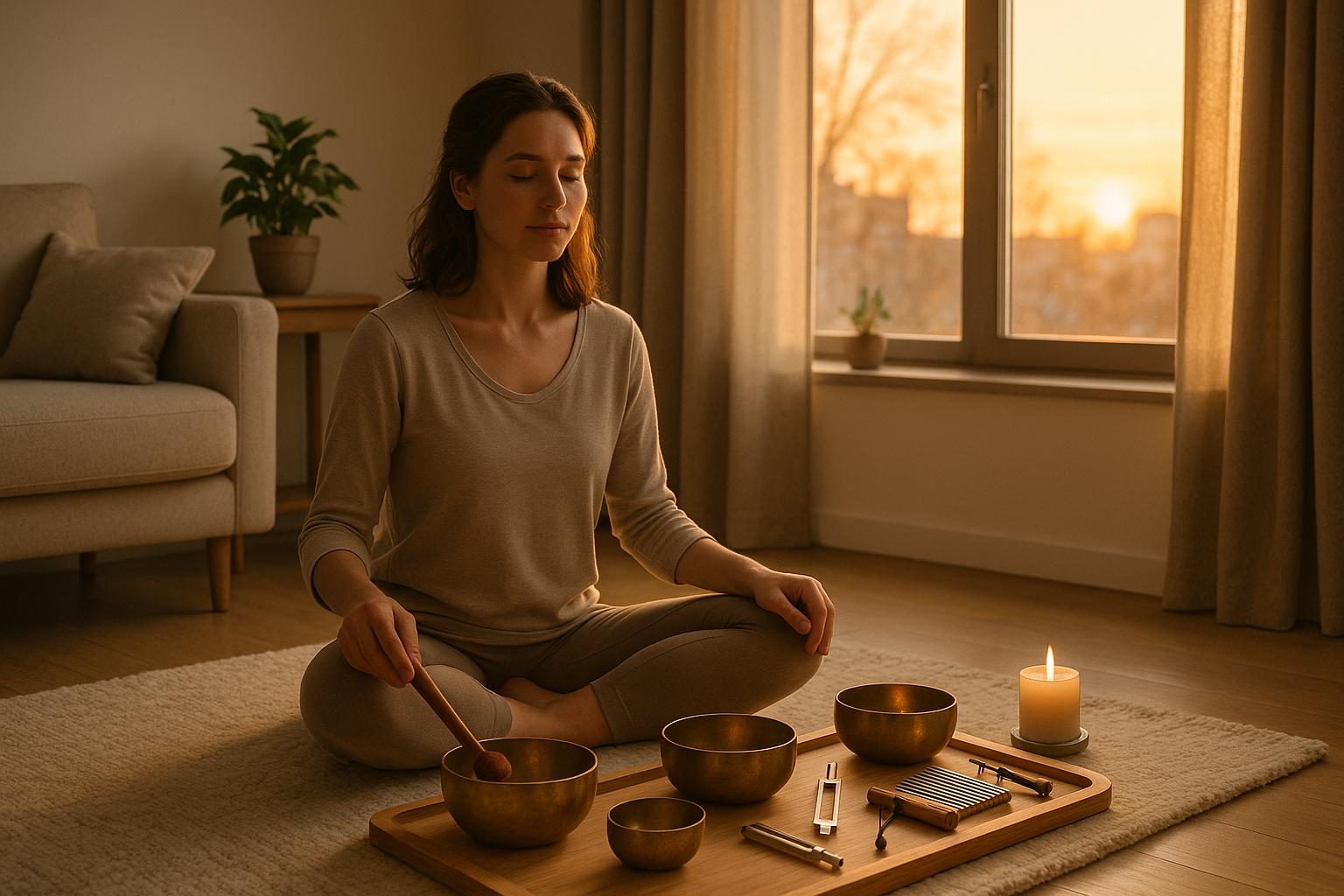
Sound therapy is a simple way to reduce stress, improve focus, and boost emotional balance using sounds, frequencies, and vibrations. Here’s how you can start:
- Benefits: Lowers stress, reduces blood pressure, boosts mood, and promotes relaxation.
- Tools: Use your voice (humming, chanting) or instruments like Tibetan bowls, tuning forks, or rainsticks (starting at $14).
- Setup: Create a quiet, cozy space with soft lighting, cushions, and calming scents.
- Routine: Start small (5–10 minutes daily), set a goal (e.g., relaxation or focus), and use breathing exercises to prepare.
- Techniques: Experiment with vocal toning, instrument sounds, or passive listening like nature sounds or binaural beats.
- Consistency: Short, regular sessions are more effective than long, infrequent ones.
Sound therapy is flexible – fit it into mornings, evenings, or even during daily tasks. With practice, it can be a powerful tool for managing stress and improving well-being.
How To Do A Sound Healing Session: Techniques for bowls, gongs, flutes, chimes and more!
Getting Ready for Your Daily Sound Therapy Practice
How you prepare for your sound therapy sessions can make all the difference. A thoughtfully arranged space can transform your practice into a calming daily ritual, allowing the soothing vibrations to work their magic and help you unwind.
Creating Your Sound Therapy Space
Start by carving out a peaceful, distraction-free area in your home. This could be a quiet corner of your bedroom, a section of your living room, or even a small spare room. The goal is to create a space that invites relaxation.
To make the area acoustically and visually calming, soften harsh echoes with rugs, curtains, or cushions. These not only improve sound quality but also add a cozy touch. If external noise is an issue, consider using acoustic panels or even hanging artwork to dampen the sound.
Lighting is another key element. Swap out bright overhead lights for softer options like candles, fairy lights, or a Himalayan salt lamp. These gentle light sources signal to your body that it’s time to relax. Adding plants can also enhance the space; they not only improve air quality but naturally absorb sound, making the environment even more serene.
Lastly, personalize the space with meaningful items. A small altar or a few cherished objects can serve as a symbolic start to your healing session, grounding you in the moment. With your space ready, it’s time to choose the tools that will guide your practice.
Picking Your Sound Therapy Tools
Your voice is the simplest and most accessible tool for sound therapy. Practices like vocal toning or chanting require no equipment and can deliver quick, noticeable benefits.
If you’re ready to explore instruments, there are plenty of options to enhance your sessions. Tibetan singing bowls and steel tongue drums are popular choices for beginners. Tibetan bowls start around $50, while steel tongue drums are typically priced from $100. Both produce rich, layered sounds that many find deeply calming.
Tuning forks are another excellent choice, offering precise frequencies in a lightweight, portable form. A single tuning fork costs about $40, and you can choose between weighted versions for physical tension relief or unweighted ones for meditation and relaxation.
For a gentler approach, consider kalimbas (starting at $26) or rainsticks (around $14). These instruments are easy to use and produce naturally soothing tones. Koshi chimes, priced at roughly $45, create soft, angelic sounds with minimal effort.
If you’re drawn to more ethereal tones, crystal singing bowls might be worth the investment. While they are pricier than Tibetan bowls, their sustained, otherworldly sounds can add a unique dimension to your practice. Experimenting with different instruments will help you discover what resonates most with your personal preferences.
Extra Items for Comfort
To make your sessions even more enjoyable, consider adding a few comfort items to your setup.
Strategically placed pillows can provide support for your head, neck, or knees, ensuring that you remain comfortable throughout your session. An eye mask can help block out visual distractions, allowing you to focus entirely on the sounds. Keeping a soft blanket nearby is also a great idea for added coziness.
To enhance the ambiance, use essential oils or incense. Scents like lavender or sandalwood can help you relax faster and create a multi-sensory environment that complements the sound therapy. If you’re using singing bowls, a grip shelf liner placed underneath can help them resonate fully without slipping.
Himalayan salt lamps are another thoughtful addition. They provide soft, calming lighting and are said to release negative ions, which many people find soothing. While not strictly necessary, these extras can help establish a comforting ritual, signaling to your mind and body that it’s time to unwind.
Keep your comfort items organized and within easy reach so you can set up your space quickly each day. This will make it easier to stick to your routine and fully enjoy the benefits of sound therapy.
How to Build Your Sound Therapy Routine
Now that you’ve set up your environment and gathered your tools, it’s time to focus on creating a sound therapy routine that works for you. Consistency and structure are key to making the most of your practice.
Setting Your Session Goal
Before diving into a sound therapy session, take a moment to define your goal. What do you want to achieve? This intention will guide your experience and help you stay focused. Common goals include reducing stress, improving focus, releasing pent-up emotions, preparing for better sleep, or rebalancing your energy. Your intention could be as simple as "I want to feel calm and centered" or more specific, like "I want to let go of the tension from today’s work challenges."
Spend about 30 seconds reflecting on your purpose. You might jot it down in a journal, say it out loud, or simply hold it in your thoughts. The key is to make it personal and focused on the present. Choose an outcome you can recognize once it happens.
Getting Your Body and Mind Ready
Preparing your body and mind before a session can enhance its benefits. Transitioning from the busyness of daily life into a more relaxed state takes a little effort but is well worth it. Start by disconnecting from technology at least 10 minutes beforehand – silence your phone, close your laptop, and step away from screens. This brief digital break helps your nervous system begin to unwind.
Try deep breathing exercises to ease into relaxation. The 4-7-8 breathing technique works well: inhale for 4 seconds, hold for 7, and exhale for 8. Repeat this cycle a few times to signal your body that it’s time to relax.
Physical comfort is equally important. Stay hydrated by drinking water before your session, but avoid overdoing it. If you’ve eaten recently, wait about 30 minutes to allow your body to digest. Throughout the day, eating fresh foods and avoiding too much sugar or caffeine can also help you settle into your session more easily.
Doing Your Sound Therapy Session
When you’re ready to begin, the methods you use will depend on your tools and preferences, but a few general tips can help guide your practice.
Start small, especially if you’re new to sound therapy. Begin with 5–10 minute sessions and gradually increase the duration as you get more comfortable. This gradual approach helps you build a sustainable routine without feeling overwhelmed.
For vocal techniques, you can try simple practices like humming or chanting. The sound "Aum" (or "Ohm") is an excellent starting point, as it resonates deeply within the body. If you’re more comfortable, experiment with longer vocal tones to amplify the vibrations and enhance relaxation.
If you’re using instruments like singing bowls or tuning forks, start with gentle movements. Strike a singing bowl softly and let the tone fully fade before creating the next sound. With tuning forks, you might use them in the morning to stimulate your energy centers or explore different frequencies during your session.
Sync your breathing with the sounds you create or hear. Breathe in during silent moments and exhale as you produce or focus on tones. This rhythm not only deepens your relaxation but also keeps you present in the moment.
For a richer experience, layer different sounds thoughtfully. For instance, you could begin with chimes, follow with the sustained tones of a singing bowl, and finish with soft vocal toning. This creates a deliberate flow rather than a random mix of noises.
If you prefer passive listening, consider starting with nature sounds or a calming playlist. You might also explore binaural beats with headphones to promote relaxation, focus, or sleep.
Throughout your session, stay mindful. If your thoughts drift, gently bring your attention back to the sounds and sensations. Wrap up your practice with 1–2 minutes of silence to let the vibrations settle and fully absorb the experience.
sbb-itb-593149b
Making Your Routine Work Better for You
Once you’ve established a therapy routine, the next step is to shape it around your lifestyle. Sound therapy thrives on its ability to adapt, giving you the freedom to experiment and find what truly works for you.
Trying Different Types of Sounds
Explore a variety of sounds to see which ones have the most positive impact on you. Start by creating a personal playlist of music or ambient sounds that resonate with you emotionally. Pay attention to how each sound affects your mood and energy levels. For instance, you might create separate playlists for "fast" and "slow" tracks – faster music can boost energy (or even create tension), while slower sounds are more likely to encourage relaxation. This way, you can align your sound therapy with how you’re feeling in the moment.
You can also experiment with sound frequencies. While most modern music is tuned to 440 Hz, some studies suggest that 432 Hz may help lower heart rate and encourage relaxation more effectively. Nature sounds like ocean waves, forest ambiance, or rainfall can also create a calming environment, often evoking peaceful memories. White noise, on the other hand, is great for blocking out distractions, making it especially useful for sleep or staying focused.
Once you’ve identified the sounds that work best for you, think about ways to incorporate them into other wellness activities.
Mixing Sound Therapy with Other Activities
Pairing sound therapy with practices like yoga or breathing exercises can deepen your relaxation. For example, sound frequencies can help you focus during yoga, syncing your movements and breath to create a more meditative experience – especially during restorative poses like the final resting posture.
Breathing exercises, such as alternate nostril breathing (Nadi Shodhana), or chanting simple mantras like "Om", can also amplify the calming effects. If you’re someone who thrives in a group setting, consider joining sound therapy or meditation sessions to connect with others while practicing.
Fitting Sound Therapy into Your Daily Schedule
Once you’ve refined your sound therapy preferences, the next step is to weave them into your daily routine. The good news? It doesn’t require a huge time commitment. Even a few minutes a day can make a noticeable difference in reducing stress. Simple acts like humming a tune you love or listening to a short clip of nature sounds can help ground your mind before diving into a busy day.
Many people find that incorporating sound therapy into their mornings – using tools like tuning forks or gentle nature sounds – helps set a calm, focused tone for the day. Similarly, a guided sound meditation in the evening can help you unwind and prepare for better sleep.
You can also make sound therapy part of your multitasking routine. Play calming music while commuting, working, or tackling household chores. Mobile apps make this even easier, offering sessions that range from 3 to 20 minutes, so you can fit them into your schedule without much effort. Whether it’s a quiet corner at home or a peaceful moment in your car during a break, having a designated space for your practice can make it feel more intentional.
The key is consistency. Short, regular sessions often have a greater impact than infrequent, longer ones. Focus on building a habit, even if it’s just a few minutes at a time. Over time, these small moments can add up to big benefits.
Solving Problems and Staying Consistent
Most challenges can be managed with practical solutions.
Dealing with Common Problems
Once you’ve established your routine, it’s normal to encounter a few hurdles. Here’s how to tackle some of the most frequent issues:
Noisy surroundings can interfere with sound therapy. If your environment is bustling or distracting, try noise-canceling headphones or a white noise app to create a calm auditory space. These tools can help you maintain focus and consistency, even in less-than-ideal conditions.
If privacy is limited, adjust your timing or location to secure uninterrupted moments. Early morning or late evening sessions might offer the solitude you need for a more focused practice.
Trouble focusing during sessions is another common issue, especially for beginners. Understand that it’s natural for your mind to wander. Instead of being hard on yourself, gently redirect your attention back to the sounds. As Deb Phelps, a certified Mindfulness and Meditation Teacher, puts it:
"Creating a personal sound healing routine can be a great way to promote relaxation, reduce stress, and enhance your overall sense of well-being".
Physical discomfort may arise if you’re sitting in one position for too long. Explore different postures – use a supportive chair, lie down, or even try a walking meditation with headphones. The key is finding what feels most comfortable for you.
Emotional overwhelm can happen if unexpected feelings or memories surface during your practice. If this occurs, remember that you are in control. It’s okay to pause, take a break, or switch to gentler sounds that feel more manageable for your emotional state.
Keeping Up Your Practice
After addressing these challenges, the next step is to maintain consistency in your practice.
Even a few minutes a day can lead to lasting benefits. Treat your sound therapy sessions like an important appointment – schedule a regular time to make it a habit. As the saying goes:
"I have so much to accomplish today that I must meditate for two hours instead of one".
If your routine changes or you’re traveling, plan ahead. Download offline sound therapy apps, invest in good headphones, and consider portable tools to keep your practice going wherever you are. Flexibility is key; whether you have a long session or just a few minutes, every effort adds to your overall well-being.
Getting Professional Help
While self-guided practice is valuable, working with a trained sound therapy practitioner can take your experience to the next level. Professionals can recommend the best frequencies and techniques tailored to your specific needs, whether you’re dealing with chronic stress, sleep issues, or emotional challenges.
Group sessions, like sound baths or guided meditations, are another great option. They not only introduce you to new techniques but also provide a sense of community and accountability.
If you have specific health concerns – such as pregnancy, a heart condition, or sensitivity to certain sounds – always inform your practitioner. It’s important to pause if a session feels too intense. For advanced techniques like frequency healing or vocal toning, professional guidance ensures the practice aligns with your lifestyle and goals.
Incorporating expert advice can strengthen your practice and help you maintain steady progress.
Conclusion: Making Sound Therapy Part of Your Life
Sound therapy offers a powerful way to improve well-being by calming the mind, easing tension, and supporting emotional balance. Studies show it can help reduce feelings of anger, fatigue, anxiety, and depression while promoting a sense of spiritual connection. Best of all, you don’t need elaborate equipment – simple tools like smartphone apps or Tibetan bowls can get you started. Whether you’re drawn to binaural beats or the soothing tones of singing bowls, the key is to make it a regular part of your routine.
This simplicity is why sound therapy fits so naturally into daily wellness habits. Bethann Schacht, Director of Aurora Counseling Associates, emphasizes its potential:
"If sound therapy becomes part of your lifestyle – similar to healthy eating and exercise – you should see consistent results."
Research backs this up. A review of 400 studies highlights music’s ability to lift mood and reduce stress. Low-frequency sound therapy has even been shown to ease chronic pain and reduce reliance on pain medication for conditions like fibromyalgia.
How to Make Sound Therapy Work for You
Here are some practical tips to seamlessly integrate sound therapy into your life:
- Start small. Dedicate just 5–10 minutes a day to sound therapy. Whether it’s part of your morning routine or a calming bedtime ritual, short, consistent sessions can lead to lasting benefits.
- Fit it into your schedule. Sound therapy doesn’t have to disrupt your day. Listen to binaural beats during your commute or enjoy a singing bowl session during a weekend meditation.
- Experiment and explore. Everyone responds differently to sound. Try a variety of options – nature sounds, frequency healing, or guided sound baths – until you find what resonates with you most.
- Keep track of your journey. Use a simple journal to note which sounds you used, how long you listened, and how you felt afterward. Tracking your progress can help you stay motivated and see patterns of improvement in areas like stress and sleep.
- Pay attention to your body. Sound therapy should feel soothing, not overwhelming. If certain tones or frequencies feel too intense, adjust the volume, duration, or type of sound.
The goal isn’t to achieve perfection – it’s about consistency. By weaving sound therapy into your daily life, you’re creating a practice that helps manage stress, supports emotional health, and even relieves chronic conditions. Over time, this small step can lead to meaningful improvements in your mental, physical, and spiritual well-being. Your future self will thank you for making this commitment to self-care.
FAQs
What are the best sound therapy tools for beginners?
If you’re just beginning with sound therapy, it’s a good idea to start with simple, easy-to-use instruments like singing bowls, tuning forks, or hand drums. These tools produce gentle, soothing sounds that can help you relax and unwind.
When picking an instrument, focus on what feels right to you both emotionally and physically. Trust your gut – choose something that brings you a sense of peace and comfort. It’s also worth investing in well-made tools to ensure better sound quality and long-lasting use. Starting with these basics allows you to gradually explore and develop a sound therapy practice that fits into your daily routine.
Can I combine sound therapy with other wellness practices for better results?
Sound therapy pairs seamlessly with wellness practices like yoga, meditation, or mindfulness exercises. When combined, these techniques can deepen relaxation, ease stress, and support overall well-being.
Adding sound therapy to your routine can help unlock deeper emotional release, sharpen focus, and create a better sense of physical and mental balance. This blend of practices often leads to a more harmonious and calming experience in daily life.
How can I stay focused during sound therapy sessions if my mind keeps wandering?
If you find your thoughts drifting during sound therapy, try using a focal point to keep your attention steady. This could be something like focusing on your breath, repeating a simple mantra, or tuning into the soothing sounds around you. When your mind starts to wander, gently guide it back to this anchor.
It’s also important to set up a calm, distraction-free space. Turn off any notifications, lower the lights, and choose a quiet spot where you can fully immerse yourself. If you’re just starting out, begin with shorter sessions and gradually increase the time as you get more comfortable. Remember, both focus and relaxation are skills that take time and practice to develop, so be kind to yourself as you learn.
