
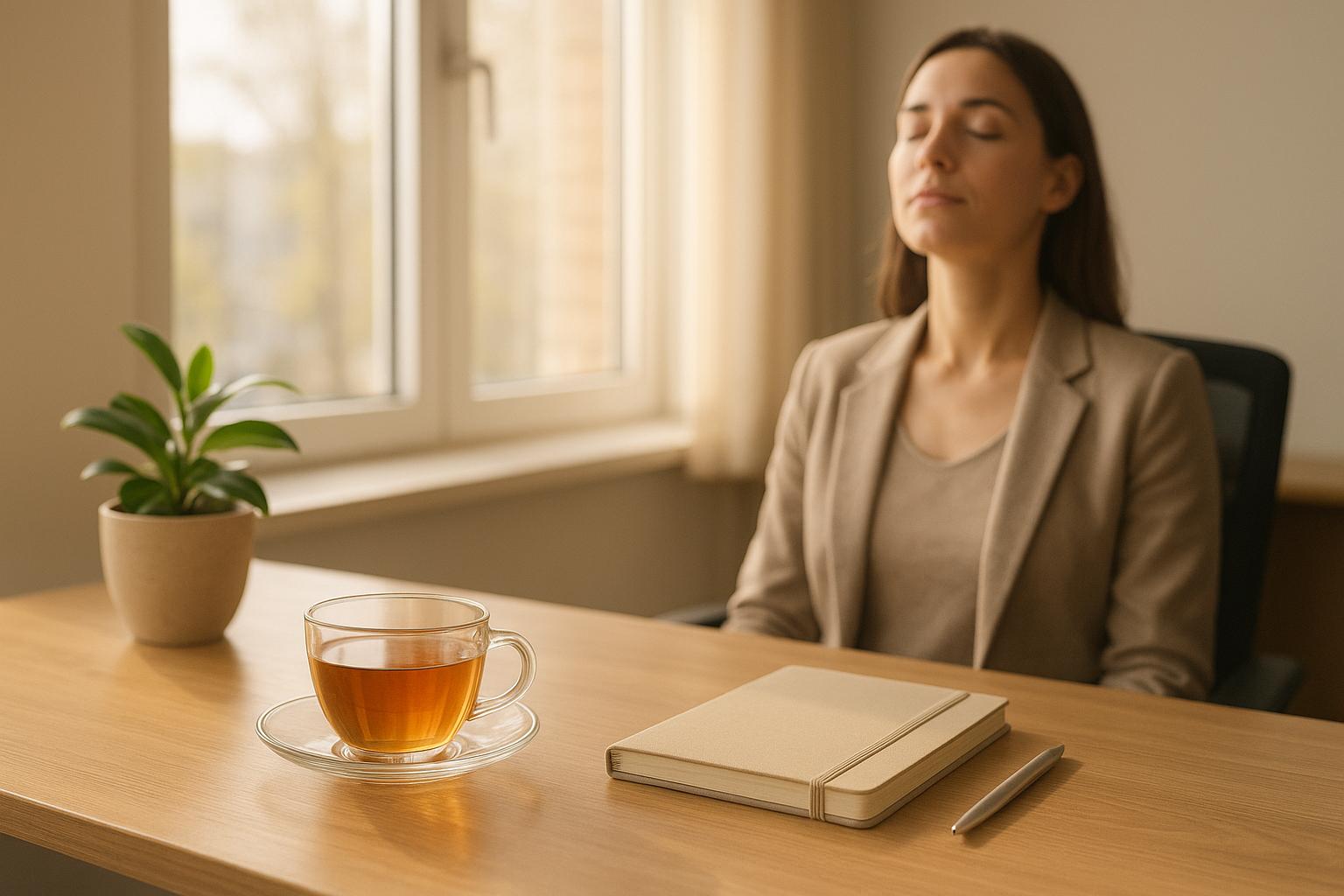
When work stress feels overwhelming, simple breathing exercises can help you regain calm and focus. Studies show that controlled breathing reduces stress hormones, lowers blood pressure, and improves focus – all without special tools or much time. Here are five effective techniques you can try:
- Diaphragmatic Breathing: Deep belly breathing to relax and reduce physical tension.
- Box Breathing: A structured pattern of inhaling, holding, exhaling, and pausing for quick resets.
- Equal Breathing: Matching inhale and exhale lengths to balance energy and soothe the mind.
- Breath Focus Technique: Pairing deep breaths with calming words for mental clarity.
- Synced Breathing: Using visual or audio cues to guide your breathing rhythm for instant grounding.
Each method is discreet, quick, and easy to incorporate into your day. Whether you’re preparing for a meeting or taking a short break, these exercises can help you manage workplace anxiety effectively.
2 breathing techniques that reduce anxiety in real time (doctor demo)
1. Diaphragmatic Breathing
Diaphragmatic breathing is a simple yet powerful exercise to help ease workplace anxiety. By focusing on slow, deep breaths that engage your diaphragm, this technique can quickly calm your nervous system and promote relaxation.
"Diaphragmatic breathing is sometimes referred to as belly, deep, relaxed, or abdominal breathing. It optimizes use of the main muscle of breathing, the diaphragm, resulting in slower, deeper breathing."
– Shilagh A. Mirgain, PhD, Janice Singles, PsyD, and Adrienne Hampton, MD
Why It Helps with Workplace Anxiety
When you’re stressed at work, your body often shifts into "fight or flight" mode, flooding you with stress hormones. Diaphragmatic breathing counteracts this by activating your parasympathetic system, which stimulates the vagus nerve to help you relax.
The Cleveland Clinic highlights its benefits:
"Diaphragmatic breathing is meant to help you use the diaphragm correctly while breathing. This breathing technique offers several benefits to your body including reducing your blood pressure and heart rate and improving relaxation."
Studies back this up, showing that regular practice can improve heart rate variability (HRV), a key indicator of stress resilience. For example, a 2010 study found that slow abdominal breathing reduces the "fight-or-flight" response while boosting vagal activity.
How to Practice Diaphragmatic Breathing
You don’t need any special equipment or space to try this technique – it’s something you can do right at your desk. Here’s how:
- Get Comfortable: Sit with your shoulders, head, and neck relaxed. Place one hand on your chest and the other on your abdomen.
- Observe Your Breath: Pay attention to how you naturally breathe.
- Inhale Deeply: Breathe in slowly through your nose, directing the air toward your lower belly. Let the hand on your abdomen rise while keeping the one on your chest still.
- Exhale Slowly: Breathe out through pursed lips, tightening your abdominal muscles to lower your hand.
- Repeat: Practice for 5 to 10 minutes, aiming for three to four sessions a day. As you get used to it, you can gradually increase the duration.
When to Use It at Work
This technique is incredibly versatile and can be used whenever you feel the need to reset. Christopher Bergland from The Athlete’s Way explains:
"Diaphragmatic breathing (also referred to as ‘slow abdominal breathing’) is something you can do anytime and anywhere to instantly stimulate your vagus nerve and lower stress responses associated with ‘fight-or-flight’ mechanisms."
Whether it’s before a big meeting, during a tense phone call, or in moments when your workload feels overwhelming, diaphragmatic breathing can provide immediate relief. Plus, with regular practice, it can build your resilience to workplace stress over time.
2. Box Breathing
Building on basic breathwork techniques, box breathing introduces a steady rhythm that’s perfect for quick mental resets during a hectic workday. Also known as square breathing, this method follows a four-step cycle: inhaling, holding your breath, exhaling, and holding again – each for an equal count. The “box” refers to these four equal parts, creating a balanced and structured breathing pattern.
Why Box Breathing Eases Workplace Stress
Box breathing helps shift your body out of its fight-or-flight mode and into a calmer state by engaging the parasympathetic nervous system.
"Box breathing bleeds off excess stress and gives you a handy, on-demand tool to avoid taking on any more stress than you can handle." – Mark Divine, creator of the SEALFIT and Unbeatable Mind fitness programs
Studies back this up: deep breathing techniques, like box breathing, can reduce cortisol levels and improve focus. A 2024 study even found that box breathing was 99.2% effective in regulating breathing frequency for individuals with COPD.
Dr. Melissa Young, an integrative medicine expert, highlights why this technique is so accessible:
"I love breathwork because it’s easy, it can be done anywhere and it has a potent effect on your physiology. It’s really very powerful."
How to Practice Box Breathing at Work
The simplicity of box breathing makes it perfect for use right at your desk. Here’s how to get started:
- Sit comfortably with your feet flat on the floor and your back supported. Close your eyes or softly gaze ahead.
- Inhale deeply through your nose for a count of four, filling your lungs completely.
- Hold your breath for a count of four, staying relaxed.
- Exhale slowly through your mouth for a count of four, emptying your lungs.
- Pause for another count of four before starting the cycle again.
Repeat this process for at least three cycles or practice for around 30 seconds to feel more grounded and in control. If four counts feel too long, begin with two or three seconds per step and work your way up as you get comfortable.
This technique can be especially helpful before tackling high-pressure tasks or as a quick midday reset to regain focus.
When to Use Box Breathing During the Day
Mark Divine, who relied on this method during his Navy SEAL training, emphasizes its versatility:
"I used it every day in SEAL training … it helped me graduate as the honor man, [the] No. 1 graduate. Now I use it for every challenging situation and practice it daily."
Box breathing is particularly useful before nerve-wracking events like presentations or tough conversations. It’s also a great way to center yourself when your workload feels overwhelming. Divine suggests integrating it into your daily routine:
"I recommend to start with a minimum of 5 minutes just after waking up, or after coming home from work before walking in the door. It can be added to your meditation practice. Do the box breathing first, and it will settle you into a deeper mental state for meditation afterward."
Much like diaphragmatic breathing, box breathing is subtle yet effective. With regular practice, it becomes a go-to tool for managing workplace stress, helping you slow down and signal to your brain that it’s time to relax.
3. Equal Breathing
Equal breathing, also known as Sama Vritti, is another practical method for managing workplace stress. Unlike box breathing, which involves a four-step pattern, this technique focuses on creating balance by making your inhales and exhales the same length. This steady rhythm helps your nervous system find calm during challenging moments at work. Plus, it’s easy to incorporate into even the busiest of schedules.
Why Equal Breathing Helps You Stay Balanced
Research highlights that equal breathing increases oxygen flow to the brain and lungs, aiding emotional regulation – especially useful during high-pressure situations like tight deadlines or tough conversations. By matching the length of your inhales and exhales, this technique establishes a soothing rhythm, signaling safety and relaxation to your body. It also encourages mindfulness, helping you stay present and focused under stress.
How to Practice Equal Breathing at Your Desk
One of the best parts about equal breathing is its simplicity – you can do it right at your desk. Here’s how to get started:
- Sit comfortably with your feet flat on the ground, keeping your back straight but relaxed. Let your shoulders drop naturally away from your ears.
- Breathe through your nose and count your inhales and exhales, ensuring they’re the same length (typically 3–5 seconds each). If you prefer, you can repeat a calming word or phrase instead of counting.
- Once you’re comfortable, you can add a brief pause after each inhale and exhale. This optional step deepens the calming effect without creating any strain.
- Practice for at least 5 minutes to fully experience the benefits.
Using Equal Breathing Throughout Your Workday
Like other breathing techniques, equal breathing is versatile enough to fit into different parts of your day. Use it during natural breaks – whether it’s while sipping your morning coffee, between meetings, or before giving a presentation – to regain focus and composure.
Once you’ve mastered the seated practice, try it while walking or during quick pauses. Studies show that slow breathing – around six breaths per minute – can reduce your body’s reflexive responses to high carbon dioxide or low oxygen levels, compared to faster breathing at 15 breaths per minute. This controlled approach helps you feel more in charge of your internal state, offering a simple yet effective way to handle workplace stress.
4. Breath Focus Technique
The Breath Focus Technique combines deep breathing with mental imagery and a calming word or phrase to ease tension. By tying your breath to a soothing word, you give your mind a clear task, making it easier to redirect attention away from anxious thoughts. At the same time, your body reaps the benefits of steady, controlled breathing.
Pick words or phrases that help you feel at ease, such as peace or relax. Neutral options like here, now, or okay can also work well to keep you grounded in the present moment.
Practicing the Technique
Start by sitting comfortably. As you take a slow, deep breath in, silently say to yourself, Inhaling peace and calm. When you exhale, think, Exhaling tension and anxiety.
You might prefer using just one word, like peace or calm, with each breath to create a steady rhythm. This rhythm can enhance the technique’s soothing effect. Try experimenting with different words during moments when you’re already calm to find what feels most natural and effective for you.
Using the Technique When Stress Arises
This method is especially useful for managing anxiety in the workplace. When you’re feeling overwhelmed – whether it’s before a demanding meeting or during a busy day – taking a moment to practice the Breath Focus Technique can help break the cycle of stress. It’s a simple, quick way to regain your composure and carry on with your day. Up next, learn how these techniques compare and how to seamlessly incorporate them into your daily routine.
sbb-itb-593149b
5. Synced Breathing
Synced breathing takes a slightly different approach by aligning your breath with external cues, such as visual or audio guides. This method creates a steady rhythm that can help you stay grounded, even during the most hectic workdays. Unlike techniques that require you to count your breaths, synced breathing often uses tools like animations or sound patterns to guide your pace.
Research shows that externally-paced breathing – where your rhythm is guided by something outside yourself – can improve heart rate variability more effectively than self-paced methods. For instance, following a visual cue, like a circle expanding and contracting, helps your nervous system align with this rhythm. This process activates the "rest and digest" response, calming your body and mind.
How Synced Breathing Works
The beauty of synced breathing lies in its simplicity. By following a visual guide – such as inhaling as a circle grows and exhaling as it shrinks – you can focus entirely on the rhythm without worrying about counting. This keeps the practice straightforward and accessible. Variations like box breathing also follow similar predictable patterns.
The technique works by activating the vagus nerve, which plays a key role in regulating heart rate and other automatic bodily functions. This stimulation has an almost immediate calming effect, making synced breathing an effective tool for managing stress. Think of it as an anchor that pulls you away from the chaos and helps you regain control.
Practicing During Work Hours
Synced breathing is easy to incorporate into your day, even during busy work hours. Whether you’re in a meeting, sitting at your desk, or walking between tasks, you can practice it discreetly. The key is consistency – practicing during calm moments trains your body to respond to this rhythm instinctively when stress levels rise.
Start with three to five cycles to avoid dizziness. As you grow more comfortable, gradually extend your sessions. Even a quick two-minute practice during a break can help you shift from a high-stress task to a more composed state of mind.
What makes synced breathing stand out is its ability to provide a steady rhythm amidst workplace unpredictability. When you’re up against tight deadlines or challenging conversations, this technique can be a go-to tool for staying calm and collected.
Comparison Table
Choose a breathing technique that aligns with your work environment and schedule to help manage anxiety effectively. Each method is tailored to different scenarios, offering specific benefits depending on your needs.
| Technique | Time Required | Key Benefits | Discreetness Level | Ideal Workplace Scenarios |
|---|---|---|---|---|
| Diaphragmatic Breathing | 5–10 minutes | Promotes deep relaxation; eases physical tension | Moderate | Perfect for lunch breaks, pre-meeting prep, or end-of-day wind-down |
| Box Breathing | 5–10 cycles (2–3 minutes) | Provides quick stress relief; sharpens focus | High | Great between tasks, muted conference calls, or pre-presentation nerves |
| Equal Breathing | Several breaths (1–2 minutes) | Balances energy; soothes the mind | Very High | Ideal for meetings, email reading, or moving between offices |
| Breath Focus Technique | Up to 20 minutes daily | Long-term anxiety support; enhances mental clarity | Low | Best during quiet breaks, in calm spaces, or before/after work hours |
| Synced Breathing | 2–5 minutes | Creates steady rhythm; offers immediate grounding | High | Useful for tight deadlines, tough conversations, or task transitions |
Research backs the effectiveness of these techniques, showing that even five minutes of daily breathing exercises can significantly reduce anxiety and boost mood. A quick 30-second session of deep breathing (about six breaths) has been shown to lower systolic blood pressure by 3–4 mmHg and diastolic pressure by 1 mmHg.
For those needing subtle methods, box breathing and equal breathing are highly discreet, making them perfect for use during calls or while seated at your desk. On the other hand, diaphragmatic breathing and the breath focus technique require a bit more time and a quieter setting, making them ideal for structured breaks. According to the NHS, these simple breathing exercises for managing stress, anxiety, and panic can be done in just a few minutes and practically anywhere.
For immediate grounding during high-stress moments, synced breathing is a reliable choice. Considering how much time is spent at work, incorporating these exercises into your routine can be a game-changer. Taking regular short breaks to practice these techniques not only supports your mental well-being but can also enhance job performance by reducing errors.
With this comparison, you can pick the method that suits you best. Keep reading for tips on turning these exercises into a daily habit!
Tips for Making Breathing Exercises a Daily Habit
Now that you’ve got a handle on these techniques, let’s talk about how to make them part of your everyday work routine. The good news? You don’t need to overhaul your schedule. Start small – just 1 to 5 minutes of focused breathing can help ease stress and sharpen your focus.
One easy way to stay on track is by setting automatic reminders on your phone or smartwatch. These gentle nudges can prompt you to take a quick breathing break during natural pauses in your day.
Another approach is to pair your breathing exercises with habits you already have. For instance, instead of scrolling through your phone during your morning coffee, try a quick 2-minute diaphragmatic breathing session. Or use the time you spend waiting for your computer to boot up to practice equal breathing. These small tweaks can help you build a routine without feeling forced.
Some workplaces in the U.S. are even jumping on board, offering wellness breaks and creating spaces where employees can step away for a moment of calm. If your workplace doesn’t have such options, find your own quiet spot – an empty conference room, a secluded corner, or even your car during lunch can work wonders for signaling your brain to unwind.
Technology can also lend a hand. Apps like Breathwrk, Calm, and Headspace offer guided sessions and features to track your progress. If you’re looking for free options, Breathe2Relax and Prana Breath App are great tools for effective breathing exercises without the cost.
"DBE is simple, time-efficient, and does not require specialized equipment, making it suitable for diverse settings."
– Dr. Dallin Tavoian, exercise physiology scientist at the University of Arizona
If you’re in a leadership role, you can amplify these benefits for your team. By practicing breathing exercises yourself and even starting meetings with a 30-second breathing session, you set the tone and encourage others to prioritize their mental health.
Timing can make a big difference, too. Morning breathing sessions can help set a positive tone for the day, while focused 20–30 minute practices provide deeper benefits. Quick micro-breaks – lasting 30 seconds to 5 minutes – are perfect for easing stress without disrupting your workflow. Considering that 77% of workers have reported work-related stress in the past month, these short pauses are more than just helpful – they’re essential.
Lastly, choose the technique that suits your setting. Box breathing or equal breathing works well during meetings or while seated at your desk. On the other hand, longer practices like the breath focus technique may be better for private moments. Remember, consistency in short, daily sessions will always beat sporadic, longer efforts.
Conclusion
Workplace anxiety doesn’t have to dictate your day. The five breathing exercises we’ve discussed – diaphragmatic breathing, box breathing, equal breathing, breath focus technique, and synced breathing – are simple yet powerful tools to help you regain a sense of calm and focus when stress takes hold. These techniques aren’t just helpful; they’re backed by science to provide quick relief in moments of tension.
Research supports their effectiveness: a meta-analysis of 12 studies involving 785 participants found that breathwork significantly reduces self-reported stress levels. Practicing mindful breathing activates your body’s relaxation response, lowering stress hormones, blood pressure, and heart rate. By incorporating these techniques, you’re essentially telling your brain, "I’ve got this", helping to counteract the natural threat response triggered by anxiety.
Even just two minutes of focused breathing during a hectic day – whether you’re up against a tight deadline or navigating a tough meeting – can help ground your mind and provide immediate stress relief. The best part? These exercises require no equipment – just a few moments of your time and your breath.
Making these practices a regular part of your workday can strengthen your ability to handle stress and promote overall well-being. Over time, you’re not just managing anxiety but also building a stronger foundation for resilience and balance in your daily life.
For more practical tips and strategies on mindfulness, stress management, and living well, visit Inspiretopics. It’s packed with resources to help you create a calmer, more centered work life.
FAQs
How can I use these breathing exercises at work without affecting my productivity?
Incorporating breathing exercises into your daily routine is easier than you might think and won’t disrupt your workflow. Use natural pauses in your day – like the moments before a meeting, during a coffee break, or after finishing a task. Simple techniques such as the 4-7-8 breathing method or alternate nostril breathing take just a few minutes and can help you feel more centered and less stressed.
You can also try mindful breathing at the start of your day to create a sense of calm or at the end of your workday to help you decompress. These small but consistent practices can sharpen your focus, ease workplace stress, and boost mental clarity – all without requiring much of your time.
When is the best time during the workday to use breathing exercises for anxiety relief?
The ideal moments to fit breathing exercises into your workday are during scheduled breaks – whether it’s in the morning, at lunch, or in the afternoon. They’re also a great tool for when you’re feeling stressed or overwhelmed. These exercises are quick and don’t demand much time, often taking just 2 to 5 minutes.
Another smart time to use them is right before high-pressure situations, like an important meeting or presentation. A few focused breaths can help steady your nerves and sharpen your concentration. Practicing regularly during these moments can go a long way in keeping workplace anxiety under control.
Can these breathing exercises be used alongside other techniques to better manage workplace stress?
Pairing breathing exercises with other stress-relief methods can amplify their impact. For instance, combining controlled breathing with yoga, meditation, or mindfulness techniques can help soothe the nervous system while sharpening your focus.
You might also try blending breathing exercises with physical activities like walking or stretching. This combination not only encourages relaxation but also helps create a sense of balance, making it easier to navigate workplace stress throughout the day.
