
Lost arts are being brought back to life through public efforts, blending history with modern relevance. From ancient crafts to forgotten techniques, these revivals preserve heritage, connect communities, and create economic opportunities. Here’s a quick look at 10 examples:
- Caddo Basket Weaving: Revived in Texas after 800 years, showcasing ancient hand-harvested techniques.
- Vilasini Natyam Dance: A dance from Andhra Pradesh, rediscovered in the 1990s, now celebrated for its heritage and artistry.
- Rajasthani Block Printing: Saved from decline, this 5,000-year-old textile art is thriving in global markets.
- Digital Art Restoration: AI is restoring damaged artworks faster, making hidden treasures accessible.
- American Quilting: Once a domestic craft, it’s now a celebrated art form with festivals and exhibitions.
- Native American Pottery: Reconnected to ancestral methods, it generates millions in revenue annually.
- Shaker Furniture: Minimalist designs are preserved through museum exhibits and workshops.
- Appalachian Basket Weaving: From practical craft to collectible art, it’s gaining recognition via artisan markets.
- Kintsugi: This Japanese art of repairing pottery with gold is now a global symbol of resilience.
- Medieval Manuscript Illumination: Workshops and digitization are reviving this intricate art form.
These efforts don’t just preserve history – they also strengthen economies, foster community pride, and offer educational benefits. Whether through festivals, workshops, or digital tools, these campaigns ensure that the skills and stories of the past remain part of our future.
CraftMelon – Reviving Lost Art One at a Time
1. Vilasini Natyam Dance
Vilasini Natyam is a traditional dance form from Andhra Pradesh that was almost lost to history but has been brought back to life through dedicated revival efforts. This ancient art was once performed by Telugu Devadasis – female dancer-singers who served temples, royal courts, and public theaters for over a millennium. Its resurgence underscores the impact of collective efforts in reclaiming cultural heritage.
The dance’s decline began after the Devadasi system was banned in 1947, coupled with changing societal attitudes and the rise of other classical dance forms.
In the 1990s, Swapna Sundari spearheaded the revival of Vilasini Natyam. Through meticulous research, she reconstructed its intricate techniques and repertoire. Her work revealed the dance’s depth, including over 100 adavus (basic dance units) that balance the vigorous Tandava and the graceful Lasya styles.
Swapna Sundari highlighted the enduring strength of Vilasini Natyam:
"Vilasini Natyam is an age-old dance tradition of the Telugu hereditary dancing community comprising female dancer-singers dedicated to temple-service and court-service. Its ‘classicism’ is evident in the dance itself. This form has survived for over 1,000 years on its intrinsic artistic strength. It will continue to do so through the present dedicated efforts to sustain and further it."
– Swapna Sundari
The mid-1990s marked a turning point for Vilasini Natyam. A national TV broadcast and a historic performance at a temple brought the dance back into the public eye. One of the most significant moments came in 1996 when Swapna Sundari performed at the Sri Ranganatha Swamy Temple in Hyderabad. This was the first time in post-colonial India that a living Hindu temple incorporated classical dance into its worship practices. This event reaffirmed the spiritual and cultural essence of Vilasini Natyam.
Today, the dance form enjoys recognition from institutions like the Sangeet Natak Akademi and has inspired modern practitioners such as Anupama Kylash. In 2003, Swapna Sundari received the Padma Bhushan for her outstanding contributions to dance, particularly her efforts in reviving Andhra Pradesh’s classical traditions.
Vilasini Natyam sets itself apart from other Telugu dance forms like Kuchipudi by emphasizing the Stree Sampradayam (female tradition) rather than the Purusha Sampradayam (male tradition). While staying true to its roots, the dance has also attracted a wide range of performers, including male dancers who are now exploring this art form.
2. Hand Block Printing of Rajasthan
Hand block printing in Rajasthan is one of India’s oldest textile traditions, with roots stretching back over 5,000 years. This ancient craft faced near extinction due to the rise of machine printing but was brought back to life through focused public awareness campaigns.
The Chippa community of Bagru introduced this intricate art in the 12th century. They carved motifs into wooden blocks with precision tools like chisels, then used vegetable dyes to create stunning patterns on fabric. Each design carries a deeper meaning, reflecting Rajasthan’s rich heritage. For instance, floral motifs such as lotus and jasmine represent beauty and purity, while peacocks are seen as symbols of prosperity and good fortune.
In 1981, Suraj Narain Titanwala breathed new life into his family’s struggling Bagru printing business. Today, his workshop employs 40 artisans and supplies fabric both nationally and internationally. His dedication also led to the creation of the Bagru Museum in 2019, which showcases textiles that date back centuries.
In another effort to revive the craft, Mohit Ahluwalia and Jagjyot Kaur launched Raamae in 2019. Partnering with seven Sanganer artisans, they created 30 jobs, enabling daily earnings of up to $12. Their work has reached customers in India, Sweden, and the UAE.
The revival of this art form has also been supported by organizations like AIACA, which collaborated with DastkarRanthambore in 2006 to develop a signature block-printed collection. This collection gained traction internationally through outlets like Ten Thousand Villages in the U.S..
The significance of this craft was further recognized when Sanganeri and Bagru block printing were awarded GI tags in 2009 and 2011, respectively. The Anokhi Museum now offers engaging displays about the craft, while initiatives by organizations like the Anokhi Foundation and Jaipur Rugs have helped artisans refine their skills and expand their reach globally. One unit alone now employs close to 500 locals, with artisans earning between $1.50 and $18 per suit. These efforts have ensured steady demand for this art, providing consistent work for artisans and safeguarding a tradition that might otherwise have been lost.
"We wanted to rejuvenate the art of block printing by giving them a quirky dimension that would be popular with buyers and create demand so we could give artisans more work."
– Shilpa Patel
This remarkable revival highlights how well-directed campaigns can breathe new life into traditional crafts, creating sustainable livelihoods and preserving cultural heritage.
3. Digital Restoration of Lost Artworks
Digital restoration is breathing new life into damaged and long-lost artworks, transforming how we preserve and celebrate fading cultural legacies. Thanks to advancements in technology, particularly AI, the process of restoring art has become faster and more precise, making it possible to uncover hidden treasures and share them with audiences worldwide. Unlike traditional methods that often take years, these new techniques are redefining what’s possible in art conservation.
At MIT, graduate student Alex Kachkine developed an AI-driven method that restored a 15th-century painting in just 3.5 hours – an astonishing 66 times faster than conventional approaches.
"My hope is that conservators around the planet will be able to use these techniques to restore paintings that have never been seen by the general public. Many institutions have paintings that arrived at them a century ago, have never been shown because they are so damaged and there are no resources to restore them. Because there’s a digital record of what mask was used, in 100 years, the next time someone is working with this, they’ll have an extremely clear understanding of what was done to the painting. And that’s never really been possible in conservation before." – Alex Kachkine, MIT Graduate Student
This innovation has sparked widespread adoption, reshaping art restoration practices in major museums and institutions. The numbers are staggering: around 70% of paintings in institutional collections remain in storage, unseen due to their poor condition. Digital restoration is changing this by making it possible – and affordable – to bring these works back to life.
Museums around the world are already achieving incredible results using these methods. The Rijksmuseum in Amsterdam, for instance, applied high-resolution imaging and AI to restore Rembrandt’s masterpiece, The Night Watch. By analyzing data from a contemporary copy, they recreated sections of the canvas that had been cut off in 1715. Similarly, the PERCEIVE project digitally reconstructed the original, now-faded colors of Edvard Munch’s The Scream, giving viewers a glimpse of how it looked in 1893. In another example, the Metropolitan Museum of Art digitally restored Margareta Haverman’s A Vase of Flowers to its 1716 appearance, revealing vibrant colors that had faded over time due to the deterioration of yellow lake pigment.
One of the most exciting aspects of digital restoration is its non-invasive nature. Techniques like X-ray fluorescence and Raman spectroscopy allow for detailed analysis without damaging the artwork. AI tools can even predict potential future damage, enabling conservators to take preventive steps before deterioration occurs.
Public awareness and collaboration have played a huge role in advancing these efforts. Many museums are digitizing their collections and using blockchain technology to authenticate and track provenance. Initiatives like the Conserving Computer-Based Art Initiative (CCBA), launched in 2013 by the Guggenheim’s Joanna Phillips and New York University’s Deena Engel, show how partnerships between public institutions and private organizations can drive progress in digital preservation.
Beyond restoration, technologies like virtual reality (VR) and augmented reality (AR) are changing how we experience art. These tools allow people to explore restored artworks in their original historical context – from anywhere in the world. By doing so, they open the door for new audiences to engage with art, even if they can’t visit a museum in person.
This push toward digital restoration is more than just a technological upgrade – it’s a profound shift in how we preserve and share artistic heritage. As Professor Hartmut Kutzke from the University of Oslo’s Museum of Cultural History points out, while these methods may initially focus on less valuable paintings, they have the potential to bring countless unseen works out of storage and into the public eye.
Through these innovations, art once thought lost forever is being preserved and shared, ensuring that future generations can continue to appreciate and learn from these cultural treasures.
4. American Quilting Practices
Quilting in America has experienced a remarkable revival, transforming from a nearly forgotten domestic craft into an art form cherished across generations and communities. This resurgence owes much to public awareness efforts, community initiatives, and exhibitions that have elevated quilts from practical household items to celebrated works of art.
The modern quilting revival gained momentum in 1971 with the "Abstract Design in American Quilts" exhibit at the Whitney Museum of American Art in New York City. Curated by Jonathan Holstein and Gail van der Hoof, this groundbreaking display presented vintage quilts as modern art, challenging traditional perceptions of quilting. This exhibit not only sparked the 1970s quilting revival but also aligned with the American Bicentennial, a time when many were reconnecting with their cultural heritage. From there, festivals, workshops, and other events began to flourish, laying the foundation for today’s thriving quilting scene.
The numbers tell the story of quilting’s resurgence. The International Quilt Festival in Houston, the largest quilt show in the world, attracts over 60,000 visitors annually. Meanwhile, Paducah QuiltWeek in Kentucky draws 30,000 attendees and features 400 vendor booths, workshops, and lectures. These events highlight quilting’s evolution into a cultural phenomenon.
Across the country, modern quilting workshops are blending traditional techniques with contemporary flair. Bold colors, unconventional materials, and abstract designs have redefined the craft, moving away from the symmetry and classic patterns of the past [44,45]. This shift has drawn a new generation of quilters eager to experiment and express themselves.
"My passion is to inspire quilters to explore the fun and creative freedom in making modern quilts. I am excited about modern quilting because it is all about bringing individualism and free expression to the quilts we are making today."
- Carole Lyles Shaw
Organizations like the Modern Quilt Guild (MQG) have played a key role in this transformation. Their annual QuiltCon event, rotating between the East and West coasts, showcases hundreds of modern quilts from around the globe, drawing thousands of attendees each February. Beyond large-scale events, local community projects also contribute to quilting’s renewed popularity. For example, in 2014, artist Maria Shell worked with residents of Moore Place, a community for individuals transitioning out of chronic homelessness, to create a quilt that celebrated their journeys toward stability and connection.
The global appeal of American quilting is evident in events like the Sisters Outdoor Quilt Show (SOQS) in Oregon, which displays over 1,300 quilts and attracts more than 10,000 visitors from 25+ countries each year [46,48]. This international reach underscores how American quilting has become a cultural export, inspiring creativity worldwide.
The American Quilter’s Society (AQS) has also been instrumental in supporting this revival, hosting QuiltWeek events in multiple cities. These gatherings provide platforms for quilters of all skill levels to share knowledge and explore new techniques [47,49]. Such initiatives ensure that quilting traditions are preserved while encouraging innovation.
Quilting’s history as a medium for storytelling remains powerful. Antebellum quilts, for instance, were used by enslaved individuals to document their experiences. As historian Gladys-Marie Fry explained, these quilts "became the means by which the enslaved recorded and preserved their experiences – not in words, but in stitches… It was their personal and communal history recorded not on paper, but on fabric". Today, modern quilters continue this tradition, using their craft to address contemporary social and political issues.
Media and education have further supported quilting’s revival. Bonnie Leman’s Quilter’s Newsletter Magazine, launched in 1969, was the first publication dedicated to quilting and helped create a national community of enthusiasts.
Through a combination of exhibitions, festivals, workshops, and media efforts, quilting has been reimagined as a modern art form that respects its roots while pushing boundaries. Workshops now teach everything from improvisational techniques and scrap quilting to working with recycled materials and exploring color theory, ensuring that the craft remains both dynamic and accessible [44,45].
5. Native American Pottery Techniques
The art of Native American pottery, with its roots extending back thousands of years, continues to thrive despite facing significant challenges over time. Thanks to educational programs and cultural festivals, communities have reconnected with their ancestral pottery techniques while sharing these traditions with wider audiences. These efforts reflect a broader movement to revive traditional arts, as seen throughout this discussion.
Pioneering artists like Maria Martinez of San Ildefonso Pueblo and Nampeyo of Hano Pueblo played a crucial role in revitalizing pottery traditions during the early 1900s. Martinez brought new life to Black-on-Black pottery, while Nampeyo reintroduced ancient Sikyatki designs, ensuring these styles remained part of the cultural legacy.
Modern revival efforts have gained momentum through initiatives like the First Nations Development Institute‘s Native Arts Initiative. Between 2014 and early 2018, this program awarded 51 grants totaling over $1.4 million. These grants supported master-apprentice instruction, community workshops led by experienced artists, and programs to help Native artists develop business skills.
Several organizations have successfully implemented these initiatives. For instance, the Zuni Youth Enrichment Project received a $30,000 grant, while the Yavapai-Apache Nation’s Tribal Artist Committee was awarded $32,000. The Santa Fe Indian School and the Oneida Nation Arts Program also utilized funding to preserve traditional arts. In 2018, the Santa Fe Indian School received $32,000 to expand its Pueblo Art Academy, where Pueblo youth learn pottery, fiber arts, and sculpture. Similarly, the Oneida Nation Arts Program in Wisconsin used its funding to support a master-apprentice program that teaches traditional art forms to local youth.
The economic impact of this revival is undeniable. Between 2010 and 2015, sales of American Indian and Alaska Native arts and crafts increased by 44%. In 2022 alone, Native American pottery generated over $55 million in revenue. Events like the annual Santa Fe Indian Market highlight this success, drawing an estimated 100,000 visitors each August and contributing over $160 million annually to artists and the local community.
"Native American art is not just about aesthetics; it’s about the stories, the histories, the cultures, and the people. It’s about the land, the ancestors, and the spirits." – Lucy Lippard, Art Historian and Critic
Today, the revival of Native American pottery blends time-honored techniques with contemporary innovations. Artists use locally sourced materials and incorporate various decoration methods – such as painting, incising, stamping, and appliqué – to reflect their cultural identity, spiritual beliefs, and clan affiliations. In the 1960s, Cochiti potter Helen Cordero introduced the now-iconic "storyteller" figure, a representation of oral tradition that has since become a symbol of Native American culture.
"The Native American art of pottery making is a medium that combines the elements of the earth in both creation and design." – Mike Daniel, Artist
Efforts to preserve the authenticity of Native American pottery also address challenges like counterfeit products. Public awareness campaigns encourage financial support for Native artists, promote effective marketing, and emphasize participation in exhibitions.
The resurgence of Native American pottery showcases how targeted educational programs, community-driven initiatives, and public exhibitions can breathe new life into traditional art forms. By fostering master-apprentice relationships, engaging communities, and supporting artists through institutional resources, these ancient techniques not only endure but also adapt to modern contexts, ensuring their legacy for generations to come.
6. Shaker Furniture Craftsmanship
The craftsmanship of Shaker furniture, once practiced by over 6,000 members across 18 communities, faced near extinction after the closure of Shaker villages in the early 20th century. Today, museum exhibits and workshops breathe new life into these age-old techniques, making them accessible to modern-day artisans.
Museums play a key role in preserving Shaker heritage. The Metropolitan Museum of Art’s American Wing features the iconic Shaker Retiring Room, which includes original architectural elements from the North Family Dwelling at Mount Lebanon, New York. Visitors can explore built-in cupboards, signature pegboards, and minimalist furnishings that highlight the Shakers’ dedication to practicality and simplicity [61,63].
"The simple, timeless aesthetic of Shaker design is preserved here for future generations to study and admire." – Nicholas C. Vincent, The American Wing, The Metropolitan Museum of Art
The 1930s documentation efforts by Faith and Edward Deming Andrews sparked renewed interest in Shaker design, encouraging museums to delve deeper into its preservation.
Modern exhibitions continue to celebrate this legacy. For example, the Currier Museum partnered with Canterbury Shaker Village to present "The Shakers and the Modern World", an exhibition held from October 12, 2019, to February 16, 2020. The display included authentic Shaker furniture, along with boxes, buckets, and historical documents. Similarly, the Shaker Village of Pleasant Hill hosted "Spark! Places of Innovation" in March 2024, integrating Shaker artifacts to explore rural ingenuity.
Beyond museum displays, hands-on workshops provide a direct connection to Shaker woodworking techniques. The Center for Furniture Craftsmanship offers immersive one- and two-week courses where participants learn traditional methods under expert instruction. Meanwhile, LA Woodshop provides practical classes priced between $299 and $850, making these skills accessible to a broader audience.
The enduring appeal of Shaker furniture lies in its forward-thinking design. Museum curator Berry B. Tracy highlighted how Shaker craftsmanship "anticipated modern functional design". Its focus on clean lines, high-quality materials, and purposeful construction resonates with contemporary values, particularly in sustainability, where durability is prized over disposability.
The significance of Shaker furniture extends beyond its craftsmanship. It represents a uniquely American design tradition, untouched by European influence, and rooted in local resources like pine, maple, and cherry. As early as 1876, this distinctiveness was recognized when the Mount Lebanon ladder-back chair earned a medal at the Philadelphia Centennial Exhibition for its "strength, sprightliness, and modest beauty".
Efforts to revive Shaker furniture bridge historical authenticity with modern relevance. Museums preserve its legacy through documentation and immersive exhibits, while workshops equip new generations with practical skills. Together, these initiatives ensure that Shaker craftsmanship continues to inspire, offering lessons in quality, simplicity, and intentional design. This revival not only honors the past but also aligns with modern movements toward sustainable and thoughtful creation.
sbb-itb-593149b
7. Appalachian Basket Weaving
Appalachian basket weaving, once a purely practical craft, has experienced a revival that blends tradition with modern creativity. This resurgence is fueled by local artisan markets, storytelling events, and initiatives that celebrate the region’s rich heritage. What was once a utilitarian skill is now recognized as a meaningful art form that connects history with contemporary expression.
One of the key players in this revival is the Southern Highland Craft Guild. Established in 1930, the guild has been instrumental in creating opportunities for craftsmen across nine states. In 1948, they introduced the Craft Fair of the Southern Highlands in Asheville, a biannual event that provides a platform for basket makers to showcase their work and earn income through their craft.
Tourism and local markets have also played a role in elevating Appalachian baskets from functional objects to collectible art pieces. These markets not only bring buyers closer to these handmade treasures but also expose artisans to fresh techniques and patterns, sparking innovation in the craft. As Ruby Dillon insightfully noted:
"Ironically enough, the sales go back to these old style baskets…People say, ‘These are nice,’ and people who do baskets all say ‘I want one of them,’ but people who want to buy a basket, they like to go back to the old styles."
This appreciation for traditional styles is reinforced by events that celebrate regional heritage. The Cherokee Indian Fair, which began in 1912 as a local farmers’ gathering and expanded by 1914 to a tribal-wide event, continues to honor native artistry. Similarly, the Qualla Arts and Crafts Mutual, founded in 1946, preserves traditional techniques and provides a platform for Cherokee artisans.
Storytelling events further strengthen these efforts to preserve Appalachian traditions. West Virginian storyteller Adam Booth, a frequent speaker at schools and folklife events, emphasizes the broader significance of storytelling:
"Good storytelling isn’t just about telling a good story. Storytelling is a preservation of community, heritage, history and folklife."
These gatherings do more than entertain – they ensure that regional traditions, including basket weaving, remain alive and relevant.
Modern initiatives are adding new energy to this revival. The Appalachian RC&D Council, for instance, is hosting the "Ag in Art 2025: Land Based Craft Series" workshops in Jonesborough, Tennessee, which include hands-on basket weaving and willow planting sessions. Meanwhile, the Berea College Appalachian Fund supports organizations that enrich central Appalachian life through folk arts, and the National Basketry Organization champions both traditional and contemporary basket making. Today’s basket makers continue to honor their craft’s roots while reimagining its possibilities, ensuring that this art form thrives for future generations.
8. Japanese Kintsugi (Golden Joinery)
The ancient Japanese art of kintsugi, which translates to "golden joinery", has gained renewed global attention, thanks to social media and growing interest in its profound philosophy. Originating in the 15th century, this practice involves repairing broken pottery with lacquer mixed with powdered gold, creating something both functional and beautiful. Beyond its aesthetic appeal, kintsugi carries a powerful message: there is beauty in imperfection and strength in embracing flaws.
Kintsugi’s roots can be traced back to Japan’s Muromachi Period (1336–1573). Legend has it that shogun Ashikaga Yoshimasa, dissatisfied with the crude metal staples used to fix his broken tea bowl, sought a more refined solution. This led to the development of kintsugi, which soon became closely associated with the tea ceremony and the wabi-sabi philosophy – a worldview that finds beauty in imperfection and the transient nature of life. Over centuries, this art form became a symbol of resilience and renewal.
Tea master Christy Bartlett captures the essence of kintsugi, stating:
"Not only is there no attempt to hide the damage, but the repair is literally illuminated… a physical expression of ‘mushin’ – living fully in the moment and embracing non-attachment."
In recent years, kintsugi has experienced a revival, fueled by platforms like Instagram and a broader fascination with Japanese culture. Young artisans, such as 29-year-old Chiari Matsumoto from Tokyo, are leading this movement. Matsumoto transitioned from a marketing career to kintsugi during the COVID-19 pandemic. Today, she repairs ceramics and jewelry, blending traditional techniques with contemporary designs, and hosts international workshops to share the art form with a global audience.
Kintsugi is more than just a craft – it’s a metaphor for healing and self-acceptance. As modern practitioner Hiroki Kiyokawa explains:
"The good thing about kintsugi is that even if something is broken, cracked, or damaged, it can be revived or redone. And if we look deeply, it is the same for us."
The traditional kintsugi process includes three main techniques:
- Crack method: Repairs cracks with fine golden lines.
- Makienaoshi method: Fills missing fragments with a golden adhesive.
- Joint method: Combines pieces from different broken ceramics to create something entirely new.
Authentic kintsugi relies on urushi lacquer mixed with powdered gold, preserving its rich tradition.
Cultural institutions and artisan workshops have been pivotal in keeping this art alive. For example, in July 2021, ZEN, a brand founded by Watanabe Atsuko in Tōno City, Iwate Prefecture, began showcasing restored ceramics at The Shop at Japan House London. These efforts not only honor traditional techniques but also introduce kintsugi to new audiences worldwide.
The repair process itself is slow and meditative, often taking months to complete. This deliberate pace reflects kintsugi’s philosophy: true beauty lies in the story of resilience and renewal, not in flawless perfection. Kiyokawa emphasizes that kintsugi’s spiritual essence is universal, making it accessible across cultures and backgrounds.
The modern resurgence of kintsugi highlights how ancient wisdom can resonate in today’s world. By transforming broken objects into something even more beautiful, kintsugi has evolved into a global movement – a celebration of imperfection, healing, and the strength found in embracing life’s cracks and scars.
9. Medieval Manuscript Illumination
The art of medieval manuscript illumination, once primarily reserved for religious texts and royal commissions, is experiencing a resurgence, thanks to workshops and collaborations with historical societies. These efforts bridge the gap between ancient craftsmanship and contemporary artistic expression.
Educational institutions across the United States are at the forefront of this revival. They offer workshops at accessible prices, often including all necessary materials. For example, St. Gregory’s Hall hosts one-day sessions where participants create medieval paints and reproduce 15th-century designs. Scholé Academy offers courses in Byzantine manuscript illumination, while Glencairn Museum runs immersive four-day workshops focusing on techniques from the Late Medieval period.
These workshops welcome participants of all skill levels, teaching essential techniques like medieval drawing, painting, calligraphy, and the intricate application of gold leaf. The atmosphere is both meditative and engaging, providing hands-on learning opportunities. Historical societies and museums enhance the experience by granting access to original manuscripts and expert instructors. In April 2023, Purdue University Libraries hosted a special workshop with Dr. Will Noel from Princeton University. Attendees examined medieval manuscripts from Purdue’s Archives and Special Collections, with archivists offering insights that even resolved some long-standing scholarly questions.
Much like other revived arts, illuminated manuscripts now play a dual role: preserving historical scholarship while fueling modern creativity. Workshops often cover a variety of styles, from Romanesque to Celtic, giving participants a deeper appreciation of these intricate techniques.
The impact of this revival is far-reaching. Remarkably, more medieval books have survived from the Middle Ages than any other form of art. Efforts like the Vatican Library‘s digitization of over 13,000 manuscripts (as of July 2025) are making these treasures more accessible than ever. This unprecedented availability allows both enthusiasts and scholars to explore these masterpieces in stunning detail.
Through workshops and collaborations with educational and cultural institutions, the revival of medieval manuscript illumination not only preserves ancient techniques but also inspires a new generation of artisans. By connecting the past with the present, this movement safeguards a vital piece of cultural heritage while fostering creativity in today’s world.
10. American Letterpress Printing
American letterpress printing, once the dominant method for producing books and newspapers in the 19th century, nearly disappeared in the 1970s with the rise of digital technology. Offset lithography took its place, offering lower costs and faster production for large-scale printing.
By the 1990s, however, letterpress began to make a comeback. Artists and designers rediscovered its tactile qualities – something digital printing simply couldn’t replicate. Martha Stewart Weddings magazine played a key role in this revival, showcasing elegant letterpress designs for wedding invitations and stationery. This exposure sparked a growing interest that has now spanned over three decades.
Today, independent artists and small businesses are leading the resurgence of letterpress printing across the United States. Organizations like Signal-Return in Detroit have become vital to this movement. Founded in 2011, Signal-Return is a nonprofit dedicated to preserving traditional letterpress techniques while fostering creativity and collaboration. Their mission highlights the enduring appeal of this craft:
"Signal-Return is leading the Detroit revival of letterpress printing – a technology that radically transformed human communication in the 15th century, and an art and a craft appreciated anew in the 21st century."
Across the country, regional hubs have emerged to support and celebrate letterpress printing. On the West Coast, Arion Press in the San Francisco Bay Area stands out for its dedication to tradition. It remains one of the few operations in the world that still casts its own type, managing a library of nearly 4,000 typefaces as of 2025. Nearby, the San Francisco Center for the Book underscores the growing demand for education in this craft, offering more than 300 workshops each year on letterpress printing, bookbinding, and related arts.
Practitioners are drawn to letterpress for its hands-on, organic nature. Joel Benson of Dependable Press in San Francisco describes the allure:
"You’re working with paper, an organic material that doesn’t behave from day to day. It’s natural-feeling work where you need to learn, observe, be perceptive. In problem solving, you have to trust what you see versus what you expect. A lot of people are attracted to [letterpress] on a superficial level, and as they learn more and more, they fall more and more in love with it."
The physicality of letterpress is another key part of its charm. As Diana Ketcham, co-owner of Arion Press, explains, "The metal type literally bites into the paper", creating a distinctive impression that can be both seen and felt.
Still, the revival hasn’t been without challenges. Many of the letterpress machines in use today are between fifty and one hundred years old, requiring expert maintenance. The equipment is bulky and heavy, limiting where workshops can be set up. Additionally, letterpress type is fragile and expensive to replace, as only a handful of foundries remain operational.
Despite these hurdles, efforts to sustain the craft continue. Skyline Type Foundry in Arizona, established in 2004, has made it their mission to support the letterpress community. They maintain over 3,000 fonts of matrices for casting type, ensuring that new type remains accessible and affordable for practitioners.
Social media has also played an unexpected role in the letterpress revival. Platforms have helped foster a sense of community, allowing practitioners to share their work and connect with others. Younger generations are increasingly opening print studios, drawn not only to the artistry but also to the craft’s environmental benefits – letterpress uses less paper and ink compared to offset printing.
What began as a nearly forgotten trade has transformed into a vibrant, craft-focused practice. Through public campaigns, community workshops, and educational programs, the modern letterpress movement continues to thrive, bridging centuries-old traditions with contemporary creativity.
Impact and Benefits
Reviving lost arts through public campaigns goes far beyond just preserving traditions. These efforts can strengthen economies, unify communities, and open up powerful educational opportunities. The connection between preserving heritage and achieving modern economic and social benefits is clear.
One of the biggest advantages is economic growth. In 2019, the arts and cultural sector contributed a staggering $919.7 billion to the U.S. economy, accounting for 4.3% of the GDP. Nonprofit arts and culture organizations alone generated $151.7 billion in economic activity in 2022, supporting 2.6 million jobs and bringing in $29.1 billion in tax revenue. These numbers show how traditional arts, once revived, can fuel local economies.
Local businesses also thrive alongside public art initiatives. Cafes host live performances, shops sell handmade crafts, and restaurants see more customers as cultural attractions draw visitors. For instance, the Gasparilla Festival of the Arts has had a $3 million economic impact on the Tampa Bay area through scholarships and permanent art installations.
"The data from the AEP6 study is a powerful validation that arts and culture are an economic driver at the community level." – Nolen Bivens, President of Americans for the Arts
Beyond economics, revived arts can help heal fractured communities, particularly in regions recovering from conflict. UNESCO’s reconstruction of the Old Bridge of Mostar, destroyed in 1993, became a symbol of unity, with traditional diving contests resuming to foster reconciliation. Similarly, in Timbuktu, UNESCO worked with locals to rebuild fourteen mausoleums and mosques after the 2012–2013 conflict, incorporating traditional building techniques and on-the-job training.
"It is certainly not enough to rebuild a bridge to restore confidence and rebuild peace in a war-torn society. But it certainly matters to care for the symbols of peace." – A. Bubić, Commissioner of Culture and Sport, East Mostar, Bosnia-Herzegovina
Educational and health benefits from engaging with the arts are equally compelling. Students from underprivileged schools showed an 18% improvement in critical thinking about art after just a one-hour museum visit. For older adults, activities like choral singing have been linked to 2.5 fewer doctor visits per year, and participating in craft- or social-based art forms can reduce the risk of cognitive impairment by 45–55%.
Programs like Stagebridge, the oldest theater company for adults over 50, and the Arts Council of Central Louisiana’s "Anyone Can Play Ukulele" initiative, help combat isolation, encourage intergenerational connections, and teach practical skills.
Preserving cultural identity is another critical outcome. A project to revive centuries-old rivercane basket weaving, for example, not only brought back a traditional skill but also reinforced a sense of identity within the community.
"Culture is a resource for the identity and cohesion of communities. In today’s interconnected world, it is also one of our most powerful resources to transform societies and renew ideas." – UNESCO
Blending traditional arts with modern innovation can also spark creativity. Companies that prioritize creativity are 3.5 times more likely to outperform their competitors on key success metrics. Institutions like MIT’s Center for Art, Science & Technology demonstrate how artistic practices can inspire technological breakthroughs and interdisciplinary collaboration.
The psychological and social benefits are equally striking. Seventy-three percent of Americans believe the arts add meaning to their lives, and participation in the arts has been shown to reduce depression, ease loneliness, improve health, and enhance community involvement.
Public campaigns can even drive advocacy efforts, encouraging governments and institutions to take action in cultural preservation. The Nepal Heritage Recovery Campaign, for instance, uses crowdsourcing and social media to push for the return of cultural artifacts illegally exported from the country. This has led to government negotiations with foreign museums.
Together, these examples highlight how reviving lost arts through public campaigns can create stronger economies, healthier communities, and deeper connections, ensuring that these cultural treasures endure for generations to come.
Conclusion
Bringing lost art forms back to life through public campaigns is more than just a nostalgic endeavor – it’s an investment in the future. These efforts not only reconnect us to our roots but also strengthen the fabric of our communities today. Time and again, we’ve seen how organized public support can rejuvenate traditions that once seemed destined to fade away.
The numbers tell a compelling story: the global market for handcrafted goods hit $526 billion in 2024, and 76% of consumers under 35 are willing to pay more for handmade items when they know the story behind them. This growing appreciation for craftsmanship and authenticity opens up incredible opportunities for traditional arts to thrive in modern markets. It’s a clear call to action.
Even small actions can have a big impact. Attend a workshop, buy artisan-made goods, or pass along a skill – every effort helps keep these traditions alive.
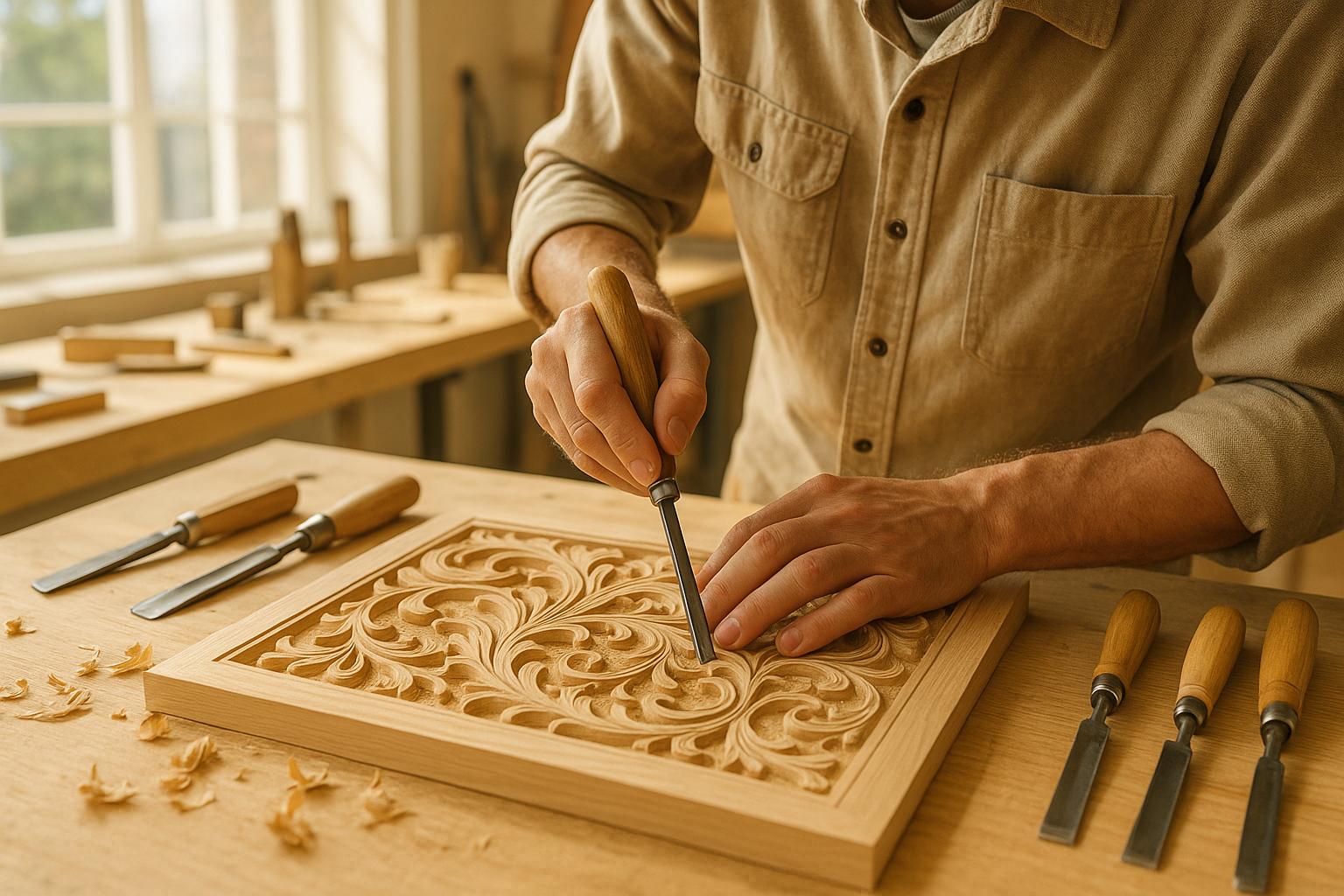
"When we carve these traditional forms, we aren’t just making objects – we’re reshaping our heritage. Each chisel stroke connects us to ancestors who developed these forms over thousands of years." – James Madison, Master Carver
Communities across the U.S. showcase how preserving cultural traditions can bring people together. In Delray Beach, Florida, the Cultural Loop and History Trail united diverse groups by celebrating the city’s heritage. Similarly, in Boston, Artists For Humanity provides young people with essential business skills in a 23,500-square-foot facility while fostering creativity.
Engaging with traditional arts offers benefits that go beyond economics. Activities like these reduce stress, encourage mindfulness, and build stronger community ties. By supporting these crafts, we help preserve the essence of our shared heritage.
Whether you’re drawn to the soothing practice of Japanese kintsugi or the storytelling embedded in Native American pottery, you have a role to play in this revival. Support organizations dedicated to preserving these traditions, connect with craft communities online or in person, and help shift cultural values toward quality and sustainability.
The art forms of yesterday can thrive once again if we all pitch in. Every workshop you join, every handcrafted piece you buy, and every skill you share helps ensure these cultural treasures remain a vibrant part of our world for generations to come.
FAQs
How do public campaigns help revive lost art forms economically and culturally?
Public campaigns are instrumental in breathing new life into forgotten art forms by opening up economic avenues and ensuring their preservation. On the economic front, these initiatives boost awareness and create demand, which translates into jobs, increased participation, and income through events, workshops, and tourism. For artisans and practitioners, this often means greater recognition and a more stable financial footing.
From a cultural perspective, such campaigns play a key role in reinforcing community identity and pride. By safeguarding traditions and passing them down to future generations, they nurture social bonds, honor heritage, and help keep these art forms alive and appreciated in today’s world.
How does technology, including AI and digital tools, help revive and preserve traditional art forms?
Technology, especially AI and digital tools, is breathing new life into traditional art forms while ensuring their preservation for the future. These advancements allow for the creation of detailed digital replicas, providing a safety net for endangered pieces of art. They also improve archiving methods and introduce non-invasive restoration techniques, helping to maintain the original works’ authenticity.
Beyond preservation, AI sparks creativity by reimagining traditional art in ways that resonate with modern audiences. By blending innovation with conservation, technology keeps these artistic treasures alive and meaningful in today’s digital world.
How do revived art forms like kintsugi and Vilasini Natyam benefit communities socially and emotionally?
Revived art forms like kintsugi, the Japanese craft of mending broken pottery with gold, and Vilasini Natyam, a classical Indian dance, bring more than just aesthetic value – they nurture social connections and emotional well-being. These traditions help strengthen community ties by celebrating shared heritage, instilling a sense of pride, and reinforcing cultural identity.
They also serve as powerful outlets for creative expression, offering individuals a way to navigate emotions and manage stress. On a deeper level, practices like kintsugi embody the philosophy of embracing flaws and imperfections, promoting personal growth and the idea of finding beauty in life’s challenges. Preserving these traditions ensures that future generations not only stay connected to their roots but also experience the healing and unifying impact of art.
