
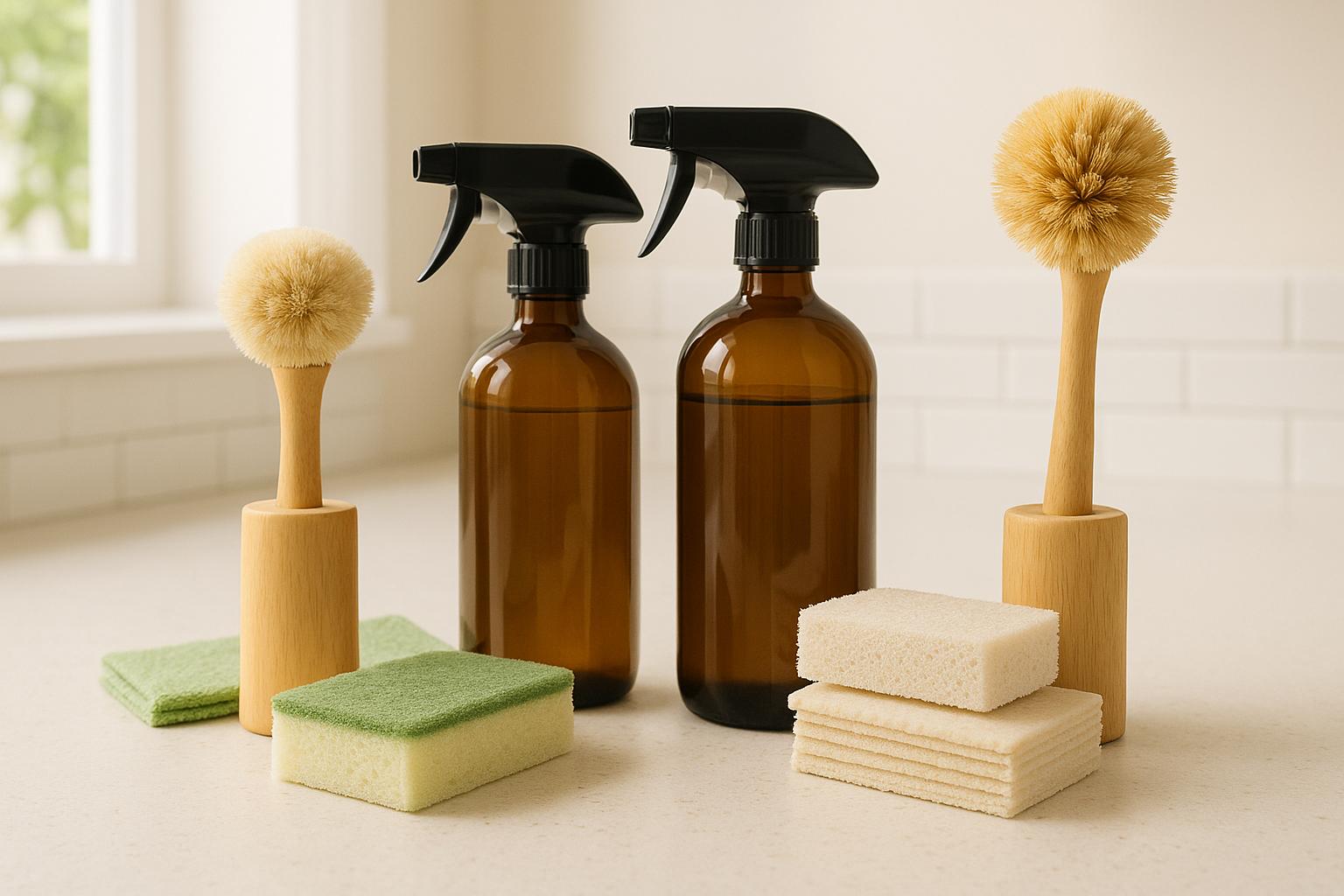
Looking to clean your home without harming the planet? Here’s a quick breakdown of the top eco-friendly cleaning tools for 2025:
- Bamboo Handle Scrub Brushes: Durable, biodegradable, and made with renewable materials like bamboo and plant-based bristles. Cost: $8–$15.
- Coconut Husk Scrubbers: Compostable scrubbers crafted from coconut coir, ideal for tough stains without scratching. Cost: $5–$12.
- Natural Cellulose Sponges: Plant-based sponges that biodegrade in soil within weeks. Cost: $3–$8.
- Microfiber Cleaning Cloths: Highly effective for bacteria removal and reusable for 500+ washes, though not biodegradable. Cost: $12–$25 per pack.
- Reusable Cotton Cleaning Pads: Organic cotton pads for surfaces and personal care, lasting up to 200 uses. Cost: $15–$30 per set.
- Green Mop Systems: Reusable mops with sustainable materials like bamboo handles and washable heads. Cost: $35–$75.
- Compostable Cleaning Wipes: Single-use but biodegradable wipes made from bamboo or plant fibers. Cost: $8–$18 per pack.
- Refillable Cleaning Spray Bottles: Long-lasting bottles for DIY or concentrated cleaners, reducing single-use plastics. Cost: $25–$50 per starter kit.
- Laundry Detergent Sheets: Lightweight, pre-measured detergent sheets with minimal packaging. Cost: $12–$20 per pack.
- Steam Cleaners: Chemical-free cleaning using only water vapor, effective for killing germs and allergens. Cost: $150–$400.
Quick Comparison
| Tool | Durability | Biodegradable | Cost | Best For |
|---|---|---|---|---|
| Bamboo Handle Scrub Brushes | 6–12 months | Yes | $8–$15 | Dishwashing, tough stains |
| Coconut Husk Scrubbers | 3–6 months | Yes | $5–$12 | Heavy-duty cleaning, delicate surfaces |
| Natural Cellulose Sponges | 4–8 weeks | Yes | $3–$8 | Absorbing spills, gentle cleaning |
| Microfiber Cleaning Cloths | 500+ washes | No | $12–$25 (pack) | Dusting, bacteria removal |
| Reusable Cotton Cleaning Pads | 120–200 uses | Yes | $15–$30 (set) | Wiping surfaces, personal care |
| Green Mop Systems | Years (base) | Partially | $35–$75 | Floor cleaning |
| Compostable Cleaning Wipes | Single-use | Yes | $8–$18 (pack) | Quick cleanups |
| Refillable Spray Bottles | Years | No | $25–$50 | DIY or concentrated cleaners |
| Laundry Detergent Sheets | Single-use | Yes (packaging) | $12–$20 (pack) | Laundry care |
| Steam Cleaners | 10+ years | N/A | $150–$400 | Deep cleaning and sanitizing |
Switching to these tools reduces waste, avoids harmful chemicals, and supports healthier living spaces. Start small by replacing a few items, and look for trusted certifications like EPA Safer Choice or Green Seal for verified eco-friendly products.
How to Make an Environmentally Friendly Cleaning Kit
1. Bamboo Handle Scrub Brushes
Bamboo handle scrub brushes are a smart, eco-conscious choice for keeping your kitchen clean. These tools combine the strength of bamboo with plant-based bristles to deliver a cleaning option that’s both effective and environmentally friendly.
Let’s dive into what makes these brushes stand out.
Earth-Friendly Materials
At the heart of these brushes is their bamboo handle, a material that grows incredibly fast – sometimes in just a few months – making it a resource with minimal environmental impact. Unlike plastic, which relies on fossil fuels, bamboo is a renewable alternative.
The bristles are another win for sustainability. Many bamboo brushes use sisal bristles, which come from the agave plant. Others incorporate fibers from coconut, palm, or similar plants. These natural materials avoid the use of synthetic plastics, which can shed harmful microplastics into waterways.
Even the packaging follows the eco-friendly theme, often made from recycled cardboard and printed with water-based inks.
"Naturally Clean Conscience: Scrub away dishes with confidence. Our brush features a bamboo handle, a rapidly renewable resource that requires minimal environmental impact." – Green Llama
Built to Last
One of the best features of bamboo scrub brushes is their durability. Unlike plastic brushes, which can crack or wear out quickly, bamboo handles are designed to endure heavy use. They’re tough enough to handle daily scrubbing without losing their shape or strength.
Many models also include replaceable heads, so when the bristles wear down, you can swap out the head instead of tossing the entire brush. This design not only extends the brush’s life but also makes it more cost-effective over time, even if the initial price is higher than disposable plastic brushes.
For maintenance, rinse the brush under hot water after use, hang it to dry, and occasionally soak it in white vinegar for a deep clean.
Fully Compostable
When your bamboo scrub brush reaches the end of its life, it won’t sit in a landfill for centuries. Both the bamboo handle and natural bristles are biodegradable in composting environments.
The handle can break down in as little as six months in a compost pile, and sisal bristles can also be composted. If the bristles aren’t compostable, you can snap off the head and dispose of the handle separately.
This stands in stark contrast to plastic brushes, which not only take hundreds of years to decompose but also release microplastics into the environment during the process. Bamboo brushes, on the other hand, offer a waste-free alternative that aligns with sustainable living.
Cleaning Power That Delivers
Choosing sustainability doesn’t mean giving up on performance. The sisal bristles are tough enough to handle stubborn messes, making these brushes versatile for a variety of tasks.
They’re great for scrubbing vegetables and fruits, removing dirt without damaging the skin. For tougher jobs, like cleaning cast iron pans or scraping off burnt food, the stiff bristles get the job done. Some brushes even come with softer bristle options, perfect for non-stick pans and glassware.
With their combination of eco-friendliness, durability, and cleaning power, bamboo scrub brushes are a practical addition to any kitchen. They prove that you don’t have to compromise on performance to make sustainable choices.
2. Coconut Husk Scrubbers
After looking at bamboo scrub brushes, let’s dive into coconut husk scrubbers – another clever way to turn natural waste into practical cleaning tools. These scrubbers are made from coconut coir, the fibrous material between the hard shell and inner core of coconuts. They offer a natural, eco-conscious replacement for plastic scrub pads.
Made from Natural Coconut Fibers
Coconut husk scrubbers are crafted entirely from coconut coir fibers, repurposing byproducts from the coconut industry into long-lasting cleaning tools . This approach not only reduces waste but also ensures the scrubbers are tough and effective without harming the environment.
The contrast with plastic scrub pads is striking. Each year, 12.7 million tons of plastic end up in the ocean, and in 2019 alone, over 850 million metric tons of greenhouse gases were linked to plastic production. Coconut husk scrubbers sidestep these issues entirely.
Built to Last
These scrubbers are designed for repeated use. They’re washable, reusable, and their fibers are tightly stitched to minimize shedding . Keeping them in good shape is simple: rinse under running water, let them air dry, and occasionally sanitize with vinegar or boiling water. With proper care, they stay fresh and effective for months, handling everything from heavy-duty cleaning to more delicate tasks. Their durability helps cut down on waste while supporting eco-friendly cleaning habits.
Breaks Down Naturally
When their job is done, coconut husk scrubbers break down naturally. They’re fully biodegradable and compostable, meaning you can toss them into your compost bin or garden to add organic material back to the soil .
Tough Yet Gentle Cleaning
Coconut husk scrubbers are built for versatility. Their texture is abrasive enough to tackle stubborn stains but gentle enough to avoid scratching surfaces like glass, porcelain, and stainless steel . They’re perfect for cleaning baking sheets, oven racks, grills, countertops, cutting boards, and even bathroom surfaces where soap scum and grime build up. Outdoors, they’re great for scrubbing gardening tools and grill grates. Plus, their natural absorbency makes them handy for gently scrubbing fruits and vegetables.
For best results, soak the scrubber in water for a few minutes before use. This softens the fibers and makes it more flexible.
3. Natural Cellulose Sponges
Natural cellulose sponges offer a thoughtful and eco-conscious alternative to conventional cleaning tools. Made from wood pulp and plant fibers, they combine effective cleaning capabilities with a reduced environmental impact.
Environmentally Conscious Materials
These sponges are crafted using renewable resources like wood pulp and plant fibers, offering a lower carbon footprint compared to synthetic options. Some producers even enhance sustainability by incorporating waste cotton and responsibly sourced cellulose, turning discarded materials into practical cleaning products.
"By opting for cellulose sponges, you are choosing a sustainable, environmentally friendly option that is devoid of harmful chemicals or plastic, contributing positively to your green living ethos." – Leaffy
Built for Repeated Use
Natural cellulose sponges are designed with durability in mind. With proper care, they can last up to six months, though heavy use may shorten their lifespan to about a month. To maximize their longevity, rinse thoroughly after each use to remove debris and soap, let them air dry completely to prevent mold, and sanitize weekly. You can sanitize them by boiling for 5 minutes, microwaving for 30 seconds while damp, or running them through the dishwasher. Remarkably, one cellulose sponge cloth can replace as many as 17 rolls of paper towels.
Compostable and Biodegradable
When it’s time to retire your sponge, pure cellulose sponges naturally decompose in soil within a few weeks. For faster composting, cut them into smaller pieces and add them to your compost pile. However, ensure the sponge is made entirely of plant-based cellulose and avoid those with polyfill or plastic components if you plan to compost them.
"By choosing compostable sponges, individuals actively participate in reducing waste and promoting a more sustainable future." – Leading Sponge in China
Cleaning Power and Versatility
These sponges aren’t just eco-friendly – they’re also highly effective. Their excellent absorbency ensures an even distribution of cleaning solutions, making them perfect for tackling grease and grime. Gentle yet efficient, they’re ideal for delicate surfaces like glassware, ceramics, and cookware, leaving no scratches behind. Their versatility makes them a reliable choice for various cleaning tasks, from kitchen counters to bathroom tiles.
Their popularity speaks volumes: cellulose sponges currently account for over 33.5% of the household cleaner sponge market in North America.
4. Microfiber Cleaning Cloths
Microfiber cleaning cloths are a modern cleaning solution that combines efficiency with the benefit of being reusable. These cloths are made from ultra-fine synthetic fibers – so fine, in fact, that they can be up to 100 times thinner than a single strand of human hair. This unique design gives them exceptional cleaning capabilities.
Reusability and Longevity
One of the best things about microfiber cloths is how long they last. While cotton towels typically wear out after 20–30 washes, microfiber cloths can handle 200–300 cycles, with some even enduring up to 500 washes. That’s about two years of regular use.
This durability makes microfiber cloths a great alternative to disposable products like paper towels. Consider this: the average American family uses around 500 pounds of paper towels every year. Switching to microfiber cloths can significantly cut down on waste while maintaining excellent cleaning performance.
To keep your microfiber cloths in top shape, wash them sparingly using a short, low-spin cycle. Use liquid laundry detergent with cold water, and either air-dry them or use a low-heat setting in the dryer. Proper care not only extends their lifespan but also ensures they remain an effective and eco-friendly cleaning option.
Effectiveness for Cleaning Tasks
What makes microfiber so effective? It’s all in the fibers. The ultra-fine threads create millions of tiny hooks that grab onto dirt, dust, and bacteria far better than traditional cleaning materials. Microfiber also uses significantly less water – 10–30 times less than cotton – and often works well with just water, cutting down on the need for chemical cleaners. These cloths are gentle enough for delicate surfaces like electronics, glassware, and polished finishes, leaving them streak-free without scratches. Their high absorbency ensures even distribution of cleaners for a spotless finish.
Environmental Considerations
Despite their benefits, microfiber cloths do have some environmental drawbacks. They’re made from synthetic materials like polyester and nylon, which aren’t biodegradable. Additionally, they can shed tiny plastic particles, known as microfibers, during washing. Microfibers are a significant environmental concern, making up 85% of global shoreline pollution. A single wash of a microfiber garment can release over 1,900 fibers into the water.
"Microfibers are essentially tiny pieces of plastic – they’re so small that they get into everything: plants, animals, soil, and water." – Danielle Jezienicki, Director of Sustainability at Grove
The good news is that wastewater treatment plants remove 95–99% of microfibers from wash water. To reduce shedding, you can use tools like microfiber-filtering laundry bags, install a microfiber filter on your washing machine, or toss in a Cora Ball during laundry cycles. When your microfiber cloths are no longer usable, consider donating them to thrift stores like Salvation Army or Goodwill, or look for companies that recycle textiles instead of throwing them away.
5. Reusable Cotton Cleaning Pads
Reusable cotton cleaning pads offer a practical and eco-friendly alternative to disposable options, helping to cut down on household waste. Made from natural materials, these pads not only reduce plastic pollution but also support a more environmentally conscious approach to cleaning.
Made with Natural Materials
These pads are crafted from organic cotton or bamboo, both grown without harmful pesticides. For instance, EcoTools Reusable Ultra Soft Cotton Pads blend recycled cotton with bamboo fibers, making them a sustainable choice. Many manufacturers also opt for recycled packaging to further reduce their environmental impact.
Long-lasting and Cost-effective
With proper care, these pads can last for 120 to 200 uses, saving money while reducing waste . To extend their lifespan, rinse them with soap and water after each use and occasionally wash them with a mild detergent. Avoid bleach and fabric softeners, as these can weaken the fibers, and always air dry them to prevent heat damage. Storing the pads in a pouch or container helps keep them clean and ready for use.
Biodegradable and Compostable
Unlike disposable pads, reusable cotton pads break down naturally. Over a lifetime, switching to these pads can prevent up to 300 pounds of waste. Considering that the average person uses about 365 disposable pads per year, this small change can have a big impact on reducing landfill waste.
Versatile and Effective
Cotton cleaning pads are known for their strength and absorbency, making them ideal for a variety of tasks like wiping surfaces, polishing furniture, and cleaning spills. They are gentle enough for most surfaces, as highlighted by Livingstone.com.au:
"Cotton towels are suitable to use on most surfaces due to their mild nature."
Beyond household cleaning, these pads are highly effective for personal care. They absorb more product than single-use pads, making them great for removing makeup, applying toner, or even tackling tougher tasks like removing nail polish and sunscreen . A slightly damp cotton pad can be used to dust and refresh wooden surfaces. While microfiber may capture more dirt and bacteria – 99.54% compared to cotton’s 67% – cotton remains a preferred choice for those seeking natural, gentle cleaning solutions.
6. Green Mop Systems
Green mop systems provide an eco-conscious way to tackle cleaning tasks, blending sustainability with practicality. These systems are designed with reusable and environmentally friendly materials, offering a greener approach to everyday maintenance.
Earth-Friendly Materials
Today’s green mop systems prioritize materials that reduce environmental impact. Bamboo, for example, is a popular choice for handles because it grows quickly – maturing in just 2 to 4 years compared to the decades required for traditional timber. Many mop heads are made from recycled plastic, post-industrial textiles, or organic cotton, avoiding harmful synthetics. Companies like the Libman Company use recycled plastic for broom fibers and recycled steel for handles, while Filmop incorporates Plastic Second Life polypropylene to cut down on waste. These thoughtful material choices ensure that cleaning tools are both effective and kinder to the planet.
Reusability and Longevity
Durability and reusability are key features of green mop systems. For instance, Libman mop heads are machine washable and can be reused more than 100 times. This not only reduces waste but also saves money – using a Quick Loop mop can save an average of $144 annually by avoiding frequent replacements. Microfiber mops, though initially more expensive, offer excellent absorbency and last longer, making them a cost-effective choice over time. Their washable design keeps them performing well throughout their extended lifespan, and many are designed to minimize environmental impact even at the end of their use.
Biodegradability and Compostability
When their life cycle ends, many components of green mop systems are designed to break down naturally or be recycled. For example, the cotton String mop head from Yocada is fully compostable when paired with natural, chemical-free cleaning agents. Some systems are also fully recyclable, helping to reduce landfill waste. This focus on biodegradable and recyclable materials sets green mop systems apart from traditional plastic alternatives that can linger in landfills for decades.
Effectiveness for Cleaning Tasks
Sustainability doesn’t mean compromising on performance. Green mop systems are highly effective for various cleaning tasks. Microfiber mops, for instance, can absorb up to seven times their weight in liquid, making them ideal for both everyday dusting and handling heavy spills. They also remove dirt and germs more efficiently than disposable options. Different designs cater to specific needs – flat mops work well on smooth surfaces, while string mops are better for tackling heavy spills or greasy messes. Looped-end string mops, in particular, are up to eight times more durable than cut-end versions, providing long-lasting performance.
sbb-itb-593149b
7. Compostable Cleaning Wipes
Compostable cleaning wipes, crafted from fast-decomposing plant-based materials, provide an eco-friendly cleaning solution that doesn’t leave behind harmful residues. They’re a smart choice for households looking to reduce their environmental footprint.
Earth-Friendly Materials
These wipes are made from natural fibers that prioritize sustainability. For instance, bamboo fiber grows quickly, requires minimal water, and doesn’t need pesticides. Plus, it has natural antibacterial properties. Lyocell, another key material, is derived from wood pulp through a closed-loop process that reuses over 99% of water and solvents. Hemp fiber shares similar benefits, while organic cotton avoids synthetic pesticides, promoting healthier ecosystems. Some wipes also incorporate PLA non-woven fabrics, which are created from renewable sources like corn starch or sugarcane. These materials not only support sustainable production but also break down quickly, helping to minimize waste.
Biodegradability and Compostability
Beyond their cleaning capabilities, these wipes excel in breaking down naturally. For example, bamboo-based wipes decompose within 2–3 months, while viscose blends take about 3–6 months. Compare that to traditional polyester wipes, which can linger in landfills for over a century. Under the right conditions, compostable wipes can fully degrade within six months. However, many require industrial composting facilities to decompose efficiently, and such facilities may not be accessible everywhere. If you’re composting at home, aim for a mix of about 60% green waste (like food scraps) and 40% brown waste (like dry leaves), and remember to stir the pile regularly as you add materials.
Effectiveness for Cleaning Tasks
These wipes aren’t just eco-friendly – they’re also reliable for everyday cleaning. Bamboo-based wipes, for example, are excellent for tackling common household messes. Their natural fiber structure effectively lifts and traps dirt and debris without leaving behind microplastic particles. This makes them ideal for use in kitchens, bathrooms, and other frequently used spaces.
8. Refillable Cleaning Spray Bottles
Refillable cleaning spray bottles are a smart way to cut down on single-use plastics while working seamlessly with concentrated or DIY cleaning solutions. They help households keep up with their cleaning routines while reducing waste. Let’s take a closer look at the materials and benefits that make these bottles an eco-friendly choice.
Earth-Friendly Materials
These bottles are often crafted from materials that are better for the planet. Glass bottles, for example, are fully recyclable and a great match for homemade cleaning solutions. Stainless steel bottles stand out for their durability and don’t retain odors or flavors.
Some brands are taking it a step further with innovative designs. Ecologic, for instance, offers a hybrid bottle made with a recycled paper shell and a plastic liner, cutting plastic use by up to 70% compared to standard rigid bottles. This is particularly relevant when you consider that only about one in six plastic water bottles gets recycled, and the rest can sit in landfills for up to 450 years. Bamboo-based bottles are another option, offering a biodegradable choice with natural antimicrobial properties.
Reusability and Longevity
The long-term benefits of refillable bottles are hard to ignore. One person using a refillable system can save around 167 single-use bottles every year. These systems also help reduce energy usage, plastic waste, and CO₂ emissions by as much as 90% compared to disposable bottles.
Here’s another interesting fact: most traditional cleaning product bottles are about 90% water, with less than 10% actual cleaning ingredients. Concentrated cleaner pods, on the other hand, can replace up to six standard bottles, slashing plastic packaging by 90%. And these refillable systems are built to last. For instance, Blueland offers starter kits for $46, while Common Good’s complete set, including refills and glass bottles, costs $111.
Effectiveness for Cleaning Tasks
Refillable spray bottles aren’t just about reducing waste – they’re also highly effective for a variety of cleaning tasks. They work well for disinfecting surfaces, applying homemade cleaners, cleaning windows, and even caring for plants. Bottles with adjustable nozzles let users switch between a fine mist and a direct spray. Materials like HDPE and PET are great for stronger cleaning solutions due to their chemical resistance, while glass is ideal for chemical-free mixtures [102, 104].
Another perk? These systems are customizable. One happy customer shared:
"Each product literally works and cleans perfectly. Obsessed with the dish soap and the laundry detergent and best of all no plastic or waste. It truly is life changing and I’m so happy I bought this entire package." – Kayla M.
Refillable systems also reduce shipping weights and use more compact packaging, which cuts down on energy used for transportation. All these factors align with the principles of a circular economy, emphasizing reuse and waste reduction. For households looking to combine practicality with environmental responsibility, refillable spray bottles are an excellent choice.
9. Laundry Detergent Sheets
Laundry detergent sheets are changing the way we think about laundry care, offering a compact and waste-conscious alternative to traditional detergents. These pre-measured, concentrated sheets dissolve completely in water, delivering powerful cleaning in a lightweight, eco-friendly format. Let’s take a closer look at the materials, environmental benefits, and performance of these innovative products.
Earth-Friendly Materials
The ingredients in laundry detergent sheets can vary widely, making it important for eco-conscious shoppers to check labels. Many brands use plant-based and biodegradable components to limit their impact on the environment.
However, some sheets include polyvinyl alcohol (PVA), a water-soluble polymer that doesn’t always fully break down in wastewater systems. Other synthetic additives, such as surfactants, preservatives, and fragrances, may also pose risks to both health and ecosystems.
In May 2025, Soane Materials introduced SoaneClean™ Laundry Detergent Sheets, which are biodegradable and free from PVA. These sheets deliver 50% more active cleaning agents per unit compared to competitors while eliminating plastic content entirely.
| Feature | Traditional Liquid Detergent | Pods/Unit-Dose | PVA-Based Sheets | SoaneClean™ Sheets |
|---|---|---|---|---|
| Plastic Content | 600g | 500g | 75g | 0g |
| Transportation Emissions | 325g CO₂ | 230g CO₂ | 100g CO₂ | 100g CO₂ |
| Water Content | Up to 90% | Up to 15% | Less than 5% | Less than 5% |
Biodegradability and Compostability
Laundry detergent sheets bring notable environmental advantages. Their concentrated formula requires less water and energy during production, and their lightweight design reduces transportation emissions.
Packaging is another win for the environment. Instead of bulky plastic jugs, most laundry sheets come in recyclable or compostable cardboard. This shift is significant when you consider that 700 million plastic laundry detergent jugs are discarded in U.S. landfills annually.
"They generally use cardboard packaging, and because they are concentrated and without water, the package can be small. This leaves less of an environmental footprint than the plastic jugs that liquid detergent and plastic containers pods or packs come in."
– Rich Handel, Consumer Reports‘ laundry expert
Switching to sheet technology could also yield major cost savings. A global shift to SoaneClean sheets, for example, could save nearly $4 billion annually by reducing warehouse space ($1.05 billion), retail shelf space ($1.75 billion), and transportation costs ($1.12 billion).
Effectiveness for Cleaning Tasks
Laundry detergent sheets dissolve in water to release concentrated cleaning agents, including surfactants and enzymes, making them effective for most everyday laundry needs. They work well in all types of washing machines, including high-efficiency models.
"For most everyday laundry needs, detergent sheets are as effective as liquid detergent. They contain surfactants and enzymes similar to those in liquid formulas."
– Rechelle Balanzat, CEO and founder of Juliette
That said, results can depend on the cleaning challenge. For light loads, one sheet usually does the job, but tougher stains or heavily soiled clothes may require two sheets and warm water. Brands like Seventh Generation Laundry Detergent Sheets are often recommended for reliable performance.
Consumer Reports testing found mixed results. While some products, like Earth Breeze Liquidless Eco Sheets, performed moderately well on dirt, others, such as Ecos Laundry Detergent Sheets, struggled with residue and tough stains.
"Some detergent sheets may lack the same level of deep-cleaning power as high-performance liquid detergents, especially for heavily-soiled clothes, intense grease or specialized fabric requirements."
– Rechelle Balanzat, CEO and founder of Juliette
From a cost perspective, laundry sheets are competitive. For example, HeySunday offers 60 sheets for $14, while Skipper’s Laundry Sheets cost about 23 cents per small load. Their pre-measured format also helps prevent overdosing, a common issue with liquid detergents that leads to waste.
10. Steam Cleaners
Steam cleaners are an eco-conscious choice for maintaining a clean home. These devices use high-temperature water vapor to clean and sanitize surfaces, eliminating the need for chemical cleaners. This straightforward method not only simplifies cleaning but also offers a range of benefits in terms of sustainability, durability, and effectiveness.
Eco-Friendly Cleaning
The beauty of steam cleaning lies in its simplicity – water is the only cleaning agent required. By avoiding chemical cleaners, steam cleaners help reduce your household’s environmental impact. Unlike traditional cleaning methods that rely on synthetic detergents or disinfectants, steam cleaners produce no volatile organic compounds (VOCs), which can improve indoor air quality. They also cut down on carbon emissions tied to chemical production and waste disposal. Plus, steam cleaning is highly water-efficient, using over 90% less water compared to conventional cleaning methods.
Built to Last
When selecting a steam cleaner, durability matters. Look for models with stainless steel boilers and solid construction to ensure they last over time. Commercial-grade units often feature metal housings and industrial-grade wiring, making them more resilient than many consumer models, which may use lightweight plastic. High-quality steam cleaners also include features like precise pressure controls, thermal safeguards, and energy-efficient designs, all of which contribute to a longer lifespan. Regular maintenance, such as descaling and proper storage, can further extend the life of your unit. Choosing a brand that provides easily accessible replacement parts and reliable customer support is another way to ensure long-term satisfaction.
Powerful Cleaning Performance
Steam cleaners are not just durable – they are highly effective. They can remove dirt and kill 99.9% of pathogens on surfaces ranging from tile grout to upholstery, significantly cutting down on the need for chemical cleaning products. These machines excel at tough jobs, such as descaling bathroom fixtures or removing stubborn stains from fabrics. They’re also excellent for deep-cleaning carpets, lifting dirt, mold, and pet odors that other methods might leave behind. Steam cleaning is less physically demanding than manual scrubbing and delivers faster, more thorough results.
From a financial perspective, steam cleaners can save you money in the long run. Studies show that steam cleaning costs 76% to 91% less than using hypochlorite solutions with concentrations of 5,000 ppm and 1,000 ppm, respectively. While the upfront cost of a steam cleaner might be higher, the savings on chemical cleaners over time make it a cost-effective investment. Additionally, steam cleaning is a safe and efficient way to disinfect surfaces, neutralizing bacteria and allergens without the need for harmful chemicals. For delicate materials like untreated wood or specific carpet types, always test on a small, hidden area first to avoid damage.
Comparison Table
Choosing the best eco-friendly cleaning tools can feel overwhelming, but laying out the options side by side makes it easier to see what fits your needs. Below, you’ll find a detailed comparison of ten popular tools based on material quality, reusability, biodegradability, effectiveness, and cost.
| Cleaning Tool | Material Quality | Reusability | Biodegradability | Effectiveness | Cost (USD) |
|---|---|---|---|---|---|
| Bamboo Handle Scrub Brushes | High – Natural bamboo handles with plant-based bristles | Excellent – Lasts 6–12 months with proper care | Fully biodegradable within 6 months | High – Tackles tough stains effectively | $8–15 |
| Coconut Husk Scrubbers | High – Natural coconut fiber construction | Good – 3–6 months typical lifespan | Fully compostable within 3–4 months | High – Strong abrasive power without scratching | $5–12 |
| Natural Cellulose Sponges | Medium-High – Plant-based cellulose | Good – 4–8 weeks depending on use | Fully biodegradable within 30 days | Medium-High – Absorbs 20× its weight in liquid | $3–8 |
| Microfiber Cleaning Cloths | High – Durable synthetic construction | Excellent – 500+ wash cycles | Not biodegradable but long-lasting | Very High – Removes 99% of bacteria with water | $12–25 for pack |
| Reusable Cotton Cleaning Pads | High – Organic cotton construction | Excellent – 200+ wash cycles | Fully biodegradable after their useful life | Medium-High – Gentle yet effective cleaning | $15–30 for set |
| Green Mop Systems | High – Sustainable materials with replaceable heads | Excellent – Base lasts years; heads are replaceable | Partially biodegradable – Replaceable heads break down, handles are reusable | High – Efficient floor cleaning with minimal water | $35–75 |
| Compostable Cleaning Wipes | Medium – Made from plant-based fibers | Single-use but compostable | Fully compostable within 90 days | Medium – Convenient but less effective than reusables | $8–18 per pack |
| Refillable Cleaning Spray Bottles | High – Durable glass or recycled plastic | Excellent – Designed for years with refills | Non-biodegradable but reusable | High – Reduces packaging waste significantly | $25–50 starter kit |
| Laundry Detergent Sheets | High – Concentrated plant-based formula | Single-use with minimal packaging | Fully biodegradable packaging and formulation | High – Cleans as effectively as liquid detergent | $12–20 per pack |
| Steam Cleaners | Very High – Stainless steel boilers; robust construction | Excellent – 10+ years with proper maintenance | N/A – Uses only water, no chemicals | Very High – Kills 99.9% of pathogens | $150–400 |
This table lays out the key strengths of each tool, helping you weigh your options based on what matters most – whether it’s cost, durability, or eco-friendliness.
For instance, steam cleaners may seem pricey upfront, but they eliminate the need for chemical cleaners, saving money in the long run. Similarly, microfiber cloths stand out for their durability and cleaning power, while bamboo scrub brushes and coconut scrubbers balance effectiveness with biodegradability.
If you’re looking for reusable options, cotton cleaning pads and refillable spray bottles offer excellent longevity. On the other hand, compostable wipes and cellulose sponges are great for single-use needs with minimal environmental impact.
Ultimately, the best choice depends on your priorities – whether it’s cutting down on waste, avoiding chemicals, or getting the deepest clean possible. Use this breakdown to find the tools that best support your sustainable lifestyle.
Conclusion
Switching to eco-friendly cleaning tools brings immediate perks for both your home and the planet. These tools not only promote healthier living spaces but also help reduce pollution and waste.
The impact of sustainable cleaning tools goes well beyond your doorstep. Made from biodegradable materials, they naturally break down, helping to curb the cycle of pollution.
"Switching to eco-friendly cleaning products reduces pollution, minimizes exposure to harmful chemicals, and conserves resources. It helps in protecting ecosystems and improving the quality of our water and air." – Blue Water
On top of the environmental benefits, these tools can lower exposure to harmful chemicals and even reduce risks like work-related injuries or asthma triggers.
While eco-friendly products can sometimes cost more initially, their durability often means fewer replacements over time. For instance, steam cleaners provide a chemical-free way to clean, offering a safer option for your household.
If you’re just starting, begin small – replace one or two conventional items with sustainable alternatives, then build from there. Look for trusted certifications like the U.S. Environmental Protection Agency’s Safer Choice program, Green Seal, or EcoCert to ensure you’re purchasing truly sustainable products.
"By choosing green cleaning solutions, you can create a safer living or working environment for your family, pets, and colleagues. There are no harsh fumes or toxic residues left behind to cause headaches, dizziness, or respiratory distress." – Abby Urbinek
Every small change matters. Whether it’s a bamboo brush, a coconut scrubber, or a refillable cleaning bottle, these choices contribute to a larger movement toward mindful, sustainable living. Together, these efforts help protect our air, water, and soil for generations to come. Start today and be part of the shift toward a healthier home and a cleaner planet.
FAQs
How can I care for eco-friendly cleaning tools like bamboo brushes and microfiber cloths to make them last longer?
To keep your bamboo scrub brushes in top shape, make sure to clean them after each use and allow them to air dry completely. Every few months, apply a light coat of natural oil to the handle to help prevent cracking. When the bristles start to show wear – usually after 3 to 6 months – it’s time to replace the brush.
For microfiber cloths, wash them separately with a mild detergent. Steer clear of fabric softeners, bleach, or high heat, as these can damage the fibers. Rinse them thoroughly and either air dry or use a low-heat setting in the dryer. With proper care, these cloths can last for years, handling anywhere from 200 to 500 washes.
What certifications or labels should I look for to ensure cleaning products are truly eco-friendly?
When picking eco-friendly cleaning products, it’s smart to check for trusted certifications that back up their environmental claims. Look for labels like Green Seal, EcoLogo, or the FSC (Forest Stewardship Council). These certifications indicate that the products are non-toxic, biodegradable, and made from responsibly sourced materials while meeting strict environmental and ethical standards.
Don’t overlook the packaging either. Many sustainable products use recyclable or compostable materials, which can significantly cut down on waste. Spotting these labels and features will help you make smarter, greener choices for your home.
What are the environmental advantages of using steam cleaners instead of traditional chemical cleaning methods?
Steam cleaners bring a range of eco-friendly advantages compared to traditional cleaning methods that rely on chemicals. Since they operate using just water to produce steam, there’s no need for harsh chemicals. This helps cut down on pollution and prevents chemical runoff, which can harm the environment.
Another plus? Steam cleaning uses significantly less water than many standard cleaning techniques, making it a more resource-conscious option. It also contributes to better indoor air quality by eliminating the harmful fumes that chemical cleaners often release. This makes steam cleaners a safer choice – not just for your home, but for the planet as well.
