
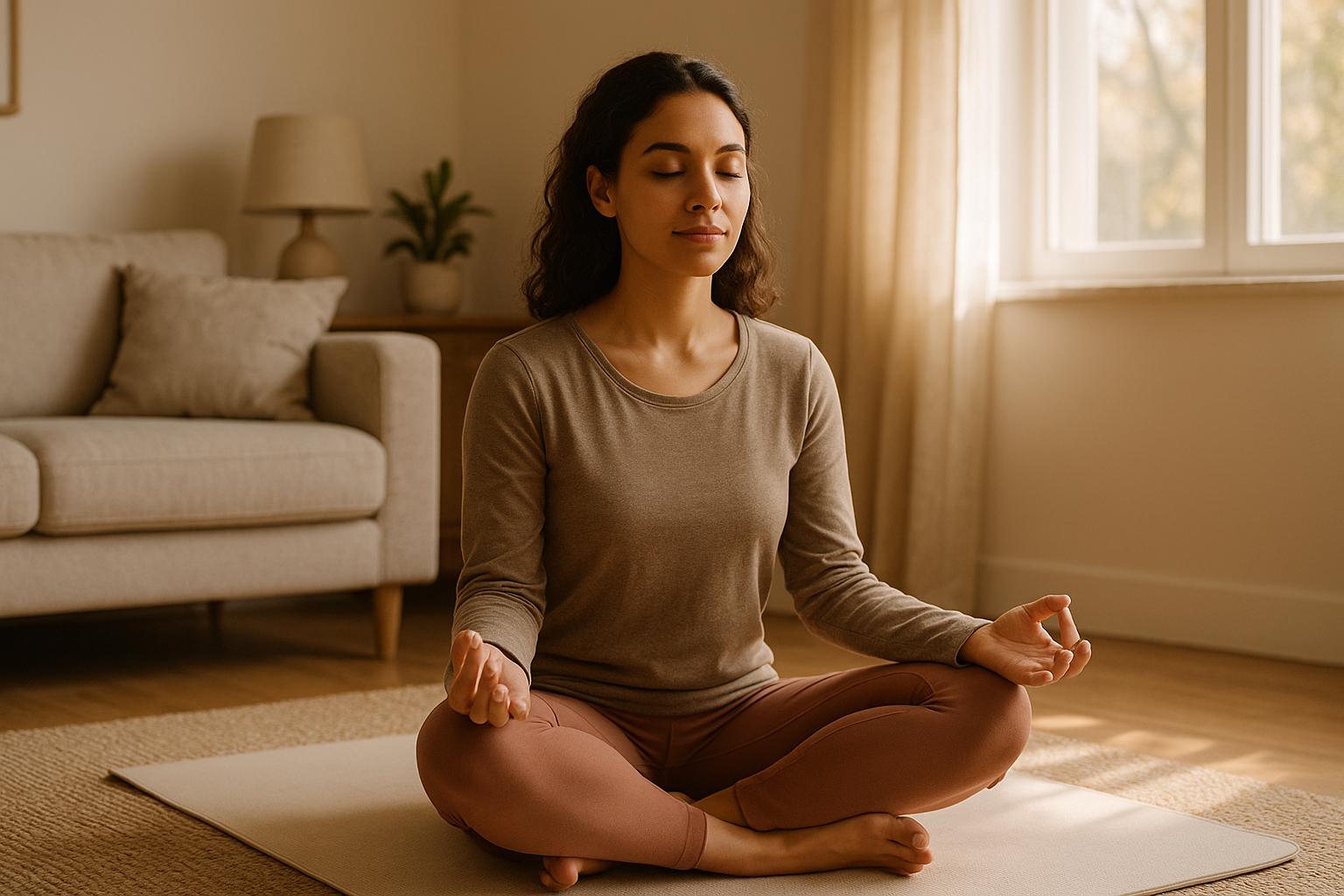
Feeling overwhelmed by stress? Guided meditation can help. It’s a simple way to reduce anxiety, improve focus, and promote calm – even if you only have 10 minutes a day. Here’s a breakdown of 10 effective guided meditation techniques you can try today:
- Breath Awareness: Focus on your natural breathing to ease stress and improve concentration.
- Progressive Muscle Relaxation: Tense and release muscles to relieve physical tension.
- Body Scan Meditation: Observe sensations in your body to enhance awareness and reduce discomfort.
- Guided Imagery: Picture calming scenes to relax your mind and body.
- Mindfulness Meditation: Stay present by observing thoughts and emotions without judgment.
- Loving-Kindness Meditation: Practice self-compassion and send positive thoughts to others.
- Mantra Meditation: Repeat a word or phrase to quiet your mind and boost focus.
- Movement-Based Meditation: Combine mindfulness with gentle movements like walking or yoga.
- Sound Meditation: Use soothing sounds or vibrations to promote relaxation.
- Repetitive Prayer or Affirmation: Repeat positive phrases to shift your mindset and encourage calm.
Each technique offers unique benefits, from reduced stress to better sleep and emotional balance. Start small – just 5-10 minutes daily – and explore what works best for you.
20 Minute Guided Meditation for Reducing Anxiety and Stress–Clear the Clutter to Calm Down
How Guided Meditation Helps You Relax
When you settle in for a guided meditation session, both your body and mind experience shifts that encourage deep relaxation. And it’s not just anecdotal – science backs up these effects. Let’s break down the benefits.
Stress Reduction That Goes Deep
Meditation has a direct impact on your stress response. Studies show it reduces cortisol, the hormone your body releases during stressful situations. A review of 45 studies found that meditation consistently lowers stress markers. For instance, one mindfulness study revealed a 30% drop in stress levels among participants who practiced regularly. Women with premenstrual syndrome also reported a 58% reduction in symptoms with consistent meditation.
Sharper Emotions and Mental Clarity
Guided meditation doesn’t just calm you down – it changes how your brain handles emotions. Neuroscience research shows increased activity in the prefrontal cortex, the part of the brain that manages self-control and emotional regulation. Regular practice has been linked to better emotional balance and improved mood scores.
Relaxation You Can Feel
Meditation triggers what’s known as the relaxation response, producing measurable physical benefits. Dr. Herbert Benson, a cardiologist, explains:
"The relaxation response [from meditation] helps decrease metabolism, lowers blood pressure, and improves heart rate, breathing, and brain waves." – Dr. Herbert Benson
In fact, meditation has been found to reduce blood pressure up to four times more effectively than standard health education programs.
Brain Changes That Promote Calm
Regular meditation doesn’t just feel good – it physically reshapes your brain. Studies show that consistent practice increases gray matter, which is crucial for memory, learning, and decision-making. Buddhist monks who meditate frequently have demonstrated higher levels of gamma wave activity, which is linked to attention, learning, and conscious awareness.
Consistency Is the Secret Sauce
The real magic of meditation lies in sticking with it. Research highlights that as little as 10 minutes of daily meditation can lead to noticeable stress relief.
"Consistency is what really makes a meditation practice work. It’s far more powerful to meditate 10 minutes a day than to meditate for 60 minutes once a week. Consistency is what lets meditation really seep into your mind and make a lasting impact." – SIYLI
By committing to daily sessions – starting with 10 minutes and gradually increasing to 45 minutes – you can train your brain to activate relaxation automatically.
What’s great about guided meditation is that it unfolds naturally. By following your instructor’s voice, relaxation becomes effortless, a natural reward for your consistent practice.
Tips for Better Guided Meditation
To truly enjoy the benefits of guided meditation, making a few thoughtful adjustments to your environment and practice can make a big difference. These small tweaks can help you relax more deeply and get the most out of your sessions.
Create Your Sacred Space
The space where you meditate plays a big role in how well you can relax. Pick a quiet spot in your home and use it consistently. Over time, your mind will associate this space with calm and relaxation.
"Creating a dedicated meditation space can be a powerful tool for enhancing your practice and improving your overall well-being." – Balance
Keep the area clutter-free to encourage mental clarity. During the day, soft natural light works wonders, but in the evening, dimmable lamps or even a single candle can create a cozy, soothing atmosphere.
Comfort Is Key
Your comfort directly affects how well you can focus. Choose a seat that supports good posture, whether it’s a cushion, a bench, or a sturdy chair. Keep the temperature comfortable – somewhere around 68–72°F – and have a light blanket nearby for extra coziness. Feeling physically at ease makes it easier to focus on your meditation.
Enhance with Natural Elements
Bring nature into your meditation space to create a calming environment. Adding plants can improve air quality and provide a grounding presence. Scents also play a role: essential oils like lavender, peppermint, or eucalyptus can help you relax. A small candle can add a gentle glow that enhances the overall ambiance.
"The environment most conducive for meditation includes both external and internal environments. The proper external environment includes both a proper space and a proper time to meditate. The proper space is one that is quiet and beautiful." – Marvin Glover
Set Clear Boundaries
Before starting your session, take steps to minimize interruptions. Turn your phone to airplane mode, let others in your household know you need quiet time, and eliminate distractions. This allows you to fully immerse yourself in the practice.
The Power of Intention Setting
Taking a moment to set an intention before meditating can make the experience more meaningful. Your intention might be as simple as "I want to feel calm" or "I’m here to release stress." Spend a few seconds connecting with what feels important to you in that moment. Writing it down can help reinforce your focus.
"Setting intentions is more than just a self-help trend – it’s a transformative practice that influences how we navigate our daily lives." – Calm Editorial Team
Make sure your intention is framed positively, like "I am inviting peace into my day." This helps set a purposeful tone for your session.
Start Small and Build Consistency
If you’re just starting out, keep your sessions short – around 5 to 10 minutes a day – and gradually increase the length as you grow more comfortable. Meditation isn’t about having a perfectly calm mind every time. Some days you’ll feel focused, while other days your thoughts might wander. Both experiences are part of the process. The key is to show up regularly and embrace whatever comes up.
1. Breath Awareness Meditation
Breath awareness meditation, often referred to as mindful breathing or pranayama, taps into your natural breathing rhythm to ease stress and promote relaxation. Instead of altering or controlling your breath, you simply observe it as it flows naturally. This practice helps shift your body from a heightened "fight-or-flight" state to a calmer, more relaxed mode.
Over time, this simple act of focusing on your breath can expand into a broader state of mindfulness, allowing you to approach life’s challenges with acceptance rather than resistance. By giving your mind a steady point of focus, you reduce mental noise and create a sense of inner tranquility.
Level of Guidance Required
Getting started with breath awareness meditation doesn’t require much assistance. Begin by sitting or lying down in a comfortable position, close your eyes, and focus on the natural rhythm of your breathing. Some initial guidance can be helpful, especially when distractions arise. As Dr. Ronald D. Siegel, a clinical psychology professor at Harvard Medical School, explains:
"Learning to focus attention and relax is a skill. As with any skill, your ability to focus and relax will improve with practice."
Once you’ve grasped the basics, you can practice on your own, wherever you find a quiet spot to sit or lie down without interruptions.
Physical Activity Involved
This technique involves little to no physical movement. You simply sit or lie comfortably, noticing when your attention wanders and gently bringing it back to your breath. As you relax, your breathing naturally slows, often decreasing from around 15 breaths per minute to about six.
Time Commitment
You can start with just 5–10 minutes a day and gradually increase the duration. Studies show that even 10 minutes of daily practice can significantly reduce anxiety and stress markers. A consistent routine is key – short, daily sessions are far more effective than occasional long ones. For example, practicing for 10 minutes every day will yield better results than cramming a single 70-minute session into your week. Building this habit also lays the groundwork for exploring more advanced mindfulness techniques later.
Key Benefits
Breath awareness meditation enhances focus, reduces stress and anxiety, and fosters a deep sense of calm. It’s also been shown to improve mood, alleviate symptoms of depression and chronic pain, and boost overall mindfulness – even with just 7–10 minutes of daily practice.
Interestingly, this practice also addresses a modern issue: the average adult attention span has dropped from 12 seconds to just 8 seconds over the past 15 years. As Dr. Siegel points out:
"It is intended to help us come to a healthy relationship with the inevitabilities of the difficulties of life, which is much more profound than relaxation training. These practices are designed to train the brain and the mind to embrace life as it actually is. When we can do that, we wind up being much less stressed. Ultimately, most of our stress comes from fighting reality."
Mastering breath awareness is a foundational step, preparing you for more advanced meditation techniques later on.
2. Progressive Muscle Relaxation
Progressive Muscle Relaxation (PMR) was introduced in the 1920s by Dr. Edmund Jacobson as a way to achieve mental calm by alternating between tensing and relaxing specific muscle groups. The process is simple but effective: you intentionally tense a muscle group for 5-10 seconds while inhaling, then exhale and release the tension completely. This contrast helps you recognize the difference between tension and relaxation, making it easier to activate a state of calm when needed.
PMR shifts the body from the "fight-or-flight" mode, governed by the sympathetic nervous system, to the parasympathetic "rest and digest" state. Dr. Matthew Kampert, a Sports Medicine Physician, describes it as:
"Progressive relaxation is like a body scan that has a mental component and a physiological component. It involves using breathing and visualization to help you acknowledge and release the tension you hold in every area of your body."
Level of Guidance Required
When starting PMR, some guidance is helpful to ensure you’re using the proper technique and sequence. Unlike simpler practices like breath awareness, PMR requires learning how to tense muscles safely without causing strain. Beginners often find guided audio or video instructions useful.
A critical part of the process is coordinating your breathing with the muscle contractions and avoiding breath-holding while tensing. Once you’ve got the hang of it, PMR can be done independently in any quiet and comfortable setting.
Physical Activity Involved
PMR involves controlled muscle contractions. You’ll work through different muscle groups, either starting from your toes and moving up to your head or vice versa. Each muscle group is tensed for 5-10 seconds before releasing.
The practice is flexible – you can do it lying down or sitting comfortably. While the physical effort is minimal, the intentional tension you create makes the release phase more impactful.
Time Commitment
A typical PMR session takes 10-20 minutes. The Corvallis Clinic suggests starting with a 12-muscle-group version, then progressing to an 8-muscle-group and eventually a 4-muscle-group approach to fit shorter timeframes.
Initially, practicing PMR twice daily can help you learn the technique more effectively. Over time, you can use shorter versions by focusing on larger muscle groups or just the release phase. With regular practice, triggering relaxation becomes faster and more natural.
Key Benefits
The benefits of PMR are backed by extensive research. For instance, a 2015 study in Evidence-Based Complementary and Alternative Medicine revealed that patients with pulmonary arterial hypertension who practiced PMR daily for 12 weeks experienced nearly a 50% reduction in anxiety and depression compared to those who didn’t.
Other studies highlight PMR’s impact on physical health. A 2023 study in Medicine found that four weeks of PMR reduced systolic blood pressure by an average of 6 mmHg and diastolic blood pressure by 4 mmHg in adults with essential hypertension. For migraine sufferers, a 2016 study published in the Journal of Headache Pain showed that daily PMR practice over three months cut the average number of migraine days per month from six to three.
Improved sleep is another standout benefit. During the COVID-19 pandemic, individuals with stress-related insomnia who practiced PMR for 30 minutes over five days saw anxiety scores drop by around 15% and sleep quality improve by more than 30%. Additionally, combining PMR with biofeedback has been shown to reduce headache frequency and severity by up to 60%.
PMR is effective for conditions such as tension headaches, migraines, TMJ, neck pain, insomnia, anxiety, bipolar disorder, backaches, and high blood pressure. By practicing regularly, you train your body to switch from stress to relaxation on demand – a skill that becomes increasingly beneficial over time. Up next, we’ll explore another mindfulness technique to enhance your relaxation routine.
3. Body Scan Meditation
Body scan meditation involves focusing your attention on different parts of your body, starting at your feet and working your way up. The idea is to notice physical sensations without labeling them as good or bad. Jon Kabat-Zinn, a renowned meditation teacher, highlights this technique as a useful tool for managing pain. The goal isn’t to erase discomfort but to better understand what your body is communicating.
"The body scan is one of the most effective ways to begin a mindfulness meditation practice." – HelpGuide
Level of Guidance Required
This method is beginner-friendly and easy to pick up. All it takes is learning the basic steps: focus on each body part in sequence and observe how it feels. A single guided session is often enough to get started. Once you’re familiar with the process, you can practice on your own.
Physical Activity Involved
Body scan meditation doesn’t involve movement. You simply lie down or sit in a comfortable position and mentally scan your body from your feet to your head, paying attention to sensations. The only physical effort required is finding a position that feels right, which makes this practice accessible to nearly everyone, including those with limited mobility.
Time Commitment
Sessions can last anywhere from 5 to 45 minutes. If you’re new, starting with 5–10 minutes can help you ease into the practice. Over time, you can extend your sessions to 20–30 minutes for a more immersive experience. A full body scan typically takes about 30 to 45 minutes.
Key Benefits
Practicing body scan meditation regularly can lead to substantial mental and physical health improvements. For instance, an eight-week program showed reduced levels of cortisol, the stress hormone. A 2017 review of 13 studies also found that mindfulness practices like this one can ease symptoms of chronic pain, such as depression and a reduced quality of life. Beyond pain relief, it can improve focus, emotional balance, and self-compassion [50, 56].
Body scan meditation is also a great way to wind down before bed. Consistent practice has been linked to better sleep quality. A 2021 meta-analysis further supports its effectiveness in reducing stress and anxiety symptoms.
"Taking a few minutes to practice a brief mindful body scan meditation can be a great way to relieve stress, reduce pain, and help you get better sleep." – Tanner Derror, Michigan State University Extension
By strengthening the connection between your mind and body, this meditation helps you stay present and aware of your emotional and physical state. This increased awareness can help you recognize stress early, manage it effectively, and even lower blood pressure [50, 56].
Next, discover how guided imagery can transport your mind to serene, calming places.
4. Guided Imagery
Guided imagery, a key component of meditation techniques, offers a straightforward way to ease stress. This relaxation method involves focusing on positive mental images or scenes, which can help trigger your body’s natural relaxation response – slowing your breathing, lowering blood pressure, and calming your heart rate.
"Guided imagery is a mind-body intervention that involves evoking positive mental imagery to help invoke a positive effect. This relaxation technique can be helpful for calming the body, relieving stress, and combatting feelings of anxiety." – Elizabeth Scott, PhD
The process is simple: picture a vivid, peaceful scene that engages all your senses. Studies show that guided imagery can boost alpha brain waves, which are linked to a relaxed and uplifted mood.
Level of Guidance Required
This technique is easy to learn and requires only a little guidance at the start. You can practice with a counselor, listen to audio recordings, or try it on your own. The steps are simple: sit or lie in a comfortable position, close your eyes, take deep breaths, and imagine a serene setting while involving all your senses.
Physical Activity Involved
Guided imagery doesn’t involve any physical movement, making it accessible to everyone.
Time Commitment
Guided imagery sessions are flexible and can fit into any schedule. Sessions typically range from 5 to 45 minutes, depending on your experience and availability. If you’re just starting, try 5-10 minute sessions and gradually extend the time. As one expert suggests, "Guided imagery takes practice. If sitting still for 15 minutes is too much time, start with 5 minutes a day, and then increase from there." The key is consistency – short daily sessions can still have a meaningful impact, and longer sessions can be broken into smaller chunks throughout the day.
Key Benefits
The advantages of guided imagery go far beyond relaxation. A 2022 review found it reduced pain levels by 30% in patients undergoing medical treatments. It has also been shown to improve mobility and ease pain for people with arthritis and other joint conditions. On the mental health front, guided imagery can help reduce depression, anxiety, and stress, while fostering a sense of control and emotional well-being. It calms the sympathetic nervous system, which can alleviate stress-related issues like headaches, high blood pressure, chest pain, digestive troubles, and even elevated blood sugar levels.
Regular practice can also enhance sleep quality. A 2024 study revealed that patients recovering from slipped disc surgery reported better sleep scores after using guided imagery. Similarly, a 2018 study highlighted that nature-based guided imagery was more effective at reducing anxiety than other forms of guided imagery.
Beyond health benefits, guided imagery is a powerful tool for improving performance. Many people use it to mentally prepare for challenges like athletic competitions, public speaking, or high-pressure situations.
Next, we’ll explore mindfulness meditation as another valuable addition to your relaxation toolkit.
5. Mindfulness Meditation
Mindfulness meditation is a well-studied and widely accessible method for promoting relaxation. This practice focuses on training your attention to achieve calmness, concentration, and a more positive outlook on life. Unlike other techniques that rely on specific imagery or physical movements, mindfulness is all about being fully present in the moment.
At its core, mindfulness meditation involves two key elements: attention and acceptance. The attention aspect encourages you to focus on your breath, thoughts, physical sensations, and emotions. The acceptance aspect involves observing these experiences without judgment – acknowledging them as they come and letting them pass.
Level of Guidance Required
Mindfulness meditation offers plenty of options to suit different preferences and learning styles. You can join classes or workshops at yoga studios, gyms, hospitals, or clinics. If you’re looking for a more structured experience, working with a therapist trained in Mindfulness-Based Stress Reduction (MBSR) or Mindfulness-Based Cognitive Therapy (MBCT) can be beneficial. For those who prefer convenience, there are many online programs and smartphone apps designed to guide you through mindfulness practices, making it easy for beginners to get started.
Physical Activity Involved
This practice requires little to no physical exertion, making it an excellent choice for people of all fitness levels. Typically, you’ll sit comfortably or lie down while focusing on your breath and maintaining awareness of the present moment. Since no special equipment is needed, mindfulness meditation can fit seamlessly into your daily routine – whether at home, at work, or even during a commute.
Time Commitment
Mindfulness meditation is highly flexible and can be tailored to your schedule. Studies suggest that even 10–12 minutes of daily practice can lead to noticeable benefits. For instance, a 2018 study revealed that practicing mindfulness for just 12 minutes a day could positively impact biomarkers associated with dementia. Another study found that a 10-minute daily session improved GRE test performance.
"Making meditation a regular part of your day is more important than how long you meditate. For that reason, the length of time you meditate should be sustainable for you." – Dr. Paul Greene
More structured programs like MBSR often recommend 40–45 minutes of daily meditation, while others suggest 20-minute sessions. The key is consistency. If longer sessions feel overwhelming, it’s perfectly fine to start small and gradually increase the duration over time.
Key Benefits
Research shows that mindfulness meditation can significantly alleviate stress, anxiety, and depression – sometimes offering results comparable to antidepressants. A review of over 200 studies found mindfulness-based therapy particularly effective for these challenges. Beyond mental health, mindfulness has been shown to reduce pain severity, improve pain tolerance, lower inflammation, strengthen the immune system, and even help lower blood pressure in some cases.
Regular practice also benefits cognitive abilities, enhancing focus, working memory, and mental adaptability. It can even reshape the brain by increasing activity, connectivity, and volume in areas tied to memory, complex thinking, and emotional regulation.
"It’s like being able to sit on the riverbank and watch thoughts floating by like leaves on a stream. Developing the skill of mindfulness can help stop you from being pulled into any one thought and carried down the stream. People often experience thoughts like, ‘nothing ever works out for me,’ or ‘it’s always going to be this way.’ Over time, and with practice, you can develop the ability to stand back from these painful thought patterns." – Dr. Sona Dimidjian, University of Colorado Boulder
Mindfulness-Based Cognitive Therapy (MBCT) has been particularly effective in reducing the risk of relapse for individuals with a history of major depression. By helping you stay present and separate from negative thought patterns, mindfulness meditation equips you to handle life’s difficulties with greater calm and less emotional reactivity.
Next, we’ll dive into loving-kindness meditation, a practice centered on nurturing compassion and positive emotions toward yourself and others.
sbb-itb-593149b
6. Loving-Kindness Meditation
Loving-Kindness Meditation (LKM) is a practice designed to nurture feelings of warmth and compassion for yourself and others. Unlike techniques that focus on breath or bodily sensations, this approach revolves around fostering positive emotions and extending supportive thoughts outward in widening circles of care.
The process involves silently repeating kind and supportive phrases, starting with yourself and gradually expanding to include loved ones, acquaintances, those you find challenging, and eventually all living beings. Phrases like "May I be happy," "May I be healthy," "May I be safe," and "May I live with ease" are commonly used. As the practice progresses, "I" is replaced with "you" to direct these wishes toward others.
What sets LKM apart is its transformative potential. It can reshape how you relate to yourself and others, fostering a deeper sense of connection and emotional balance. This secular practice is accessible to anyone and provides a clear, step-by-step path to cultivating compassion and relaxation.
Level of Guidance Required
LKM works well for people at any stage of their meditation journey. Beginners often find guided sessions helpful, as they offer structure and keep the mind focused. These guided meditations can be particularly useful when starting out, providing a clear roadmap for the practice. Once you’re familiar with the process – beginning with self-compassion and gradually expanding outward – you can easily continue on your own.
Physical Activity Involved
This meditation requires no physical effort, making it an ideal practice for anyone, anywhere. All you need is a quiet spot where you can sit or lie down comfortably. Close your eyes, settle in, and begin. No special equipment or specific posture is necessary, allowing you to focus entirely on cultivating positive emotions.
Time Commitment
The time commitment for LKM is flexible, and even short sessions can be effective. Practicing for as little as ten minutes a day has been shown to improve mental and emotional well-being. Research indicates that benefits can start to emerge with just ten minutes of daily practice. The key is consistency – begin with a time frame that feels manageable and increase it as you grow more comfortable.
Key Benefits
Loving-Kindness Meditation has been shown to significantly boost positive emotions like love, joy, and gratitude while reducing stress and improving relationships. Studies reveal that practicing LKM for seven weeks can enhance feelings of love, joy, contentment, hope, and pride, among others. These shifts contribute to greater life satisfaction and a decrease in symptoms of depression.
"The practice of loving-kindness meditation led to shifts in people’s daily experiences of a wide range of positive emotions, including love, joy, gratitude, contentment, hope, pride, interest, amusement, and awe…They enabled people to become more satisfied with their lives and to experience fewer symptoms of depression." – Barbara Fredrickson
LKM has also been linked to physical health benefits. It reduces cortisol levels, improves vagal tone, and even slows cellular aging, as shown in a 12-week trial.
For relationships, the impact is equally profound. Couples who practice LKM report greater satisfaction and deeper emotional bonds. It also fosters empathy for strangers and strengthens workplace connections.
Additionally, LKM can be a powerful tool for self-acceptance. It helps reduce harsh self-criticism and supports those dealing with anger or self-harming tendencies. In one study, seven weeks of LKM significantly decreased self-harming impulses in individuals with borderline personality traits and suicidal tendencies.
"Loving-kindness meditation fosters compassion & empathy by encouraging individuals to direct positive thoughts & wishes towards themselves & others. Practicing this meditation regularly can reduce stress, enhance emotional resilience & improve overall wellbeing." – Jo Nash, Ph.D.
Beyond emotional benefits, LKM has also shown promise in managing chronic pain, offering a non-invasive way to address physical discomfort.
7. Mantra Meditation
Mantra meditation involves repeating a sound, word, or phrase to center your focus and calm your mind. This practice provides a single point of attention, helping to quiet the constant stream of thoughts that often distract us.
"Mantra meditation involves repeating a specific sound or short phrase (mantra) silently or out loud to focus and quiet the mind."
– Chiti Parikh, MD, Integrative Medicine Physician, Weill Cornell Medical College
You can choose to chant, whisper, or silently repeat your mantra. The mantra serves as an anchor, gently pulling your attention back to the present moment whenever your mind starts to wander. As Dr. Parikh explains, "By using a mantra, we can narrow our focus, enhance relaxation, and facilitate a meditative state".
Level of Guidance Required
Mantra meditation is particularly helpful for those who struggle to maintain focus. It’s a beginner-friendly technique, offering a straightforward way to settle a busy or chaotic mind. Unlike breath meditation, which requires subtle attention to your breathing, mantra meditation gives you something more tangible to focus on. Selecting a word or phrase that resonates with you – such as "I am here now", "ease", or a Sanskrit mantra – can make the practice even more meaningful. Peloton instructor Nico Sarani highlights this, saying, "If we focus on a single (Sanskrit) sound, the vibrational quality of that sound is supposed to have a direct effect on our mind, body, and soul".
Physical Activity Involved
This method doesn’t involve any physical movement, making it accessible to everyone. Simply find a comfortable seated or lying position where you can remain still and focus on your mantra. Its simplicity ensures that it’s suitable for people of all physical abilities.
Time Commitment
One of the great things about mantra meditation is its flexibility – it can fit into even the busiest of schedules. You can start with just a few minutes a day to experience its benefits. Beginners might aim for 5 to 10 minutes, while those with more experience may extend their practice to 15 or 20 minutes. Advanced practitioners sometimes meditate for 30 minutes or more. Vishen Lakhiani, CEO of Mindvalley, shares that "The biggest benefits are going to happen in the first few minutes", suggesting that even short sessions can be impactful. He advises meditating for no more than 20 minutes, reminding us that "Life is bigger than that". Traditional practices like Vedic Meditation often recommend two 20-minute sessions daily – one in the morning and another later in the day. Ultimately, the duration should feel manageable and sustainable for your lifestyle.
Key Benefits
Mantra meditation offers a wide range of benefits for your mind, emotions, and body. Studies show that it can significantly slow your breathing rate – from an average of 14.1 breaths per minute to about 5.7 breaths per minute – helping to promote deep relaxation and reduce stress. Over time, regular practice can improve focus, patience, and the ability to let go of negative thoughts.
Dr. Parikh emphasizes that "Mantra meditation supports holistic wellness by reducing stress, enhancing emotional resilience, and fostering a sense of inner peace". Additionally, research has shown that eight weeks of Kriya Kirtan meditation, which incorporates mantra elements, increased cerebral blood flow and improved cognitive function in older adults facing memory challenges. With its ease of practice and proven benefits, mantra meditation is a powerful tool for managing daily stress and building resilience.
8. Movement-Based Meditation
Movement-based meditation blends intentional physical activity with mindfulness, making it a great option for those who find it difficult to sit still during traditional meditation. By combining movement with present-moment awareness, this practice bridges the gap between physical activity and mental focus, offering a dynamic alternative to seated techniques.
"Moving meditation weaves together the calm of meditation with the energy of movement, creating a harmonious blend of wellbeing for your mind and body."
- Calm Editorial Team
Unlike static meditation, this approach encourages purposeful movement while staying fully aware of each step, breath, and sensation. The goal is to remain present, letting your movements anchor your attention.
Popular Forms of Movement-Based Meditation
This type of meditation comes in many forms, allowing you to choose what resonates most with you. Options include:
- Mindful walking: Focus on the sensation of your feet touching the ground and the rhythm of your breath.
- Mindful dancing: Move freely to music, staying connected to how your body feels as it moves.
- Tai Chi and Qigong: Engage in slow, flowing movements paired with deep, deliberate breathing.
- Forest bathing: Spend time in nature, paying attention to sights, sounds, and smells around you.
- Shaking meditation: Release tension by shaking your body in a controlled, mindful way.
Each of these practices integrates movement with mindfulness, offering both physical and mental benefits.
Level of Guidance Required
This meditation style is beginner-friendly. While initial guidance can be helpful – especially for structured practices like Tai Chi or yoga – the movement itself naturally keeps your focus grounded. For those just starting out, simple activities like mindful walking or light stretching are excellent entry points. Once you’re familiar with the basics, you can practice independently and adapt the movements to suit your preferences.
Physical Activity Involved
Movement-based meditation revolves around physical activity, ranging from gentle to more energetic. For example:
- Gentle stretches: Pay attention to how your body feels as you move.
- Tai Chi: Practice slow, deliberate motions that enhance flexibility and reduce stress.
- Mindful dancing: Let your body flow freely to music, staying aware of your sensations.
- Yin yoga: A slower-paced approach that fosters deep bodily awareness.
You can choose activities that match your energy level, whether it’s a calming stretch or a lively dance session.
Time Commitment
This meditation style is flexible when it comes to time. Research highlights that even brief sessions can make a difference. For instance, a 2019 study found that just 13 minutes of daily meditation reduced anxiety and improved focus. More recent research from 2023 suggests that as little as 10 minutes a day can enhance mindfulness and overall wellbeing.
If you’re new to meditation, start with 5-minute sessions to create a manageable habit. Over time, you can gradually extend your practice to 15, 20, or even 30 minutes. The key is consistency – short, regular sessions are often more effective than sporadic longer ones.
Key Benefits
Movement-based meditation offers a combination of physical and mental perks. By focusing on the present moment during movement, you can help regulate your autonomic nervous system, influencing your heart rate, blood pressure, and stress response. Regular practice has been shown to:
- Reduce stress and anxiety.
- Promote emotional balance and inner peace.
- Improve sleep quality and reduce pain.
- Enhance flexibility, coordination, and balance.
- Support memory and cognitive health by keeping both the mind and body active.
"Moving meditation is about connecting with yourself on a deeper level so you notice your thoughts and feelings without judgment. It is a practice that brings a sense of peace and clarity that can be beneficial in managing stress and improving overall wellbeing."
- Calm Editorial Team
With its wide-ranging benefits, movement-based meditation is an excellent addition to any relaxation or mindfulness routine.
9. Sound Meditation
Sound meditation, often called a sound bath, provides a soothing auditory path to relaxation. This practice uses carefully selected sounds and vibrations to guide the mind into a deeply relaxed state. Sound therapist Sara Auster describes it as:
"A sound bath is a deeply immersive, full-body listening experience that uses sound and simple mindfulness techniques to invite gentle yet powerful therapeutic and restorative processes to the mind and body".
Rooted in ancient traditions, sound meditation leverages sound vibrations to encourage relaxation and even healing. Research shows that these vibrations can shift brainwave activity from the usual beta state into the deeper theta state in as little as 30 seconds, making it a fast and effective way to enter a meditative state.
Instruments and Techniques
Sound meditation typically involves listening to instruments like Tibetan singing bowls, crystal bowls, gongs, wind chimes, or tuning forks. Each instrument produces unique frequencies and vibrations that help harmonize the mind and body. Some practitioners also incorporate natural sounds or rhythmic drumming, a method used in shamanic ceremonies for centuries to create altered states of consciousness.
Beginner-Friendly Practice
This form of meditation is particularly accessible for beginners. The sounds naturally anchor your focus, making it easier to stay present compared to silent meditation. You can start by exploring pre-recorded sessions or attending guided sound baths led by trained practitioners. For those practicing at home, experimenting with different sounds can help you find what works best for you. Once comfortable, sound meditation becomes a largely self-guided practice – simply listen and let the vibrations lead you into relaxation.
No Physical Effort Required
Sound meditation is entirely passive, requiring no physical movement. You can remain seated or lie down comfortably throughout the session, making it an excellent option for individuals with limited mobility or those who prefer a still, restful meditation style. Many people use yoga mats, blankets, and pillows to enhance their comfort during the experience, allowing them to fully immerse themselves in the auditory journey.
Flexible Time Commitment
One of the most appealing aspects of sound meditation is its adaptability to your schedule. Studies suggest that sound can help you enter a meditative state in as little as 30 seconds. Even a brief 10-minute session can have a meaningful impact on stress and mental clarity. Beginners may start with shorter sessions of 10–15 minutes and gradually extend the duration as they become more comfortable. For those seeking deeper relaxation, longer sessions of 30 minutes or more are ideal. A 2022 study comparing silent and sound meditation found that participants engaging in sound meditation reported significantly lower stress, fatigue, and negativity.
Benefits for Mind and Body
Sound meditation offers a range of benefits, both immediate and long-term. For instance, research has shown that an hour of listening to soothing sounds can reduce cortisol levels in 86% of participants. Tibetan singing bowl meditation has been linked to decreased tension, anger, fatigue, and depression, while also enhancing feelings of spiritual well-being.
Beyond stress relief, this practice may support heart health, strengthen the immune system, and even help manage chronic pain. A 2015 study revealed that low-frequency sound therapy significantly reduced pain in fibromyalgia patients, with nearly 75% of participants able to decrease their reliance on pain medication.
Incorporating sound meditation into your daily life can help you develop a more peaceful relationship with your thoughts while reducing the stress of everyday life.
10. Repetitive Prayer or Affirmation
Repetitive prayer or affirmation, like other guided meditation techniques, helps calm the mind and fosters deep relaxation. This approach relies on repeating positive statements to shift thought patterns from negative to positive, encouraging the brain to release mood-enhancing neurotransmitters like dopamine and serotonin. As InsightTimer puts it:
"The words we tell ourselves are powerful. We become what we repeat to ourselves, whether we like it or not".
Mental health professionals often suggest affirmations as a supplemental therapy to help people navigate various challenges. Studies have shown that affirmations activate the brain’s reward centers, boosting self-esteem and motivation.
Level of Guidance Required
This technique is easy to practice with minimal external help. Affirmations are short, positive statements that you can tailor to align with your personal goals or values. Even beginners can benefit from moments of focused, positive thinking.
Louise Hay, known for her work with affirmations, emphasized their transformative potential:
"An affirmation opens the door. It’s a beginning point on the path to change".
For best results, write affirmations in the present tense, such as "I am calm and peaceful". You might jot them down in a journal or place them on sticky notes where you’ll see them daily – mirrors or desks are great spots.
Physical Activity Involved
There’s no physical movement required for this practice, making it accessible to everyone, including those with limited mobility. You can practice while sitting, lying down, or even standing. This stillness allows you to focus on aligning your physical, mental, and spiritual states.
Time Commitment
This meditation style is incredibly flexible. You can dedicate just a few minutes or extend your sessions to 30 minutes or more, depending on your schedule and needs. Regular, consistent practice – whether brief or extended – helps solidify its impact.
You can seamlessly integrate affirmations into your daily routine. Decide how often and when you’ll practice, and make sure your affirmations align with your desired outcomes. Repeating each affirmation several times reinforces its effect.
Key Benefits
The benefits of repetitive prayer or affirmation extend well beyond relaxation. This practice can reduce stress, anxiety, and fear while fostering calmness, encouragement, and a sense of connection. Physically, it may lower blood pressure, improve heart health, and strengthen the immune system.
In one 2009 study, participants who prayed for one another experienced lower rates of depression and anxiety and reported greater optimism compared to a control group. Another study in 2011 found that prayer could help reduce anger and aggression. Over time, regular practice has been linked to better cognitive function, improved memory, and enhanced creativity.
Brad Bushman, a professor at The Ohio State University, explains:
"Prayer may help people see situations ‘in a new light’ or from a different perspective".
This practice also boosts focus and productivity by setting a positive tone for the day. Ryan Bremner, a psychology professor at the University of St. Thomas, highlights the calming effect of rituals:
"Rituals in general serve a calming function… They distract the mind which might otherwise go down one of those rabbit holes of useless worry, and they give us a sense of influence or control over something that may not be ultimately controllable".
For the best results, consider pairing affirmations with other techniques like deep breathing. Personalize your affirmations to address what you need most, and focus on appreciating life’s small joys. Always frame them in the present tense for immediate resonance.
Technique Comparison Chart
Find the meditation technique that best matches your schedule, physical comfort, and relaxation goals. Use the chart below to quickly compare options and decide which practice aligns with your needs.
| Technique | Guidance Level | Physical Activity | Time Commitment | Key Benefits |
|---|---|---|---|---|
| Breath Awareness | Minimal – beginner-friendly | None – seated or lying down | Flexible | Reduces anxiety and improves focus |
| Progressive Muscle Relaxation | Low – simple instructions | Light tensing and releasing | Flexible | Relieves physical tension and promotes relaxation |
| Body Scan Meditation | Moderate – requires focused attention | Typically lying down | Dedicated session | Boosts body awareness and eases discomfort |
| Guided Imagery | High – detailed visualization needed | None – stationary practice | Flexible | Encourages deep relaxation and creative thinking |
| Mindfulness Meditation | Moderate – approachable with practice | May include gentle movement | Flexible | Enhances attention and emotional regulation |
| Loving-Kindness Meditation | Low – easily accessible | None – usually seated | Flexible | Fosters compassion and emotional balance |
| Mantra Meditation | Minimal – highly accessible | Any comfortable position | Flexible | Calms the mind and sharpens concentration |
| Movement-Based Meditation | Moderate – benefits from mindful guidance | Active physical movement | Flexible | Combines exercise with mindfulness |
| Sound Meditation | Low – simple guidance required | None – stationary practice | Flexible | Reduces stress and lifts mood |
| Prayer/Affirmation | Minimal – easily accessible | Adaptable to various postures | Flexible | Encourages positivity and emotional resilience |
Key Considerations for Choosing a Technique
Guidance Levels: Some practices, like breath awareness or mantra meditation, are simple enough for beginners, while others, such as guided imagery, require more detailed instruction to be effective.
Physical Involvement: Techniques vary in activity levels. Research from Utrecht University highlights how mindful movement enhances the benefits of meditation by amplifying positive experiences during physical activity. For instance, minimalist runner Ashley Hicks shares her mindful running approach:
"I don’t run with music, headphones, anything – I call myself a true minimalist runner. Literally, it’s just me and my running clothes . . . it’s just the idea of allowing myself to settle into the run, settle in and to feel the road beneath your feet, settle in and really acknowledge your surroundings. When I run, it’s this idea of really being present and acknowledging where I am and what I’m doing and the purpose."
Flexibility: Adaptability is crucial for busy schedules. Many techniques, like breath awareness or mantra meditation, can be practiced in short sessions, while others, such as body scan meditation, may benefit from uninterrupted time. Studies suggest even 13 minutes of daily meditation can enhance cognitive functions.
Unique Benefits: Each technique offers distinct advantages. Mindfulness, for example, has been shown to reduce anxiety, depression, and pain. For individuals with chronic insomnia, intensive meditation programs over eight weeks have led to improvements like reduced wake time and lower pre-sleep arousal.
When selecting a practice, think about your personal needs and lifestyle. If sitting still feels challenging, movement-based meditation might be a better fit. For time-crunched days, techniques like breath awareness or mantra meditation are highly adaptable. If physical tension is an issue, progressive muscle relaxation or body scan meditation could be more effective.
Conclusion
The techniques outlined above showcase various ways to achieve relaxation through guided meditation. Whether it’s the simplicity of focusing on your breath or the active engagement of movement-based practices, finding the right method for you takes a bit of trial and error. The goal is to experiment until you discover what fits your lifestyle, schedule, and personal relaxation needs.
Between 2002 and 2022, the number of U.S. adults practicing meditation more than doubled, with 84% of them starting to reduce stress . Beyond offering a moment of calm, meditation delivers long-term benefits. Studies reveal it can help lower blood pressure, improve sleep, and manage conditions like depression, anxiety, and insomnia. It also boosts cognitive abilities and strengthens the immune system. The American Heart Association highlights these benefits, saying:
"Practicing mindfulness and meditation may help you manage stress and high blood pressure, sleep better, feel more balanced and connected and even lower your risk of heart disease."
Starting small is the key to building a sustainable meditation habit. Just five to ten minutes a day can make a difference. Pick a comfortable spot and a consistent time that fits your routine. Linking meditation to an existing habit – like practicing after brushing your teeth – can help it feel as natural as any other part of your day.
The mental benefits are just as powerful. Meditation sharpens attention, may slow age-related memory decline, and fosters deeper self-awareness. It encourages a calmer, more positive mindset and reduces emotional reactivity .
Meditation is a proven way to ease anxiety, helping you navigate stress and focus on inner peace. As you explore different techniques, remember that consistency matters more than perfection. The most effective practice is the one you can stick with, making it a lasting part of your path to relaxation and well-being.
FAQs
How can I pick the best guided meditation technique for my needs and lifestyle?
Choosing the right guided meditation technique begins with understanding what you want to achieve. Are you aiming to lower stress, sharpen your focus, or just unwind? Think about how much time you can realistically set aside each day and whether you’re drawn to methods like visualization, breathing exercises, or mindfulness practices.
It’s a good idea to start with shorter sessions to get comfortable with the process. Try out a few different techniques to discover what resonates with you the most. As you grow more familiar with meditation, you can tweak the duration and style to align with your changing goals and daily routine.
How can I stay consistent with my meditation practice when my schedule is busy?
Consistency in meditation, even with a busy schedule, is absolutely doable with a few practical steps. Start by setting small, manageable goals – dedicating just 5 to 10 minutes a day can be enough to make a difference. Pick a specific time, like right after you wake up or before heading to bed, to make meditation a regular part of your routine.
If you’re just starting out, guided meditations can be a great way to ease into the practice and keep it interesting. To stay motivated, try using a journal or a meditation app to track your progress. You might also find it helpful to join a community or group for extra encouragement and accountability.
And here’s a key reminder: consistency is more important than being perfect. If you miss a day, don’t stress – just pick it up again the next day!
Can you combine guided meditation techniques to improve relaxation?
Yes, you can mix different guided meditation techniques to amplify relaxation. For instance, combining mindfulness meditation with deep breathing exercises or incorporating visualization into a body scan can result in a more soothing and immersive session. Blending these approaches allows you to customize your practice, making it more effective in easing stress.
Try out various combinations to find what resonates with you. The most important part is staying consistent and fully engaging in the present moment.
