
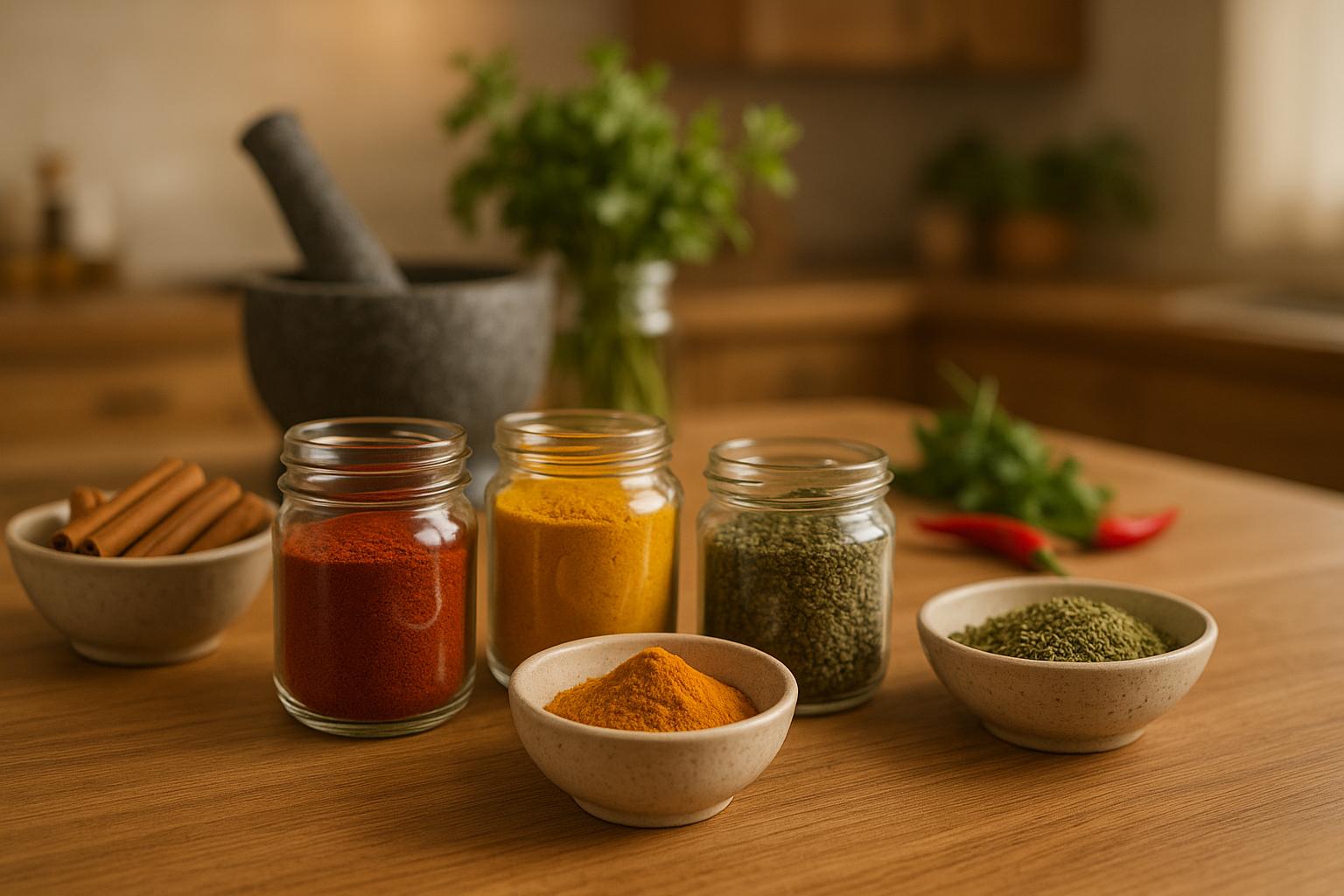
Spices can transform your cooking by adding depth, balance, and flavor. Whether you’re a beginner or an experienced cook, mastering spice pairing can elevate your dishes. Here’s a quick overview of what you’ll learn:
- Understand Flavor Profiles: Sweet, earthy, spicy, and more – know how each spice contributes to a dish.
- Pairing Principles: Balance contrasting flavors like sweet and savory or reinforce similar ones for harmony.
- Timing Matters: Add spices at the right cooking stage for maximum flavor impact.
- Regional Inspiration: Explore spice blends from South Asia, the Middle East, and East Asia.
- Practical Tips: Start small, use fresh spices, and keep a spice journal to refine your skills.
Key takeaway: Spice pairing is both an art and science. Start simple, trust your palate, and experiment to discover combinations that work best for you. Ready to spice up your cooking? Let’s dive in!
The Beginner’s Guide to Cooking with Spices (with Testing)
Understanding Spice Flavor Profiles
Each spice brings a distinct personality to the kitchen, influencing both the flavor and aroma of your dish. By understanding these characteristics, you can make smarter choices about which spices to combine and how to use them effectively. Spices don’t just season food – they transform it, shaping its overall profile in profound ways.
Your sense of smell is a key player in how you experience spice flavors. Humans can identify around 10,000 different odors, and the volatile compounds in spices are what give them their enticing aromas. These aromas are often the first thing that draws us to a meal, sparking our appetite and setting the stage for the flavors to come.
"Spices can transform a meal by adding a range of flavors, from a hint of sweetness to a kick of heat. They also give beautiful aromas that are often our first determining factor for whether we want to eat a meal or not." – Cook Smarts
Mastering spice flavor profiles also helps you avoid missteps. Using too much of a spice can overpower your dish, while too little can leave it underwhelming. A good approach is to add spices gradually, tasting as you go, until you achieve a harmonious balance.
Understanding these profiles lays the groundwork for more advanced pairing techniques, which we’ll dive into later. For now, let’s look at how spices are grouped into flavor categories to guide your choices.
Main Flavor Categories
Spices can be grouped into several broad flavor categories, each serving a unique role in cooking. These categories include sweet, savory/umami, spicy/heat, citrusy, and earthy. Additionally, spices often reflect the five basic tastes: bitter, salty, sour, sweet, and umami.
But there’s more to spices than just these basic categories. They can also carry cooling, floral, fruity, or woody notes, which explains why certain spices complement each other so well.
Here’s a quick reference table to help you understand how different spices fit into these categories:
| Flavor Classification | Common Spices | Best Uses |
|---|---|---|
| Hot (Pungent) | Black and white peppers, mustard, red pepper | Adding heat and intensity to dishes |
| Mild Flavored | Paprika, coriander | Building base flavors without overwhelming |
| Aromatic | Clove, cumin, dill seed, fennel seed, nutmeg, mace, cinnamon | Creating depth and complexity |
| Aromatic Herbs and Vegetables | Thyme, basil, bay leaf, marjoram, shallot, onion, garlic | Foundation building and finishing touches |
Sweet spices like cinnamon and nutmeg are versatile, working beautifully in both desserts and savory dishes. They can enhance sweetness, amplify flavors, or even tone down bitterness. For instance, a pinch of cinnamon can elevate a simple tomato sauce, while nutmeg adds sophistication to a creamy pasta dish.
Earthy spices like cumin and paprika provide a grounding element, anchoring more volatile aromatics. These spices often serve as the backbone of spice blends, creating depth without adding heat.
Citrusy spices, such as coriander seeds, bring a refreshing brightness to dishes. They’re particularly useful for balancing rich, heavy meals or adding a fresh note to hearty stews.
Pungent spices like black pepper and mustard deliver sharpness and energy to your cooking. Use them sparingly, though – a little can go a long way.
Beyond flavor categories, understanding how to control spice intensity is just as crucial.
Heat Levels and Intensity
Spice heat can dramatically alter a dish, and understanding it is key to creating balanced flavors. The heat in peppers comes from capsaicinoids, primarily capsaicin, while black peppercorns owe their spiciness to piperine .
The Scoville Scale is the standard for measuring a pepper’s heat, based on its capsaicin content. The scale ranges from 0 SHU (bell peppers) to a fiery 3.2 million SHU (Pepper X). For comparison, jalapeños score between 1,000 and 10,000 SHU, while scotch bonnet peppers range from 100,000 to 350,000 SHU.
Interestingly, a pepper’s heat can vary depending on environmental factors like where and how it was grown. This means even the same type of pepper can differ in intensity. Always taste-test when working with hot spices, especially if it’s a new batch or brand.
Capsaicin is fat-soluble, which is why dairy products like yogurt, sour cream, or milk are so effective at cooling down spicy dishes. The protein casein in dairy binds to capsaicin, neutralizing its heat.
If you’ve gone overboard with spice, there are several ways to tone it down:
- Add dairy like yogurt or cream.
- Incorporate fats, such as nut butter or oil, to dissolve capsaicin.
- Use starchy ingredients like rice or potatoes to absorb the heat.
- Balance the flavor with sweetness (sugar or honey) or acidity (lemon or lime juice).
- Dilute the dish by increasing the base ingredients.
For beginners, start with milder spices. Poblano peppers (1,000–2,500 SHU) and banana peppers (0–500 SHU) offer gentle heat without overwhelming your dish. As you build confidence, you can experiment with spicier options like cayenne (25,000–50,000 SHU) or habanero peppers (100,000–350,000 SHU).
With practice, you’ll develop a deeper understanding of how to balance spice heat and flavor, paving the way for more adventurous cooking.
Basic Principles of Pairing Spices
Pairing spices successfully is both a science and an art. It’s about blending flavors that complement each other rather than clash. By understanding why certain spices work together, you can move beyond simply following recipes and start crafting your own distinctive blends. With a solid grasp of flavor profiles, these principles will help you refine your spice pairing skills.
At the heart of great spice pairing is the balance of the five basic tastes: sweet, sour, salty, bitter, and umami. When these tastes are in harmony, your dishes feel complete, multidimensional, and satisfying.
"The goal of using spices is not just to add heat or intense bursts of flavor, but to create a balanced, aromatic, and complex palate that complements the primary ingredients of your dish." – Sujan Sarkar, Chef-Owner of Indienne
Molecular Compatibility
Some of the best spice pairings happen because the spices share similar chemical compounds, a concept scientists call molecular compatibility. For example, chocolate and vanilla pair beautifully because both contain vanillin, which enhances their natural sweetness. Similarly, tomato and basil share eugenol, giving them a naturally harmonious flavor profile.
You don’t need to memorize these compounds to master spice pairing – trust your nose. If the aromas blend well, chances are the flavors will too.
Balancing Contrast and Reinforcement
Pairing spices isn’t just about molecular harmony – it’s also about finding the right balance between contrasting and reinforcing flavors. This balance can elevate your spice blends to new heights. Reinforcement involves layering similar flavors to deepen the taste, while contrast uses opposing flavors to create balance and keep any one note from dominating the dish.
For instance, salt enhances sweetness and counteracts bitterness. Sourness can brighten a dish and offset both sweetness and heat. Umami, meanwhile, has a rounding effect, tying all the flavors together into a cohesive whole.
Start small when introducing contrasting elements. A well-placed pinch of spice can transform an ordinary dish into something memorable without overwhelming it.
Timing and Layering Spices
Beyond pairing the right spices, the timing of when you add them plays a crucial role in defining a dish’s complexity. Spices release their flavors at different rates, so introducing them at the right moment can make all the difference.
Layering spices means adding them at various stages of cooking to maximize their impact. Early-stage spices like toasted cumin, coriander, or mustard seeds release their essential oils when heated in oil, forming a flavorful base. Mid-cooking spices, such as paprika or turmeric, should be added once aromatics have softened to build depth. Finally, delicate herbs and citrus zest should be added at the very end to preserve their brightness.
Toasting whole spices before grinding them is another way to unlock deeper flavors. A quick toast in a dry pan over medium heat can elevate ordinary spices into something extraordinary.
Salt deserves special attention in the layering process. Adding it early helps flavors meld, but reserving a bit for the end can brighten and balance the overall dish.
When experimenting with your own spice blends, aim for harmony among sweet, salty, bitter, and spicy notes. Start with a base of primary spices, then add accents to enhance complexity. And remember: you can always add more, but you can’t take it out once it’s in the pot.
sbb-itb-593149b
Regional Spice Pairing Methods
Spices are more than just ingredients; they’re the heart of regional cuisines, carrying the essence of local climates, ingredients, and traditions. Over centuries, different regions have developed distinct methods of combining spices, creating authentic flavors and inspiring endless possibilities for new pairings.
South Asian Spice Combinations
South Asian cuisine is a masterclass in intricate spice blends, with over 60 spices commonly used across the region. Staples like turmeric, cumin, coriander, and cardamom take center stage, often brought to life through a technique called tempering (or tadka).
"Spices are the soul of South Asian cuisine. They elevate a simple meal to a symphony of flavors that resonate with warmth and vibrancy." – East India Company Restaurants
Tempering involves heating whole spices in oil to release their essential oils before mixing them with other ingredients. This method, dating back to the Harappan Civilization around 3000 BC, not only intensifies flavors but also enhances the health benefits of spices. For example, turmeric is known for its anti-inflammatory and antioxidant properties, while cumin supports digestion.
South Asian cooking also highlights spice blends like garam masala, chaat masala, sambar powder, and various curry powders. To recreate these flavors, try blooming whole spices like mustard seeds, cumin, or fenugreek in hot oil until they sizzle, then add ground spices such as turmeric and coriander alongside aromatics like ginger and garlic.
Middle Eastern and North African Blends
Middle Eastern and North African cuisines are celebrated for their bold and balanced spice blends, which layer earthy, tangy, sweet, spicy, and savory notes.
Za’atar, a signature Middle Eastern blend, combines dried oregano, thyme (or marjoram), sumac, and toasted sesame seeds. The herbs add depth, sumac provides a bright, tangy kick, and sesame seeds contribute a nutty richness. As chef Zachary Engel of Galit in Chicago puts it:
"Since it’s not one singular spice, za’atar has a lot of balance in its overall flavor – vegetal, nutty, lemony, and zesty."
Moroccan ras el hanout is another standout, often made with 10 to 30 spices, including cumin, coriander, cinnamon, cloves, and turmeric. Some blends add chili or cayenne for heat, while others include rose petals or lavender for floral notes.
Baharat, another classic blend, varies by region but typically features black pepper, allspice, cardamom, cinnamon, cloves, cumin, and nutmeg. This warm, aromatic mix works beautifully in dishes like lamb, rice, and vegetable stews, showcasing the art of balancing flavors without overwhelming the palate.
East Asian Flavor Builders
East Asian cuisines take a more minimalist approach, focusing on precise combinations of spices to balance hot, savory, sour, and sweet flavors.
Chinese Five Spice is a perfect example, blending star anise, Sichuan peppercorns, cinnamon, fennel seeds, and cloves to represent the five basic tastes – sweet, salty, bitter, sour, and umami. Similarly, Japan’s Shichimi Togarashi, a seven-spice mix from the Edo Period (circa 1625), includes Sichuan peppercorns, sesame seeds, red chili peppers, poppy seeds, nori, and ground ginger.
Sichuan cuisine takes spice pairing to another level with the mala sensation, where the numbing effect of Sichuan peppercorns balances the heat of chile peppers. Common East Asian spices like cassia (Chinese cinnamon), coriander, galangal, garlic, ginger, and star anise are often complemented by fresh aromatics such as basil, cilantro, lemongrass, mint, and scallions. This approach proves that even minimal use of spices can create a flavor profile that’s both subtle and deeply satisfying.
Practical Tips for Experimenting with Spices
When it comes to experimenting with spices, a little preparation goes a long way. By starting small, staying organized, and choosing high-quality ingredients, you can confidently turn theoretical knowledge into flavorful kitchen creations. These tips will help you refine your skills and create memorable dishes.
Start with Simple Combinations
Keep it straightforward – stick to two or three spices at a time to understand how they interact. Once you’ve mastered the basics, you can gradually add complexity. Pre-made spice blends are a great place to begin, as they’ve been perfected over generations.
Take Italian seasoning, for example. It combines basil, oregano, rosemary, thyme, garlic, and red pepper, showing how multiple herbs can harmonize without overpowering one another. Similarly, poultry seasoning blends parsley, sage, rosemary, and marjoram to create a warm, earthy flavor profile.
When creating your own combinations, consider the main ingredient first. For beef dishes, try a simple trio of lemon juice, rosemary, and black pepper. The lemon brightens the richness of the meat, rosemary adds an aromatic touch, and black pepper provides a subtle heat. For poultry, ginger, orange peel, and sage work beautifully, with the ginger adding warmth, orange peel bringing freshness, and sage offering earthy depth.
Fish dishes pair well with dill, lemon juice, and mustard seeds. Dill’s grassy freshness complements the delicate fish, lemon adds acidity, and mustard seeds provide a gentle peppery kick. Vegetables also shine when paired with the right spices. Green vegetables benefit from savory, chives, and onions, while yellow and orange vegetables like squash or carrots pair well with cinnamon, nutmeg, orange juice, and thyme.
Here’s a quick reference table to guide your spice experiments with common proteins:
| Protein | Compatible Spices |
|---|---|
| Beef | Basil, Bay Leaf, Caraway, Cumin, Fenugreek, Garlic, Ginger, Marjoram, Onion, Oregano, Parsley, Rosemary, Sage, Savory, Tarragon, Thyme |
| Chicken | Anise, Basil, Bay Leaf, Borage, Chives, Cinnamon, Cumin, Dill, Fenugreek, Garlic, Ginger, Lovage, Marjoram, Onion, Oregano, Parsley, Rosemary, Saffron, Sage, Savory, Tarragon, Thyme |
| Fish | Anise, Basil, Borage, Caraway, Chervil, Chives, Dill, Fennel, Garlic, Ginger, Marjoram, Oregano, Parsley, Rosemary, Saffron, Sage, Savory, Tarragon, Thyme |
As you experiment, aim to balance sweet, sour, spicy, and earthy elements. Start with familiar flavors before introducing new ones. Over time, your palate will develop, and you’ll gain the confidence to craft your own spice blends.
Keep a Spice Journal
A spice journal is an invaluable tool for learning and improving. By documenting your experiments, you can track what works, avoid repeating mistakes, and recreate successful dishes.
Record specifics like the spices used, their quantities, cooking methods, and results. Organize the journal into categories – meats, vegetables, desserts, and beverages – so you can easily find information later. Note the types of flavors you’re aiming for, such as sweet, salty, sour, bitter, or umami.
Write down your recipe plan before you start experimenting. This gives you a baseline to track changes and see how they affect the final dish. When you find a winning combination, record the exact proportions so you can replicate it consistently.
Your journal will also help you understand how spices behave. Pay attention to how they change when heated, which fade quickly, and which become more harmonious over time. Over time, this knowledge will make you more intuitive when combining spices.
Sourcing and Storing Spices
The quality of your spices can make or break your dishes. Whenever possible, buy whole spices and grind them fresh to preserve their flavor and shelf life. Whole spices retain their essential oils longer, delivering more intense flavors when freshly ground.
For fresher options, shop at ethnic markets or local spice merchants. These vendors often have quicker turnover, meaning their spices haven’t been sitting on shelves for long. Look for suppliers that provide details like harvest dates, which indicate a commitment to quality.
Buy spices in small quantities, as they typically last no more than six months before losing potency. When assessing quality, check for vibrant colors, strong aromas, and smooth textures. Dull colors or weak smells are signs of aging. As Krissy Scommegna, founder of Boonville Barn Collective, advises:
"If the color is looking faded or you find yourself using much more than usual to get the same flavor, it’s time to buy fresh spices. If you smell them and there’s not much of an aroma, they probably won’t have much flavor to imbue if you cook with them".
Store spices in airtight containers, away from heat, light, and moisture. Label them with purchase dates to track freshness. Chef Palak Patel emphasizes:
"Nothing sucks the life out of fresh spices faster than heat and moisture. Rather than storing them in a cabinet near your stove or directly above your stove, opt for a dark and relatively cool, dry space."
Avoid storing spices in humid environments like refrigerators or freezers. However, bulk spices can be frozen to preserve their oils for longer periods. Properly stored whole spices can stay fresh for three to five years, while ground spices last about a year. Chile powders maintain their flavor for one to two years when stored correctly.
Use dry measuring spoons to prevent moisture from entering spice containers. Regularly check your spices for aroma, flavor, and color. If they’ve lost their potency, it’s time to replace them. Fresh, well-stored spices are the cornerstone of successful flavor experiments.
Conclusion
Mastering spice pairing can turn everyday meals into vibrant, flavorful creations that showcase your personal touch.
Key Takeaways
Getting familiar with flavor profiles and balancing them is the secret to successful spice pairing. Knowing whether a spice leans sweet, earthy, or pungent helps you combine them thoughtfully, ensuring no single flavor dominates unless intended. As French chef Éric Guérin beautifully puts it:
"A spice should tell a story, not erase another one."
Timing and layering spices during cooking can unlock deeper flavors. Adding spices at different stages allows their profiles to develop fully, creating a more complex and satisfying dish than if everything were added at once.
Regional spice traditions are a treasure trove of inspiration. From the bold blends of South Asia to the aromatic combinations of the Middle East and the balanced profiles of East Asia, these time-honored pairings provide a solid foundation for experimenting in your kitchen.
Armed with these basics, you can confidently start creating your own spice-infused masterpieces.
Next Steps for Home Cooks
Begin with simple pairings to build your confidence. For instance, try ginger and orange zest with poultry, or roast vegetables with an unexpected combination like cardamom and mushrooms.
Experiment with crafting your own spice blends. Draw inspiration from global traditions – like an Asian-inspired mix featuring lemongrass and galangal – or create a custom rub for meats. This not only personalizes your dishes but also helps you cut back on salt and sugar.
Dive into the origins and traditional uses of spices to better understand how different cultures layer flavors in their cuisines. This knowledge can guide your own experiments.
Above all, trust your palate. Add spices gradually, taste frequently, and consider keeping a spice journal to track your favorite combinations and discoveries.
The possibilities with spice pairing are endless. With these tools and tips, you’re ready to transform even the simplest ingredients into something extraordinary. Let your creativity shine!
FAQs
What’s the best way for beginners to start experimenting with spice pairings?
If you’re just starting out in the kitchen, stick with simple, tried-and-true spice combinations to ease into the world of seasoning. For instance, a mix of paprika, thyme, and black pepper works wonderfully on chicken, while cumin and turmeric bring warmth and depth to lentils. These blends are straightforward yet effective, enhancing the flavor of your ingredients without overpowering them.
When it comes to spices, less is more at first. Start with a pinch, taste, and adjust gradually to find the balance you like. You can also play around with contrasting flavors – try pairing a sweet spice like cinnamon with a savory one like cumin for a surprising twist. The most important part? Taste along the way and enjoy the process of discovering what works best for you!
What mistakes should I avoid when pairing spices?
When working with spices, a few missteps can throw off the flavor of your dish. One frequent mistake is tossing spices straight into boiling water. Spices shine best when their essential oils and aromas are released through heat – specifically in fat like oil or butter. This step adds a layer of depth and richness to your dish.
Another common issue? Using stale spices. Over time, spices lose their punch, leaving your food tasting flat. To keep your flavors bold and vibrant, make it a habit to check your spice stash regularly and replace anything that’s past its prime. And don’t forget to strike the right balance – over-seasoning can overwhelm your dish, while under-seasoning leaves it bland. Finding that sweet spot is crucial to enhancing your ingredients.
Lastly, keep in mind that heat transforms spices. Adding them at different cooking stages can unlock a variety of flavors. For instance, lightly toasting spices before using them can amplify their natural aroma and taste, creating a more layered and complex flavor profile.
What makes regional spice blends unique, and how can I use them in my cooking?
Regional spice blends carry the essence of their origins, shaped by local ingredients, traditions, and history. Take Ras el Hanout from Morocco, for example – it combines warm spices like cumin, coriander, and cinnamon, creating a flavor profile that’s both comforting and complex. Meanwhile, India’s garam masala showcases aromatic spices such as cardamom, cloves, and nutmeg, adding depth to countless dishes. These blends do more than enhance taste – they tell a story of the culinary heritage they represent.
Incorporating these blends into your cooking is easier than you might think. Add them to marinades, soups, or roasted dishes to elevate your meals. For a Middle Eastern flair, sprinkle za’atar over roasted vegetables, or season grilled meats with adobo to infuse them with bold, savory notes. Playing with these spices can bring the flavors of the world to your table, turning everyday dishes into something truly special.
