

3D-printed homes are faster, cheaper, and more efficient than traditional construction. They can cut costs by up to 45%, reduce build times by 20x, and minimize material waste by 95%. These homes also support sustainability by using less water, energy, and materials, while offering unique designs like curved walls and intricate details.
Key Insights:
- Speed: Homes can be printed in 24-48 hours, saving months of construction time.
- Cost: Prices are up to 45% lower, with labor costs reduced by 80%.
- Environmental Impact: 3D printing cuts concrete waste by 95% and energy use by 50%.
- Design Flexibility: Enables complex, custom designs that are hard to achieve with traditional methods.
- Market Growth: The 3D-printed housing market is projected to grow from $36.9M in 2023 to $2.9B by 2032.
Top Projects:
- SQ4D House (New York, USA): Affordable, durable, 1,407 sq ft home built in 10 days.
- ICON & Lennar Community (Texas, USA): World’s first 3D-printed neighborhood with 100 homes.
- PERI House (Germany): Two-story home with minimal waste and high energy efficiency.
- WinSun Apartment Block (China): Multi-story building using recycled materials.
- Municipal Building (Dubai, UAE): World’s largest 3D-printed building.
- Fibonacci House (Canada): Compact, eco-friendly home supporting affordable housing.
- Prvok House (Czech Republic): Durable, 463 sq ft home with reusable materials.
- Mense-Korte House (Germany): Certified 3D-printed home with advanced insulation.
- COBOD BOD2 House (Denmark): Modular home with low CO₂ concrete.
- TAM Social Housing (Latin America): Prefabricated homes addressing housing shortages.
Quick Comparison Table:
| Project | Location | Size | Build Time | Cost | Key Features |
|---|---|---|---|---|---|
| SQ4D House | New York, USA | 1,407 sq ft | 10 days | $299,999 | Durable, affordable, fire-resistant |
| ICON & Lennar Community | Texas, USA | 600–2,000 sq ft | 5-7 days/home | $140K–$160K | Solar panels, smart home features |
| PERI House | Germany | 1,722 sq ft | 100 hours | – | Energy-efficient, minimal waste |
| WinSun Apartment Block | China | Multi-story | 50-70% faster | – | Recycled materials, earthquake-proof |
| Municipal Building | Dubai, UAE | 6,890 sq ft | 50–70% faster | $140K (similar) | Gypsum-based material, 9.5m tall |
| Fibonacci House | Canada | 376 sq ft | 5 weeks | $100,000 | Compact, eco-friendly, Airbnb-listed |
| Prvok House | Czech Republic | 463 sq ft | 32 hours | – | Reusable materials, unique design |
| Mense-Korte House | Germany | 1,722 sq ft | 100 hours | – | Curved walls, advanced insulation |
| COBOD BOD2 House | Denmark | 969 sq ft | 28 hours | $200,000 | Modular, low CO₂ concrete |
| TAM Social Housing | Latin America | 600–1,200 sq ft | 6 weeks | $10K–$50K | Prefabricated, low-carbon materials |
3D-printed homes are reshaping the housing industry with faster builds, lower costs, and eco-friendly solutions. These projects show how this technology is solving housing shortages and improving construction efficiency worldwide.
TOP 10 3D PRINTED HOUSES FROM 2022!!!
What Makes 3D-Printed Homes Different
3D printing is reshaping the construction industry by introducing advanced materials, reducing costs, and enabling groundbreaking designs.
Materials That Redefine Construction
At the heart of 3D-printed homes are specialized concrete blends enhanced with additives. These blends are engineered to hold their form during the layer-by-layer printing process, making them far more advanced than traditional concrete.
Cost and Speed: A Game Changer
Automation in 3D printing has the potential to slash construction costs by up to 35% and labor expenses by as much as 80%. For example, a 1,200-square-foot home can be printed in just 20 hours and completed in 10 days.
"3D printing automates the repetitive tasks that usually require extensive manual labor, dramatically cutting labor costs – often by as much as 80%" – Dr. Behrokh Khoshnevis, Professor at the University of Southern California
One notable example is in Kilifi, Kenya, where 14Trees aims to produce up to 52 homes using a single BOD2 printer from COBOD. This approach is expected to reduce construction costs by 20% compared to traditional methods. Beyond cost savings, these efficiencies also support more environmentally friendly construction practices.
A Greener Approach to Building
3D printing minimizes concrete waste by up to 95% through precise material placement and reduces energy consumption by 50% compared to conventional methods.
"By precisely depositing materials only where needed, we drastically reduce waste and energy usage, making 3D printing one of the most sustainable construction methods" – Anna Cheniuntai, CEO of Apis Cor
Challenges Holding Back Adoption
Despite its promise, 3D printing in construction faces hurdles. Material costs and availability are the biggest concerns for industry professionals.
| Top Challenges in 3D Printing for Construction |
|---|
| Materials: High cost and limited availability of specialized concrete blends (54%) |
| Workforce: Shortage of skilled operators and technicians (43%) |
| Equipment: Expensive and scarce industrial printers (42%) |
| Regulation: Building codes not yet adapted for 3D-printed structures |
| Technical Issues: Environmental factors affecting print quality |
Unlimited Design Possibilities
Even with these obstacles, the design flexibility offered by 3D printing is unmatched. Architects can experiment with complex curves, intricate details, and organic shapes that are nearly impossible – or prohibitively expensive – with traditional methods. This allows for fully customized homes tailored to the unique features of a site and the preferences of the homeowner.
The global market for 3D-printed housing is projected to grow from $59.93 million in 2024 to $2.9 billion by 2032. However, achieving this growth will require overcoming challenges related to materials, skilled labor, and regulatory frameworks.
1. SQ4D House, Riverhead, New York, USA
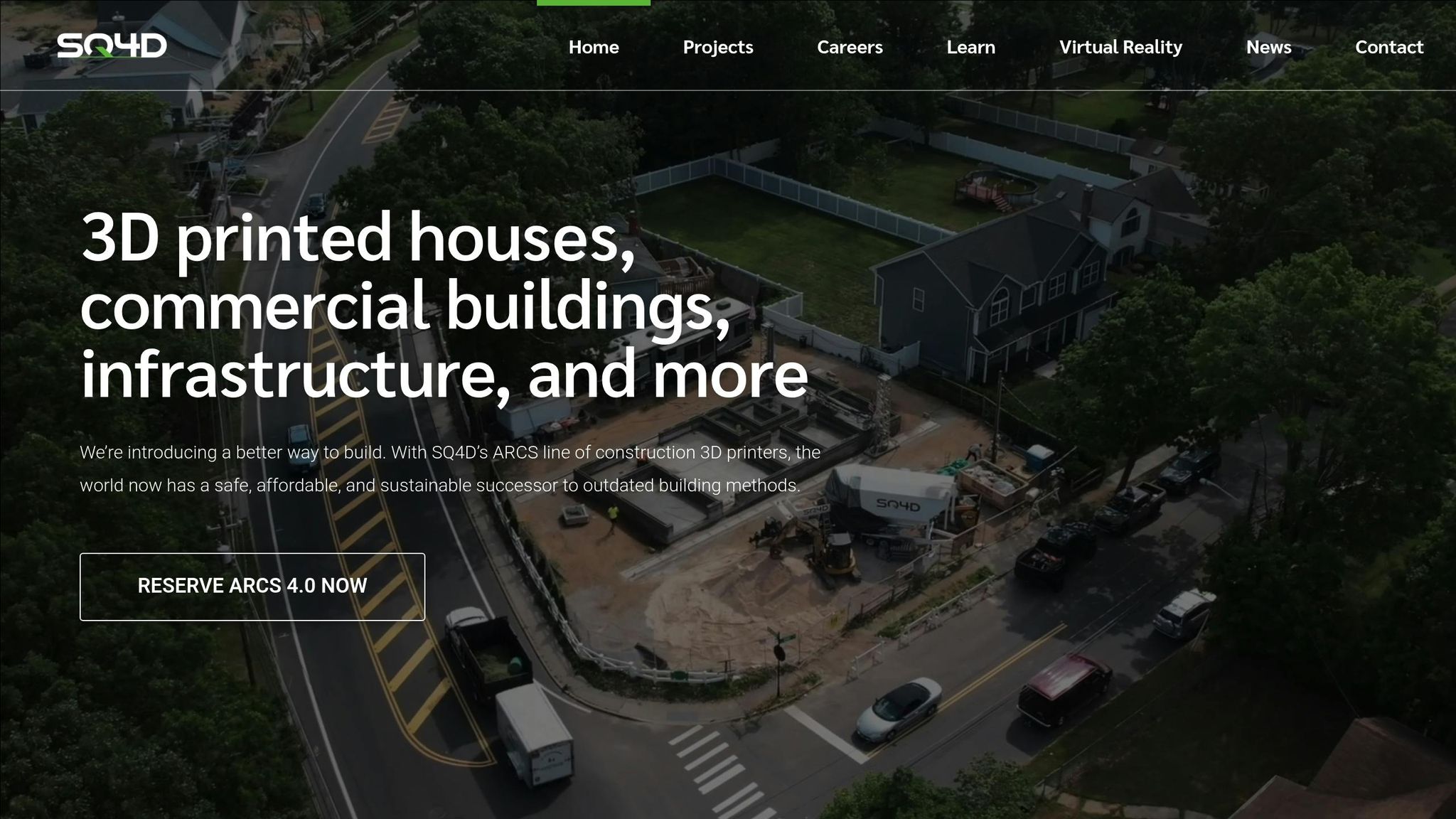
The SQ4D House in Riverhead highlights how 3D-printed construction can quickly produce affordable, high-quality homes. This 1,407-square-foot property includes three bedrooms, two bathrooms, and a two-car garage, making it a practical solution for areas with high housing costs. It’s a clear example of how 3D printing can compete in challenging housing markets.
Location
Located in Riverhead, New York, on Long Island, this home was listed at $299,000 – far below the area’s median home price of $450,000. At $299,999, it’s priced 50% lower than comparable new builds, directly addressing the region’s affordable housing challenges.
Primary Materials
SQ4D uses a locally sourced concrete blend made of sand, water, and Portland cement. This material boasts a compressive strength of nearly 9,000 psi and includes rebar reinforcement, which allows the home to come with a 50-year warranty.
The concrete offers more than just durability. It’s fire-resistant, can endure prolonged exposure to floodwaters, and naturally deters pests like termites, ants, and rodents.
"Our unique building process strictly utilizes locally sourced, sustainable, abundant materials." – SQ4D
Construction Time
Thanks to SQ4D’s ARCS technology, the structural components – footings, foundation, and walls – were printed in under 10 days. The actual printing process took just 6–8 hours per day, with speeds reaching 400–700 inches per minute. According to SQ4D:
"With ARCS by SQ4D, building full-scale homes is now possible in a matter of hours, not days or months."
This method is about three times faster than traditional construction techniques.
Design Features
The home’s walls showcase a subtle curved texture created by the printer’s directional changes. The technology also allows for custom geometric designs, such as curved kitchen counters, which are difficult and expensive to achieve with conventional methods.
"This is the future, there is no doubt about it… We can make things more affordable and safer. We can use the technology to tackle homelessness, and aid in disaster relief in an eco-friendly way." – Kirk Andersen, Director of Operations at SQ4D Inc.
The design proves that 3D-printed homes can combine structural strength and visual appeal without sacrificing the practical layouts and features buyers expect.
2. Icon & Lennar Community, Austin, Texas, USA
The Icon & Lennar community in Wolf Ranch stands as the world’s first large-scale 3D-printed neighborhood, featuring 100 homes. This project highlights how robotic construction can go beyond individual houses to shape entire housing developments. It’s a leap forward, showing how 3D printing technology is reshaping the way communities are built. The neighborhood’s strategic location and thoughtful design further enhance its appeal.
Location
Situated in Wolf Ranch, just north of Austin, Texas, the homes are priced between $475,990 and $559,990. For those looking to move in quickly, select options in the high $300,000s are also available.
Primary Materials
Icon relies on a special cement mix tailored for Texas’s climate. They’ve also developed CarbonX, an advanced concrete blend designed to perform well in local weather conditions.
This material creates walls that are 350% stronger than standard code requirements and offers excellent energy efficiency. Exterior walls provide over 2.5 hours of fire resistance, meeting ASTM E119 standards, while interior walls offer 117 minutes of fire resistance.
"ICON homes are 3D printed, layer by layer with a high-tech robot using a specialized cement mix. The result is superior insulation that reduces temperature fluctuations and enhances energy efficiency." – ICON
The concrete’s thermal properties help cut heating and cooling costs by efficiently absorbing, storing, and releasing heat – outperforming traditional timber and sheetrock construction.
Construction Time
Icon’s Vulcan construction system significantly speeds up the building process compared to traditional methods. A 1,000–2,150 sq ft home can be printed in just 5–7 days, compared to the 16 weeks typically required for timber framing. By the second year of the Wolf Ranch project, Icon had deployed 11 printing machines, cutting the print time in half and enabling the production of two homes per week. This streamlined process underscores the project’s focus on efficiency and modern design.
Design Features
The community offers eight distinct floor plans and twenty-four unique elevations, created in collaboration with the architectural firm Bjarke Ingels Group (BIG). Homes range from 1,500 to 2,100 square feet, featuring 3–4 bedrooms and 2–3 bathrooms, all styled in a modern Texas ranch aesthetic.
Each home incorporates advanced technology and eco-friendly features. Rooftop solar panels provide power, while Lennar’s Connected Home package includes a Ring Video Doorbell Pro, Schlage Encode™ Smart WiFi deadbolt, and Honeywell Home T6 Pro WiFi smart thermostat. Additionally, the Wolf Ranch security package ensures added peace of mind for residents.
"For the first time in the history of the world, what we’re witnessing here is a fleet of robots building an entire community of homes. And not just any homes, homes that are better in every way… better design, higher strength, higher energy performance and comfort, and increased resiliency." – Jason Ballard, co-founder and CEO, ICON
3. PERI House, Beckum, Germany
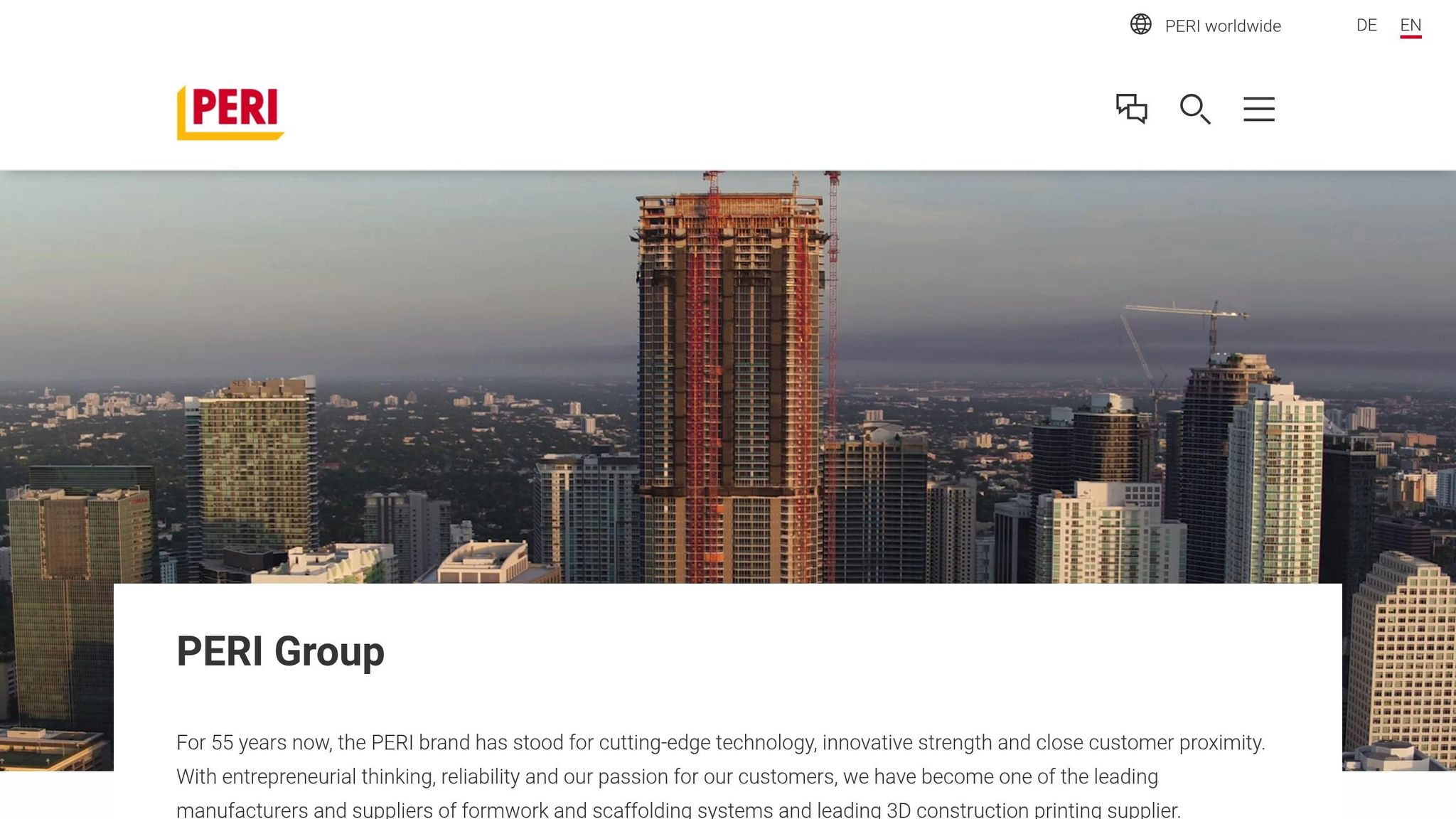
The PERI House stands as Germany’s first 3D-printed residential building, marking a significant step in Europe’s embrace of additive manufacturing for architecture. This project, a collaboration between PERI Group and Danish tech partner COBOD, showcases the potential of 3D construction printing to reshape residential design.
Location
Situated in Beckum, Germany, this two-story home offers 1,722 sq ft (160 m²) of living space, evenly distributed across two floors. Its innovative approach earned it the German Innovation Award 2021 in the "Building & Elements" category.
Primary Materials
The house features triple-skin cavity walls filled with insulating material, delivering excellent thermal efficiency while minimizing material waste. Compared to traditional methods, this approach reduces concrete waste by up to 95% and cuts energy use by 50%. This precise material application reflects the environmental benefits of 3D printing in construction.
Construction Time
Printing the PERI House took 100 hours, but the overall project – including planning, approvals, and finishing – spanned nearly eight months. The team intentionally slowed the printing process to refine techniques.
Leonhard Braig, Production & Supply Chain Director at PERI, explained their deliberate pace:
"As this is the first building of its kind, we are making a point of printing at a slower rate than what is actually possible. We want to take the opportunity to gain further experience in day-to-day operations, as this will help us to leverage the cost reduction potential of our technology to a greater extent in the next project." – Leonhard Braig
The BOD2 printer used in this project can print 1 sq m of double-skin wall in under five minutes, hinting at the speed and efficiency possible in future projects.
Design Features
The home’s rounded walls, an uncommon feature in traditional construction, highlight the design flexibility of 3D printing.
"The concrete printing process affords us designers a high degree of freedom when we are designing buildings. With conventional construction methods, this would only be possible at great financial cost." – Waldemar Korte, architect and partner at MENSE-KORTE
Designed by MENSE-KORTE ingenieure+architekten using ALLPLAN software, the house integrates structural and interior design seamlessly. It incorporates smart technology, including Gira G1 for centralized control and Gira E3 design line switches. Notably, the 3D-printed walls meet all structural requirements without reinforcement.
Thomas Imbacher, Director of Innovation & Marketing at PERI Group, emphasized the significance of the project:
"Together with our Danish technology partner COBOD, the PERI team has shown that 3D concrete printing technology is ready for the market. The project in Beckum is a milestone that has set many things in motion in the industry." – Thomas Imbacher
4. Winsun 3D-Printed Apartment Block, Suzhou, China
In January 2015, WinSun, a Chinese company, unveiled an ambitious project at Suzhou Industrial Park: a five-story apartment building and a sprawling 1,100 sq. m villa. This project showcased the potential of 3D printing to revolutionize multi-story residential construction.
Location
Situated in Suzhou Industrial Park, this project demonstrated the feasibility of large-scale 3D-printed structures, combining innovation with practicality.
Primary Materials
At the heart of WinSun’s approach is its patented construction "ink." This material is a blend of recycled construction waste, including concrete, fiberglass, and sand. The result? A flexible, self-insulating, and earthquake-resistant material that also reduces dependence on quarried stone.
Construction Time
WinSun’s 3D printing method claims to cut production times by 50% to 70%. This efficiency is made possible by their massive 3D printer, which measures 20 feet tall, 33 feet wide, and 132 feet long. The process also reduces material usage by 60% and labor requirements by 80%. Not only does this lower costs, but it also minimizes on-site safety risks.
Design Features
The apartment block incorporates several forward-thinking design elements that highlight the advantages of 3D printing. The walls feature an internal zig-zag pattern for improved structural strength, while the hollow design enhances insulation. The printing process even accounts for spaces needed for pipelines, windows, and doors.
These components are printed off-site and then assembled at the construction site. The structures also include decorative details, showing off the aesthetic possibilities of 3D-printed architecture.
Ma Rongquan, Chief Engineer of China Construction No. 8 Engineering Bureau, inspected the completed buildings and affirmed their safety standards:
"These two houses are in full compliance with the relevant national standards. It is safe, reliable, and features a good integration of architecture and decoration. But as there is no specific national standard for 3D printing architecture, we need to revise and improve such a standard for the future."
WinSun’s Suzhou project is part of a larger mission to redefine construction methods. As stated by Yingchuang Building Technique (Shanghai) Co. Ltd. (WinSun):
"We will completely change the environmental damage of buildings and building materials and backward manufacturing. We are committed to becoming world advanced manufacturing. (smart innovation)".
This project marks a significant step forward in the development of 3D-printed residential architecture, paving the way for future advancements in the field.
5. Municipal Building, Dubai, UAE
In 2019, Dubai unveiled the world’s largest 3D-printed building, a bold step forward in construction technology. This project demonstrated how 3D printing can address the unique challenges of building in a desert environment, paving the way for future administrative structures utilizing this innovative approach.
Location
The Dubai Municipality building is located in the heart of Dubai, United Arab Emirates. This two-story administrative facility is a cornerstone of the city’s ambitious goal to construct 25% of its buildings using 3D printing technology by 2030. It highlights Dubai’s forward-thinking approach to urban development and its commitment to integrating advanced technologies.
Primary Materials
The building’s walls were crafted using a gypsum-based material applied by Apis Cor’s mobile 3D printer. Meanwhile, the foundation relied on traditional construction techniques, incorporating manually filled rebar and concrete columns for structural support.
Construction Time
Although specific timelines for this project remain undisclosed, similar initiatives provide valuable context. For instance, Dubai’s first fully functional 3D-printed office was completed in just 17 days at an approximate cost of $140,000. This showcases the potential of 3D printing to cut construction time by 50–70% and labor costs by 50–80%, compared to conventional methods.
Design Features
Standing 9.5 meters tall, the building spans 640 m² (about 6,890 ft²). Its design combines 3D-printed walls with a traditional foundation, ensuring both durability and efficiency in construction.
As Nikita Cheniuntai, CEO and Founder of Apis Cor, stated:
"Construction 3D printing technology is only at the early stages of development. We do extensive R&D work to make the technology available for mass use… This project is a huge step forward in the concrete 3D printing industry."
Sustainability and Future Impact
This project not only highlights rapid construction and robust design but also emphasizes sustainable practices. By 2030, Dubai aims to reduce construction waste by 60%, lower labor needs by 70%, cut costs by 90%, and shrink construction time by 80%. This initiative represents a significant step toward achieving those ambitious goals.
sbb-itb-593149b
6. Fibonacci House, British Columbia, Canada
Perched near the serene Kootenay Lake in Procter, British Columbia, the Fibonacci House stands as a milestone in Canadian 3D printing. This remarkable dwelling is celebrated as Canada’s first permitted 3D-printed home and the first of its kind to be listed on Airbnb. Beyond its innovative construction, it serves a greater cause – Airbnb proceeds are directed to World Housing, a charity dedicated to affordable housing.
Location
The Fibonacci House is situated in Procter, British Columbia, with stunning views of Kootenay Lake. While showcasing cutting-edge building techniques, it also carries a philanthropic mission. Every dollar earned through Airbnb rentals supports World Housing’s efforts to provide affordable homes [63, 64, 65].
Primary Materials
This home was built using a custom K1 concrete mix, enhanced with an accelerant for quick curing, and Laticrete 3D Printing Mortar M68 for the printing process. Locally sourced fir and cedar were used for the roof and window frames, adding a natural touch to the design. Insulating foam was applied around the foundation, and a grey elastomeric paint – offering 300% elasticity – was used to ensure water resistance and seal any microfractures [62, 3, 64].
Construction Time
The 3D-printed sections of the house were completed in just 11 days at the factory, while the walls were printed and installed on-site within five weeks by a team of four. The printing itself cost approximately $6,000, with the overall project totaling $100,000 [63, 64, 65].
Design Features
The house’s design takes inspiration from the Fibonacci sequence, often associated with the "golden ratio", a pattern found in nature – from seashells to flower petals. This curvilinear design not only reflects mathematical beauty but also optimizes space within its compact 376-square-foot (35-square-meter) layout [64, 65, 69].
"The design of the house was created using the Fibonacci Sequence, a well-known pattern that is often referred to as ‘the golden ratio’ which can be found in nature in numerous variations: in shells, flower petals, leaf formations, etc. The Twente Team was inspired by this ancient pattern that has always intrigued people of science, of art and of nature throughout history immemorial."
Inside, the home features two mezzanine sleeping areas, a fully functional kitchenette, and a tiled bathroom with a shower. A covered porch extends the living space outdoors, offering additional comfort.
The structure was assembled from just 20 modular pieces using TAM’s advanced 9-axis 3D printer, which combines an ABB robot with a custom-built gantry. This modular approach highlights the potential for scaling 3D-printed housing.
Ian Comishin, co-founder and president of TAM, shared his thoughts on the technology:
"What’s cool about 3D printing is after you program the house once then when we’re asked to do it again the printer can just keep printing the house over and over no matter where you drive the printer to."
7. Prvok House, Czech Republic
The Prvok House represents a key achievement in European 3D-printed construction, demonstrating how advanced concrete technology can create durable homes with a smaller environmental footprint. This compact home highlights the potential for fast and efficient construction, offering a performance level that rivals traditional building methods while aligning with the global push for more sustainable housing solutions.
Primary Materials
Prvok House relies on an innovative combination of materials. Its main structure is made from 3D-printed concrete, paired with a wooden framework. The concrete mix, developed by Master Builder Solutions, includes polypropylene microfibers for added durability. This advanced blend also incorporates nano-polypropylene fibers, plasticizers, and a setting accelerator to enhance both strength and ease of printing. The result is a concrete shell that is three times stronger than standard concrete and has an exterior lifespan of at least 100 years. Remarkably, once the structure reaches the end of its life, the material can be crushed and reused on-site for new construction. The concrete achieves a compressive strength of 25 MPa within 24 hours and 65 MPa after 28 days – similar to the strength used in bridge construction.
Construction Time
The house was 3D-printed in just 32 hours, with the entire project completed within two months. Using a Scoolpt robotic arm that prints at a speed of 15 cm per second, the construction process was seven times faster than traditional methods and produced 20% fewer CO₂ emissions. This approach underscores the efficiency and environmental advantages of 3D-printed housing.
Design Features
Despite its modest size of 463 sq ft (43 m²), the Prvok House offers a thoughtfully designed three-room layout, including a bathroom, a combined living and kitchen area, and a separate bedroom. Its design not only prioritizes sustainability but also supports a circular economy approach. As sculptor Michal Trpak explained:
"In the future, the owners can crush the building once it has run its useful life, and print it again with the same material directly on the location." – Michal Trpak, Sculptor
8. Mense-Korte House, Germany
The Mense-Korte House in Beckum, North Rhine-Westphalia, marks a major achievement in European 3D-printed construction. As Germany’s first fully 3D-printed house to meet complete certification under national building regulations, it showcases how advanced concrete technology can combine strength with design flexibility.
Location
Situated in Beckum, North Rhine-Westphalia, this groundbreaking project was a collaborative effort between MENSE-KORTE ingenieure + architekten, PERI construction company, and HeidelbergCement. It’s a landmark for the German construction industry, earning recognition from the German Design Council for its forward-thinking approach to residential building.
Primary Materials
The house was built using i.tech 3D, a specially developed concrete by HeidelbergCement. This material was tailored for 3D printing, meeting specific requirements like quick hardening, strong bonding between layers, smooth extrusion, and pumpability throughout the process.
Beyond its technical advantages, this concrete also aligns with sustainability goals. It’s 100% recyclable and includes a binder that reduces CO₂ emissions by about 55% compared to traditional cement. This eco-friendly approach reflects Germany’s push for greener construction methods.
Construction Time
Printing the house took 100 hours, roughly twelve and a half working days. However, the entire project spanned eight months due to its complexity and the precision required as Germany’s first certified 3D-printed home. The team intentionally slowed the printing process to ensure quality and gain valuable experience for future projects.
Design Features
The two-story Mense-Korte House offers 1,722 square feet (160 square meters) of living space. Its multi-layered wall design includes an outer façade, insulation cavity, central track, load-bearing concrete core, and inner track, enhancing both insulation and structural support.
3D printing enabled unique design elements, such as curved walls, lintels, and projections, without adding extra costs. The interior retains the horizontal lines characteristic of printed layers, blending functionality with aesthetics.
Architect Waldemar Korte highlighted the potential of this technology:
"3D printing allows a high degree of design freedom that would only be achievable in conventional building at enormous financial price. 3D construction printing profoundly alters how we construct, including the process of building homes." – Waldemar Korte, Architect
The project also showcased practical benefits in integrating building systems. Mechanical, electrical, and plumbing (MEP) penetrations were planned and executed more efficiently than traditional methods, saving both labor and materials. The German Design Council praised these advancements:
"With this production process, houses can be built faster, more economically and more sustainably. It also allows a highly individual design of living spaces." – German Design Council Jury
This combination of innovative design and efficient systems integration highlights the transformative impact of 3D printing on modern construction.
9. COBOD BOD2 House, Denmark
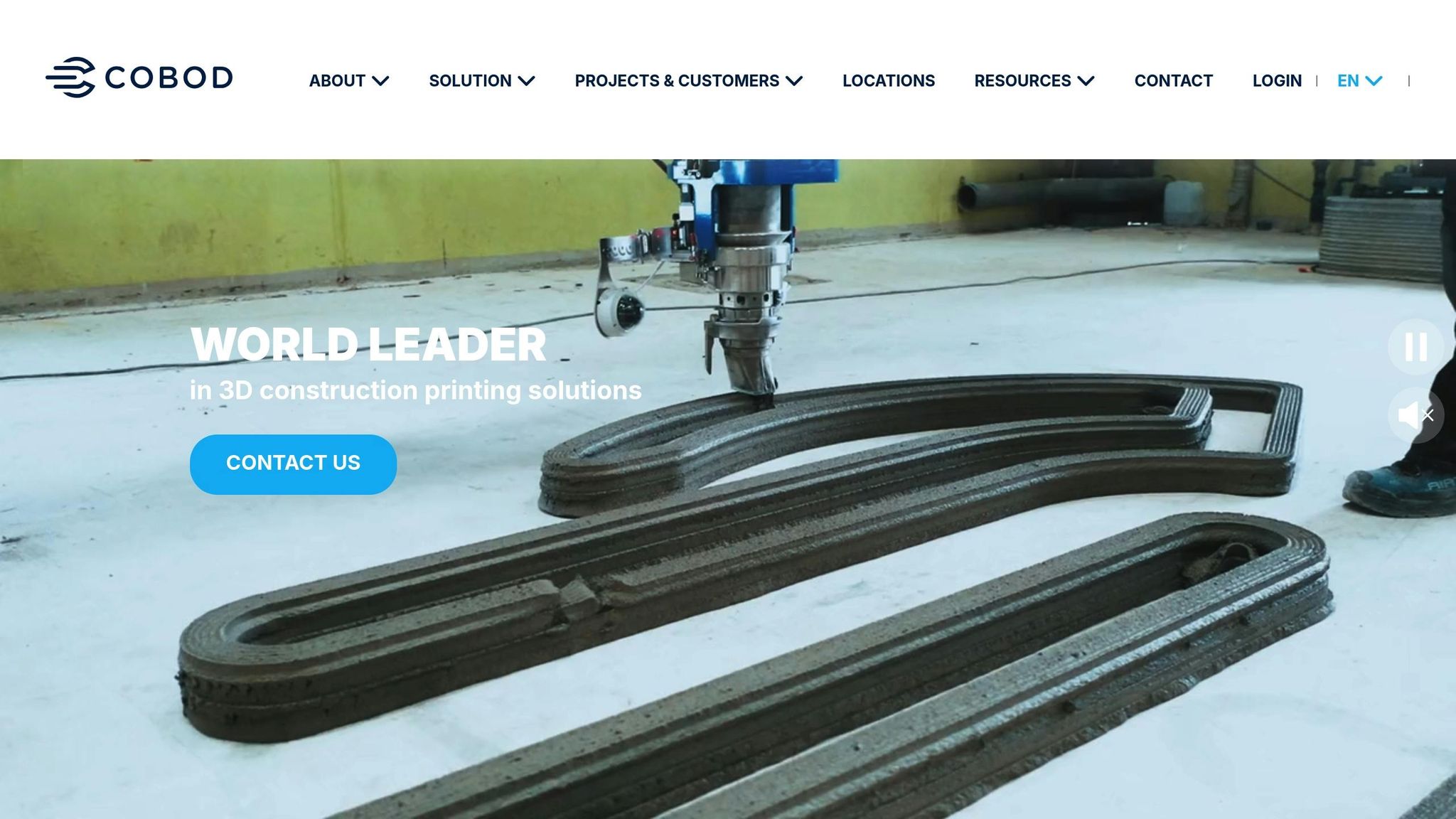
The COBOD BOD2 House in Denmark is a prime example of cutting-edge 3D construction printing. Created by COBOD International, this project demonstrates how modular printer designs and advanced material handling can simplify and accelerate building processes.
Location
The journey began in Copenhagen with the original Building on Demand (BOD) project, which served as a testing ground for this groundbreaking technology. The house was first printed in 2017 and then reprinted in 2019, completing the process in just 28 hours spread over three days – a massive improvement from the initial two-month timeline. This success laid the foundation for COBOD’s global reach, with the BOD2 printer now utilized in projects across Europe, Africa, and North America. The significant reduction in print time has opened doors for more widespread applications worldwide.
Primary Materials
A key feature of this project is its use of locally approved, low CO₂ concrete. Unlike many 3D printers restricted to mortars, the BOD2 printer can handle real concrete with aggregates up to 10 mm. This capability ensures compatibility with regional building standards. The concrete mix typically includes low CO₂ cement, local sand, and gravel, offering a significant reduction in environmental impact – up to 50% less carbon emissions compared to traditional 3D printing mortars. Some projects even incorporate recycled materials, further enhancing sustainability.
"3D printing is an adaptive construction process where material is added only where necessary… This allows for a reduction in resource consumption and can bring significant environmental and economic benefits while providing greater freedom in the architectural design of the building." – AKF
Construction Time
The BOD2 printer is not only precise but also impressively fast. For example, architecture students in Los Angeles used it to print the concrete walls of a 425-square-foot net-zero energy home in just 15 hours. In another case, a social housing project in Ireland cut construction time by 35%, completing walls in just 12 days.
"HTL.tech is extremely proud to be the first company in Europe to build a structure that complies with the rigorous new I.S. EN ISO/ASTM 52939:2023 additive manufacturing standard, representing a significant advancement in additive construction. The COBOD BOD2 3D printer was crucial in this accomplishment, enabling us to complete the Grange Close Social Housing Scheme 35% faster than traditional methods." – Justin Kinsella, Director of HTL.tech
Design Features
The BOD2 printer’s modular truss structure is highly versatile, making it suitable for a variety of construction projects. Its re-engineered tangential steel nozzle ensures precise control over surface texture and quality, often eliminating the need for additional plastering. The quick-release nozzle system allows operators to switch nozzles in under two minutes, accommodating different layer widths (20–100 mm) and heights (10–40 mm). The printer also adjusts for uneven foundations by measuring and correcting layer by layer, ensuring perfectly level walls – all while operating at speeds of up to 1,000 mm/s.
"3D printing redefines construction as it brings new architecture to life that would otherwise not have been possible by conventional brick and mortar methods." – Mikkel Brich, CEO of 3DCP Group
10. TAM‘s Social Housing Project, Latin America
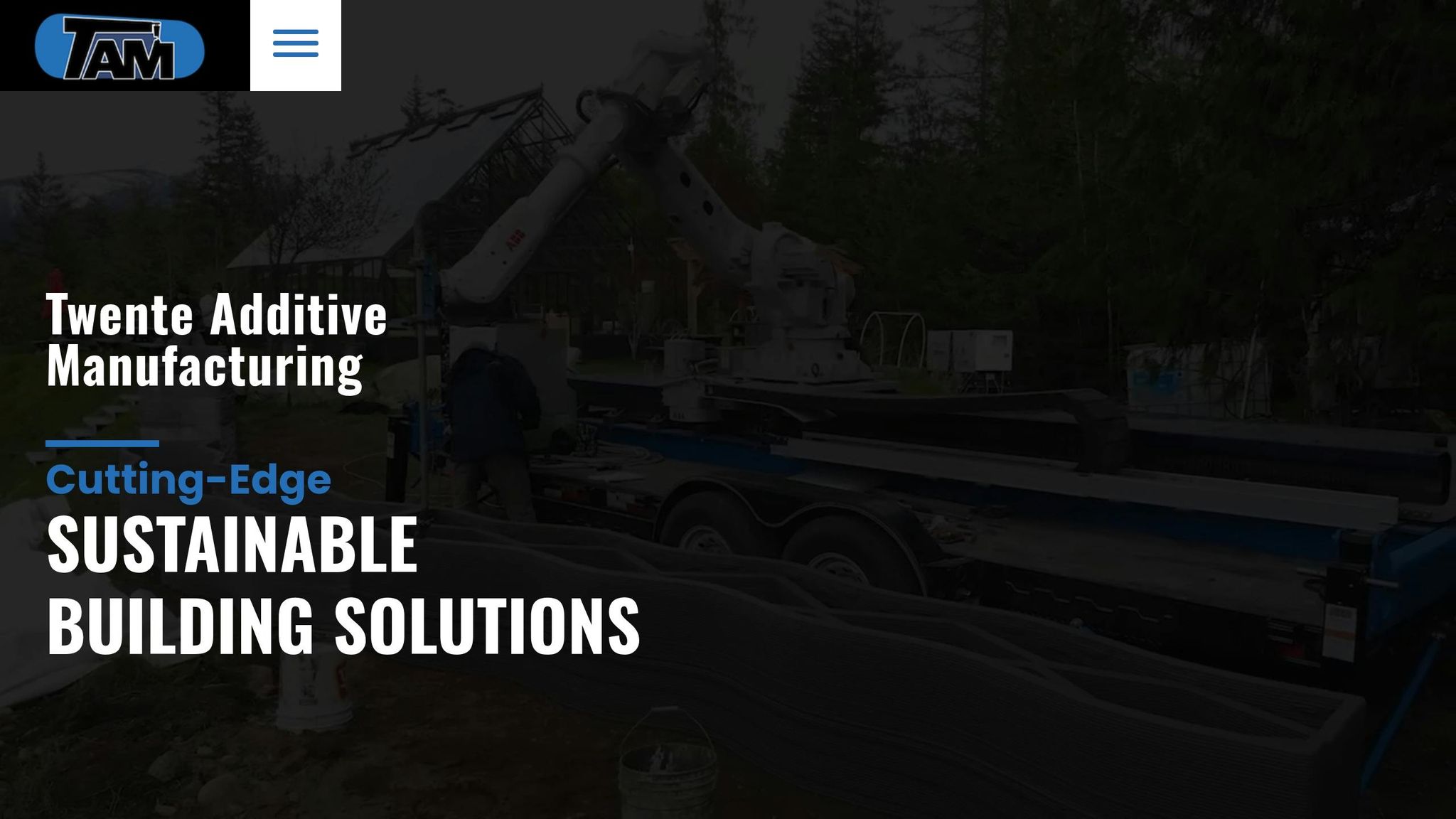
TAM’s Social Housing Project is tackling Latin America’s housing crisis head-on with a fresh approach to construction. While not a 3D-printed solution, this project uses cutting-edge prefabrication techniques to deliver homes quickly, efficiently, and with a focus on sustainability. It’s a bold step forward in addressing housing shortages in some of the region’s most underserved areas.
Location
The project spans several Latin American countries and works in partnership with TECHO, a youth-led organization operating in 18 nations across Latin America and the Caribbean. TECHO has already made a significant impact, having built over 135,000 homes and completed more than 700 infrastructure projects in over 600 communities. By focusing on areas dominated by informal settlements, TAM targets regions with the greatest need. For example, Brazil faced a housing deficit of about 5.8 million units in 2019, while across Latin America, 55 million households – almost 45% of the population – are affected by housing shortages.
Primary Materials
The homes are constructed using super-insulated straw and timber panels, which dramatically reduce CO₂ emissions compared to traditional concrete. Earth-based materials (EBM) and industrial biomass are also key components, aligning with environmentally conscious building trends. Research shows that EBM can lower embodied energy demand by 38–83% and reduce embodied climate change potential by 60–82% when compared to conventional construction methods. Globally, about 30% of buildings are made from EBM, housing approximately 2 billion people across 150 countries.
Construction Time
Speed is a standout feature of this project. Walls, floors, and roofs can be assembled in just one day, and the entire home is ready for occupancy in as little as six weeks. This makes TAM’s approach ideal for emergency housing and large-scale social housing programs.
"TAM is a unique, prefabricated, fast-deployment housing solution that enables the delivery of high quality, low-carbon affordable modular homes in new and innovative ways." – Agile Property
Design Features
TAM homes are designed with flexibility in mind. Using flat-pack panels, they can be installed in varied environments, including microsites, rooftops, and even on stilts. They are built to last, with a minimum 60-year lifespan and compliance with strict national standards. These homes are energy-efficient, featuring super-insulated walls, triple-glazed windows, LED lighting, and layouts ranging from one to four bedrooms. This ensures they meet accessibility and space requirements while remaining easy to relocate.
"TAM combines low-carbon and naturally renewable materials with exceptional design quality to create an affordable and high-performance home, without compromise." – Agile Property
The foundation system is another innovative aspect, replacing traditional concrete bases with ground screws or pads. This reduces environmental impact while maintaining structural stability, even on uneven terrain. TAM’s approach not only highlights the potential of modern prefabricated housing but also complements the growing interest in 3D-printed construction as a way to make housing more accessible worldwide.
Comparison Table
Examining these notable 3D-printed homes side by side reveals varying approaches, costs, and construction techniques. Below is a table comparing the key features of several projects.
| Project | Location | Year | Primary Materials | Size | Construction Time | Cost | Key Design Features | Environmental Benefits |
|---|---|---|---|---|---|---|---|---|
| SQ4D House | Riverhead, NY, USA | 2021 | Concrete mixture | 1,407 sq ft | 48 hours printing | $299,999 | 3 bedrooms, 2 baths, open floor plan | Reduced material waste |
| ICON & Lennar | Austin, TX, USA | 2022–2023 | Lavacrete concrete | 600–2,000 sq ft | 24 hours printing | $140,000–$160,000 | Stone-like texture, hurricane resistant | 50% less energy consumption |
| PERI House | Beckum, Germany | 2021 | 100% recycled concrete | 1,615 sq ft | 120 hours | – | Two-story design printed using a COBOD BOD2 printer | Up to 95% reduction in concrete waste |
| Prvok House | Czech Republic | 2019 | Concrete with nano-polymers | 463 sq ft | 48 hours | – | Floating design, printed with a robotic arm | – |
| COBOD BOD2 House | Denmark | 2018 | Standard concrete | 969 sq ft | 120 hours | $200,000 | Modular design utilizing the BOD2 printer | 35% cost reduction |
| TAM Project | Latin America | 2023 | Straw and timber panels | 600–1,200 sq ft | 6 weeks total | $10,000–$50,000 | Prefabricated design with a 60-year lifespan | – |
This table highlights the diversity in cost, speed, and materials used across projects, showcasing the versatility of 3D printing technology. For instance, ICON can print a compact home (600–800 sq ft) in just 24 hours at a raw cost of $4,000, while finished homes range from $140,000 to $160,000.
Construction speed is another standout feature. The SQ4D House and Prvok House were completed in about 48 hours, while the PERI House took 120 hours. This demonstrates how 3D printing can deliver homes up to 20 times faster than traditional construction methods.
Environmental impact is another area where 3D printing shines. Studies show that 3D-printed homes generate significantly lower CO₂ emissions – averaging 58 kg CO₂-eq/m² compared to 147 kg CO₂-eq/m² for conventional homes. Projects like the PERI House, which use recycled concrete, further minimize construction waste.
Material choices often align with local conditions. For example, the COBOD BOD2 House in Denmark uses standard concrete designed for colder climates, while the Apis Cor House in Russia uses a specialized concrete mix that can be applied at temperatures as low as 5°C with a protective cover.
The flexibility of 3D printing is evident in the range of home sizes, from the compact 463 sq ft Prvok House to larger multi-unit developments. This adaptability underscores the potential of 3D printing to reshape residential construction, making it faster, more efficient, and environmentally friendly.
The Future of 3D-Printed Homes
The market for 3D-printed homes is on track to skyrocket, with projections showing growth from $59.93 million in 2024 to a staggering $2.9 billion by 2032.
Advancements in Materials
New materials are driving this growth. Innovations in carbon-fiber composites, polymers, and multi-material printing are not only improving the strength of these homes but also incorporating recycled and eco-friendly components. These advancements are laying the groundwork for evolving regulations and scaling up production.
"As 3D printing moves from being viewed as a stand-alone innovation to becoming a natural part of the production toolset, 2025 is looking to be a significant year for the technology. Instead of doubting its viability, companies are focusing on how to best integrate it into their processes."
- Dr. Max Siebert, CEO and Co-Founder, Replique GmbH
Regulatory Progress
Regulations are gradually catching up with the technology. Governments are introducing policies and adapting local building codes to make room for 3D-printed construction. This shift allows for more experimentation and broader application of the technology in residential projects.
Tackling Scalability
Scaling up production has always been a challenge, but new methods are making it more achievable. Large-format 3D printers are now capable of producing massive building components efficiently and at a lower cost. Pellet-based extrusion is emerging as a more economical alternative to traditional filament-based printing. For instance, a 2024 social housing project in Ireland used COBOD technology to complete construction 35% faster than conventional methods.
AI and Hybrid Manufacturing
Artificial intelligence is playing a crucial role in refining 3D-printed construction. AI tools are optimizing everything from design and material selection to scheduling. Additionally, hybrid approaches that combine 3D printing with CNC machining are boosting efficiency even further.
"In 2025, we’re going to see more businesses using 3D printing in practical, everyday ways. Over the past few years, companies of all sizes have adopted the technology, and it’s becoming a normal part of how work gets done. It’s not just for prototyping anymore – you’ll see it used for office tools, quick solutions in machine shops like bending metal with plastic parts, and finding new ways to improve manufacturing."
- Rob Lent, Chief Operating Officer, Vision Miner
Localized Manufacturing
Localized production is emerging as a game-changer for addressing housing shortages. By reducing transportation costs and enabling quicker responses to housing crises, especially in areas with limited construction infrastructure, this approach holds tremendous promise.
Making Homes Affordable
Efforts to make 3D-printed homes more accessible are gaining momentum. ICON’s Initiative 99 is challenging architects to design homes priced at $99,000 or less. Similarly, 14Trees aims to cut build costs by 20% compared to traditional methods and plans to construct up to 52 homes in Kilifi, Kenya, using a single printer.
"We finally have a solution for the global housing crisis to speed things up and produce the housing that we need."
- Mona Peters, I99 winner
Environmental Impact
The environmental benefits of 3D-printed homes are hard to ignore. These homes can reduce concrete waste by up to 95% and cut energy consumption in half compared to traditional construction methods. As the industry grows, these advantages are expected to become even more pronounced.
Industry Consolidation
As the market matures, consolidation is likely. Ric Fulop, Founder and CEO of Desktop Metal, predicts:
"The industry is going to mature into a smaller number of larger players. We expect consolidation to continue."
This consolidation could lead to greater standardization and lower costs, helping 3D-printed homes move from novelty to mainstream.
With a combination of rapid construction, affordability, and sustainability, 3D-printed homes are poised to revolutionize residential construction. The future looks bright for this transformative technology.
FAQs
Are 3D-printed homes as durable and safe as traditional homes?
3D-printed homes have shown they can be both strong and reliable, especially when built with durable materials like concrete. Many of these homes are specifically designed to handle natural disasters such as earthquakes, floods, and extreme weather conditions. In fact, some models have already passed real-world stress tests, proving their toughness.
Although the technology is still developing, early evidence suggests that with proper engineering, 3D-printed homes can match traditional construction in terms of safety and durability. Continued research will be essential to fully understand how well these homes perform over time and under various conditions.
What challenges are preventing 3D-printed homes from becoming more widespread?
The journey toward making 3D-printed homes a common reality isn’t without its hurdles. One major obstacle lies in technical limitations – current printers often struggle with building larger or multi-story structures due to their size and material constraints.
On top of that, regulatory challenges slow things down. Many building codes weren’t designed with 3D printing in mind, and policy updates tend to lag behind technological advancements, creating roadblocks for widespread adoption.
There are also questions about material durability and how well these homes will perform over time. Plus, the industry faces a shortage of professionals skilled in 3D printing technologies, which further complicates scaling up production. Addressing these challenges is key to turning 3D-printed homes into a viable housing option for the masses.
What are the environmental and cost-saving benefits of 3D-printed homes?
3D-printed homes bring impressive benefits when it comes to cutting costs and reducing environmental impact. By using only the exact amount of materials needed, these homes can slash construction waste by as much as 95%. This not only drives down material expenses but also significantly lessens the strain on the environment.
On top of that, the production process consumes up to 50% less energy compared to traditional construction techniques. This means lower energy bills and a notable reduction in carbon emissions.
With these advantages, 3D-printed homes present a practical solution that tackles both affordability and environmental challenges head-on.
