
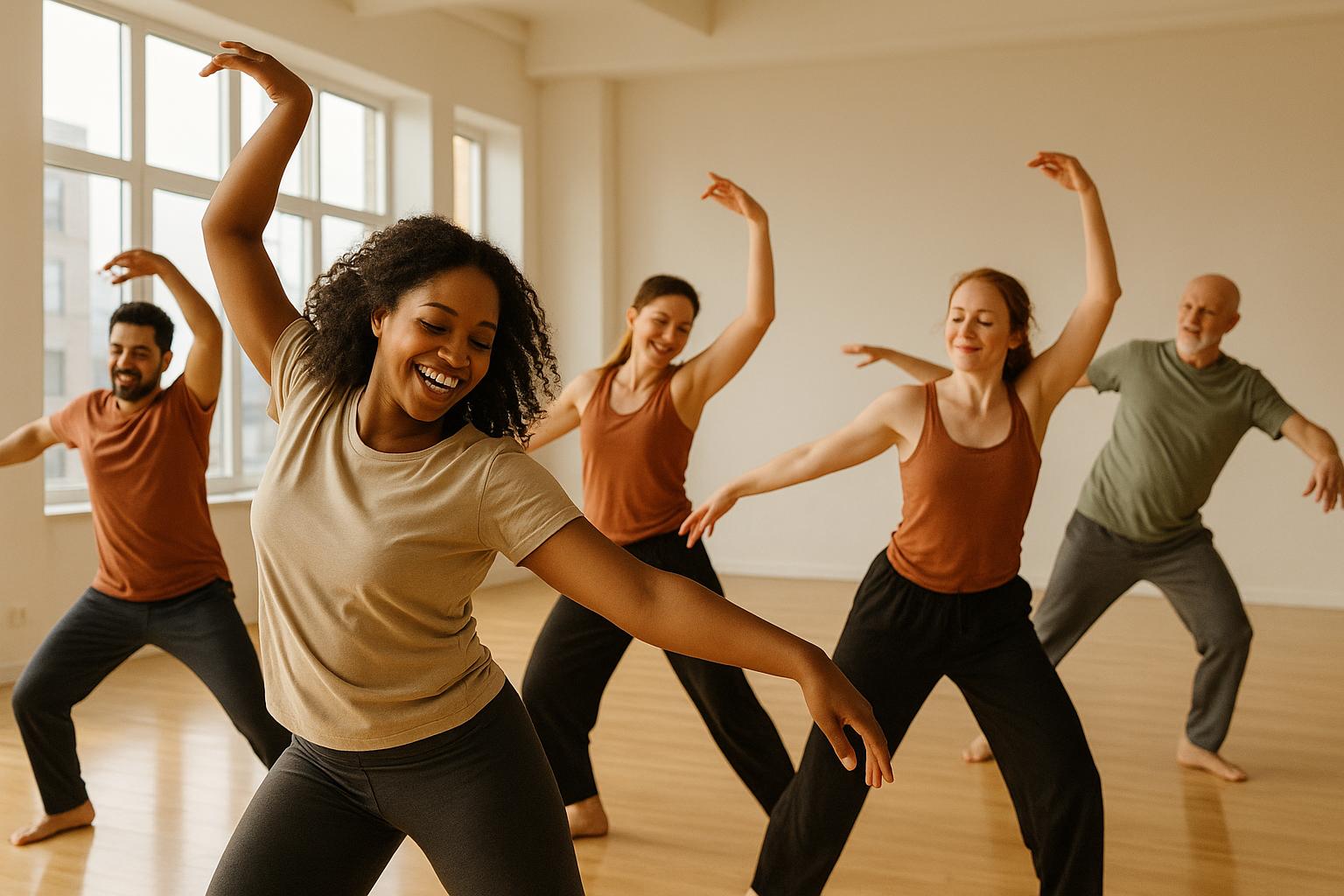
Dancing can transform your brain. It’s not just exercise – it’s a full-brain workout that improves memory, balance, and decision-making. Research shows that regular dancing can reduce the risk of dementia by 76% and increase hippocampus size by 15%. Unlike repetitive workouts, dance combines movement, rhythm, and social interaction, creating 3x more neural connections.
Key Benefits of Dance for Your Brain:
- Improves Memory: Boosts hippocampus volume and spatial memory.
- Enhances Balance and Coordination: Strengthens motor cortex and cerebellum.
- Sharpens Cognitive Skills: Improves executive function and processing speed.
- Supports Mental Health: Relieves anxiety and depression while building social connections.
- Helps with Neurological Conditions: Assists Parkinson’s patients with motor skills and cognitive abilities.
Whether you’re learning a new routine or dancing with friends, every step strengthens your brain. Programs like Dance for PD and Medicare-covered dance therapy make it easier than ever to get started. Ready to dance your way to better brain health?
Science Worth Dancing About | Andy Noble | TEDxSHSU
Research on Dance and Brain Changes
Research highlights how dance influences both brain structure and function, building on the concept of neuroplasticity discussed earlier.
Studies reveal that dance leads to structural changes in the brain, improving cognitive performance. Here’s a closer look:
| Brain Region | Structural Changes | Functional Impact |
|---|---|---|
| Hippocampus | Increased volume | Better spatial processing |
| Motor Cortex | Higher gray matter density | Improved movement control |
| Corpus Callosum | Strengthened neural pathways | Enhanced coordination between hemispheres |
| Cerebellum | Improved white matter integrity | Better balance and timing |
These changes reflect the brain’s ability to adapt to the complex demands of dancing.
Brain Performance Benefits
Dance training boosts processing speed, working memory, executive function, and sensorimotor skills. These improvements highlight dance’s ability to support cognitive flexibility and coordination in ways other activities might not.
How Dance Stands Out from Other Exercises
What sets dance apart is its unique combination of physical movement, mental challenges, emotional expression, and social interaction. This blend creates a richer range of neural adaptations compared to repetitive exercises, promoting diverse and interconnected brain development.
How Dance Changes the Brain
Movement and Mental Processing
Learning dance routines challenges the brain to align sensory inputs with specific movements. Practicing choreography combines visual, auditory, and physical cues, helping to create new neural pathways. This process strengthens the brain’s ability to adapt and enhances mental processing. On top of that, dance encourages social interaction, adding another layer of mental engagement.
Learning and Social Effects
Learning complex dance sequences improves cognitive flexibility by engaging the brain with intricate patterns and unfamiliar movements. This not only sharpens memory but also enhances spatial awareness and planning skills. When dancing in a group, the added element of social interaction further stimulates critical thinking and strengthens mental connections, contributing to overall brain health.
sbb-itb-593149b
Mental Health Effects of Dance
Research continues to uncover how dance impacts mental health, building on its effects on the brain.
How Dance Boosts Brain Function
Dancing regularly strengthens connections in the brain, improving memory, decision-making, and even the structure of the hippocampus. These changes open up possibilities for using dance in treatments for neurological issues.
Dance and Neurological Conditions
The benefits of dance go beyond general brain health. It’s showing potential as a therapy for neurological disorders. For example, early studies suggest that dance can help Parkinson’s patients with motor skills, balance, and cognitive abilities. The combination of physical movement, mental stimulation, and social engagement may also help reduce the risk of cognitive decline.
Supporting Mental Wellness
Dance helps with anxiety and depression by triggering the release of endorphins. Its creative aspects and social nature also help ease stress and build a sense of connection with others.
Dance for Long-term Brain Health
Dance and Brain Aging
Studies show that dancing, which involves coordination, memory, and responding to music, can help maintain cognitive abilities as we grow older. While more research is needed to fully understand its effect on age-related decline, it’s clear that dance plays a role in supporting brain health. Many local programs make it easy to get started.
Dance Opportunities in the US
In the United States, you can find dance programs at community centers, studios, and senior centers. These programs cater to different ages and mobility levels. While the benefits might differ depending on the style of dance, every class provides both physical activity and mental engagement.
Incorporating Dance into Your Routine
Pick a dance style that fits your lifestyle and interests. Regular dancing combines physical activity with mental stimulation, offering an engaging way to support your overall health. It’s a fun, active habit that can easily become part of your routine.
Conclusion: Dance and Brain Health
Research shows that dance can lead to significant changes in the brain. Long-term dancers, for instance, have a 76% lower risk of dementia and a hippocampus that’s 15% larger compared to those who rely on treadmill exercises.
"Dance’s movement-pattern novelty creates 3x more neural connections than repetitive exercise", says Dr. Joe Verghese from Stony Brook University.
Dancers also have 32% higher BDNF levels compared to those doing traditional exercises. This supports better brain plasticity and cognitive abilities. Plus, the social aspect of dancing adds even more benefits. For example, EEG research shows that partner dancing boosts neural synchrony by 40%.
With Medicare Advantage now covering dance therapy in 34 states and over 24,000 gyms in the U.S. offering programs like SilverSneakers BOOM, getting started has never been more accessible. Whether you join a local community center, a dedicated studio, or even practice at home, dance can play a key role in maintaining brain health.
Programs like Dance for PD, available in over 300 communities across the country, highlight its benefits. Participants report a 35% improvement in balance alongside cognitive gains. By combining movement, social interaction, and mental stimulation, dance provides a well-rounded approach to brain health. Its ability to engage multiple neural pathways makes it a standout activity for promoting mental clarity and long-term cognitive wellness.
FAQs
How does dancing help lower the risk of dementia compared to other types of exercise?
Dancing uniquely benefits brain health by combining physical activity, coordination, rhythm, and social interaction – all of which stimulate the brain in ways other exercises may not. Scientific studies suggest that learning and remembering dance routines can enhance neuroplasticity, the brain’s ability to form and reorganize connections. This process is key to maintaining cognitive health and reducing the risk of dementia.
Additionally, dancing often involves music, which further engages the brain and promotes emotional well-being. Unlike repetitive exercises, dance challenges memory, balance, and creativity, offering a holistic workout for both the body and mind.
Which types of dance are best for boosting cognitive health, and how do they help?
Scientific studies suggest that dance styles involving coordination, rhythm, and memory are particularly effective for improving cognitive function. For example, ballroom dancing, salsa, and other partner dances challenge your brain by requiring you to follow patterns, respond to cues, and adapt to your partner’s movements. Similarly, choreographed routines in styles like hip-hop or contemporary dance engage memory and sequencing skills.
The key lies in the combination of physical activity, mental focus, and social interaction, which stimulates neuroplasticity – the brain’s ability to reorganize and form new connections. Regular dancing has been shown to support memory, problem-solving, and overall brain health while reducing the risk of cognitive decline over time.
Can dance therapy help with neurological conditions besides Parkinson’s, and how does it support brain health?
While dance therapy is widely recognized for its benefits in managing Parkinson’s disease, research suggests it may also be helpful for other neurological conditions, such as Alzheimer’s, multiple sclerosis, and stroke recovery. Dance combines physical movement, rhythm, and social interaction, all of which stimulate the brain and encourage neuroplasticity – the brain’s ability to adapt and form new neural connections.
By engaging multiple brain regions, dance therapy can improve coordination, memory, and emotional well-being. However, the effectiveness may vary depending on the individual and the specific condition. For personalized advice, consulting a healthcare professional is recommended.
