
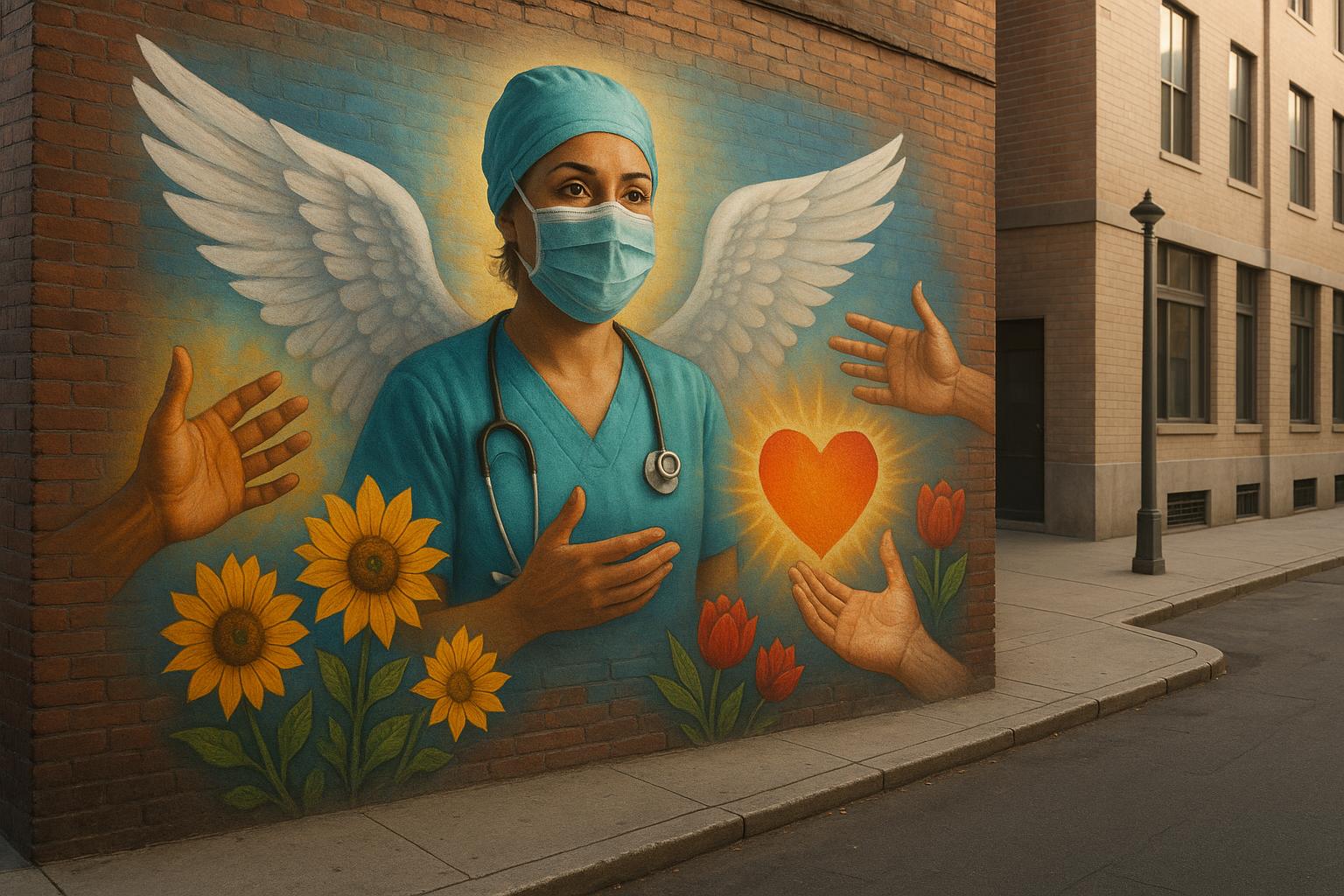
Street art became a powerful voice during the COVID-19 pandemic, transforming public spaces into visual diaries of shared emotions and experiences. Artists worldwide used their work to honor healthcare workers, promote public health messages, and reflect themes of isolation, hope, and resilience. Key highlights include:
- Tributes to Frontline Workers: Murals like TVBoy’s "Today’s Heroes" in Milan and Banksy’s "Game Changer" honored healthcare workers.
- Community Projects: Initiatives like Detroit’s "Memorial Hearts" painted 1,500 hearts to commemorate lives lost.
- Pandemic Art Growth: New York City saw a 40% rise in murals from March 2020 to December 2021.
- Adapting Methods: 58% of artists shifted to faster techniques like stencils during lockdowns.
- Legacy Preservation: Over 14,000 pandemic-era works are archived globally, with 23% relocated to protected spaces.
This art not only documented the pandemic but also fostered unity and sparked conversations about societal challenges and resilience.
During COVID, street art is vital – a look at its present and future
Major COVID-19 Street Art Examples
During the COVID-19 pandemic, street art became a powerful outlet for expressing shared emotions like fear, hope, and perseverance. One standout example is Banksy’s "Game Changer", unveiled at a hospital in 2020. This piece quickly became a symbol of optimism and strength during an incredibly challenging time.
Banksy‘s Pandemic Works
Banksy created several pieces that reflected the universal experience of the pandemic. By weaving pandemic-related themes into his art, he encouraged reflection on the collective struggles and the importance of care and support. His work resonated globally, highlighting both the fragility and resilience of communities navigating lockdowns and uncertainty. These iconic pieces inspired others to turn public health messages into meaningful art.
Health Messages in Street Art
Street artists used urban spaces to share health advice and foster a sense of unity. Through murals and installations, they promoted actions like wearing masks and maintaining social distance, while also emphasizing perseverance and solidarity. This creative approach brought an artistic dimension to public health discussions during a difficult time for so many.
Recording Shared Experiences Through Art
This section highlights how artists used visual storytelling to reflect collective emotions during the pandemic.
Street art became a powerful medium for documenting shared experiences during COVID-19. Across cities, public spaces turned into canvases showcasing both the loneliness of isolation and the hope for brighter days ahead.
Art About Isolation and Hope
Pandemic art often balanced themes of isolation and hope. Empty streets, masked figures, and solitary scenes became common subjects, reflecting the emotional toll of social distancing. These visuals struck a chord with audiences, showing that even when physically apart, people could connect through shared feelings and experiences.
Addressing Social Issues Through Art
Artists also used their work to highlight pressing social challenges, such as:
- Struggles with healthcare access
- Economic hardships faced by vulnerable groups
- The critical contributions of front-line workers
These pieces not only captured the unequal effects of the pandemic but also sparked discussions about resilience and the need for societal change.
sbb-itb-593149b
Street Art for Community Support
During the COVID-19 pandemic, street art played a powerful role in helping communities heal and remember. Artists transformed public spaces into tributes, honoring both the grief of loss and the efforts of frontline workers. Murals, in particular, became symbols of remembrance and appreciation.
Murals for COVID-19 Victims
Across the country, murals served as memorials for those lost to the pandemic. These public works provided a space for collective mourning, allowing communities to come together and honor loved ones in a shared, visual way.
Art Honoring Essential Workers
Street art also celebrated the contributions of essential workers. Through vivid depictions of their efforts, these artworks highlighted their importance while fostering a sense of unity within neighborhoods during difficult times.
The street art created during this period remains a testament to the way art can bring people together, offer comfort, and commemorate significant moments in history.
Pandemic Street Art in 2025
As we move past the pandemic’s most intense phase, street art has become a medium for reflecting on collective trauma and change.
Pandemic-Inspired Art in 2025
One standout example from 2025 is the "Abstract Futures" mosaic at the 42nd Street/3rd Avenue entrance to NYC’s 7 train. Spanning 600 square feet, this work by the artist collective Hilma’s Ghost shifts away from earlier, more literal pandemic imagery. Instead, it uses Tarot-inspired symbols to trace the community’s experiences during the pandemic. This approach sparks ongoing conversations about the role of art in society.
"Artists now use COVID-19 iconography as visual shorthand for broader societal fractures", explains Dr. Todd Lawrence. He highlights how virus shapes are being used in works addressing issues like political polarization and AI ethics debates.
The mosaic also incorporates modern elements like augmented reality overlays and QR codes that link viewers to oral histories from the pandemic.
In San Francisco, the "Paint the Void" project has expanded its mission. It now creates installations that tie pandemic experiences to current social issues. These pieces have resonated deeply, with curator Meredith Winner noting that 38% of Bay Area artists continue to use boards from pandemic-shuttered businesses as canvases for murals focusing on economic justice.
These evolving forms of expression naturally lead to efforts to preserve the legacy of COVID-19-related art.
Preserving COVID-19 Street Art
Cultural institutions are prioritizing the preservation of pandemic-era street art. The COVID-19 Street Art Archive has cataloged over 14,000 works worldwide. Dr. Heather Shirey reports that 23% of U.S. murals have already been relocated to protected cultural spaces.
This preservation effort is proving valuable for academic research. By documenting these works, researchers are uncovering regional themes in the artistic response to the pandemic. A 2025 Johns Hopkins study analyzed 6,000 archived pieces and found clear geographic trends:
| Region | Primary Theme | Percentage |
|---|---|---|
| West Coast | Isolation | 72% |
| East Coast | Systemic Failure | 68% |
| Urban Centers | Healthcare Heroes | 64% |
Municipal support remains strong – New York City allocated $2.7 million in 2025 to support these efforts. However, private commissions have dropped by 45% as commercial interest wanes.
The 2025 ESCMID Global award winner, "Frostbite", blends pandemic themes with global issues. This piece uses machine learning to combine CDC infection maps with climate data, creating a striking commentary on interconnected crises.
Street art continues to evolve, moving beyond immediate pandemic reflections to explore broader societal changes and challenges.
Conclusion: Street Art During Crisis
Street art played a powerful role during the pandemic, reflecting the emotional and social challenges of the time while sparking meaningful conversations within communities. It served as a visual diary, illustrating themes of isolation, inequality, and the collective fight for connection and solidarity.
With empty streets as their canvas, artists created striking works that not only documented the crisis but also helped communities process shared trauma and foster stronger social connections. These pieces became more than art – they became a way to make sense of the chaos and find unity in adversity.
Street art continues to stand as both a historical record and a source of inspiration, proving its ability to transform hardship into a shared story of resilience.
FAQs
How did street art reflect public health and social challenges during the COVID-19 pandemic?
During the COVID-19 pandemic, street art became a powerful medium for expressing collective emotions, raising awareness, and addressing societal challenges. Artists around the world used walls, murals, and public spaces to highlight themes such as gratitude for healthcare workers, the importance of wearing masks, and messages of hope and resilience.
This art often combined vibrant visuals with thought-provoking messages, creating a unique dialogue about the pandemic’s impact on communities. Street art served as both a creative outlet and a way to unite people during a time of global uncertainty, showcasing the resilience and adaptability of art in times of crisis.
How has street art created during the COVID-19 pandemic been preserved and documented?
Street art created in response to the COVID-19 pandemic has been preserved and documented in several ways. Photographers, art enthusiasts, and local organizations have captured images of these works to ensure their stories endure. Many of these photos have been shared in online galleries, books, and exhibitions, allowing people to reflect on the emotions and messages conveyed during this historic period.
In some cases, communities have worked to physically preserve murals by applying protective coatings or relocating panels to museums or cultural centers. These efforts highlight the importance of street art as a form of public expression and a historical record of collective experiences during the pandemic.
How has street art created during the COVID-19 pandemic continued to shape artistic expression and societal conversations in 2025?
Street art from the COVID-19 pandemic era remains a powerful influence in 2025, serving as a visual reminder of shared experiences and resilience. Many artists continue to draw inspiration from the themes of unity, loss, and hope that emerged during the pandemic, integrating these elements into their current work.
Pandemic-era street art has also sparked ongoing societal conversations about public health, social justice, and community solidarity. Murals and installations created during that time are frequently revisited, celebrated, and even restored, highlighting their lasting cultural significance in shaping how we process collective challenges and triumphs.
