
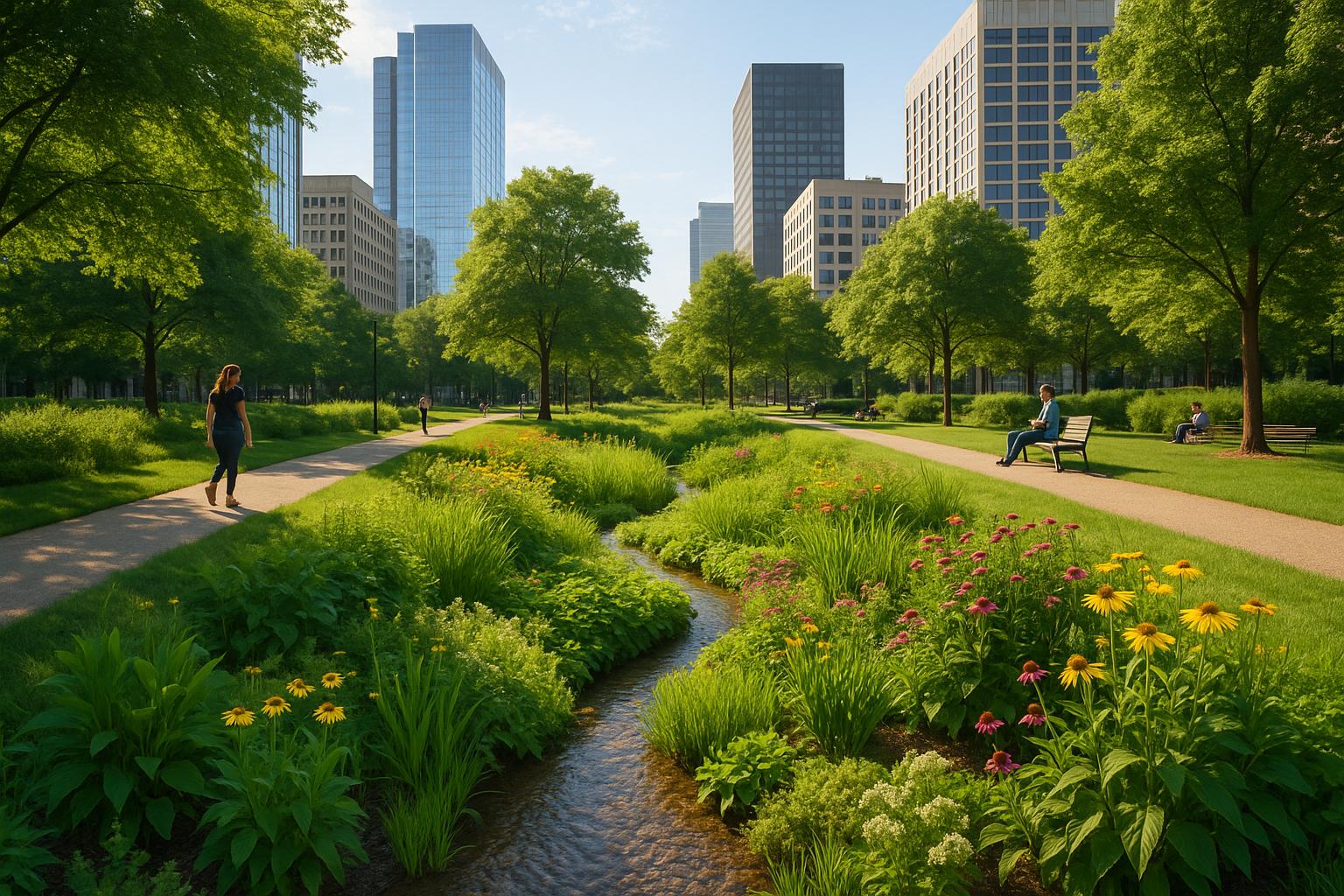
Urban water systems face big challenges like flooding, pollution, and aging infrastructure. Green infrastructure offers smarter solutions by mimicking natural processes to manage stormwater. Here’s how it works and why it matters:
- What is it? Green infrastructure uses features like rain gardens, green roofs, and permeable surfaces to absorb, filter, and store water naturally.
- Why it’s better: It reduces flooding, improves water quality, and recharges groundwater, all while creating greener, more livable spaces.
- Key benefits: Lower costs, cleaner water, and better community spaces compared to traditional concrete-based systems.
Green Infrastructure for Urban Stormwater Management
How Green Infrastructure Supports Urban Water Management
Green infrastructure transforms how cities handle water by leveraging natural systems to enhance water quality, reduce flooding, and safeguard groundwater supplies.
Improving Water Quality
Plants and soil act as natural filters, removing sediments and pollutants from urban runoff. For instance, bioswales in various cities have shown success in filtering stormwater contaminants. This process not only cleans the water but also helps reduce flooding risks.
Reducing Flood Risks
Instead of relying on a single large basin, cities now use a network of features like bioretention areas, green roofs, and enhanced tree pits. These elements work together to absorb and slow water flow, easing the strain on traditional drainage systems. At the same time, they allow water to seep into the ground, replenishing local aquifers.
Protecting Groundwater
Permeable surfaces and designated filtration zones play a key role in allowing rainwater to penetrate the soil and recharge underground water supplies. This helps maintain steady water levels and ensures urban areas have reliable access to groundwater for the future.
Main Types of Green Infrastructure
Cities across the U.S. are turning to green infrastructure to better manage stormwater. These methods work alongside natural water management techniques, offering practical, on-site solutions.
Green Roofs
Green roofs, or plant-covered rooftops, use layers of vegetation to capture and filter rainwater before it reaches the ground. This helps absorb rainwater, reducing stormwater runoff, easing the strain on drainage systems, and minimizing flooding risks.
Rain Gardens
Rain gardens are landscaped areas designed to collect and filter runoff naturally. These shallow, planted depressions allow water to slowly soak into the soil. By using native plants, rain gardens not only manage stormwater but also enhance the look and feel of urban spaces.
Permeable Surfaces
Permeable surfaces, like porous concrete or pavers, let water pass through instead of flowing off like it does on traditional pavement. This helps replenish groundwater and reduces surface runoff, making it a practical choice for urban development.
Urban Wetlands
Constructed urban wetlands act like natural ones, filtering runoff and managing stormwater effectively. They also double as green spaces, supporting wildlife and improving urban environments.
These approaches can be customized to fit local needs and work seamlessly with existing systems, helping cities create stronger, more efficient water management strategies.
sbb-itb-593149b
Combining Green and Gray Infrastructure
Cities are blending traditional gray infrastructure – like pipes and treatment plants – with green solutions to create more resilient water systems.
This combination brings advantages that neither approach can achieve alone. By integrating these methods, cities can tackle a range of water management challenges more effectively:
- Cost savings by cutting down on treatment demands
- Improved adaptability to handle both daily needs and extreme weather events
- Better water quality through natural filtration working alongside mechanical systems
- Greater reliability with multiple water management options in place
Community and Cost Benefits
Green infrastructure goes beyond just technical upgrades – it improves urban life and reduces public spending. It creates better public spaces, cuts costs for water management, and promotes community learning.
Improved Public Spaces
Rain gardens, green roofs, and bioswales can turn dull, concrete-heavy areas into more welcoming and attractive spots. These additions not only make neighborhoods look better but also boost overall well-being by bringing nature closer to where people live. It’s a clear link between managing water sustainably and enhancing daily life.
Lower Costs for Water Management
These systems aren’t just about aesthetics – they also make financial sense. By handling stormwater in a more natural way, cities can cut back on the need for large, expensive treatment facilities. Over time, this can mean lower maintenance and operational costs.
Community Education
Green infrastructure also opens doors for learning. Programs at community centers, schools, and workshops provide hands-on lessons about water conservation. These efforts help residents understand how they can contribute to managing water resources while fostering stronger community involvement.
Conclusion: Future of City Water Systems
Cities are grappling with growing water management challenges driven by climate change and urban expansion. To address these issues, combining natural solutions with traditional infrastructure is becoming a necessity.
Green infrastructure is steadily gaining traction, while emerging technologies like smart sensors and AI-based monitoring are reshaping water management practices. These tools are making systems more efficient and setting the stage for even greater improvements in the years ahead.
The future of urban water systems will hinge on key strategies such as:
- Integrated planning that incorporates advanced monitoring tools
- Community involvement in maintaining and expanding projects
- Reliable funding to ensure long-term success
FAQs
How does green infrastructure help reduce urban flooding compared to traditional water systems?
Green infrastructure reduces urban flooding by mimicking natural water management processes. Methods like green roofs, rain gardens, and constructed wetlands absorb and filter rainwater, slowing its flow into stormwater systems. This helps prevent overwhelming drainage systems during heavy rainfall.
Unlike traditional systems that rely on pipes and concrete to channel water away, green infrastructure allows water to infiltrate the soil, recharge groundwater, and reduce surface runoff. By managing water at its source, urban areas can better handle intense storms while improving water quality and creating greener, more sustainable spaces.
What challenges might cities encounter when adopting green infrastructure solutions?
Cities may face several challenges when implementing green infrastructure projects. Initial costs for designing and constructing features like green roofs, rain gardens, or permeable pavements can be high, which may strain municipal budgets. Additionally, space limitations in dense urban areas can make it difficult to integrate these solutions effectively.
Another common issue is the need for ongoing maintenance to ensure green infrastructure continues to function as intended. For example, constructed wetlands and bioswales require regular upkeep to prevent clogging and maintain their water filtration capabilities. Lastly, public awareness and support can also be a barrier, as residents and stakeholders may need education on the long-term benefits of these systems to embrace them fully.
How can community members help support and maintain green infrastructure projects in their neighborhoods?
Residents can play a vital role in supporting and maintaining green infrastructure projects by participating in community initiatives and adopting sustainable practices. You can get involved by volunteering for local cleanup events, planting trees, or maintaining rain gardens and green roofs in your area. Many cities also offer workshops or training programs to educate residents on how to care for green infrastructure.
Additionally, you can advocate for green infrastructure by attending city council meetings, supporting policies that fund sustainable projects, or collaborating with local organizations focused on urban environmental improvements. Small actions, like using rain barrels or reducing water runoff from your property, can also make a big difference in enhancing your community’s water systems.
