
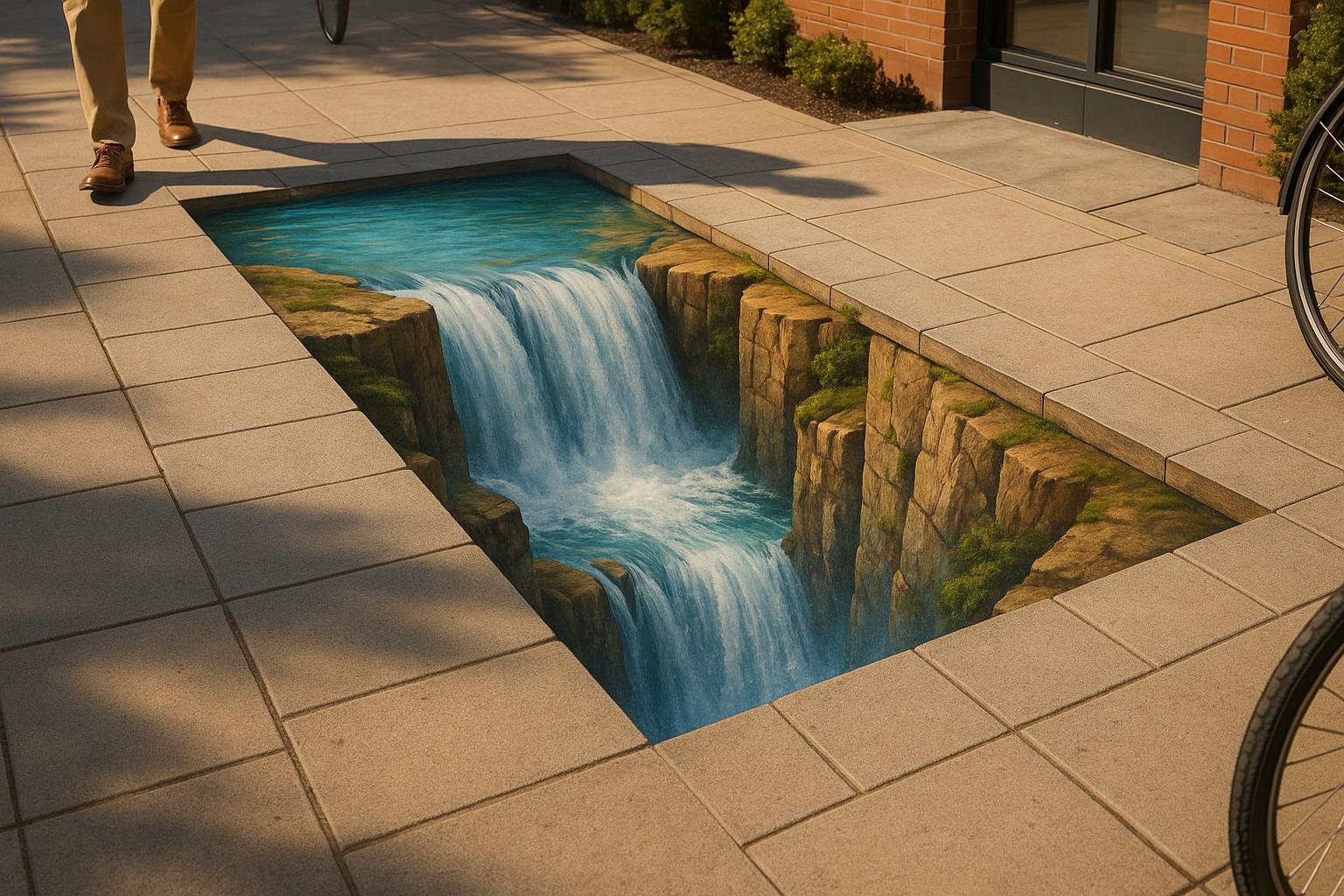
3D street art transforms flat surfaces into mind-bending illusions that appear three-dimensional when viewed from the right angle. This art form, called anamorphic art, uses precise geometry, perspective, and visual tricks to fool the eye. Here’s how it works:
- Perspective and Depth Cues: Artists manipulate linear perspective, shadows, and size to mimic depth.
- Distortions: Shapes are intentionally distorted to align with a single viewing point.
- Integration with Surroundings: Art blends seamlessly with urban features like sidewalks and walls.
- Tools and Techniques: Chalk, pastels, grid systems, and projectors help create precise designs.
How Optical Illusions Work in Art
Basics of Visual Perception
The brain interprets visuals by relying on depth cues, which artists cleverly manipulate in 3D street art to create stunning illusions. These cues help the brain make sense of depth and distance:
- Linear perspective: Objects appear smaller the farther they are.
- Atmospheric perspective: Distant objects look less sharp and more muted.
- Relative size: Larger objects seem closer, while smaller ones appear farther away.
- Overlap: When one object overlaps another, it’s perceived as being in front.
- Texture gradient: Surface textures appear denser as they recede into the distance.
By using these natural visual elements, anamorphic art tricks the brain into seeing depth where none exists.
Understanding Anamorphic Art

Anamorphic art uses precise calculations to create images that look distorted from most angles but appear clear and three-dimensional from a specific viewpoint. Modern 3D street artists bring this technique to life in public spaces. Three key factors make this possible:
- Viewing distance: The ideal distance to fully experience the illusion.
- Viewing angle: The exact position where the perspective aligns perfectly.
- Surface geometry: How the artwork adapts to uneven ground or textured surfaces.
Artists often combine traditional grid systems with advanced software to map out the necessary distortions. When viewed from the right spot, these distortions come together to form a believable 3D image.
Creating Visual Deception
Artists create these illusions by blending calculated distortions with their surroundings. They enhance the effect by aligning shadows with natural light, using complementary colors, and incorporating existing architectural features like walls, cracks, or steps into the design.
Key techniques include:
- Shadow manipulation: Shadows are carefully crafted to match natural lighting, adding depth and volume to the illusion.
- Color harmony: Colors are chosen to blend seamlessly with the surrounding environment, making the artwork feel like an organic part of the space.
The best 3D street art creates a fascinating contradiction: the brain knows it’s a flat surface but can’t help perceiving a vivid three-dimensional scene. These principles are the foundation of the captivating illusions that define this art form.
Anamorphic illusion tutorial – How to make 3D trick art
Equipment and Methods
Creating 3D street art that plays with perspective and distortion requires the right tools and techniques. Let’s break down the essentials.
Materials You’ll Need
To create professional 3D street art, you’ll need durable and high-quality supplies that ensure vibrant visuals and lasting results. Here’s what artists typically use:
- Chalk and soft pastels for rich colors and smooth gradients
- Blending tools like stumps, soft cloths, and brushes for seamless transitions
- UV-resistant clear coat sealants to protect the finished piece
- Surface prep materials such as concrete cleaners and primers
- Safety gear including knee pads, dust masks, and work gloves
Tools for Measuring and Layout
Precision is everything in 3D illusions. Artists use a mix of traditional and modern tools to map out their designs accurately:
- Grid systems to transfer designs onto the pavement
- Digital projectors for projecting designs directly onto the surface
- Laser levels to maintain perspective and alignment
- Measuring tapes and rulers for exact dimensions
The process starts by marking a primary viewing point – this ensures the artwork aligns perfectly with the viewer’s perspective. From there, accurate measurements set the stage for adding light and shadow effects.
Light and Shadow: Bringing 3D to Life
Mastering light and shadow is key to making the artwork pop. Artists carefully study natural light and use specific techniques to create depth and realism.
Natural Light Integration
- Observe how sunlight moves across the location throughout the day
- Take note of shadow directions and intensity
- Align the artwork’s orientation to enhance its interaction with natural light
Techniques for Shadows
- Begin with lighter tones, layering darker shades for depth
- Use sharp edges for cast shadows and soft blending for ambient shading
Playing with Color Temperature
- Apply warm tones to illuminated areas and cool tones to shadowed sections
- Keep the light source direction consistent throughout the piece
sbb-itb-593149b
Making 3D Street Art: Step by Step
Design and Layout
Start by sketching your design, making sure it blends well with its surroundings. Identify a primary viewing point and outline a grid to keep proportions accurate.
To map perspective effectively:
- Set a vanishing point at eye level.
- Draw perspective lines to guide your design.
- Align key elements along these lines.
- Periodically test the perspective to ensure everything looks right.
Once your layout is confirmed, you can shift your attention to adding color and refining the details.
Color and Detail Work
With the layout in place, start adding colors, working in layers from the background to the foreground. Depth comes from how colors interact with one another.
When applying color:
- Start with lighter base tones.
- Add darker shades to create depth and dimension.
- Use contrasting colors to make elements pop.
- Add highlights at the end to draw attention to key areas.
Shadows play a crucial role in adding depth. Ensure shadows align with your chosen light source and fall naturally within the scene. After completing this step, review your work from the designated viewing point to fine-tune any details.
Viewing Point Adjustments
Refine the illusion by regularly checking it from the marked viewing point. This ensures the perspective stays accurate.
Tips for Adjustments:
- Take photos from the viewing point at eye level to quickly identify distortions.
- Gradually adjust lines and angles if parts of the design seem off.
- Test the illusion under different lighting conditions.
- Use temporary markers to note key reference points for alignment.
Even small adjustments can make a big difference. Try squinting at the design to spot any inconsistencies.
Pro Tip: Use temporary guides, like cones or markers, to help viewers find the best spot to experience the illusion. This simple trick enhances the overall effect.
Uses and Effects of 3D Street Art
Public Space Design
3D street art has the power to transform urban areas into interactive and eye-catching spaces. It turns forgotten walls, sidewalks, and other surfaces into vibrant landmarks that leave a lasting impression. Some of the key impacts include:
- Encouraging Community Interaction: Spaces become gathering points where people connect and engage.
- Revitalizing Neglected Areas: Breathing new life into rundown or overlooked parts of a city.
- Boosting Tourism: Unique and creative installations attract visitors and photographers.
- Highlighting Local Identity: Showcasing the culture and heritage of a community through artistic expression.
These transformations pave the way for its use in marketing, advertising, and as a platform for showcasing prominent works of art.
Conclusion
3D street art combines artistic talent, mathematical precision, and an understanding of visual perception. By skillfully using perspective, geometry, and anamorphosis, artists craft illusions that draw attention and transform everyday spaces.
To succeed in this art form, focus on these key elements:
- Accurate Measurements: Ensure calculations align with the intended viewing angle.
- Mastering Color: Use light, shadow, and color thoughtfully to enhance depth.
- Surface Preparation: Prepare the surface properly to support your design.
- Optimal Viewing Point: Identify the perfect "sweet spot" for the illusion to work.
Start with smaller projects to develop your skills. Practice drawing anamorphic designs on paper before tackling larger, more complex surfaces. Pay close attention to how light and shadow affect your work.
Creating compelling 3D street art requires detailed planning, precise execution, and continuous adjustments to achieve the perfect illusion. These practices not only improve your technique but also elevate the impact of your art in public spaces. Whether you’re beautifying urban areas or designing eye-catching marketing displays, understanding perspective and visual perception is key.
To sharpen your skills:
- Study the principles of geometry and perspective.
- Experiment with digital design tools.
- Take photos of your work from different angles to refine your approach.
- Connect with local street art communities for advice and inspiration.
The growing interest in 3D street art highlights its ability to transform spaces and captivate audiences in fresh, engaging ways. By applying these methods, you’ll continue pushing the boundaries of what’s possible with optical illusions in public art.
FAQs
How do artists make sure 3D street art looks realistic from different angles and under various lighting conditions?
Artists use a combination of techniques to ensure 3D street art maintains its illusion. Perspective is key – they carefully calculate the viewing angle where the artwork will appear most realistic, often marking specific vantage points for observers. By distorting proportions and shapes, they create the illusion of depth and dimension when viewed from the intended spot.
To address lighting, artists often study how natural and artificial light will interact with the artwork. They may use shading, highlights, and color gradients to mimic shadows and reflections, ensuring the illusion remains convincing throughout the day. These techniques combine art, geometry, and science to produce stunning, lifelike effects.
What challenges do artists face when creating 3D street art on uneven surfaces?
Creating 3D street art on uneven surfaces presents unique challenges for artists. Perspective alignment becomes more complex when working on irregular terrain, as the artwork must still appear seamless from a specific viewing angle. Additionally, uneven surfaces can distort proportions, requiring artists to carefully adjust their designs to maintain the intended optical illusion.
Another common issue is the texture and material of the surface itself. Rough or inconsistent textures may interfere with details or make it harder for paint to adhere properly. Artists often need to experiment with different techniques and materials to overcome these obstacles and achieve the desired visual effect.
What are some practical tips for beginners to start creating 3D street art and mastering optical illusions?
To start creating 3D street art, focus on mastering perspective and geometry, as these are key to creating realistic optical illusions. Begin by studying the basics of vanishing points, light, and shadow to understand how to create depth and dimension. Practice sketching simple designs on paper before moving on to larger surfaces.
Use tools like chalk, tape, and rulers to map out your designs on the ground. Observing the work of skilled 3D street artists can also provide valuable inspiration and insights. Most importantly, practice regularly and experiment with different techniques to refine your skills over time.
