
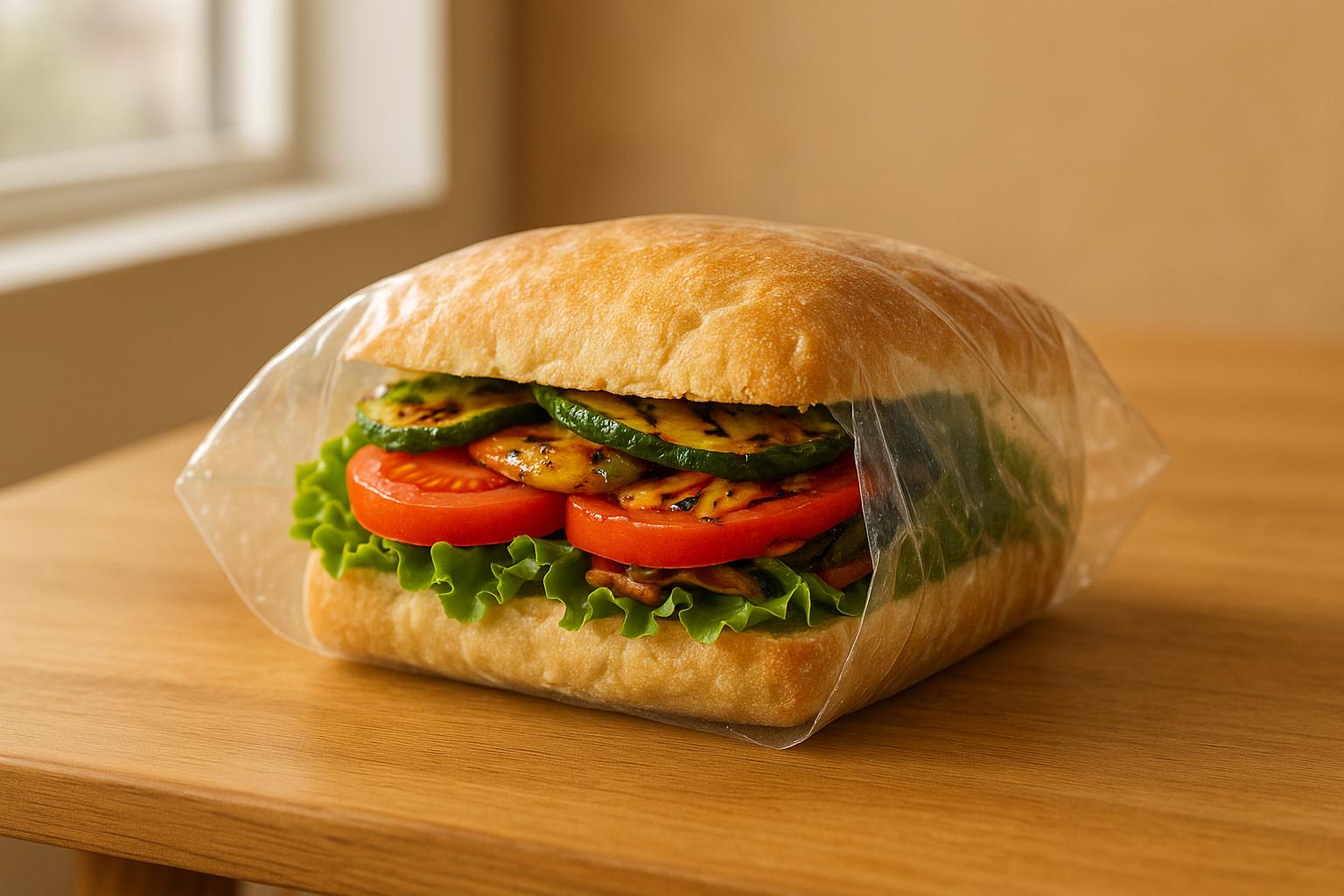
Plastic pollution is a growing crisis, with over 8 million tons of plastic entering oceans annually. Edible packaging offers a waste-free solution by using food-grade materials like seaweed, rice, and potato starch that can be eaten or composted. This innovation not only reduces plastic waste but also extends food shelf life and aligns with eco-conscious consumer demand.
Key Points:
- Global plastic waste problem: 2,000 garbage trucks worth of plastic enter waterways daily.
- Edible packaging market growth: Valued at $1.1 billion in 2023, expected to grow at 5.6% annually.
- Materials used: Seaweed, starches, milk proteins, and gelatin.
- Startups leading the way:
- Challenges: High production costs, consumer skepticism, and regulatory hurdles.
Edible packaging is reshaping how we think about waste, offering a sustainable alternative to traditional plastics while benefiting both businesses and the planet.
What Is Edible Packaging
Edible Packaging Basics
Edible packaging is crafted from biodegradable, food-grade materials that can either be consumed as part of your meal or naturally break down over time. Its core idea revolves around three main qualities: it’s biodegradable, safe to eat, and made from renewable resources. Essentially, it eliminates waste rather than just managing it.
What makes edible packaging stand out is its dual role. Like traditional packaging, it safeguards food during transport and storage. But it goes a step further by serving as food itself or as compost. This aligns with the principles of a circular economy, where nothing is wasted, and everything has multiple purposes. These features are made possible through the use of natural materials.
Materials Used in Edible Packaging
Edible packaging incorporates a variety of natural ingredients, such as seaweed, rice, potato starch, milk proteins, and gelatin. Each material brings unique properties that make the packaging both functional and edible.
Seaweed has become a standout material in this field. It’s waterproof, flexible, and nutrient-rich. Compounds like alginate, extracted from seaweed, are used to create films that can hold both liquids and solids. Starch-based materials, particularly those derived from potatoes, offer strong barrier properties and dissolve easily in warm water.
Milk proteins also play a significant role in enhancing packaging performance. Studies reveal that films made from milk proteins are up to 500 times more effective at blocking oxygen compared to traditional plastic wrap. This superior barrier helps keep food fresh while relying entirely on natural components.
"The materials mainly used to make edible packaging include polysaccharides, proteins, lipids, and blends of these (composites) with appropriate surfactants, if necessary."
- Melvin Pascall, professor of food science and technology at The Ohio State University
Some edible packaging goes beyond mere functionality by incorporating flavors, nutrients, or other beneficial ingredients. Picture a drinking straw that adds a touch of vanilla to your beverage or a burger wrapper that boosts your meal with extra vitamins. This turns packaging into a value-added part of your dining experience.
How Edible Packaging Helps the Planet
The use of innovative, natural materials in edible packaging offers clear environmental benefits. In 2015 alone, over 141 million metric tons of plastic packaging waste were discarded globally. In the U.S., the average person generates about 140 kilograms of packaging waste annually. By replacing single-use plastics with edible options, this growing waste issue can be directly addressed.
Edible packaging also supports a circular economy by relying on renewable resources instead of fossil fuels. Materials like seaweed and plant-based starches can replace petroleum-based plastics, creating a more sustainable production cycle and potentially reducing carbon emissions.
Additionally, it helps cut down on food waste. By preserving freshness and extending shelf life, edible packaging ensures less food is spoiled before it’s eaten. And since the packaging itself can be consumed, consumers gain added nutritional benefits while businesses save on disposal costs.
The demand for sustainable packaging is growing rapidly. Over 80% of consumers now prefer eco-friendly options. This combination of environmental awareness and practical benefits is driving the adoption of edible packaging.
"We face a huge challenge in developing new packaging materials that protect food all through the supply chain while being recyclable, compostable, produced with renewable energy, or even edible."
- Sara Risch, Ph.D., principal at the consulting firm Science by Design
Globally, takeout orders alone generate around 269,000 U.S. tons of plastic waste annually. The world also uses 500 billion plastic cups each year, and more than half a billion plastic straws are discarded daily. Edible packaging provides a way to significantly reduce this waste while offering nutritional value instead of environmental harm.
Seaweed to Replace Plastic | Edible & Biodegradable Packaging | Notpla
Startups Creating Edible Packaging Solutions
Edible packaging startups are tackling the plastic pollution crisis with solutions that can be eaten, composted, or naturally break down. These innovations take the concept of edible packaging and turn it into practical, scalable products.
Notpla: Seaweed-Based Packaging
London-based Notpla uses seaweed to create packaging materials that are compatible with large-scale production. Their seaweed-coated boxes are designed to replace traditional containers lined with plastic coatings.
Co-founder Pierre‑Yves Paslier shared their vision:
"If we could design packaging a bit more like fruits, we [knew we] would have something really interesting".
Their product, Ooho, is inspired by nature and biodegrades in just four to six weeks.
Notpla has already replaced 16 million single-use plastics across Europe and is gearing up to scale production to 100 million units annually. Big names like Compass Group, Decathlon, and Just Eat Takeaway.com have adopted their solutions. Notpla’s materials are now used in ten European markets and at venues like Aston Villa FC, The O2 Arena, Allianz Stadium, and Tottenham Hotspur. In 2023, the Dutch government recognized their food packaging coating as the only product meeting the definition of plastic-free under the Single Use Plastic Directive. By 2030, Notpla aims to replace 1 billion units of plastic. As Paslier puts it:
"Notpla creates waste-free solutions; nature completes the cycle".
Loliware: Edible and Compostable Straws
New York-based Loliware is on a mission to eliminate plastic waste. Founder and CEO Chelsea Briganti describes their approach:
"We’re a movement to go plastic-free. We’re also a technology to replace plastic. Both of these things come together. That’s the secret sauce".
The company has developed a new type of resin made from ocean-farmed seaweed. Their Blue Carbon Straw, fully commercialized in May 2023, has been certified plastic-free by Oceanic Global‘s Blue Standard. These straws dissolve naturally without leaving behind harmful microplastics, proving that convenience doesn’t have to come at the environment’s expense.
Evoware: Nutrient-Infused Seaweed Packaging
Indonesian startup Evoware addresses the country’s severe plastic waste problem by creating edible and biodegradable packaging for items like coffee sachets, cookies, and soaps.
What sets Evoware apart is its nutrient-rich packaging, which includes vitamins and minerals. Their solutions not only reduce waste but also support local seaweed farmers, providing economic opportunities in developing regions while tackling global environmental issues.
These companies showcase a variety of innovative approaches to packaging that aligns with natural ecosystems. With packaging making up over 40% of global plastic use, their work represents a critical step toward reducing our reliance on plastics and creating a cleaner future.
Benefits and Challenges of Edible Packaging
The edible packaging industry finds itself at a pivotal moment, balancing the urgent need for environmental solutions with the practicalities of implementation. While this innovative approach offers clear advantages for businesses and the planet, it also faces hurdles that must be addressed for it to become a mainstream option.
Benefits for Business and the Environment
Edible packaging offers a dual advantage: it reduces plastic pollution and provides opportunities for businesses to align with sustainability goals. By breaking down naturally into harmless organic compounds, it helps combat the staggering 8 million tons of plastic that enter our oceans annually. Additionally, since many edible packaging materials are made from renewable sources like seaweed, cassava, and corn, they can contribute to lowering carbon emissions.
Another key benefit is its role in reducing food waste. Edible packaging often extends the shelf life of food, which is crucial given that over 30% of food in the United States goes to waste. This aligns with the preferences of modern consumers – more than 80% of whom favor sustainable packaging options. For businesses, this presents a chance to strengthen their brand image and attract eco-conscious buyers.
The market also reflects this growing interest. The global edible packaging industry is projected to grow at a 5.6% CAGR between 2023 and 2030, with its value expected to rise from $1.1 billion in 2024 to $1.5 billion by 2029. Despite these promising trends, edible packaging still faces several barriers to widespread adoption.
Challenges Hindering Edible Packaging
While the benefits are clear, edible packaging comes with its own set of challenges. Production costs are notably higher compared to traditional plastics, making it harder for these materials to compete in mass markets.
Consumer acceptance also remains a hurdle. Concerns about taste, texture, and safety often lead to skepticism, which means educating consumers will be essential to build trust and interest.
Regulatory issues add another layer of complexity. The absence of clear guidelines for edible packaging slows down product approvals and increases the risks for investors. Scaling production to meet global demand will require significant investments in infrastructure and research. Dr. Sara Risch, principal at Science by Design, highlights this challenge:
"We face a huge challenge in developing new packaging materials that protect food all through the supply chain while being recyclable, compostable, produced with renewable energy, or even edible."
Technical limitations further complicate matters. Edible packaging is generally more fragile than conventional plastics, making it less suitable for products with long storage needs or that require long-distance shipping. Environmental factors like temperature and humidity can also impact the material’s stability and shelf life.
Finally, developing packaging that is functional across a wide range of food products while maintaining acceptable taste, texture, and safety standards is a significant technological challenge. Overcoming these issues will require ongoing research, consumer outreach, and collaboration between packaging companies, food producers, and sustainability experts. With continued innovation, the industry is steadily moving closer to addressing these obstacles and achieving broader adoption.
Future Trends and Opportunities in Edible Packaging
The edible packaging market is on the brink of major advancements that could reshape food packaging as we know it. Projections show impressive growth, with the market expected to jump from $1.82 billion in 2024 to an estimated $5.26 billion by 2032, growing at a compound annual rate of 14.2%. This rapid expansion is drawing significant attention from investors and innovators alike, setting the stage for new materials and applications.
Breakthrough Materials on the Horizon
Researchers are working on cutting-edge materials to tackle issues like durability and functionality in edible packaging. One standout is casein protein packaging, which, according to USDA studies, is 500 times more effective than traditional plastic film at keeping oxygen out. Another promising innovation involves edible bioplastic films made using a citric acid crosslinking process for soybean protein and chitosan. These films have shown the ability to delay fruit ripening by about five days and maintain the quality of cherries and strawberries for up to a week.
Emerging technologies like nanotechnology and 3D printing are also making waves, enhancing the strength, barrier properties, and antimicrobial features of plant-based edible films. These technologies even allow for intricate and customized designs. Beyond technology, waste reduction is becoming a key focus. For example, an industrial proof of concept demonstrated that 18 cubic feet of soy whey, a tofu byproduct, can be transformed into 60 pounds of bioplastic films using protein nanofibrils combined with okara, methylcellulose, and glycerol. Additionally, active packaging – which incorporates antimicrobial agents or oxygen scavengers directly into the material – is gaining traction as a way to extend product shelf life.
Moving Into Mainstream Retail and Beyond
Major players in the food industry are already experimenting with edible packaging. In June 2024, Nestlé launched a limited-edition edible fork for its Maggi cup noodles in India, made from wheat flour and salt, as part of its efforts to cut down on plastic use. Similarly, the food delivery sector is exploring these solutions. In March 2025, DeliverGreen partnered with Notpla to integrate seaweed-based edible packaging, reducing single-use plastics in their supply chain by 30%. These efforts are part of a broader trend, with forecasts suggesting that the sustainable packaging market could reach nearly $500 billion by 2032.
Investors are also showing strong interest in this space. In October 2024, Notpla raised approximately $25 million to expand its seaweed-based packaging solutions into North America. Earlier that year, Generation Food Rural Partners I, LP acquired DisSolves, a startup specializing in fast-dissolving edible films for food and supplements. E-commerce platforms are increasingly exploring edible packaging for meal kits and food deliveries, while the Asia Pacific region is experiencing rapid growth, driven by emerging economies and rising environmental awareness.
Government initiatives are playing a crucial role in this momentum. Subsidies, grants, and tax incentives are helping businesses offset costs, while global bans on single-use plastics are pushing industries to adopt sustainable alternatives. The food and beverage sector is currently leading the charge, holding a 77.2% market share in 2024, with plant-based materials making up 73.7% of the market. These figures highlight the potential for edible packaging to scale across mainstream retail channels.
With growing consumer interest, regulatory support, technological advancements, and corporate investments aligning, edible packaging is poised to transition from a niche innovation to a widely adopted solution in the coming years.
sbb-itb-593149b
Conclusion: Building a Better Future with Edible Packaging
Edible packaging startups are stepping up as key players in the fight against plastic pollution, proving that their contributions go far beyond quirky, niche products. By addressing both the benefits and challenges of this approach, it’s clear that the future of packaging rests on practical, forward-thinking solutions.
There’s a growing wave of support on multiple levels. Governments are pushing the envelope with policies designed to accelerate change, and startups like Notpla are showing us that "convenience doesn’t have to cost the world". Recent funding successes also highlight the confidence investors have in sustainable packaging as a viable and necessary solution.
"Edible packaging is more than a novelty; it represents a sustainable solution to the plastic crisis and a step towards a greener future."
But creating a sustainable future with edible packaging isn’t a one-person job. It requires teamwork from all sides – innovators developing new technologies, businesses adopting these solutions, policymakers shaping supportive regulations, and consumers embracing the change. Shifting from plastic to edible alternatives not only transforms packaging but challenges us to rethink our connection to waste and sustainability.
What makes this movement so powerful is its threefold impact: cutting down on plastic waste with consumable options, reducing carbon emissions by using renewable materials instead of petroleum-based ones, and extending food shelf life to help tackle food waste.
The startups we’ve explored – like Notpla with its seaweed-based designs, Loliware’s edible straws, and Evoware’s nutrient-rich packaging – are just scratching the surface of what’s possible. Their success will hinge not only on technological breakthroughs but also on our collective drive to bring these solutions from the lab to everyday life.
Edible packaging is reshaping how we think about waste and consumption, offering a more sustainable way forward. As these startups grow, it’s vital for innovators, businesses, and regulators to work together to integrate edible packaging into our daily routines. The tools, the technology, and the market conditions are all aligning. Now is the moment to back these trailblazing companies and help make sustainable packaging a widespread reality – not just an exception.
FAQs
What challenges do edible packaging startups face when expanding to a global market?
Challenges Facing Edible Packaging Startups
Edible packaging startups face a variety of obstacles as they attempt to expand globally. One of the biggest issues is the high cost of production. From sourcing eco-friendly materials to modifying manufacturing processes for large-scale production, these expenses often make it tough to compete with the affordability of traditional plastic packaging.
Another significant hurdle is getting consumers on board. Many people are unfamiliar with the concept of edible packaging, which can lead to skepticism or hesitation. To gain traction, companies need to focus on educating the public about the benefits, such as reducing waste and promoting sustainability.
Finally, navigating regulations across different countries adds another layer of complexity. Food safety and packaging standards vary widely from one region to another, and meeting these requirements can slow down efforts to enter new markets. Overcoming these challenges will demand creative problem-solving, partnerships, and a strong push to promote sustainable practices.
How does edible packaging help reduce food waste and keep food fresh longer?
Edible Packaging: A Fresh Approach to Food Preservation
Edible packaging offers a smart way to cut down on food waste while keeping food fresher for longer. Acting as a protective barrier, it shields food from moisture, oxygen, and light – all of which can speed up spoilage. Take fruits and vegetables, for instance. A thin edible coating can help lock in moisture and slow the oxidation process, extending their freshness.
What’s more, many edible packaging options are crafted from biodegradable materials. This makes them a practical, eco-conscious alternative to traditional plastic packaging. Not only do they help maintain food quality, but they also contribute to reducing plastic waste – a win for both the environment and smarter food management.
How do government policies and regulations support the growth of edible packaging solutions?
The Role of Government Policies and Regulations
Government policies and regulations are key players in the expansion of edible packaging solutions. By offering financial incentives – such as grants, subsidies, and tax breaks – governments help lower the financial barriers for businesses exploring sustainable packaging options. This support allows startups to develop new ideas and compete in the marketplace more effectively.
On top of that, regulatory measures targeting plastic reduction and promoting sustainability create an environment where edible packaging can thrive. Clear safety standards set by regulatory bodies ensure these materials meet health requirements, helping to build consumer confidence and encourage widespread use. Together, these initiatives are shaping a greener, more sustainable future.
