
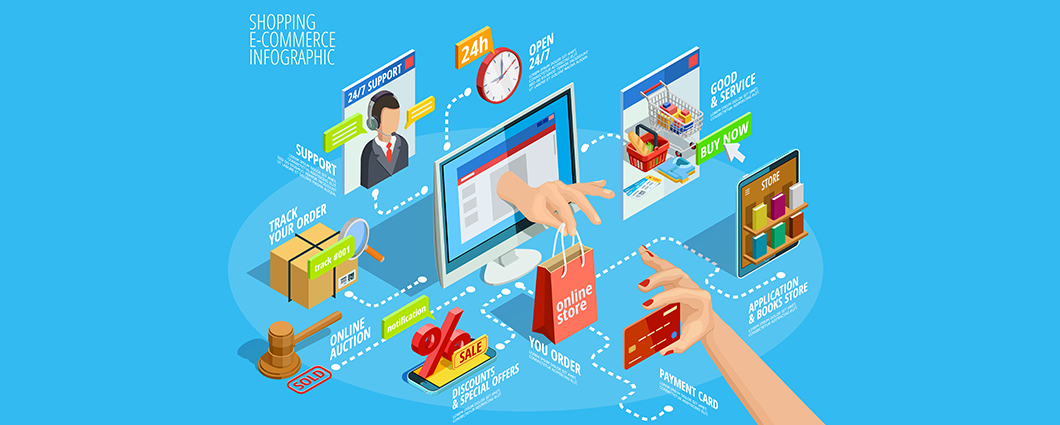
This digital marketplace has revolutionized the way we shop, offering convenience, variety, and competitive pricing. As technology advances and consumer behavior shifts, e-commerce continues to grow and evolve. This article explores the fundamentals of e-commerce, its benefits, challenges, and future trends.
What is E-commerce?
E-commerce encompasses a wide range of online business activities for products and services. It includes various models such as Business-to-Consumer (B2C), Business-to-Business (B2B), Consumer-to-Consumer (C2C), and Consumer-to-Business (C2B). Online retail, digital marketplaces, and auction sites are all part of the e-commerce ecosystem.
Benefits of E-commerce
Convenience and Accessibility
One of the primary advantages of e-commerce is the convenience it offers. Consumers can shop anytime, anywhere, without the constraints of physical store hours or locations. This 24/7 availability caters to the modern consumer’s busy lifestyle.
Wide Selection and Availability
E-commerce platforms provide access to a vast array of products and services that might not be available locally. Shoppers can easily compare products, read reviews, and find the best deals, all from the comfort of their homes.
Competitive Pricing
Online businesses often have lower operational costs compared to traditional brick-and-mortar stores. These savings can be passed on to consumers in the form of competitive pricing. Additionally, online marketplaces increase price transparency, allowing consumers to find the best value.
Personalized Shopping Experience
Advanced technologies like artificial intelligence and machine learning enable e-commerce platforms to offer personalized recommendations based on a user’s browsing and purchasing history. This enhances the shopping experience by making it more relevant and engaging for each individual.
Challenges of E-commerce
Security Concerns
Security is a major concern in e-commerce. Protecting customer data and ensuring secure transactions is critical. Cyber threats such as hacking, identity theft, and fraud pose significant risks to both businesses and consumers.
Competition
The e-commerce landscape is highly competitive. Businesses must continuously innovate and provide exceptional customer service to stand out. The ease of entry into the online marketplace also means new competitors are constantly emerging.
Logistics and Supply Chain Management
Efficient logistics and supply chain management are crucial for e-commerce success. Ensuring timely delivery, managing inventory, and handling returns can be challenging, especially for businesses operating on a global scale.
Future Trends in E-commerce
Mobile Commerce (M-commerce)
The rise of smartphones has significantly contributed to the growth of e-commerce. Mobile commerce, or m-commerce, is expected to continue expanding as more consumers use their mobile devices for shopping. Optimizing websites and apps for mobile users is essential for businesses to capture this market.
Social Commerce
Social media platforms are increasingly being used as shopping channels. Social commerce allows users to discover and purchase products directly through social media, making the shopping experience more integrated and seamless. Influencer marketing and shoppable posts are key components of this trend.
Augmented Reality (AR) and Virtual Reality (VR)
AR and VR technologies are enhancing the online shopping experience by allowing customers to visualize products in a real-world context. For example, AR can enable shoppers to see how furniture would look in their homes, while VR can provide immersive virtual store experiences.
Sustainability and Ethical Shopping
Consumers are becoming more conscious of the environmental and ethical impact of their purchases. E-commerce businesses that prioritize sustainability, ethical sourcing, and transparent practices are likely to attract and retain customers who value these principles.
Conclusion
E-commerce has fundamentally transformed the retail landscape, offering unparalleled convenience, variety, and personalization. Despite challenges such as security concerns and intense competition, the future of e-commerce looks promising with trends like mobile commerce, social commerce, and AR/VR technologies. As consumer expectations continue to evolve, businesses must innovate and adapt to stay ahead in this dynamic digital marketplace.
