
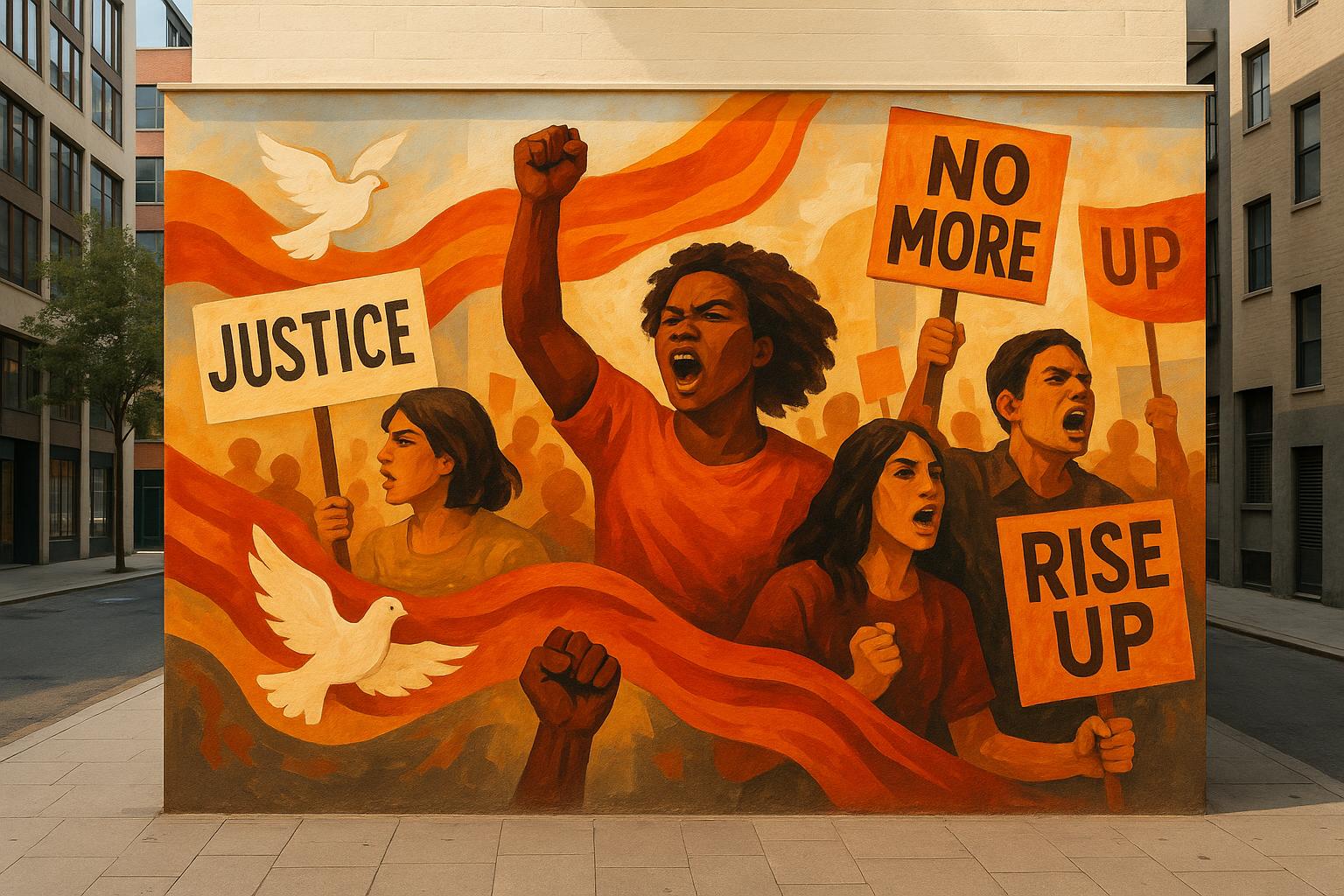
Street art is a powerful tool for political protest, turning public spaces into platforms for expression. It simplifies complex ideas into visuals, sparks conversations, and inspires action. Here’s what makes it impactful:
- Accessible to All: Street art is free and visible to everyone, breaking barriers of socioeconomic status and language.
- Strategic Placement: Artists choose locations that amplify their message, like murals on gentrified buildings or near corporate offices.
- Digital Reach: Social media spreads these artworks globally, turning local protests into worldwide movements.
- Community Engagement: Art becomes a rallying point for discussions and collective action.
7 Iconic Examples of Political Street Art:
- Banksy’s ‘Balloon Girl’: Reimagined to highlight the Syrian refugee crisis.
- JR’s ‘Face 2 Face’: Portraits of Israelis and Palestinians on the separation wall to promote dialogue.
- Keith Haring’s ‘Free South Africa’: A bold statement against apartheid.
- Shepard Fairey’s ‘HOPE’ Poster: Symbolized optimism during Obama’s 2008 campaign.
- Blu’s Berlin Mural: Critiqued gentrification and economic inequality.
- Tatyana Fazlalizadeh’s ‘Stop Telling Women to Smile’: Addressed street harassment.
- Ai Weiwei’s Refugee Projects: Highlighted the struggles of displaced communities.
Street art bridges activism and creativity, reshaping narratives and inspiring change.
Banksy’s Anti-War Activism – Murals & Art Prints
How Street Art Works in Political Protest
Street art turns public spaces into stages for political expression. Its power lies in reaching a wide audience and sparking immediate emotional reactions.
Visual Impact and Accessibility Street art simplifies complex ideas into visuals that resonate with everyone. By becoming part of the cityscape, it ensures even those who might not actively seek out political messages are exposed to them. Unlike traditional protests, the artwork leaves a lasting impression, continuing to engage people long after it’s created.
Strategic Placement Artists often choose locations that enhance the message. For example, a mural critiquing gentrification might appear on a building set for luxury redevelopment, while environmental messages are often placed near corporate offices. These choices add deeper meaning to the art and amplify its message. The physical location also gains further reach online, spreading the message far beyond its original setting.
Street art communicates quickly and effectively by cutting through language barriers, evoking emotions, and using universal imagery. Its influence comes from several factors:
Democratic Access
- Open to everyone, day or night, without cost
- Reaches people from various socioeconomic backgrounds
- Encourages community discussions
Digital Amplification Social media and online platforms turn local pieces into global statements, broadening their impact and putting pressure on larger systems.
Community Engagement These artworks often become gathering points where people meet, discuss, and share their thoughts. They inspire conversations, encourage community action, and help build momentum for broader political movements.
Street art addresses political challenges by:
- Creating lasting visual records of dissent
- Turning public spaces into forums for dialogue
- Critiquing power through peaceful expression
- Transforming cities into open-air galleries of resistance
Through these approaches, street art remains a powerful way to question authority and inspire political action.
1. Banksy’s ‘Balloon Girl’ and Syrian Crisis
Banksy, famous for his protest art, reimagined his ‘Balloon Girl’ to reflect themes of hope, loss, and resilience in the context of the Syrian refugee crisis. By blending this iconic image with a pressing humanitarian issue, he created a powerful statement.
This work showcases how street art can serve as a quiet yet impactful form of protest, sparking public awareness and conversations about global crises.
2. JR‘s Israel-Palestine Photo Project
In 2007, French artist JR unveiled his "Face 2 Face" project, featuring massive black-and-white portraits of Israelis and Palestinians. These striking images were displayed on both sides of the separation barrier in Jerusalem, Ramallah, and Bethlehem. The placement of these portraits was intentional, inviting viewers to question deeply held perceptions.
JR explained that the project aimed to highlight shared human experiences, breaking down biases and encouraging dialogue between the two communities. While the initiative encountered some pushback from local authorities, it stayed up for several weeks and captured global attention with its message of peace.
This project showcased how street art can cross political divides and create opportunities for meaningful conversations in a region marked by conflict.
3. Keith Haring‘s Fight Against Apartheid
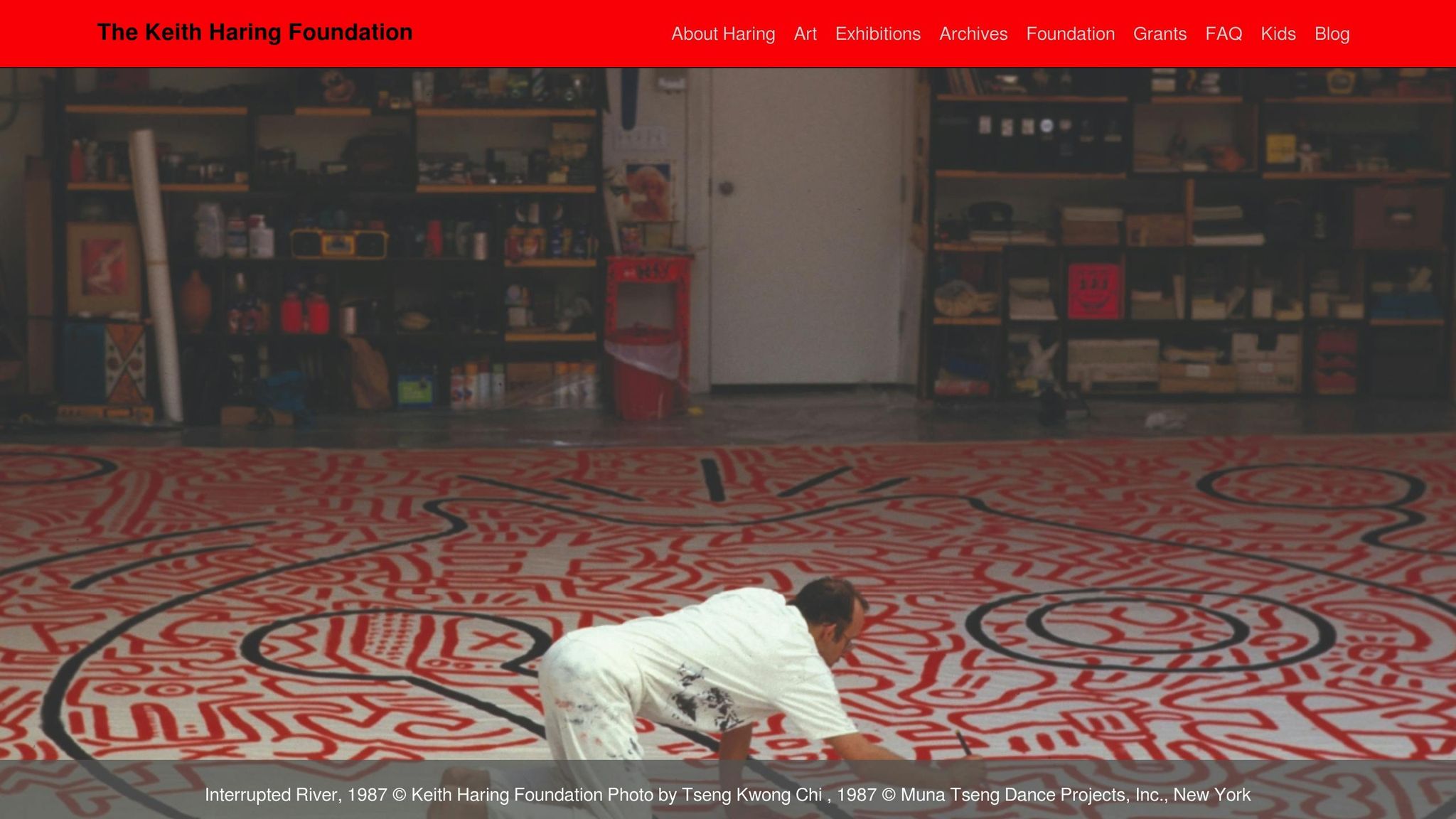
Keith Haring took a stand against apartheid in South Africa with his powerful piece, Free South Africa. Through bold lines and bright, striking colors, he illustrated a figure breaking free from oppression. This artwork turned personal creativity into a strong statement for justice, showing how art can cross borders to highlight pressing political issues.
4. Shepard Fairey‘s Obama Campaign Art

Shepard Fairey’s "HOPE" poster for Barack Obama’s 2008 presidential campaign is one of the most iconic pieces of political street art. The red, white, and blue portrait, showing Obama looking upward with the word "HOPE" below, became a striking symbol of political optimism.
Interestingly, Fairey created the poster independently, without official approval from the campaign. Despite this, it quickly gained traction both online and in public spaces. Fairey initially produced a small batch of posters, which were displayed in urban areas across major cities. The artwork’s rapid and organic spread helped it capture attention nationwide.
This grassroots success turned the poster into a cultural touchstone, especially among younger voters, and reshaped how political art could influence public engagement. The "HOPE" poster remains a key example of how art can drive political involvement and leave a lasting impact.
sbb-itb-593149b
5. Blu‘s Economic Protest in Berlin
Italian street artist Blu took to Berlin’s urban spaces in 2014 to address growing economic inequalities and the rapid gentrification of the city. His work in the Kreuzberg district, an area under heavy pressure from urban redevelopment, left a lasting impression.
Blu’s mural, painted on the facade of a former squat on Cuvrystraße, depicted corporate figures in suits using crowbars to dismantle colorful residential buildings. This striking image represented the displacement of local communities in favor of profit-driven urban development. It quickly became a symbol of resistance, highlighting the struggles faced by Berlin residents as their neighborhoods were transformed.
The mural sparked intense conversations about affordable housing and economic displacement. Local activists rallied around the artwork, using it as a focal point for community efforts to push back against gentrification. When plans to convert the building into luxury apartments were announced later that year, Blu and his supporters painted over the mural in black. This act of covering the artwork became a powerful statement in itself, emphasizing the fight for community control over public spaces.
6. Tatyana Fazlalizadeh‘s Anti-Harassment Art
Tatyana Fazlalizadeh’s project, Stop Telling Women to Smile, uses bold portraits and straightforward messages to address street harassment head-on. Her work is strategically placed in public spaces where harassment often happens, prompting conversations about safety and respect.
What makes her approach stand out is how it centers on the experiences of survivors. Instead of delivering a top-down message, her art gives a voice to those affected, encouraging them to reclaim their stories. At the same time, it challenges communities to face and address the issue of harassment directly.
7. Ai Weiwei‘s Refugee Art Projects
Chinese artist and activist Ai Weiwei uses his art to shed light on the global refugee crisis and question policy approaches to displacement. His creations focus on the human toll of forced migration, pushing for more compassionate responses.
One of his standout works, the documentary Human Flow (2017), captures the struggles faced by refugees worldwide. It encourages viewers to face these harsh realities and think critically about possible solutions.
Ai Weiwei’s work serves as a powerful reminder of how art can spotlight social issues, inspire political action, and push for meaningful change.
Street Art’s Power in Political Change
Street art does more than just protest – it actively reshapes political narratives. By transforming urban spaces into platforms for dialogue, it delivers powerful political messages in a visual, accessible way.
How Street Art Makes an Impact
Accessibility and Visibility
Unlike traditional art confined to galleries, street art exists in public spaces, making it accessible to people from all walks of life. Its presence in everyday environments ensures that political messages reach a much broader audience.
Viral Potential
Street art’s influence often extends beyond its physical location. For example, when Banksy’s "Love is in the Bin" self-destructed at auction, it sparked global conversations about art and its value. This ability to generate widespread attention highlights the medium’s power to amplify political discourse.
Strengths and Challenges
Street art is a powerful medium, but it comes with its own set of challenges:
| Strength | Challenge |
|---|---|
| Immediate public visibility | Risk of removal |
| Low-cost impact | Vulnerability to weather or damage |
| Accessible to diverse audiences | Risk of message dilution |
| Potential for viral sharing | Legal risks for artists |
What Makes It Effective?
For street art to drive political change, it often relies on:
- Memorable symbols that connect with broader social movements
- Media and social media buzz to amplify its reach
- Community engagement to spark dialogue and action
- Longevity in public memory, even after the artwork itself is gone
As society and technology evolve, so does street art’s role in political activism. From Banksy’s provocative statements to Ai Weiwei’s bold works, street art continues to keep political issues in the spotlight, proving its ability to inspire change and fuel conversation.
Conclusion
Street art has become a powerful tool in political discourse, turning city walls into platforms for expression and change. Its accessibility and striking visuals allow artists to bypass traditional media, directly engaging with the public in meaningful ways.
Many iconic works have sparked important conversations and inspired collective action. These examples show how street art challenges viewpoints and motivates people to take action.
With the rise of digital media, street art now reaches global audiences within hours, extending its influence far beyond local communities. This blend of physical presence and digital amplification has solidified its role in political protests and cultural movements. By distilling complex issues into simple, impactful visuals, street art continues to serve as a democratic and effective medium for public dialogue.
This dynamic art form has consistently shaped political conversations. In a world grappling with ongoing challenges, street art remains a crucial voice in the fight for social justice and political change.
FAQs
How does street art communicate political messages to people from different backgrounds?
Street art is a powerful medium for conveying political messages because it is accessible, visual, and often located in public spaces where it can reach a wide audience. Through bold imagery, symbolism, and thought-provoking messages, street art can spark conversations and inspire reflection on complex political issues.
By using universal symbols or culturally relevant themes, street artists bridge language and cultural barriers, making their messages understandable to diverse audiences. This accessibility allows street art to serve as a platform for activism, giving voice to marginalized communities and challenging societal norms in a visually impactful way.
How does digital media enhance the reach and influence of street art as a form of political protest?
Digital media plays a crucial role in amplifying the impact of street art by making it accessible to a global audience. Platforms like social media allow artists to share their work instantly, breaking geographical barriers and sparking conversations about political issues worldwide. This helps street art evolve from a local statement to a global movement.
Additionally, digital tools enable artists to document and preserve their work, ensuring its message endures even if the physical art is removed or altered. By combining the power of visual storytelling with the connectivity of digital platforms, street art becomes a powerful tool for raising awareness and inspiring change.
What obstacles do street artists encounter when using public spaces for political protest?
Street artists often face several challenges when using public spaces to express political views. Legal restrictions are a major hurdle, as many cities have strict laws against graffiti and unauthorized artwork, which can result in fines or even criminal charges. Additionally, artists may encounter public backlash or opposition from individuals who disagree with their message or view their work as vandalism.
Another significant challenge is the ephemeral nature of street art. Public artwork is frequently removed, painted over, or defaced, making it difficult for artists to ensure their message reaches a wide audience. Despite these obstacles, many street artists continue to use public spaces as a powerful platform for political expression and social commentary.