
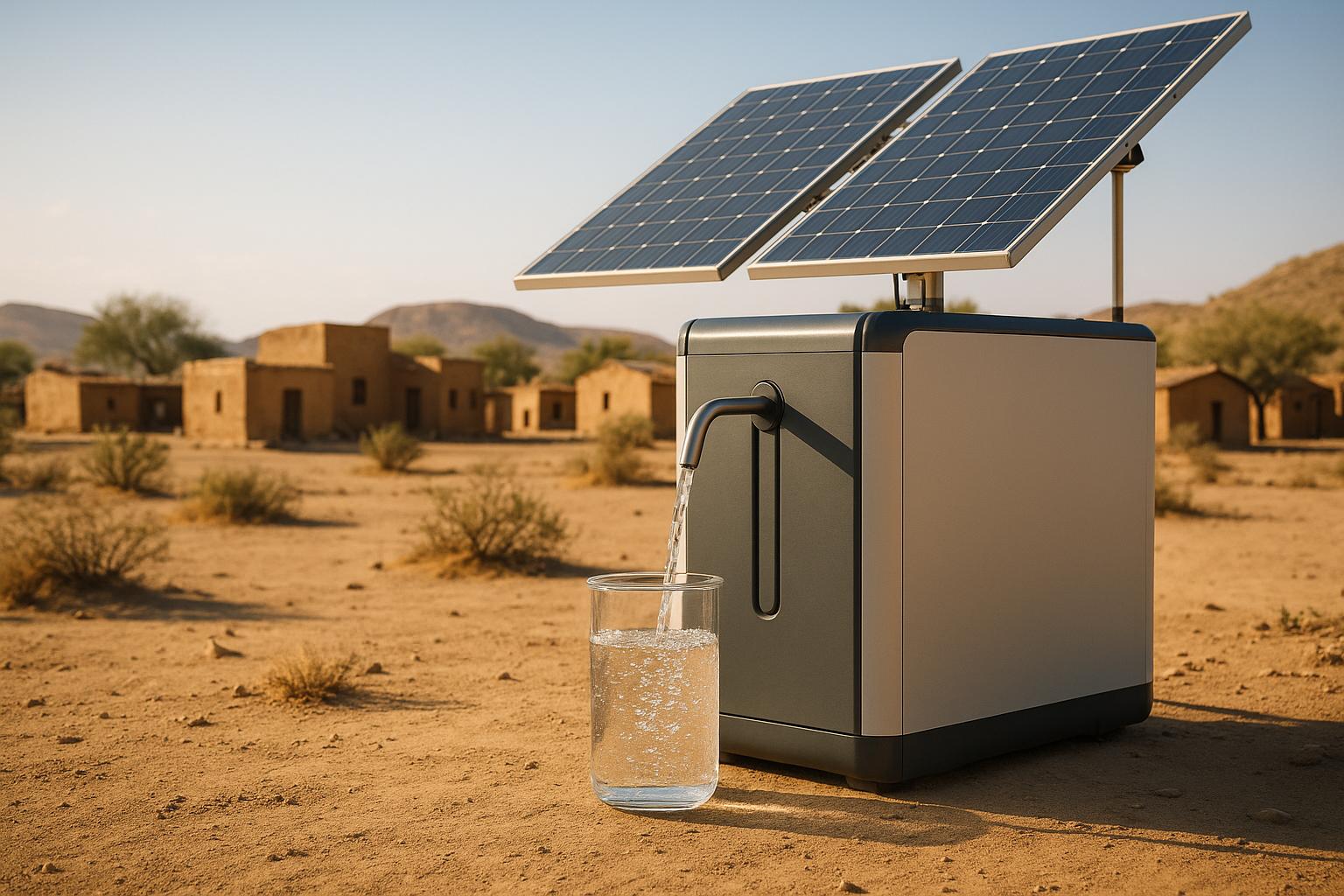
Looking for a way to purify water using clean energy? Solar-powered electrodialysis combines solar power with water desalination to remove salts and impurities effectively. Here’s why it matters and how it works:
- What It Does: Treats brackish water by using an electric field and ion-selective membranes.
- Why Solar Power? Low energy needs and flexibility make it ideal for areas with variable sunlight or limited grid access.
- Key Benefits: Lower energy consumption compared to traditional reverse osmosis, operates at low pressure, and handles power fluctuations well.
Steps to Implement:
- Test water quality (TDS, pH, conductivity).
- Assess solar site suitability (sunlight, space, mounting surface).
- Secure permits (building, environmental, utility).
- Size your solar array based on energy needs and sunlight availability.
- Establish regular maintenance for membranes and solar panels.
Quick Comparison
| Feature | Solar-Powered ED | Traditional RO |
|---|---|---|
| Energy Use | Lower (ideal for brackish water) | Higher (increases with salinity) |
| Power Supply Flexibility | Handles variable solar output | Requires stable, consistent power |
| Operating Pressure | Low pressure | High pressure |
Bottom Line: Solar-powered electrodialysis is a practical, cost-efficient way to address water scarcity, especially in remote areas. Test water, plan solar setup, and maintain regularly for best results.
Electrodialysis & Electrodialysis Reversal Equipment DESALT …
How Electrodialysis Works
Electrodialysis (ED) separates dissolved salts from water by using an electric field and ion-selective membranes. These membranes allow specific ions to pass while blocking others, making ED effective for treating brackish water.
Main System Components
An electrodialysis system relies on these key parts:
- Ion-Exchange Membranes: Alternating cation- and anion-selective membranes form the system’s core, enabling the separation of positive and negative ions.
- Electrodes: The anode and cathode create the electric field that drives the process.
- Circulation System: Pumps move water through the membranes, separating purified water from the concentrated brine.
Solar power can be integrated into ED systems, offering unique advantages for their operation.
Why Use Solar Power?
Pairing solar power with ED systems makes them more adaptable to variable energy inputs. Unlike reverse osmosis (RO), ED systems can handle power fluctuations without compromising performance, making solar a natural fit.
Here’s a comparison between solar-powered ED and traditional RO systems:
| Feature | Solar-Powered ED | Traditional RO |
|---|---|---|
| Energy Use | Lower energy needs, especially for brackish water | Higher energy demand, increases with salinity |
| Power Supply Flexibility | Works well with variable solar output | Requires a stable, consistent power supply |
| Operating Pressure | Operates at low pressure | Requires high-pressure operation |
Because ED systems can efficiently handle inconsistent power, they’re ideal for areas with unreliable grid electricity or fluctuating sunlight, ensuring steady water treatment under varying conditions.
Pre-Installation Checks
Before installation, it’s crucial to perform essential evaluations to ensure the system operates efficiently and complies with all regulations. These steps build on earlier design insights, helping to bridge the gap between planning and deployment.
Water Testing Steps
Testing the water quality is necessary to determine if electrodialysis is a suitable option. Focus on these key factors:
- Total Dissolved Solids (TDS)
- pH levels
- Conductivity
- Hardness
Gather water samples from different locations and seasons to get a complete picture. Have these samples analyzed by a certified lab for accurate results.
Solar Site Review
Check that the site meets the following conditions for effective solar panel installation:
- Receives adequate direct sunlight.
- Has enough open, unobstructed space for the panels.
- Includes a sturdy surface for mounting the system.
These factors are essential for capturing the necessary solar energy to power the system.
Legal Requirements
- Building Permits: Secure local permits for both solar and water systems.
- Environmental Permits: Obtain approval from local and state environmental agencies.
- Utility Interconnection: Get the necessary agreements and approvals from your utility provider.
- Water Compliance: Ensure adherence to local water extraction and discharge regulations by consulting your state’s water resources department.
sbb-itb-593149b
System Setup Guide
Setting up your system correctly is key to getting the most out of your water treatment and solar power generation.
Power Requirements
To determine your power needs, consider the following factors:
- Daily Water Production: Higher production rates require more energy.
- Water Quality: Poorer water quality (e.g., high TDS or impurities) increases energy demands.
- Operating Hours: Factor in how many hours of effective sunlight you get each day.
- System Efficiency: Account for energy losses during power conversion and transmission.
Calculate your daily energy consumption, factor in efficiency losses, and size your solar array based on the average peak sun hours in your area. Be sure to include a safety margin to account for cloudy days or seasonal variations.
Once your solar array is properly sized, you can improve its performance with smart power usage strategies.
Power Usage Tips
- Peak Operation: Run your system during periods of peak sunlight to rely more on direct solar energy and reduce the strain on battery storage.
- Load Management: Use smart controllers to balance energy consumption with available solar power.
- Routine Maintenance: Keep your solar panels clean and inspect them regularly to maintain optimal performance. Adjust your maintenance schedule to suit local environmental conditions.
Upkeep and Expenses
Maintenance Schedule
Stick to a consistent maintenance schedule to keep your system running smoothly. Regular membrane cleaning and equipment inspections can help you avoid performance dips and unexpected failures. By following the manufacturer’s recommendations and scheduling routine checks, you can catch potential problems early. This approach works hand-in-hand with energy-saving strategies, ensuring all components operate efficiently. Consistent maintenance not only keeps the system dependable but also helps maintain the energy efficiencies outlined earlier.
Cost Considerations
When planning maintenance, keep in mind these cost factors:
- Maintenance expenses depend on the system’s size, required labor, and replacement parts.
- Budget for regular cleanings, inspections, and part replacements to manage long-term costs.
- Staying on top of upkeep reduces the likelihood of costly emergency repairs and ensures the system remains reliable.
Summary
Solar-powered electrodialysis combines renewable energy with efficient water purification. To ensure smooth operation, focus on these practical priorities.
For a system to run effectively, it’s essential to test water quality regularly, maximize solar panel exposure, maintain membranes properly, and manage power usage wisely. These steps help keep operations reliable and cost-efficient.
Key operational considerations include:
- Water Quality: Conduct regular tests to monitor mineral levels and conductivity.
- Power Management: Make the most of solar panel output and energy usage.
- Maintenance Scheduling: Plan cleanings during periods of lower water demand.
- Cost Monitoring: Keep track of maintenance and energy costs to sustain efficiency.
FAQs
How does solar-powered electrodialysis compare to traditional reverse osmosis in terms of energy use and flexibility?
Solar-powered electrodialysis and traditional reverse osmosis differ significantly in energy efficiency and operational adaptability. Solar-powered electrodialysis is generally more energy-efficient, especially in areas with abundant sunlight, as it uses renewable solar energy to drive the process. This makes it a sustainable choice for regions with limited access to conventional power sources.
In terms of flexibility, electrodialysis is particularly well-suited for treating water with moderate salinity levels and can be more easily scaled for small or remote applications. Reverse osmosis, on the other hand, is highly effective for a broader range of water salinity but typically requires higher energy input and more maintenance, especially in off-grid settings. The choice between the two depends on specific needs, such as water quality, energy availability, and environmental conditions.
What factors should I consider when choosing the right location for a solar-powered electrodialysis system?
When selecting a site for a solar-powered electrodialysis system, consider the following key factors:
- Solar exposure: Ensure the location receives ample sunlight year-round, ideally with minimal shading from trees, buildings, or other obstructions.
- Proximity to water sources: The site should be close to the water source requiring treatment to reduce transportation costs and energy use.
- Land availability: Verify that the area has enough space to accommodate solar panels, storage units, and other system components.
- Accessibility: Choose a location that allows easy access for installation, maintenance, and repairs.
- Local climate: Assess whether the local weather conditions, such as temperature and humidity, are suitable for the system’s operation.
By carefully evaluating these factors, you can ensure optimal performance and cost-efficiency for your solar-powered electrodialysis system.
What are the key maintenance practices to keep a solar-powered electrodialysis system running efficiently?
To ensure the long-term efficiency and reliability of a solar-powered electrodialysis system, regular maintenance is essential. Start by cleaning the solar panels periodically to remove dust, dirt, and debris that can reduce energy output. Inspect the panels for any physical damage, especially after severe weather conditions.
Additionally, monitor the electrical connections and wiring to ensure they remain secure and free from corrosion. It’s also important to regularly check the membranes and filters within the electrodialysis unit for wear and tear, as these components directly impact water quality and system performance. Replacing worn parts promptly can prevent larger issues down the line.
Finally, keep a log of maintenance activities and system performance to identify any patterns or potential problems early. With consistent care, your system can operate efficiently for years to come while contributing to sustainable water treatment solutions.
