
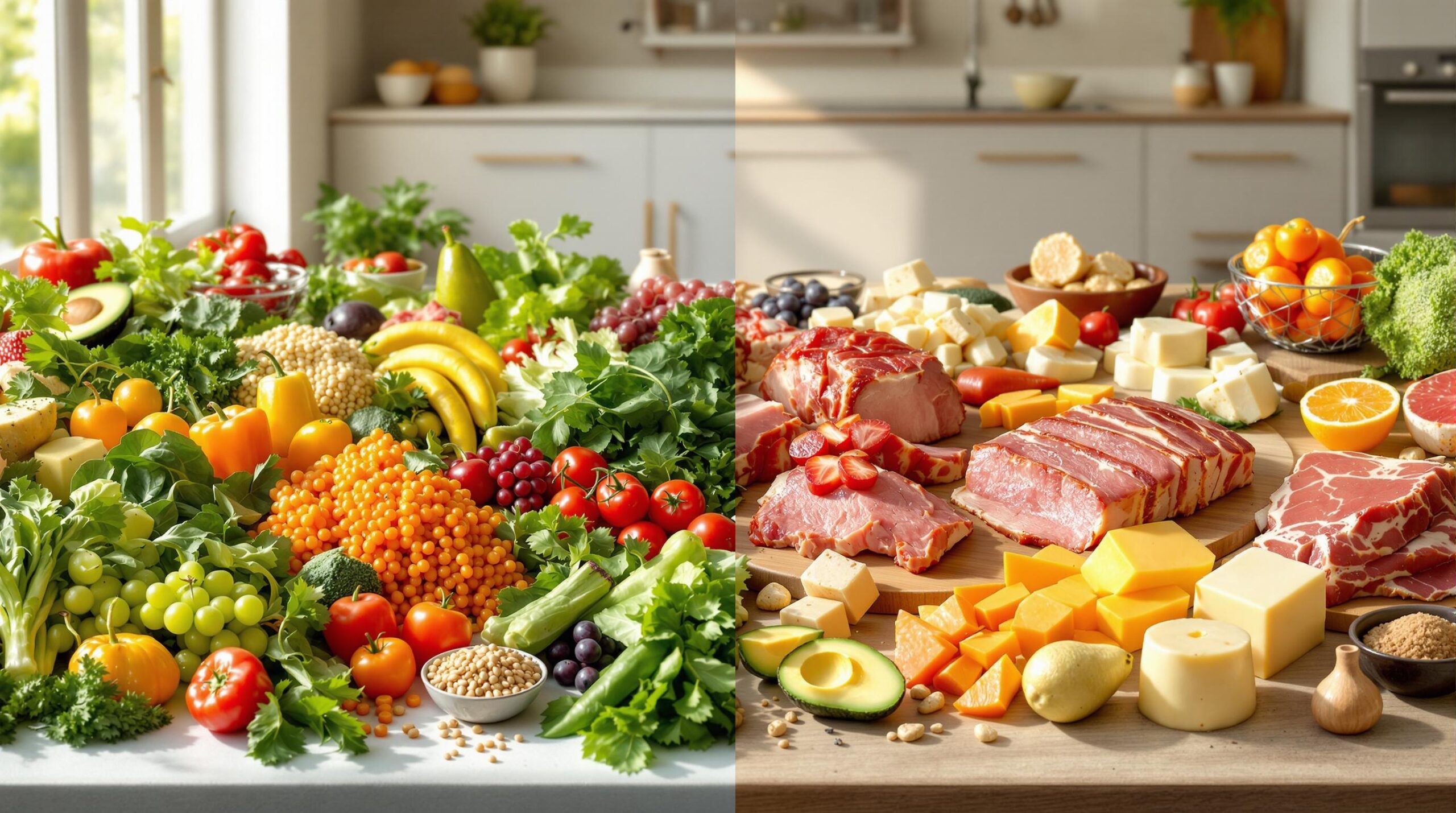
Choosing between a plant-based diet and a keto diet depends on your health goals and lifestyle.
- Plant-Based Diet: Focuses on whole foods like fruits, vegetables, legumes, and grains. It’s better for long-term health, disease prevention, and overall nutrition.
- Keto Diet: Prioritizes high-fat, low-carb foods to trigger fat-burning ketosis. It’s effective for short-term weight loss and blood sugar control but harder to sustain.
Quick Comparison:
| Factor | Plant-Based Diet | Keto Diet |
|---|---|---|
| Best For | General health, disease prevention | Short-term weight loss, diabetes |
| Macronutrient Focus | No strict limits; nutrient-dense | 70% fat, 20% protein, 10% carbs |
| Sustainability | Easier to maintain long-term | Challenging for long-term use |
| Food Choices | Wide variety of plant-based foods | High-fat, very low-carb options |
Both diets have unique benefits and challenges. Consider your goals, consult a professional, and choose what works best for you.
What Plant-Based and Keto Diets Are
Plant-Based Diet Basics
A plant-based diet focuses on eating whole foods like fruits, vegetables, beans, legumes, whole grains, and plant oils. It often reduces or completely avoids animal products. Instead of following strict ratios of protein, carbs, and fats, this diet highlights the quality of the food, typically leading to a higher intake of carbohydrates from natural, unprocessed sources.
Keto Diet Basics
The keto diet takes a very different approach. It limits carbohydrate intake – usually to less than 50 grams per day – and replaces those carbs with fats to trigger ketosis. In this state, the body burns fat as its primary energy source. The diet emphasizes high-fat foods and moderate protein to maintain this metabolic state.
Main Differences
These two diets vary significantly in their macronutrient goals and the types of foods they encourage.
- Food Sources: Plant-based diets focus on plant-derived foods and avoid animal products, while keto heavily relies on animal fats and proteins.
- Carbohydrate Approach: Plant-based diets include carbs from whole, natural sources, whereas keto strictly limits carb intake.
- Macronutrient Focus: Keto requires precise fat, protein, and carb ratios, while plant-based diets concentrate on eating high-quality, nutrient-dense foods.
Next, we’ll explore the health benefits associated with each diet.
STUDY: Animal-Based Keto vs Low-Fat Plant-Based (Vegan …
Health Benefits and Research
Now that we’ve outlined the basics, let’s dive into the clinical outcomes of each diet.
Plant-Based Diet Results
Research highlights that plant-based diets can reduce disease risk and improve metabolic health markers. For individuals with type 2 diabetes, studies report noticeable improvements:
- HbA1c (blood sugar levels): Dropped from 8.07% to 6.84%
- Fasting glucose: Reduced from 177.4 mg/dL to 128.2 mg/dL
- Diabetes risk reduction: Observed across both Black and non-Black participants
These findings suggest plant-based diets can help with disease management and long-term weight control.
Keto Diet Results
The ketogenic diet delivers strong short-term results. Its ability to improve both glucose levels and body weight makes it effective for immediate metabolic goals:
- HbA1c: Reduced by 1.1 points (7.4% to 6.3%)
- Fasting glucose: Dropped by 27 mg/dL
- Average weight loss: 8.7 kg (19.1 lbs)
While keto is highly effective for short durations (around three months), transitioning to a moderate low-carb diet afterward can help maintain these results.
Weight Loss and Health Effects
When directly compared, plant-based diets achieved a mean OGTT of 115.6 mg/dL, while keto showed 143.3 mg/dL. However, keto had lower post-meal glucose levels (80.5 mg/dL vs. 102.5 mg/dL). Plant-based diets are often better for long-term use, while keto works well in shorter cycles.
"Health can be found through different forms of extreme dieting or exercise regimens, and each group has its unwavering proponents. This study has shown that both the ketogenic diet and the plant-based diet can have positive effects on blood glucose and insulin levels to better control type two diabetes".
Next, we’ll explore the common challenges associated with each approach.
sbb-itb-593149b
Common Problems and Risks
Each diet comes with its own set of hurdles.
Plant-Based Diet Challenges
Getting enough protein and essential nutrients like vitamin B12, iron, omega-3s, and calcium can be tricky. Incorporating foods like tofu, tempeh, lentils, and quinoa can help. Careful planning is key to maintaining a balanced diet.
Keto Diet Challenges
Switching to keto often causes flu-like symptoms as the body adjusts. There’s also the risk of gallbladder strain. Keeping an eye on fiber, folate, and potassium intake is crucial. Additionally, the high-fat nature of the diet might impact heart health and gut bacteria.
Both diets require thoughtful planning and may call for supplements, depending on your needs and goals. Consider how these challenges align with your lifestyle.
How to Pick Your Diet
After weighing the pros and cons of each diet, consider these factors to determine which aligns with your health goals.
"Both a keto and plant-based diet may be an effective intervention to promote weight loss in some individuals, but might not be effective or appropriate for the long term in all individuals."
Key Decision Points
| Factor | Plant-Based Diet | Keto Diet |
|---|---|---|
| Best For | General health, weight management, disease prevention | Short-term weight loss, blood sugar control, epilepsy management |
| Macronutrient Focus | No strict limits; focuses on whole, plant-based foods | 70% fat, 20% protein, 10% carbs |
| Sustainability | Easier to maintain over time | Harder to stick with long-term |
| Food Choices | Wide range of fruits, veggies, beans, grains | High-fat, very low-carb options |
These two approaches serve different purposes and are rarely interchangeable.
Starting Your New Diet
"Plant-based diets can provide adequate nutrition and may offer health benefits in the prevention and treatment of certain diseases."
Steps to get started:
- Consult a professional: Speak with a dietitian or doctor to ensure the diet is safe and suitable for you.
- Plan ahead: Organize your meals weekly to simplify preparation and stay on track.
Diet-specific tips:
- Keto: Monitor your macronutrients closely and keep carbs at around 10% of daily calories to maintain ketosis.
- Plant-Based: Include a variety of legumes, tofu, nuts, and seeds to meet your protein requirements.
Conclusion
This comparison has broken down the main principles, benefits, and challenges of each diet. As you decide, think about your health goals, lifestyle, and how manageable each option feels for the long haul.
Plant-based diets offer a well-rounded approach, focusing on nutrient-rich foods and supporting disease prevention. On the other hand, keto diets can lead to quick weight loss and may help manage epilepsy, but they’re best used in short cycles (around three months) and under medical supervision. Research highlights that plant-based eating supports overall nutrition and reduces the risk of various illnesses, while keto demands close monitoring to be effective.
Take another look at the "How to Pick Your Diet" section if you need guidance. Plan your meals carefully, stay consistent, and consider working with a professional to see how each diet aligns with your goals. Use the framework provided earlier to find the best match for your needs.
