
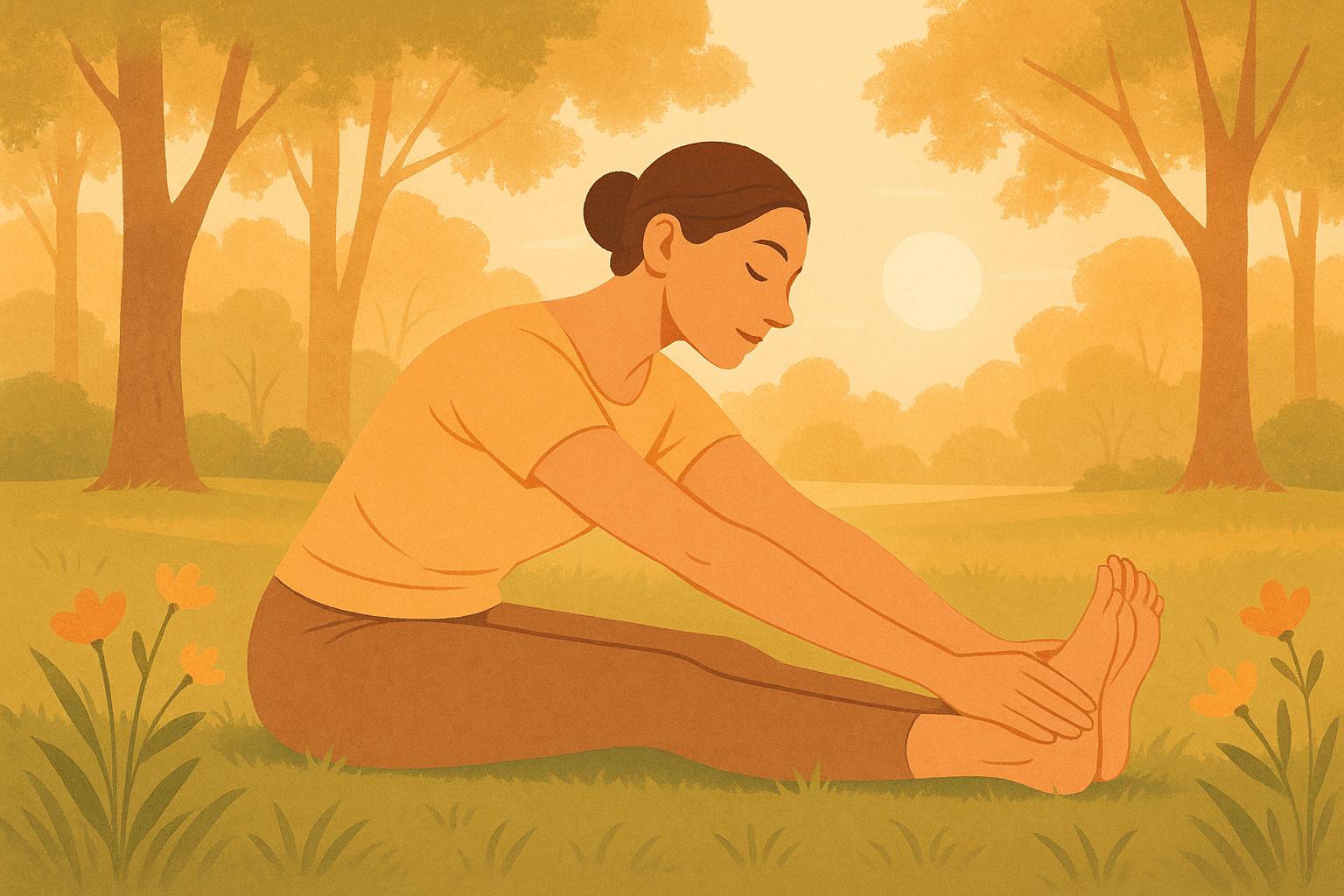
Stretching isn’t just for your muscles – it can help clear your mind, reduce stress, and improve focus. Here’s how:
- Boosts Mood: Stretching releases chemicals like endorphins, serotonin, and dopamine, which enhance your mood and motivation.
- Reduces Stress: Simple stretches like neck rolls or child’s pose relieve tension and activate relaxation responses.
- Improves Focus: Desk-friendly stretches such as seated spinal twists or wrist stretches improve blood flow and mental sharpness.
- Supports Mental Health: Gentle movements paired with deep breathing can calm anxiety and promote mindfulness.
Want to feel more focused and less stressed? Add 10–15 minutes of stretching to your daily routine. Start your morning with energizing stretches, take breaks with desk-friendly moves, and wind down with calming poses at night.
10 min Morning Yoga for Mental Clarity | Mindful Yoga Stretch …
How Stretching Affects Your Brain
Stretching can improve mental clarity by triggering the release of chemicals that positively influence your mood and mindset.
Mood-Enhancing Chemicals
When you stretch, your body releases key neurochemicals, including:
- Endorphins: These act as natural pain relievers and help create feelings of well-being.
- Serotonin: This neurotransmitter plays a role in stabilizing mood and reducing anxiety.
- Dopamine: Known for boosting motivation and sharpening focus.
Mental Health Benefits of Stretching
Stretching doesn’t just benefit your body – it can also have a positive impact on your mental well-being. Let’s break down how stretching can help with stress, focus, and mood.
Stress Relief
Stretching can help ease stress by releasing built-up tension in your body. Here are a few stretches that are particularly effective:
- Neck rolls: Slowly rolling your head in circles can loosen tight muscles in your neck and shoulders.
- Child’s pose: This calming position promotes relaxation by engaging your parasympathetic nervous system.
- Forward folds: These stretches improve blood flow and reduce tension along your spine.
Boosting Focus at Work
Short stretching breaks during the day can sharpen your focus and improve mental clarity. Try these simple desk-friendly stretches:
- Seated spinal twists: These stretches improve blood flow to your brain and relieve back stiffness.
- Wrist and finger stretches: Perfect for alleviating strain from typing, these stretches can also help refresh your mind.
- Shoulder blade squeezes: Encouraging better posture, these stretches may reduce mental fatigue and keep you more alert.
Stretching doesn’t just enhance focus – it also provides an outlet for emotional stress.
Improving Mood and Reducing Anxiety
Pairing gentle stretches with deep breathing can help regulate stress and improve your mood. Consider these options for calming anxiety:
- Standing forward bend: This stretch soothes the nervous system and encourages better circulation.
- Cat-cow pose: Combining movement with breath creates a sense of relaxation and ease.
- Legs up the wall: This position can help lower cortisol levels and promote a feeling of calm.
Adding just 10–15 minutes of stretching to your daily routine can make a noticeable difference in your mental health.
sbb-itb-593149b
Daily Stretching Schedule
Building a daily stretching routine can help clear your mind and improve focus. Here’s how to fit in stretches at key moments of your day:
Wake-Up Stretches
Kickstart your morning with these easy stretches to wake up your body and mind:
- Full-Body Roll-Up (2–3 minutes): While still lying in bed, slowly roll your spine up into a sitting position, focusing on each vertebra as you move. This gentle motion gets your blood flowing as you wake up.
- Standing Side Bends (1–2 minutes): Stand next to your bed and alternate reaching each arm overhead, stretching your sides. This encourages deep breathing and gently engages your core.
- Gentle Spinal Twists (2–3 minutes): Sit on the edge of your bed with your hands behind you for support. Slowly twist your torso from side to side, keeping good posture to help wake up your nervous system.
You can also add quick stretches later in the day to maintain focus while working.
Office and Desk Stretches
Break up long hours at your desk with these simple stretches to ease stiffness and stay sharp:
- Seated Figure-4 Stretch (30–60 seconds per side): Sit down and cross one ankle over the opposite thigh. This stretch opens up your hips and relieves lower-body tension that can distract you.
- Desktop Prayer Stretch (1 minute): Rest your palms on your desk with fingers pointing toward you, then lean back slightly. This stretch helps loosen your wrists and forearms while improving circulation.
Getting the Most Mental Benefit from Stretching
Breathing and Stretching
Pairing mindful breathing with your stretches can amplify mental benefits. Take slow, deep breaths through your nose, allowing your diaphragm to fully expand. Sync your movements with your breath: stretch as you inhale, then deepen the stretch as you exhale. Aim for a steady rhythm of 4–6 breaths per minute – inhale for 4 counts, exhale for 6.
As you stretch, focus on aligning your awareness with each movement to sharpen mental clarity.
Mind-Body Connection
Practice mindful movement by:
- Body scanning: Take 10–15 seconds to focus on the muscles you’re targeting.
- Sensation awareness: Pay attention to feelings of tension and release as you stretch.
If your mind starts to wander, gently shift your focus back to your breath and the sensations in your body.
Once you’ve incorporated mindful movement, keeping track of your experience can help you fine-tune your routine.
Recording Your Progress
Monitor how stretching impacts your mood, focus, physical tension, and sleep. Use a simple format like this to track your progress:
| Aspect to Track | What to Record |
|---|---|
| Mood Rating | Scale of 1–10 before and after stretching |
| Focus Level | Hours of sustained concentration |
| Physical Tension | Areas of tightness or discomfort |
| Sleep Quality | Hours of sleep and how restful it felt |
Review your notes weekly to see which stretching techniques give you the best results for mental clarity and overall well-being.
Conclusion
Stretching can improve your focus and mental clarity. When done regularly, it enhances your ability to concentrate during the day while promoting mindfulness – helping you stay aware of your body and breath with each movement.
You can take advantage of these benefits by adding specific stretches to your daily routine. Start small with morning stretches, include a few exercises at your desk, and wind down with relaxing stretches before bed.
Whether you’re dealing with work stress, feeling anxious, or just want to stay focused, stretching is a practical way to support your mental health. It’s a simple habit that complements the mind-body practices we’ve discussed.
Take a moment during your next break to try one or two stretches. It’s an easy step toward improving both your mental and physical well-being.
FAQs
How can I add stretching to my daily routine to boost mental clarity?
Incorporating stretching into your daily routine can be simple and highly beneficial for improving mental clarity. Start by dedicating just 5–10 minutes each morning or evening to gentle stretches. Focus on movements that release tension in your neck, shoulders, and back, as these areas often hold stress.
You can also integrate stretching into existing habits. For example, try stretching while watching TV, during work breaks, or after a workout. Consistency is key, so aim to make it a regular part of your day. Over time, these small efforts can help clear your mind, reduce stress, and improve focus.
What are the best stretches to reduce stress and improve focus during the workday?
Incorporating simple stretches into your workday can help reduce stress and boost focus. Some of the most effective stretches include:
- Neck Stretch: Gently tilt your head toward your shoulder and hold for 15–30 seconds on each side to release tension in your neck.
- Seated Spinal Twist: While sitting, place one hand on the back of your chair and twist your upper body gently to stretch your spine and improve posture.
- Forward Fold: Stand up, hinge at your hips, and let your arms hang toward the floor to stretch your back and hamstrings.
These stretches can be done in just a few minutes and are perfect for breaking up long periods of sitting. Try to integrate them into your routine for better mental clarity and relaxation throughout the day.
How does stretching help boost mood and mental clarity?
Stretching can positively impact your brain by triggering the release of endorphins, often referred to as ‘feel-good’ chemicals. These natural mood enhancers help reduce stress and improve focus, leaving you feeling more clear-headed and energized. Additionally, stretching increases blood flow to the brain, which can enhance cognitive function and mental clarity.
Incorporating simple stretches into your daily routine, especially during breaks or after long periods of sitting, can make a noticeable difference in your mood and overall mental well-being.
