
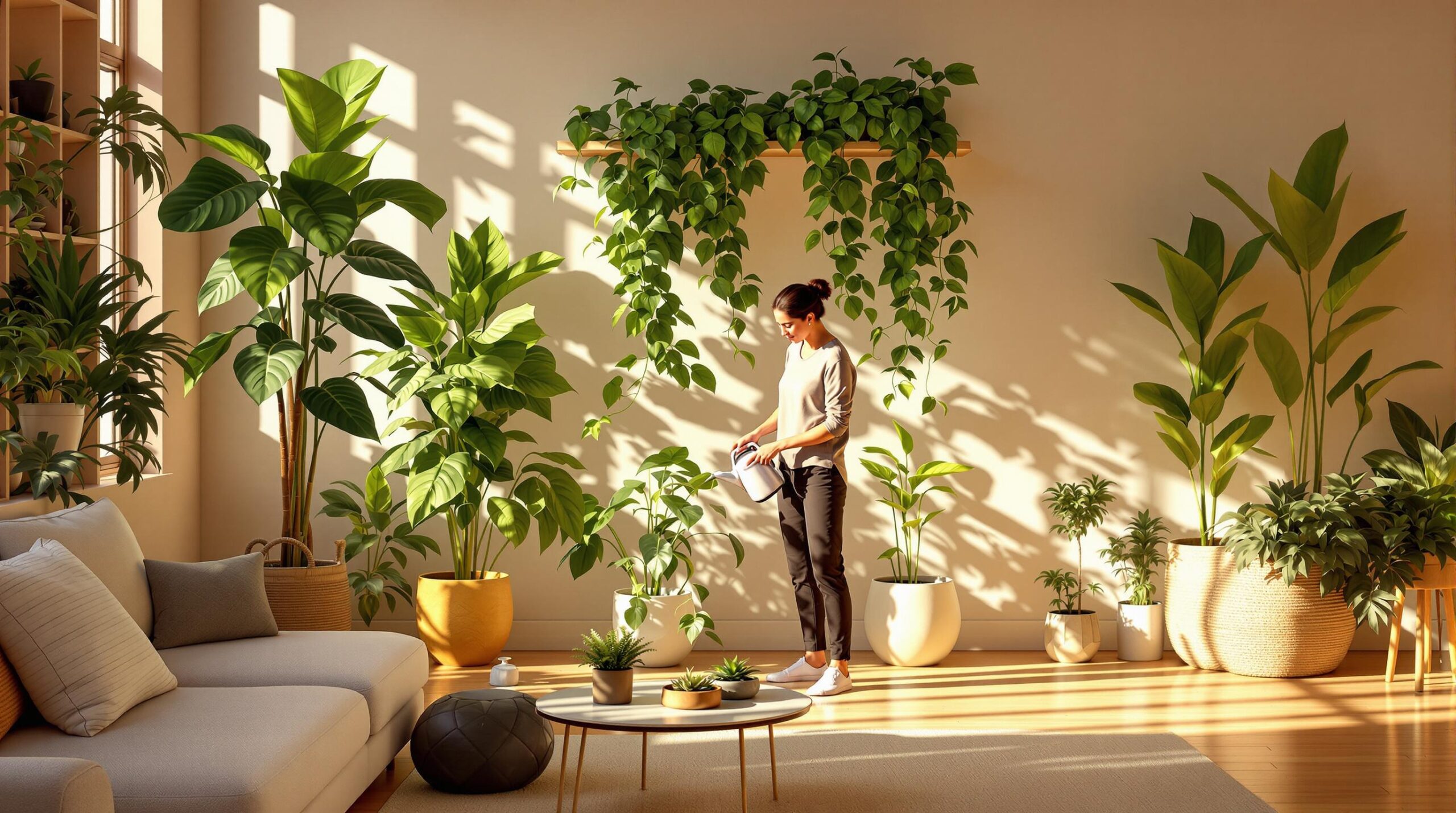
Indoor plants are more than just decor – they improve air quality, reduce stress, and even boost productivity. Whether you’re a beginner or looking to refine your skills, this guide covers everything you need to know to keep your plants thriving.
Key Takeaways:
- Choose the right plants for your home: Match plants to your light conditions (e.g., Snake Plant for low light, Succulents for bright light).
- Master the basics of care: Learn proper watering, light requirements, and how to maintain the right indoor climate.
- Tackle common issues: Identify and fix problems like yellowing leaves, root rot, or pests.
- Have the right tools: Essentials include a watering can, pruning shears, and pots with drainage holes.
- Adjust for seasons: Water less in winter and increase care during summer.
Quick tip: Start with easy-care plants like Chinese Evergreen or ZZ Plant, and group plants with similar needs together. Ready to dive in? Let’s get started.
Beginners Guide to Houseplants | Houseplant Care 101 …
Picking Your First Plants
Start by selecting plants that suit your home’s light conditions and fit your daily routine.
Easy-Care Plants
If you’re new to plant care, the Chinese Evergreen (Aglaonema) is a great option. It thrives in medium to bright indirect light, tolerates low light, prefers temperatures between 65°F–80°F, and only needs water when the soil is dry.
Here are some plant suggestions based on light levels:
- Low light (north-facing): Snake Plant, Pothos Vine, Peace Lily, ZZ Plant
- Medium light (east/west-facing): African Violets, Peperomia, Pilea, Calathea
- Bright light (south-facing): Cacti, Succulents, Croton, Monstera
Right Plant, Right Place
To keep your plants healthy, match them to the right light zone in your home. Here’s a quick guide:
- Shade: Enough light to read, but far from windows
- Semi-shade: Near a north-facing window
- Bright but sunless: Filtered light close to a bright window
- Some direct sun: East or west-facing windows (shield plants during summer)
- Full sun: South-facing windows, but provide shade during intense heat
Helpful Tips:
- Keep pet-safe plants out of reach and label any that are toxic.
- Group plants with similar light and water needs together.
- Use pots with drainage holes to avoid root rot.
- Measure your space before picking a pot to ensure it fits.
Next up: gather the tools and materials you’ll need to care for your plants.
Basic Tools and Materials
Starting Equipment
Here’s a list of tools to get you started:
- Watering can: Look for one with a slim spout for precise watering.
- Spray mister: Great for increasing humidity and cleaning leaves.
- Pruning shears: Necessary for trimming and shaping plants.
- Hand trowel: Useful for repotting and soil work.
- Plastic tongs: Handy for safely handling cacti.
- Moisture meter: Helps monitor soil moisture levels.
- Potting mix: Opt for high-quality brands like Foxfarm Happy Frog or Ocean Forest.
- Perlite or pumice: Improves soil drainage.
- Activated charcoal: Reduces the risk of root rot.
- Clay pebbles: Ideal for creating drainage layers.
- Pots with drainage holes:
- Terracotta: Best for succulents and cacti; dries out quickly.
- Glazed ceramic: Retains moisture, making it great for tropical plants.
- Plastic: Lightweight and budget-friendly, perfect for beginners.
When selecting soil, match it to your plant’s needs – succulents thrive in fast-draining mixes, while tropical plants prefer soil that holds moisture. For easier care, group plants with similar requirements together.
From here, you can dive into the essentials of light, watering, and maintaining the right indoor climate.
Plant Care Basics
Let’s break down the essentials for light, water, and indoor climate to help your plants thrive.
Light Requirements
Understanding your plant’s light needs is key. Here’s a quick guide:
- Full sun (5–6 hours/day): Best near south or west-facing windows. Perfect for succulents, palms, snake plants, and herbs.
- Indirect light: Works well near east-facing windows or filtered south/west exposures. Great for orchids, ti plants, and fiddle leaf figs.
- Low light: Ideal for north-facing windows or shaded areas. Suitable for ZZ plants, pothos, and peace lilies.
"Excessive or insufficient light stresses plants, inviting pests and disease".
If natural light is limited, consider using grow lights, especially during winter months.
Water Needs
Proper watering is critical for plant health:
- Check the soil about 1–2 inches deep. If it’s dry, it’s time to water.
- Water thoroughly until it drains out of the pot’s holes, but make sure to empty the saucer to prevent root rot.
Indoor Climate
Keep your plants comfortable by maintaining these temperature ranges:
- Daytime: 70–80°F
- Nighttime: 60–68°F
- Seasonal adjustments: Winter temps should stay between 60–68°F, while summer temps can range from 68–75°F.
Additional tips:
- Avoid placing plants near heaters, air conditioning vents, or drafts.
- Allow a 10–15°F temperature drop at night.
- Use a humidifier or group plants together during dry months to maintain humidity.
sbb-itb-593149b
Common Problems and Solutions
Once you’ve got the basics of light, water, and climate down, it’s time to tackle common plant issues. Use the symptoms below to identify problems and apply the right fixes.
Problem Signs
Leaf Changes
- Yellowing leaves could mean too much water, too little water, or a lack of nutrients.
- Crispy, brown edges on leaves usually point to underwatering.
- If leaves (both new and old) are dropping, overwatering is likely the culprit.
Root Health
- Brown, mushy roots with a bad smell are a clear sign of root rot.
- If the pot feels unusually light, the soil may be too dry.
Pest Indicators
- Fine webbing on leaves often signals spider mites.
- Cottony white spots suggest mealybugs.
- Flying gnats on the soil surface indicate fungus gnats.
| Problem | Symptoms | Solution |
|---|---|---|
| Overwatering | Yellow leaves, moldy soil, foul smell | Stop watering, improve drainage, and repot if needed. |
| Underwatering | Wilting, dry soil, crispy brown leaves | Water thoroughly until it drains and set a consistent watering schedule. |
| Root Rot | Brown, mushy roots, sour smell | Remove damaged roots and repot in fresh, well-draining soil. |
| Spider Mites | Webbing, stippled leaves | Boost humidity, rinse leaves, and use insecticidal soap or horticultural oil weekly for 4–6 weeks. |
| Mealybugs | Cottony patches on leaves or stems | Treat affected areas with rubbing alcohol or apply neem oil. |
| Nutrient Deficiency | Yellow-green new growth | Use balanced, water-soluble fertilizer during active growth. Minor yellowing may recover; severe cases won’t. |
Prevention and Care
- Keep humidity levels consistent and suitable for your plants.
- Avoid placing plants near drafts or extreme temperature changes.
- Use well-draining soil that’s appropriate for your plant type.
- Adjust your watering routine based on each plant’s moisture needs.
- Regularly inspect plants for early signs of trouble.
Up next, we’ll dive into weekly care routines and seasonal adjustments to help keep your plants thriving.
Regular Plant Care
Stick to a regular schedule for maintenance and adjust as needed with the seasons.
Weekly Tasks
- Rotate plants a quarter turn every few months and clean leaves with a damp cloth.
- Remove dead or yellow leaves every few weeks.
- Repot plants every 2–5 years, depending on their growth.
Once these tasks become second nature, focus on adapting your care to seasonal changes.
Seasonal Care
Your plants’ needs shift with the seasons. In winter, most houseplants experience slower growth or dormancy, so their care routine should be adjusted.
"In the darker days of winter, most plants are in a resting period and they don’t require as much fertilizer or water because they aren’t actively growing", – Jodi Cahillane, nursery worker at Ward’s Nursery and Garden Center
During winter:
- Water only once or twice a month.
- Stop fertilizing until spring.
- Place plants near south- or west-facing windows for better light.
- Keep them away from vents and drafts.
For summer care:
- Slowly increase how often you water.
- Start fertilizing again as part of your routine.
- If moving plants outdoors, wait until nighttime temperatures stay above 50–55°F. Before bringing them back inside, check for pests.
Next Steps
Now that you’re familiar with seasonal routines, it’s time to take your plant care to the next level.
Start by grouping plants with similar light, water, and soil requirements, as mentioned in Picking Your First Plants. This makes maintaining them much easier.
Before introducing a new plant to your collection, research its specific needs for light, water, and soil. Also, keep it isolated for 2–3 weeks to avoid spreading pests to your other plants.
Consider joining online plant care communities. These are great places to exchange tips, ask questions, and solve any issues you might face.
FAQs
How can I tell if my indoor plant isn’t getting enough light?
If your indoor plant isn’t getting enough light, you may notice a few key signs. These include leggy or stretched-out stems, slowed or stunted growth, and fewer or no blooms. The plant might also start leaning toward the light source or lose its vibrant colors, such as the variegation in leaves or fenestration (natural holes) in certain plants.
To help your plant thrive, consider moving it closer to a bright window or supplementing with a grow light. Keep in mind that different plants have varying light needs, so be sure to research what’s best for your specific plant.
How do I know if I’m overwatering or underwatering my indoor plants?
The easiest way to tell if you’re overwatering or underwatering your plants is by observing their appearance and the condition of the soil.
If you’re overwatering, you might notice soft, limp leaves, yellowing or browning tips, mushy stems, or even mold on the soil. The plant may also stop producing new growth and the soil might stay wet for too long.
On the other hand, underwatering often causes drooping leaves that perk up after watering, dry or crispy leaves, curling edges, and soil that feels completely dry to the touch.
Paying attention to these signs can help you adjust your watering habits and keep your plants healthy!
How do I handle pests on my indoor plants?
If you spot pests on your indoor plants, start by identifying the type of pest. Common culprits include spider mites, aphids, and fungus gnats. Once identified, you can choose an appropriate treatment.
For mild infestations, try natural remedies like a soap spray (a mix of mild dish soap and water), neem oil, or a rubbing alcohol solution applied carefully to affected areas. For more persistent pests, consider using insecticidal soap or diatomaceous earth as safe and effective options. Regularly inspect your plants and clean their leaves to prevent future issues.
Act quickly to protect your plants, and always test any treatment on a small area first to ensure it won’t harm your plant.
