
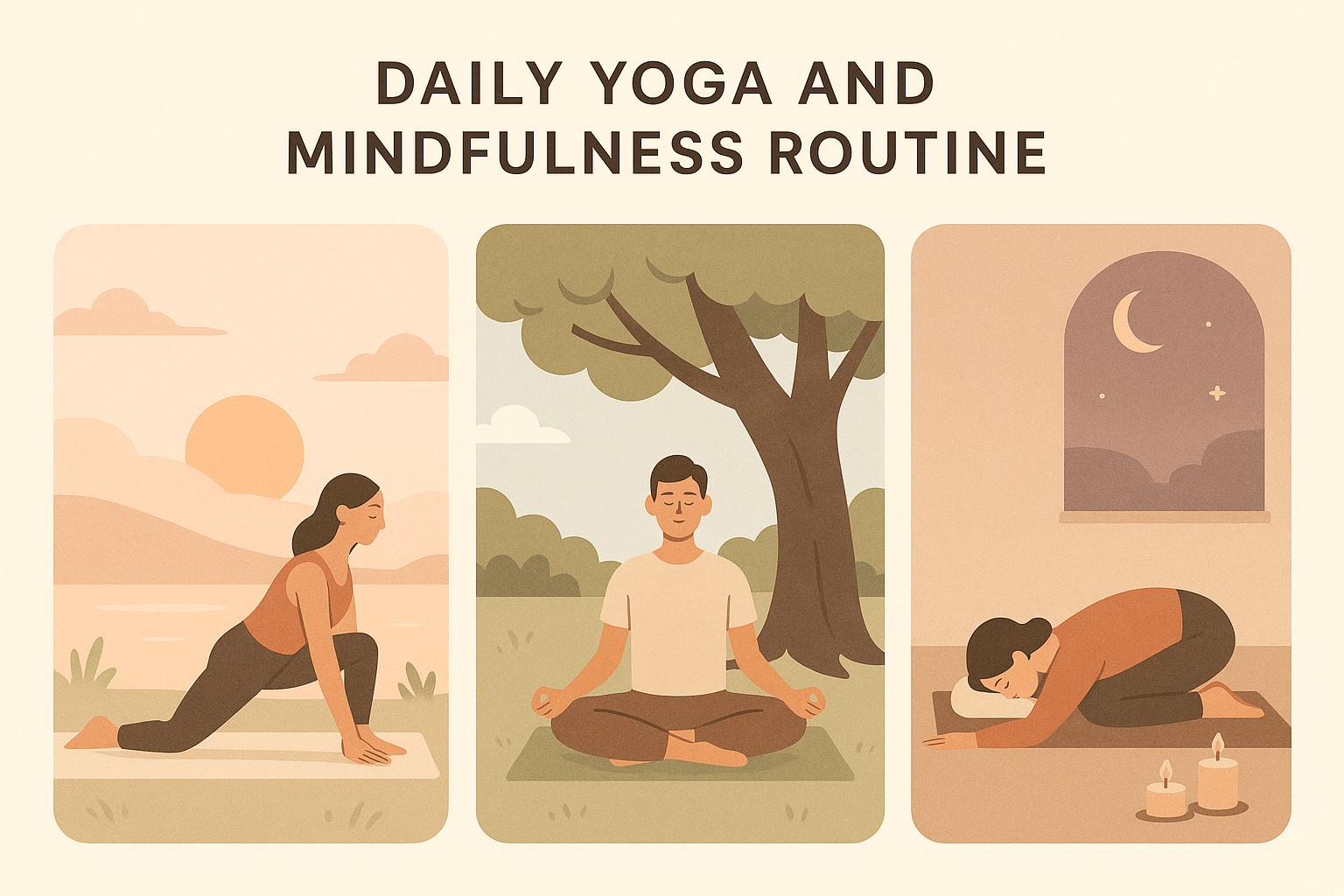
Want less stress, better sleep, and improved focus? A daily yoga and mindfulness routine can help. Here’s a quick summary to get started:
- Morning: Start with 10 minutes of meditation and a 15-minute yoga flow (Sun Salutations). Add mindful habits like savoring your coffee or taking deep breaths before leaving the house.
- Midday: Recharge with 5-minute desk yoga (spinal twists, neck stretches) and calming breathing exercises like box breathing.
- Evening: Wind down with relaxing yoga poses (Child’s Pose, Legs-Up-The-Wall) and a gratitude practice before bed.
You don’t need fancy gear – just a mat and a quiet space. Start small with 10–15 minute sessions and build from there. Even a few minutes daily can reduce stress and improve your well-being over time.
Mindful Yoga Routine | Daily Practice for Mindfulness
Morning: Start Your Day Right
Kick off your day with yoga and mindfulness to feel refreshed and focused. A consistent morning routine that includes meditation, gentle stretches, and mindful habits can set a positive tone for the rest of your day.
10-Minute Morning Meditation
Starting your morning with meditation helps you feel more grounded and intentional. Here’s a quick guide to get started:
- Prepare your space: Sit comfortably on a cushion or chair with your back straight.
- Take three deep breaths: Inhale for 4 counts, hold for 2, and exhale for 6 counts.
- Do a body scan: Slowly bring your attention from your toes to your head, releasing any tension.
- Focus on your breath: Observe your natural breathing for the remaining time.
Set aside time for this practice and get your space ready the night before for a smoother start.
Basic Morning Yoga Sequence
This 15-minute yoga flow is great for waking up your body. All you need is a yoga mat.
Begin with 2–3 minutes of dynamic stretches like Cat-Cow, Child’s Pose transitions, and a standing forward fold.
Sun Salutation A (10–12 minutes):
- Start in Mountain Pose.
- Transition to Upward Salute.
- Move into a Forward Fold.
- Lift halfway into a Half-Standing Forward Bend.
- Step back into Plank Pose.
- Lower into Low Plank or Knees-Chest-Chin.
- Flow into Cobra or Upward-Facing Dog.
- Finish in Downward-Facing Dog.
Repeat this sequence 3–4 times, syncing each movement with your breath.
Mindful Morning Habits
Turn everyday tasks into moments of mindfulness. While making your coffee or tea, pay attention to the aroma, the warmth of the cup, and take three intentional sips before continuing.
You can also pause for three deep breaths before heading out the door. Pairing mindfulness with your regular activities helps you build a steady practice without adding extra steps to your routine.
Let this mindful energy guide you as you move into the rest of your day.
Midday: Refresh and Refocus
When that afternoon slump hits, a mix of desk yoga and mindful breathing can help recharge your energy and sharpen your focus. These quick practices are designed to fit seamlessly into your workday.
5-Minute Desk Yoga
Ease workplace tension with these simple desk yoga moves you can do right at your chair:
- Seated Spinal Twist: Sit tall and take a deep breath. Place your right hand on your left knee and your left hand behind your chair. Gently twist to the left, holding for 3-5 breaths. Switch sides and repeat.
- Shoulder and Neck Release: Drop your right ear toward your right shoulder. Use your right hand to gently press on your left temple. Hold for 30 seconds, then switch sides. This move helps ease neck tension from desk work.
- Wrist and Finger Stretches: Extend your arms forward with palms facing up. Use your other hand to gently pull your fingers back for 15 seconds. Flip your palms down and repeat. This stretch helps counteract strain from typing.
- Chair Pigeon Pose: While seated, cross your right ankle over your left thigh to form a figure-4 shape. Keep your spine straight and lean forward slightly. Hold for 30 seconds on each side to relieve hip tension.
After your stretches, transition into breathing exercises to boost clarity and calm.
Simple Stress-Relief Breathing
Try these breathing techniques to regain focus and reduce stress:
- Box Breathing: Inhale for 4 counts, hold for 4 counts, exhale for 4 counts, and hold again for 4 counts. Repeat this cycle 3-4 times.
- Energizing Breath: Sit upright with relaxed shoulders. Take quick, sharp inhales through your nose, followed by longer, smooth exhales through your mouth. Continue for 30 seconds.
Setting aside moments for these practices – even on busy days – can make a big difference. Use a phone timer to remind yourself to take these mindful breaks every 2-3 hours. For the best results, step away from your screen or find a quiet spot to focus on your breathing and movements. Just a few minutes can help you feel refreshed and ready to tackle the rest of your day.
sbb-itb-593149b
Evening: Wind Down and Relax
End your day on a peaceful note with evening yoga and mindfulness exercises. These practices can help ease tension and prepare your body and mind for restful sleep. To set the mood, dim the lights, silence your phone, and find a quiet spot where you won’t be interrupted.
Bedtime Yoga Poses
These simple yoga poses can help relax your muscles and calm your mind. Hold each pose for 2–3 minutes, focusing on slow, steady breathing:
Child’s Pose (Balasana)
Begin by kneeling on your mat and sitting back onto your heels. Stretch your arms forward and rest your forehead on the mat. This position gently stretches your back and creates a sense of comfort. If needed, keep your knees wide to make space for your torso.
Legs-Up-The-Wall (Viparita Karani)
Sit close to a wall and lift your legs up against it. Place a folded blanket under your lower back for extra support. This pose can reduce swelling in your legs and help calm your nervous system.
Night-Time Gratitude Practice
Wrap up your day with a short gratitude meditation to clear your mind and focus on positive moments before sleep:
- Find a comfortable position, either seated or lying in bed.
- Close your eyes and take three deep, calming breaths.
- Think of three moments from your day that brought you joy or peace.
- Acknowledge any challenges you faced and consciously let them go.
- Set a gentle intention for the day ahead.
Let this peaceful energy carry you into a restful night and support your ongoing practice.
Making Your Practice Last
Improve your daily routine with these practical tips to maintain your yoga and mindfulness practice.
Start Small with Short Sessions
Consistency begins with manageable steps. Try starting with 10–15 minute sessions: dedicate 5 minutes to gentle stretches, 5 minutes to mindful breathing, and 5 minutes to simple poses. Over time, you can gradually increase the duration as it feels right.
Create a Dedicated Practice Space
Having a specific area for your practice can help you stay committed. This space should feel like a peaceful retreat that supports your focus and relaxation.
Key Tips for Setting Up Your Space:
- Pick a quiet spot away from busy areas.
- Ensure good airflow and keep the temperature comfortable.
- Keep it clean and free of clutter.
- Have your yoga mat and props within easy reach.
You can also add elements to make your space more inviting:
| Element | Purpose | Suggested Items |
|---|---|---|
| Lighting | Set the mood | Natural light, dimmable lamps |
| Comfort | Support your practice | Non-slip mat, meditation cushions |
| Atmosphere | Encourage relaxation | Indoor plants, essential oil diffuser |
| Sound | Reduce distractions | White noise machine, soft furnishings |
This setup can make your practice feel like a special part of your day.
Adapt Your Practice to Your Needs
Your practice should reflect how you’re feeling and what your schedule allows. On days when you have more energy, try longer sessions or challenging poses. When energy is low, focus on shorter, gentler practices with an emphasis on breathing and relaxation. Adjusting your practice ensures it stays enjoyable and sustainable.
Conclusion: Next Steps for Daily Practice
Even small, consistent habits can make a big difference – just 5 minutes of morning meditation can reduce cortisol by 15%.
Here’s a simple plan to start tomorrow:
- Set Your Morning Routine: Place your mat by your bed tonight, set a 7:00 AM alarm, and begin your day with 5 minutes of meditation and two basic yoga poses.
- Add Midday Breathers: Set a 2:00 PM reminder for a 4-7-8 breathing exercise. This technique can lower your heart rate in just 90 seconds.
- End on a Positive Note: Keep a gratitude journal by your bedside. Writing in it nightly has been linked to a 21% boost in life satisfaction.
Track your progress daily to see how these practices improve your well-being. Stress reduction is often noticeable within 3–4 weeks.
| Focus Area | Tracking Method | When to Measure |
|---|---|---|
| Sleep Quality | Fitbit or similar device | Morning review |
| Stress Level | Rate 1–10 in a journal | Evening check-in |
| Practice Consistency | Use a calendar | Weekly review |
By focusing on morning, midday, and evening practices, you’ll create a sustainable routine. Research from USC’s Mindful Awareness Center shows that practicing for just 10 minutes daily improves flexibility 30% faster than sporadic hour-long sessions.
For more tips, check out the Mindful Living section at Inspiretopics.com. Remember, time pressure is a common challenge – 87% of people who quit yoga cite it as their main reason. Starting small and staying consistent can help you avoid this pitfall.
These simple steps can help you weave yoga and mindfulness into your daily life with ease.
FAQs
How can I stick to a daily yoga and mindfulness routine even with a busy schedule?
Staying consistent with yoga and mindfulness can be challenging, but it’s achievable with a few simple strategies. Start by setting aside a specific time each day, even if it’s just 10–15 minutes, and treat it as a non-negotiable appointment with yourself. Early mornings or evenings often work best for busy schedules.
You can also incorporate mindfulness into your daily activities. For example, practice deep breathing while commuting, or do a quick stretch break during work. Remember, consistency is more important than duration – small, regular efforts will build lasting habits over time.
How can I create a comfortable and inspiring space at home for yoga and mindfulness?
Creating a dedicated space for yoga and mindfulness at home can enhance your practice and help you stay consistent. Start by choosing a quiet area with minimal distractions. Ensure the space has enough room for you to move freely and stretch comfortably.
Add elements that promote relaxation, such as a yoga mat, cushions, soft lighting, and perhaps a plant or two to bring in a touch of nature. Keep the area clean and clutter-free to maintain a sense of calm. Personalize it with items like candles, essential oils, or calming artwork to make it feel inviting and inspiring.
Consistency is key, so try practicing at the same time each day to build a routine. By creating a space that feels peaceful and motivating, you’ll set the stage for a more fulfilling yoga and mindfulness practice.
How can I adjust my daily yoga and mindfulness routine to match my energy levels or mood?
You can tailor your yoga and mindfulness practice to suit your energy levels or mood by choosing activities that align with how you feel. For low-energy days, focus on gentle stretches, restorative yoga poses, or calming breathing exercises. On days when you feel more energetic, opt for dynamic flows or invigorating poses like sun salutations.
If your mood feels off-balance, mindfulness exercises such as guided meditation or journaling can help center your thoughts. The key is to listen to your body and mind, adapting your practice to create a sense of balance and well-being.
