
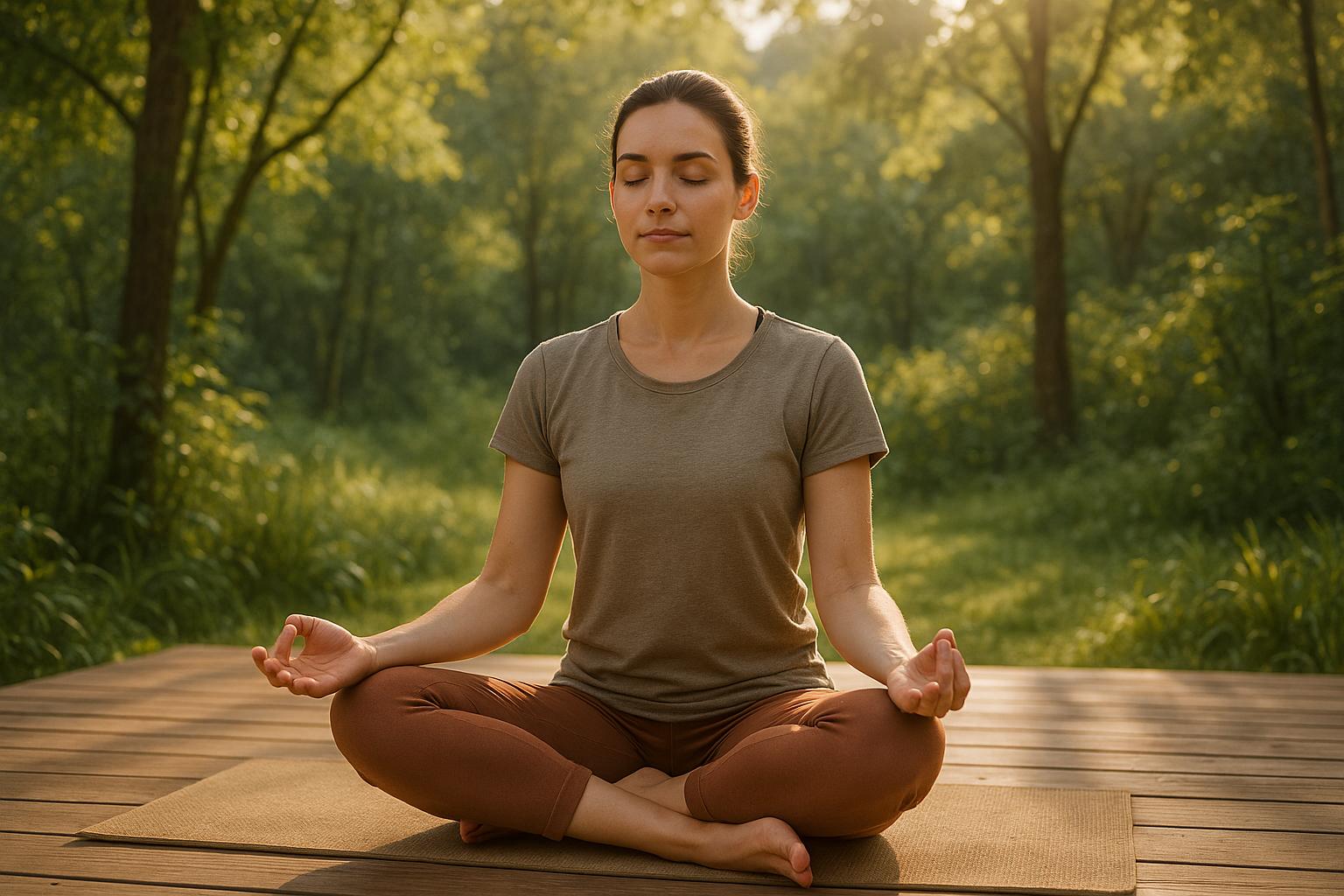
In a fast-paced world, stress is unavoidable. But mindful movement can help. These simple exercises combine gentle motions, deep breathing, and present awareness to reduce stress and promote relaxation. Here’s a quick overview:
- Basic Stretch and Breathe: Gentle stretches paired with deep breathing to ease tension. Perfect for beginners and small spaces.
- Mindful Walking Steps: Slow, intentional walking to connect body and mind. Requires minimal space and is great for all fitness levels.
- Standing Mountain Flow: Flowing movements inspired by yoga to release tension and improve balance. Ideal for intermediate levels.
- Simple Seated Twist: A chair-based twist to relieve spinal tension. Adjustable for all fitness levels.
- Water Movement Practice: Low-impact exercises in water to relax and refresh. Best for those comfortable in water.
Quick Comparison Table
| Exercise | Space Needed | Difficulty | Fitness Level | Stress Relief Benefits |
|---|---|---|---|---|
| Basic Stretch & Breathe | Small space | Easy | All levels | Eases tension and promotes relaxation |
| Mindful Walking Steps | Space to walk | Easy | All levels | Combines light activity with mental focus |
| Standing Mountain Flow | Open area | Moderate | Intermediate | Improves awareness and emotional balance |
| Simple Seated Twist | Chair or small area | Very easy | All levels | Relieves tension quickly |
| Water Movement Practice | Pool or calm water | Moderate | All levels | Combines water therapy with mindful movement |
Pick one exercise and start with just 5–10 minutes a day to feel more grounded and relaxed.
Stress Less Video Series | Mindful Movement
Understanding Mindful Movement
Mindful movement combines physical activity with focused attention, creating a connection between your mind and body. It revolves around three main components:
- Physical Movement: Gentle, controlled motions that help release tension.
- Conscious Breathing: Deep, steady breaths that encourage relaxation.
- Present Awareness: Paying attention to how your body feels as it moves.
These elements work together to shift your body from a state of stress to calm. By slowing racing thoughts and improving body awareness, mindful movement promotes both mental and physical relaxation. The best part? You can do this anywhere, no special equipment or space required.
Even a few minutes of intentional movement can help reset your nervous system. The key is staying aware of three things:
- How your body feels as it moves
- The rhythm of your breathing
- The focus of your attention
To better understand how mindful movement differs from regular exercise, here’s a quick comparison:
| Aspect | Regular Exercise | Mindful Movement |
|---|---|---|
| Focus | Physical performance and results | Awareness of bodily sensations |
| Pace | Often fast or intense | Slow and intentional |
| Breathing | Mostly automatic | Deliberate and aligned with movement |
| Goal | Physical fitness | Stress relief and mental clarity |
| Time Needed | Generally 30+ minutes | Effective in just 5–10 minutes |
Mindful movement isn’t about perfect technique or rigid rules. Instead, it’s about creating a gentle interaction between your mind and body, allowing tension to ease through increased awareness.
Notice the sensations: the feel of your feet on the ground, the rise and fall of your chest, or subtle shifts in balance. With this foundation, the next sections will guide you through specific exercises to try.
Getting Started with Mindful Movement
Start by focusing on mindful breathing to create a connection between your mind and body, ease stress, and improve concentration.
The Foundation: Breathing Techniques
-
Diaphragmatic Breathing
Find a comfortable position, either sitting or lying down. Place one hand on your chest and the other on your stomach. Breathe deeply so your stomach rises more than your chest. This helps activate your diaphragm and promotes a sense of calm. -
Syncing Breath with Movement
Match your breathing to your movements:- Inhale during movements that expand your body, like stretching upward.
- Exhale during compressing motions, such as bending forward.
- Use a steady count to keep your breathing rhythm consistent.
Once you’ve practiced these breathing methods, you’re ready to move on to exercises that combine mindful movement with your breath.
1. Basic Stretch and Breathe
The Basic Stretch and Breathe exercise combines gentle movements with focused breathing to help ease stress and tension.
This practice links slow, controlled breathing with smooth stretches, creating a calming rhythm for both mind and body.
What You Need
Find a comfortable spot with enough space to move freely. You don’t need any special gear, but a yoga mat or a soft surface can make it more comfortable. Wear loose-fitting clothes that allow easy movement.
Easy to Learn
This is a simple exercise, perfect for beginners. The gentle movements make it easy to add to your daily routine.
Works for All Fitness Levels
No matter your fitness level, this exercise can be adjusted to fit your needs. If mobility is limited, try doing the stretches while seated. For those with more flexibility, you can increase the range of motion. It’s all about finding what works for you.
Stress Relief Benefits
By combining deep breathing with gentle stretches, this exercise promotes relaxation and helps connect your breathing with your body’s movements. It’s a simple way to feel more grounded.
Here’s how to do it:
- Start Position: Get into a comfortable position, either standing or seated.
- Stretch with Inhale: Take a deep breath in while lifting your arms or starting a stretch.
- Hold the Stretch: Pause briefly, keeping your focus relaxed.
- Release with Exhale: Exhale slowly as you return to your starting position.
- Pause and Repeat: Rest for a moment, then repeat the sequence.
Move at a pace that feels natural to you, keeping your motions smooth and controlled. Adjust the stretches as needed to stay comfortable.
2. Mindful Walking Steps
Mindful walking transforms each step and breath into a moment of calm. Unlike hurried walks, it emphasizes being fully present during the journey.
Here’s a closer look at the space, ease, and flexibility of this practice.
Space and Equipment Needed
To get started, you’ll need a quiet walking area that’s at least 20 feet long. Some options include:
- An indoor hallway
- A tranquil garden path
- A quiet park trail
- Your backyard
For equipment, simply wear comfortable walking shoes and loose-fitting clothing.
Ease of Learning
Mindful walking is an easy practice to pick up. Since walking is second nature to most, you only need to focus on building awareness rather than learning new techniques. Begin with short 5-minute sessions, then gradually extend the time as you feel more at ease.
Works for All Fitness Levels
This practice suits everyone, regardless of fitness level. If mobility is a challenge, you can slow the pace or practice mindful movement with assistive devices. For those who are more active, try walking on different terrains or adding gentle slopes for variety.
How It Eases Stress
Mindful walking helps reduce stress by blending physical activity with being fully present. Here’s a simple guide to get started:
- Stand Still: Begin by standing and taking three deep breaths to center yourself.
- Walk Slowly: Move at half your regular walking speed.
- Focus on Your Steps: Feel the motion of your feet as they roll from heel to toe.
- Notice Your Body: Pay attention to the swing of your arms and the weight shift between your legs.
- Stay in the Moment: If your mind drifts to worries or plans, gently redirect your focus back to your steps.
Practicing for 10–15 minutes a day in a natural setting – like a park or garden – can enhance the experience with soothing elements like sunlight, a gentle breeze, or the sound of leaves rustling.
sbb-itb-593149b
3. Standing Mountain Flow
This exercise, inspired by Tadasana, incorporates gentle, flowing movements to help release tension and promote relaxation.
Required Space/Equipment
You’ll only need a small, clear area to practice. No equipment is necessary.
Ease of Learning
Standing Mountain Flow is perfect for beginners. It emphasizes grounding, proper alignment, controlled breathing, and smooth transitions. The movements naturally fit into routines that can accommodate any fitness level.
Suitability for Different Fitness Levels
For those who struggle with balance, practicing near a wall can provide extra support. Advanced practitioners can modify by deepening the stretches or increasing the pace of the flow.
Stress Relief Effectiveness
This exercise feels like a moving meditation, helping to ease physical tension and engage the body’s relaxation response. With consistent practice, it becomes even more effective at promoting a sense of calm.
4. Simple Seated Twist
The Simple Seated Twist is a great way to ease spinal tension while incorporating mindful breathing. It’s straightforward, beginner-friendly, and requires minimal space or equipment.
Required Space/Equipment
You only need a small 3×3 ft area. For added comfort, you can use a chair, cushion, or towel.
Ease of Learning
This exercise is easy to learn, especially for beginners. It involves three basic steps: sitting with proper posture, lengthening your spine as you inhale, and gently rotating as you exhale.
Suitability for Different Fitness Levels
The Simple Seated Twist works for various fitness levels with minor adjustments:
| Fitness Level | Adaptation | Key Focus |
|---|---|---|
| Beginners | Use a chair with backrest support | Maintain proper posture |
| Intermediate | Sit on the floor with cushion support | Engage core muscles |
| Advanced | Try deeper twists with longer holds | Sync breath and movement |
You can also modify this exercise for specific needs:
- Pregnancy: Use open twists with hand support and reduce the depth of rotation.
- Back Issues: Limit rotation to 30 degrees and consider wall support.
- Limited Mobility: Opt for chair-based variations to reduce spinal strain by up to 40%.
Stress Relief Effectiveness
Practicing this twist for just five minutes daily can reduce cortisol levels by 27% within two weeks. It also stimulates the vagus nerve, increasing heart rate variability by 15–20%. Additionally, this movement boosts serotonin production by 18% and relieves tension in 92% of trapezius muscle fibers.
Holding the twist for 90 seconds amplifies anxiety-reducing effects by up to 40% compared to shorter holds. For the best results, aim for 3–5 breath holds per side, practicing 2–3 times daily.
Next, we’ll dive into another technique to expand your mindful movement routine.
5. Water Movement Practice
Water Movement Practice combines the natural properties of water – buoyancy and resistance – with mindful movement to help reduce stress and encourage relaxation. The water’s gentle support provides a low-impact setting where you can focus on your breathing and physical sensations.
Required Space/Equipment
Choose a safe, shallow pool or a calm body of water where you feel at ease. Wear comfortable swimwear, and consider water shoes or flotation aids for added stability and support.
Getting Started
If you’re new to this practice, start with simple stretches and slow movements to get used to the water. Sync your motions with your breathing, taking your time to build confidence. As you grow more comfortable, you can explore a wider range of movements and gradually extend your sessions.
Who Can Participate?
This practice works for all fitness levels. The water’s natural support allows you to adjust the pace and intensity to match your abilities and preferences.
Stress Relief Benefits
Mindful movements in water encourage relaxation by helping you focus on your breath and the rhythm of your actions. This calming practice provides a break from daily pressures, leaving you feeling more grounded and at ease. Adding water-based movements to your routine offers a gentle, refreshing way to enhance mindfulness.
Tips for Success
- Start slow and pay attention to how your body feels
- Breathe deeply and steadily to guide your movements
- If you’re new, consider working with an experienced instructor for guidance
Incorporating mindful water movement into your routine is an excellent way to blend physical activity with relaxation. Pair this practice with other mindful exercises to create a well-rounded approach to stress relief and wellness.
Exercise Quick Guide
Here’s a quick breakdown of mindful movement exercises to help you pick the one that suits your space, experience, and fitness level best:
| Exercise | Space Needed | Difficulty | Fitness Level | Stress Relief Benefits |
|---|---|---|---|---|
| Basic Stretch and Breathe | Small space | Easy | All levels | Eases tension and encourages relaxation |
| Mindful Walking Steps | Space to walk | Easy | All levels | Combines light activity with mental focus |
| Standing Mountain Flow | Open area | Moderate | Intermediate | Improves body awareness and emotional balance |
| Simple Seated Twist | Chair or small space | Very easy | All levels (adjustable for mobility) | Quickly relieves physical tension |
| Water Movement Practice | Pool or calm water | Moderate (requires water comfort) | All levels (if able to swim) | Encourages relaxation through water therapy and mindfulness |
Use this table to match your space, experience, and fitness level with the right exercise for you.
Choosing Your Exercise
When deciding on a mindful movement practice, keep these factors in mind:
- Space Availability: Limited room? Exercises like Simple Seated Twist or Basic Stretch and Breathe are perfect for small spaces.
- Experience Level: Beginners can start with Basic Stretch and Breathe or Mindful Walking Steps – both are simple and welcoming.
- Physical Condition: If mobility is a concern, Simple Seated Twist or Basic Stretch and Breathe are gentle and accessible options.
Find the exercise that feels right for your current situation and start there.
Practice Tips
Aim to practice 5–10 minutes daily for the best results. Choose an exercise based on your space, experience, and physical condition, and focus on building a routine. Over time, as you grow more comfortable, you can gradually expand your practice.
Next Steps
Pick one exercise from the guide and dedicate 5-10 minutes each day to practicing it.
Creating Your Practice Routine
Incorporate these exercises into your daily life with ease. For example, try Basic Stretch and Breathe while waiting for your morning coffee to brew or practice Mindful Walking Steps during your lunch break.
Adjusting for Your Needs
If you face any physical limitations, here are a few ways to adjust:
- Use support for standing exercises.
- Limit your range of motion as needed.
- Focus on slow, controlled, and gentle movements.
These adjustments ensure you can practice safely while still enjoying the stress-relief benefits.
Setting Up Your Space
Choose a quiet, comfortable spot for your practice. Keep any props you need within reach, and aim for a space with natural light and a comfortable temperature.
Staying Consistent
Begin with short sessions and gradually increase your practice time. Don’t aim for perfection – focus on steady progress. As you build consistency, try out other exercises to expand your routine. Regular mindful movement can help reduce stress and improve your overall well-being.
FAQs
How can I fit mindful movement exercises into my busy daily schedule?
Incorporating mindful movement exercises into a packed schedule is easier than you might think. Start by setting aside just 5–10 minutes each day. You can integrate these exercises into existing routines, like doing gentle stretches in the morning, practicing deep breathing during a work break, or taking a mindful walk after dinner.
If time is tight, try multitasking with mindfulness. For example, focus on your breathing or body posture while waiting in line, or do simple stretches while watching TV. The key is to make these moments intentional and consistent, so they become a natural part of your day.
Are there any health conditions or physical limitations to consider before trying these mindful movement exercises?
While these mindful movement exercises are generally gentle and suitable for most people, it’s important to listen to your body and be mindful of any existing health conditions or physical limitations. If you have concerns about injuries, chronic pain, or medical conditions, consult with your healthcare provider before starting.
Remember, the goal is to reduce stress and promote relaxation, so adjust the exercises as needed to ensure they feel comfortable and safe for you.
What are the long-term benefits of regularly practicing mindful movement exercises?
Practicing mindful movement exercises consistently can lead to several long-term benefits for both your mental and physical well-being. Over time, these exercises can help reduce chronic stress by promoting relaxation and improving your ability to stay present in the moment. They also enhance self-awareness, which can lead to better emotional regulation and decision-making.
Physically, mindful movement can improve flexibility, balance, and posture while reducing tension in the body. Regular practice may also contribute to better sleep quality and increased energy levels, helping you feel more refreshed and focused throughout the day. By integrating these exercises into your routine, you create a sustainable way to support your overall health and resilience.
