
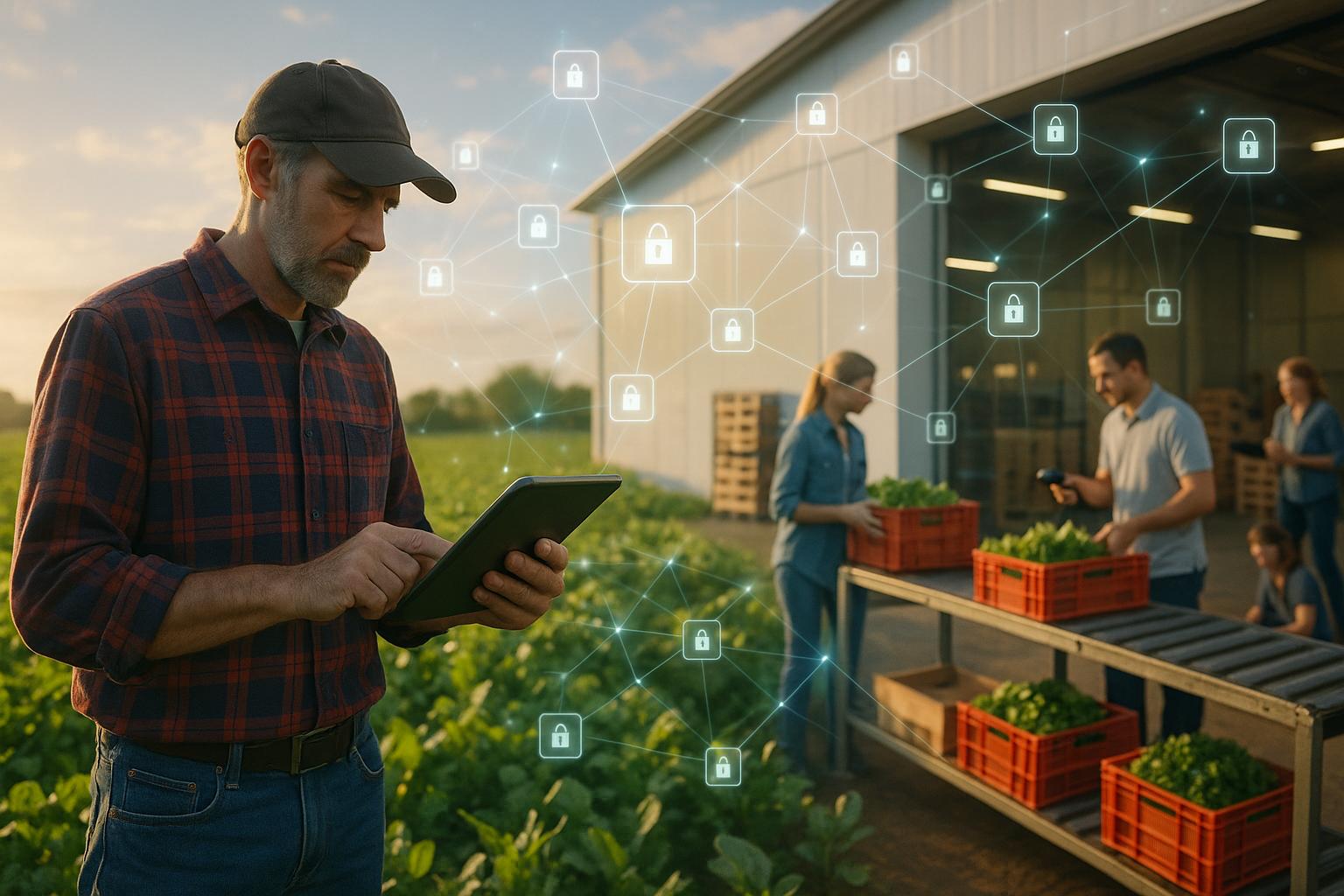
Blockchain is transforming agriculture by tackling inefficiencies, improving food safety, and boosting transparency. It creates a secure, tamper-proof record of every step in the supply chain, solving challenges like food fraud, waste, and payment delays.
Key Takeaways:
- Food Safety: Blockchain enables quick recalls and ensures traceability from farm to table.
- Efficiency: Real-time tracking reduces waste and improves coordination.
- Farmer Benefits: Instant payments and direct market access increase farmer incomes by up to 15%.
- Challenges: High costs, poor internet in rural areas, and compatibility issues slow adoption.
Example Impact:
- IBM’s Food Trust cut traceability time from 7 days to 2.2 seconds.
- Blockchain-based systems reduced payment delays from 30–60 days to under 24 hours.
Blockchain, paired with IoT and AI, has the potential to revolutionize agriculture by creating faster, more transparent, and efficient supply chains.
Main Advantages of Blockchain in Agriculture
Food Safety and Product Tracking
Blockchain provides a permanent record of a product’s path from origin to destination. This transparency allows for quick recalls when needed and helps uphold strict safety standards. Beyond safety, it also simplifies supply chain processes, making them more efficient.
Supply Chain Efficiency and Waste Reduction
With blockchain, inventory and product movements can be monitored in real time. This improves coordination across the supply chain, enhances demand forecasting, and helps cut down on waste.
Blockchain for agricultural supply chain
Current Blockchain Projects in Agriculture
Blockchain is making waves in agriculture by improving supply chains and market access. Digital trading platforms built on blockchain are connecting farmers directly with international buyers. These platforms provide a secure way for farmers to bypass middlemen, opening up global markets and simplifying transactions. This approach not only streamlines supply chains but also promotes fairer trade practices, complementing other blockchain initiatives focused on transforming agriculture.
sbb-itb-593149b
Barriers to Blockchain Adoption
Blockchain technology has its share of challenges that slow down its use in agriculture. These hurdles restrict its ability to bring change to the sector.
Technology and Infrastructure Challenges
Many rural areas face poor internet access and low levels of digital knowledge. This makes it harder for communities in these regions to adopt blockchain-based solutions.
Compatibility Problems
Different stakeholders often use blockchain systems that don’t work well together. This lack of standardization makes data sharing difficult and reduces the overall effectiveness of blockchain.
High Costs of Implementation
The expense of setting up and maintaining blockchain systems can be overwhelming for small-scale farmers. Approaches like shared infrastructure and gradual rollouts can help distribute these costs more evenly. These financial challenges highlight the importance of finding practical ways to make blockchain accessible.
Next Steps for Agricultural Blockchain
Building on earlier challenges and opportunities, these strategies aim to expand blockchain’s role in agriculture.
Integrating with IoT and AI
Pairing blockchain with technologies like IoT and AI can enable real-time data tracking – such as temperature, humidity, and location – and streamline logistics. These connections can also support better regulatory alignment and international collaboration.
Updating Regulations and Standards
Regulatory bodies need to revise guidelines to improve transparency and traceability in areas like food safety, digital product tracking, and reporting. Clearer standards can create more accountable supply chains and help tackle compatibility issues highlighted earlier.
Expanding Global Use
For blockchain to succeed worldwide, shared infrastructure, interoperability standards, and thorough training for local stakeholders are essential. This approach addresses existing technological barriers and ensures solutions are tailored to the varied needs of agriculture globally.
Conclusion
Blockchain technology is reshaping agricultural supply chains by tackling persistent issues like food safety, traceability, and payment delays. Current projects demonstrate how blockchain simplifies tracking and ensures quicker, transparent transactions.
Beyond improving operations, blockchain plays a role in promoting eco-conscious practices. By documenting sustainable methods, it helps agricultural businesses align with growing consumer preferences for environmentally friendly products.
While challenges like infrastructure limitations and compatibility remain, combining blockchain with IoT and AI holds the potential to create highly automated and efficient supply chains. Progress in regulations, global adoption, and education for stakeholders will be key to its broader implementation.
This positions blockchain as a game-changer for how agricultural products are produced, tracked, and distributed, paving the way for a more transparent and efficient food supply system.
FAQs
How does blockchain enhance food safety and traceability in agricultural supply chains?
Blockchain technology improves food safety and traceability by creating a secure, transparent, and tamper-proof record of every step in the agricultural supply chain. Each transaction, from farm to table, is logged in real-time, allowing stakeholders to track the origin, handling, and movement of food products.
This enhanced visibility helps quickly identify sources of contamination during food safety incidents, reducing risks to consumers and minimizing recalls. By ensuring data accuracy and accountability, blockchain builds trust among farmers, distributors, retailers, and consumers while promoting a safer and more efficient food supply chain.
What challenges do small-scale farmers face when adopting blockchain technology?
Small-scale farmers often face several challenges when trying to adopt blockchain technology. One major hurdle is high implementation costs, as blockchain systems can require significant investment in infrastructure, hardware, and software, which may not be affordable for smaller operations. Additionally, limited access to reliable internet in rural areas can make it difficult to use blockchain effectively.
Another challenge is the lack of technical knowledge and training. Many small-scale farmers may not be familiar with blockchain or how to integrate it into their supply chains, creating a steep learning curve. Finally, scalability issues may arise, as blockchain solutions are typically designed for larger operations, making it harder for smaller farms to benefit from the technology without tailored solutions.
How can combining blockchain with IoT and AI improve the efficiency of agricultural supply chains?
Integrating blockchain technology with IoT (Internet of Things) and AI (Artificial Intelligence) can significantly enhance the efficiency of agricultural supply chains by improving transparency, traceability, and decision-making.
Blockchain ensures secure and tamper-proof tracking of data across the supply chain, while IoT devices, such as sensors, collect real-time data on factors like soil quality, weather conditions, and crop health. AI can analyze this data to optimize processes, predict demand, and reduce waste. Together, these technologies create a smarter, more reliable system that benefits farmers, distributors, and consumers alike.
For example, IoT sensors can monitor storage conditions during transportation (like temperature and humidity), and blockchain can record this data to ensure product quality. AI algorithms can then predict potential risks or inefficiencies, enabling proactive solutions. This combination not only reduces costs but also builds trust among stakeholders by ensuring the integrity of the supply chain.
