
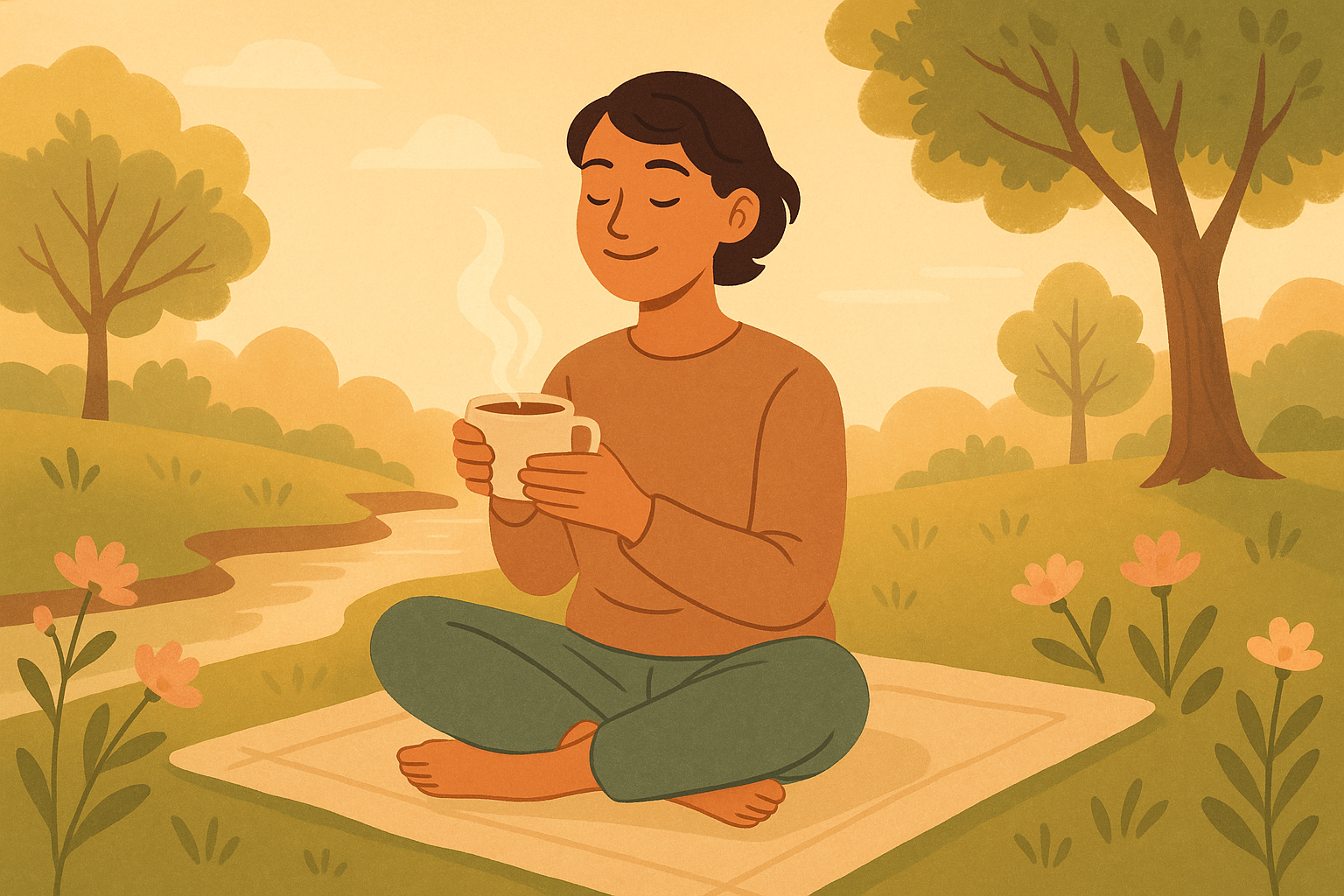
Feeling stressed? Your five senses – sight, sound, touch, smell, and taste – can help you relax and stay present. Sensory exercises shift your focus to physical sensations, calming your mind and body. Here’s a quick overview of five easy techniques you can try anytime:
- Focused Walking: Slow down and observe your surroundings with near, mid-range, and distant focus.
- Sound Meditation: Close your eyes and immerse yourself in nearby sounds or calming audio.
- Touch Discovery: Explore textures like smooth stones, soft fabrics, or rough bark for grounding.
- Aromatherapy Breathing: Pair deep breathing with calming scents like lavender or eucalyptus.
- Slow-Paced Eating: Savor each bite of food, noticing its texture, flavor, and aroma.
These exercises are simple, require no special tools, and can fit into your daily routine – whether at home, work, or outdoors. Start with just 2–3 minutes a day to feel calmer and more centered. Ready to relax? Pick one and give it a try!
🧘🏻♀️ ACT | 5 SENSES Guided Imagery Mindfulness …
How Sensory Exercises Help You Relax
Sensory exercises help your brain focus on physical sensations, shifting your attention from stress to the present moment. This change in focus sets the stage for the relaxation techniques outlined below.
Studies show that sensory awareness activates the parasympathetic nervous system, also known as the "rest and digest" mode. This response naturally lowers blood pressure, relaxes muscles, and slows your breathing. These physical changes promote mindfulness and a sense of calm.
Your brain processes sensory input in several ways, each playing a role in relaxation:
- Visual focus keeps your mind engaged and reduces mental distractions
- Auditory attention helps quiet intrusive thoughts
- Touch anchors you in the present
- Smell connects directly to areas of the brain tied to emotion
- Taste awareness encourages mindful eating
Sensory exercises can be practiced almost anywhere because they’re easy to adapt to different situations. Whether you’re commuting, sitting at your desk, or waiting in line, you can use these exercises to find moments of calm.
Even short, mindful pauses can make a difference. For instance, you might notice sunlight streaming through a window, feel the texture of your chair, or tune in to the ambient sounds around you. Start with just 1–2 minutes at a time and gradually increase the duration.
Different locations offer unique opportunities for sensory focus:
- At home: Pay attention to familiar textures, scents, or sounds.
- At work: Use everyday items like a pen or coffee cup to center your attention.
- Outdoors: Engage with natural elements like the breeze, sunlight, or the sound of rain.
- In public spaces: Try subtle exercises, like noticing the rhythm of your breath or the feel of your clothes, without drawing attention to yourself.
Incorporating these practices into your daily routine can help create small but meaningful moments of relaxation throughout your day.
1. Focused Walking
Focused walking transforms a simple walk into a mindful experience by directing your attention to what you see around you.
Pick a quiet path that takes about 10-15 minutes to complete. This could be a backyard, a nearby park, or a calm neighborhood street. Walk slowly (around 2-3 mph) so you have time to observe details without needing to stop.
Here’s how to engage your sense of sight during the walk:
- Near focus: Pay attention to things within 3 feet of you. Notice the textures, patterns, or subtle color changes in leaves, flowers, or even nearby walls.
- Mid-range focus: Look at objects 10-20 feet ahead. Watch for movements like leaves rustling or birds flying by.
- Distance focus: Occasionally lift your gaze to the horizon. This helps relax your eyes and gives you a broader perspective.
To make this a habit, try incorporating it into your daily routine:
- Morning: Arrive at work early and take a walk around the building.
- Lunch break: Step outside for a quick stroll instead of staying at your desk.
- After work: Park a little farther from your destination to add some walking time.
- Evening: Take a short walk around your neighborhood before dinner.
Avoid using your phone or other distractions. If your mind starts to wander, gently bring your focus back to something visual in your surroundings.
Even a 5-minute walk each day can make a difference. These walks become a kind of visual meditation, helping you feel more connected to your environment while reducing stress.
Different weather adds variety to the experience. Rain might highlight how water changes textures and colors, while sunny days bring out contrasts and shadows. Once you’ve sharpened your visual focus, you’ll be ready to explore the next sense: sound meditation.
2. Sound Meditation
Sound meditation helps calm your mind by focusing on what you hear. Unlike visual techniques, this practice works best with your eyes closed, allowing you to fully immerse yourself in the sounds around you.
Find a quiet spot and sit comfortably – either on a chair or a cushion – with your back straight but relaxed. Dedicate at least 10 minutes to this practice. Here are some tools you can use:
- A meditation bell or singing bowl
- A soft wind chime
- A meditation app featuring nature sounds
- Natural sounds in your surroundings
Here’s how to practice sound meditation:
- Take three deep breaths. Then, use a bell or chime and focus on the sound, following it from its peak until it fades completely.
- Mentally map the sounds you hear, categorizing them by distance: those within 6 feet, those up to 30 feet away, and those further out.
Start with 5-minute sessions twice a day. As you get more comfortable, gradually extend your sessions to 15-20 minutes. Many find early mornings (6:00-7:00 AM) or evenings (8:00-9:00 PM) ideal, as these times tend to be quieter. With consistent practice, this method can help prepare you for tactile-focused exercises in the future.
Common Challenges and How to Handle Them:
- Distracted by traffic noise? Move to a space further from windows.
- Echoes indoors? Add soft furnishings like cushions or rugs to absorb sound.
- Overwhelmed by outside noise? Use white noise or nature sound recordings.
- Mind wandering? Gently bring your focus back to the sound you’re hearing.
Keep in mind, sound meditation isn’t about silencing your thoughts. It’s about shifting your attention to the act of listening. Over time, this practice helps you become more aware of your surroundings and naturally leads into the next sensory exercise: exploring touch.
Pro Tip: Keep a meditation cushion handy to create a consistent and inviting space for practice.
3. Touch Discovery
After centering yourself through sound, shift your attention to touch. This helps ground you in the present moment by focusing on physical sensations.
Gather Textured Items
Collect a variety of items with different textures to explore. Here are some examples:
- Smooth: Polished stones, glass marbles, silk fabric
- Rough: Tree bark, pumice stone, burlap
- Soft: Velvet, fleece, cotton balls
- Structured: Ribbed corduroy, woven baskets, textured paper
How to Practice
-
Explore Each Item
Spend about 30 seconds with each object. Pay attention to its texture, weight, and temperature. -
Describe Mindfully
As you touch each item, ask yourself questions like:- Is it warm or cool?
- Does the texture feel different as you move your fingers?
- Does it bring up any particular sensations or memories?
-
Compare Textures
Hold two contrasting items, one in each hand, and notice the differences between them.
This practice encourages mindfulness by helping you connect with the physical world through touch.
sbb-itb-593149b
4. Aromatherapy Breathing

Aromatherapy breathing combines calming scents with deep, intentional breathing to help you unwind. Oils like lavender or eucalyptus work well to create a tranquil atmosphere.
How to Practice
- Prepare the Space: Pick a calming essential oil and diffuse it in a quiet, cozy spot.
- Focus on Your Breathing: Sit comfortably. Breathe in deeply through your nose, hold for a moment, and exhale slowly through your mouth while paying attention to the scent.
- Start Small: Keep sessions brief at first, then gradually increase the time as you feel more at ease.
Up next, learn how to deepen your mindfulness through slow, intentional eating with mindful tasting.
5. Slow-Paced Eating
Slow-paced eating transforms a meal into a mindful experience. By focusing on a single food item – like fresh berries, grapes, or a piece of dark chocolate – you can fully engage with its smell, texture, and taste.
Foods to Try
- Fresh berries or grapes
- Dark chocolate
Steps to Practice
- Observe Your Food: Before eating, take a moment to notice its color, shape, and details.
- Engage Your Senses: Smell the food, feel its texture, and note its temperature.
- Savor Slowly: Chew each bite slowly, paying attention to how the flavors and textures evolve.
This approach helps you connect deeply with your food while sharpening your mindfulness. Over time, it can naturally blend with other mindfulness techniques, enriching your daily practice.
Adding Sensory Exercises to Your Day
Find simple ways to include sensory exercises into your daily routine to create moments of mindfulness.
Morning Routine Integration
Start your day by paying attention to small sensory details. Focus on the smell of your coffee or tea and notice the warmth of the cup in your hands.
Workplace Opportunities
Throughout your workday, take short breaks to practice sensory mindfulness:
- Spend 2 minutes every couple of hours exploring the texture of an object on your desk.
- For the first 5 minutes of your meal, eat slowly, noticing the flavors and textures.
- Turn quick team chats into walking discussions, either around the office or outside.
Travel Time Applications
Your commute can also be a chance to engage your senses:
- Pay attention to how the temperature changes or how the morning light feels.
- Practice sound meditation by focusing on the ambient noises around you.
- Notice the rhythm of your steps and the physical sensation of movement.
Evening Wind-Down
Create a calming sensory routine before bed, lasting 10–15 minutes:
- Use lavender or chamomile essential oils for aromatherapy.
- Gently touch a soft blanket or pillow, focusing on the texture.
- Listen to soothing sounds like nature noises or white noise.
These small actions can turn mindfulness into a natural part of your day.
Tips for Consistency
Start small with a 2-minute exercise each day and build from there. Use transitional moments – like moving from one task to another – as opportunities to practice. If you’re short on time, pause for three mindful breaths while focusing on a nearby sensory detail.
Conclusion
Sensory exercises provide a simple way to bring relaxation and mindfulness into your daily life. By intentionally engaging your senses – through activities like focused walking, sound meditation, touch exploration, aromatherapy breathing, or mindful eating – you can create small but meaningful pauses to reconnect with the present moment.
These practices are easy to try, don’t require special equipment, and just 2-3 minutes a day can help lower stress and boost your overall well-being. You can seamlessly add them to your routine – whether during your morning coffee, a quick break at work, your commute, or while winding down in the evening. This approach makes mindfulness feel natural and effortless.
As you try out these sensory exercises, keep an open mind. Not every method will feel right for you, so pick the ones that fit your preferences and lifestyle. The focus isn’t on doing it perfectly but on finding small moments of awareness to help you feel calmer and more centered throughout your day.
Take the next step: choose one sensory exercise and weave it into your daily routine to start building a more mindful and balanced way of living.
FAQs
How can I fit sensory exercises into my busy daily schedule without adding stress?
Incorporating sensory exercises into a hectic day can be simple and stress-free by focusing on small, manageable moments. Start by identifying brief windows of time, like during your morning coffee, a lunch break, or before bed, to engage your senses intentionally.
Here are a few ideas:
- Sight: Take 1-2 minutes to observe something visually calming, like a sunset, a plant, or even a favorite piece of art.
- Touch: Pause to feel textures around you, such as the warmth of a mug, the softness of a blanket, or the sensation of water while washing your hands.
- Sound: Listen to a soothing soundscape, your favorite song, or simply notice the natural sounds around you, like birds chirping or rain falling.
By weaving these small practices into your routine, you can promote relaxation and mindfulness without disrupting your day.
How can beginners stay consistent with sensory relaxation exercises?
Staying consistent with sensory relaxation exercises can be easier with a few simple strategies. Start by setting aside a specific time each day, even if it’s just 5–10 minutes, to practice these exercises. Consistency is key, so try to make it part of your daily routine, like after waking up or before bedtime.
It can also help to focus on just one sense at a time when starting out. For example, you might begin with a calming scent, like lavender, or a soothing sound, like soft music. Gradually incorporate other senses as you become more comfortable. Remember, the goal is to enjoy the process and create a moment of mindfulness in your day.
Do certain sensory exercises work better depending on your stress level or environment?
While sensory exercises can be universally beneficial, their effectiveness often depends on your individual stress level and surroundings. For instance, if you’re in a noisy environment, focusing on a calming scent or texture might help you relax more effectively. Similarly, if you’re feeling highly stressed, grounding exercises like focusing on your breath or touching a soft object may provide quicker relief.
Experimenting with different exercises can help you discover what works best for you in various situations. The key is to stay mindful of your needs and adapt accordingly.
