
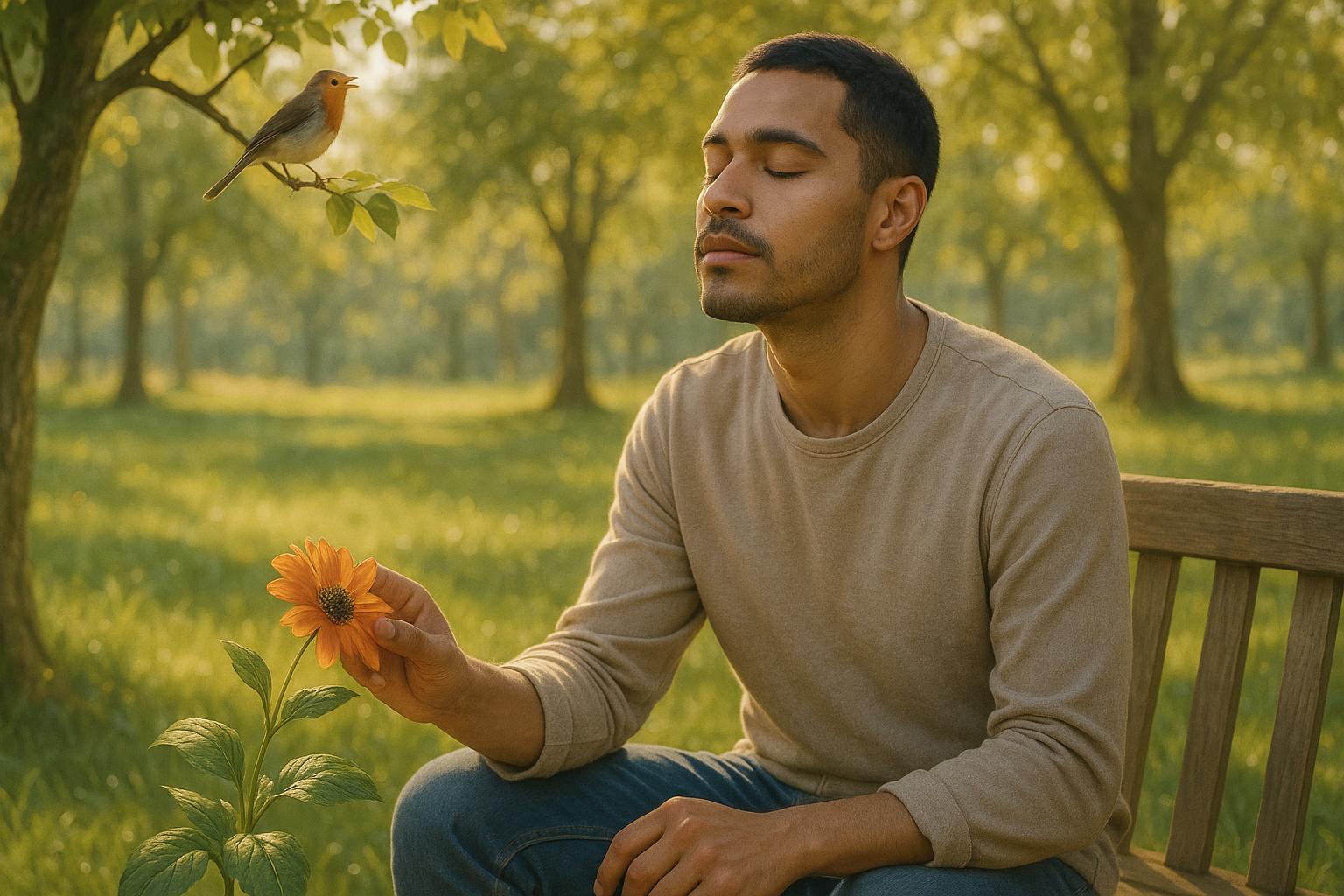
When stress hits, your five senses – sight, sound, touch, taste, and smell – can help you feel calmer and more grounded. These simple techniques work anywhere, anytime, without special tools or training. Here’s a quick guide:
- Sight: Use grounding exercises like the 5-4-3-2-1 method, create a calming visual space with soft colors and plants, or focus on a single object to improve concentration.
- Sound: Listen to calming soundscapes (e.g., nature sounds, binaural beats), practice active listening to your surroundings, or use humming and chanting to relax your body.
- Touch: Try temperature shifts (hot or cold), explore soothing textures, or use deep pressure tools like weighted blankets to ease tension.
- Smell: Use essential oils like lavender or citrus for quick relief, set up a relaxing scented environment, or tap into memory-triggering scents tied to happy experiences.
- Taste: Practice mindful eating by focusing on flavors, textures, and temperature contrasts to stay present and reduce stress.
These techniques anchor you in the present moment, interrupt anxious thoughts, and promote emotional balance. Start small by picking one or two methods that resonate with you, and build from there.
How To Use Your Five Senses To Reduce Anxiety
Sight Techniques for Stress Relief
Sight-based techniques can help ground you in the present moment by redirecting your focus away from stress. By engaging your brain’s visual processing centers, these methods provide a natural way to calm your mind. Let’s explore three effective strategies that use sight to reduce stress.
5-4-3-2-1 Grounding Technique
The 5-4-3-2-1 grounding technique is a mindfulness exercise aimed at easing stress and anxiety by bringing your attention to your immediate surroundings.
How it works: Start by taking slow, deep breaths. Then, identify five things you can see around you. Pay attention to their details – notice colors, shapes, textures, and how light interacts with them. Observe without judgment or overthinking.
This exercise doesn’t stop with sight; it incorporates other senses too, which will be discussed in later sections. The goal is to shift your mindset from overwhelming thoughts to a calmer, more present state.
"A mindfulness exercise, this technique helps us come out of anxiety, unpleasant thoughts, or worries and come into what is right here, right now in the present, through our senses. This exercise acts as an immediate distraction that diverts our attention away from anxious thoughts, by engaging our senses. It moves us from an overthinking, worrying, or ruminating mindset to a noticing and describing mindset."
– Stephanie Strauss, Yoga, Meditation, and Mindfulness Expert
Pro tip: Take your time with each step. If you feel overwhelmed, pause and repeat the process until you regain a sense of calm.
Creating a Calming Visual Space
Your surroundings can have a huge impact on your stress levels. Research from the University of Kentucky found that spending just 15 minutes in a calming workspace can reduce stress by 60%. The secret lies in designing your environment to promote visual tranquility.
Colors and lighting play a big role. Soft, cool tones like blue and green can encourage relaxation, while smaller, warm light sources are better than harsh overhead lighting for creating a cozy atmosphere.
Adding natural elements is another effective way to reduce stress. Incorporate plants, preserved moss walls, or other greenery, especially in spaces without windows. Studies have shown that these features, often used in places like hospital waiting rooms, can help ease anxiety during tense moments.
Keeping your space tidy is equally important. Simple acts like decluttering, dusting, and organizing can make your environment feel more peaceful. For an added touch, try biophilic design – introducing natural materials, textures, or plants into your space. Whether it’s a small planter or a larger installation, these elements can create a sense of calm and well-being.
Single Object Focus Exercises
Once your environment feels more soothing, you can deepen your focus with a single-object exercise. This practice, often called focused observation, trains your brain to resist distractions and enhances concentration.
Choosing an object: Pick something simple and neutral, like a pen, a plant, or a watch. Switching objects each time can keep the exercise fresh and engaging.
How to practice: Sit comfortably and place the object in front of you. Take a few deep breaths, then examine the item as if you’re seeing it for the first time. Notice its colors, textures, and intricate details without forming judgments.
Jaclyn Alper, MA, LPC, introduced a practical version of this exercise in 2017. She suggests spending 3–5 minutes daily focusing on a single object for 2–3 weeks. This practice not only improves focus but also helps you feel more grounded.
For a more advanced variation, try observing natural elements like a candle flame, a campfire, or the horizon. Let your eyes rest gently on the chosen point, resisting the urge to look away. Over time, this can strengthen your ability to meditate and foster a more balanced, peaceful state.
These sight-based techniques are simple yet powerful tools to help you step away from stress and find clarity in the present moment.
Sound Techniques for Relaxation
Sound has an incredible way of transforming your mental state, helping you shift from stress to calm. By engaging your sense of hearing intentionally, you can create a mental escape from anxious thoughts, focusing instead on soothing audio experiences. Below, we’ll dive into some effective sound-based techniques to help you tap into this calming potential.
Calming Soundscapes
Soundscapes are carefully crafted to encourage relaxation and mental clarity. Think of nature sounds like the rhythmic patter of rain, the gentle crash of ocean waves, or the tranquil hum of a forest. These sounds can transport your mind to serene settings. Similarly, binaural beats – where each ear hears a slightly different frequency – can help your brain settle into calmer rhythms. Other options like ambient music or white, pink, and brown noise can mask distractions or provide rich, soothing tones that promote relaxation.
For instance, the Calm app offers a feature called Calm Noise, which blends various noise types like white, pink, brown, and green to enhance sleep and relaxation. According to the app:
"Harnessing advanced psychoacoustic technology, Calm Noise offers a unique mix of White, Pink, Brown, and Green noise, meticulously crafted and tested by White Mirror for maximum relaxation and sleep benefits. 89% of individuals Calm surveyed, reported that they thought it helped with anxiety relief and sleep improvement."
Getting started doesn’t require much effort. Apps like Calm and Calm Radio provide instant access to a wide range of soundscapes. Whether you’re sipping your morning coffee or winding down before bed, these tools make it easy to integrate calming audio into your daily life.
Active Listening Practices
Once you’ve explored soundscapes, you can take relaxation a step further with active listening. This practice involves tuning in to the ambient sounds around you and using them as a tool for mindfulness. Start by eliminating distractions and taking a few deep breaths. Then, focus on identifying individual sounds in your environment, like the hum of an air conditioner, distant chatter, or birds singing.
Mindful listening adds another layer to this practice. It encourages you not only to notice sounds but also to reflect on how they make you feel. Pay attention to details like pitch, rhythm, and texture, and let your focus gravitate toward sounds that bring a sense of calm. This practice helps quiet mental noise and provides a much-needed break from worry.
Dr. Sabrina Romanoff, PsyD, highlights how active listening can foster both relaxation and connection:
"Active listening requires de-centering from one’s fixed position to be fully present with another. It helps people feel more understood and strengthens relationships as it signals a willingness to sit with the other’s perspective and empathy for their situation instead of singular focus on oneself."
You don’t need a lot of time to get started – just 3–5 minutes a day can help you feel more grounded and connected.
Humming and Chanting Benefits
Your voice can be an incredibly accessible tool for relaxation. Humming, for example, activates the vagus nerve, which plays a key role in your body’s natural relaxation response. It also stimulates nitric oxide production, which supports overall physical balance. Studies even suggest that humming can lower your stress levels and heart rate compared to other stressors.
To try it, sit comfortably, close your eyes, and take a deep breath. As you exhale, hum softly with a gentle "mmmm" sound. Focus on the vibrations moving through your chest, throat, and head, imagining them dissolving tension. Experiment with different pitches and durations for 5–10 minutes. For a more immersive experience, try plugging your ears with your thumbs to amplify the vibrations.
Chanting is another vocal practice with powerful benefits. A 2016 study found that chanting "om" for just 10 minutes could reduce stress, anxiety, and depressive symptoms while improving attention and mood. Chanting may also slow your heart rate, lower blood pressure, and boost oxygen flow to your brain. As yoga teacher Rama Jyoti Vernon beautifully explains:
"Exhalation is an egoless state. I am not doing the Om, the Om is done through me."
Whether you hum for a few moments during a stressful day or incorporate chanting into your routine, these vocal techniques harness sound vibrations to bring about a sense of calm and ease.
Touch Methods for Stress Management
Touch, like other senses, has a unique ability to anchor you in the present moment. It can quickly shift your focus from stress to calm without needing elaborate setups or specific environments. One of the most direct ways to harness this is through temperature changes, which can immediately influence your stress response.
Temperature Techniques
Temperature shifts send strong signals to your nervous system, helping your body transition from a state of stress to one of relaxation. Both hot and cold sensations play distinct roles in this process.
Cold therapy involves exposing your body to cold sensations, which can interrupt stress and help you feel grounded. Dr. Lori Davis explains:
"The cold sensation tells our body to relax when we are having a panic attack or feeling stressed. Whether we hold an ice cube, take a cold shower, or dunk our face in a bowl of icy water, we feel an intense sensation other than anxiety. This kicks off a series of reactions in our nervous system, which makes us feel calmer and grounded."
Simple methods like holding an ice cube, splashing cold water on your face, or applying a cold pack to your forehead can provide quick relief . For added convenience, products such as the Skinny Confidential Hot Mess Ice Roller or Skyn Iceland Hydro Cool Firming Eye Gels make cold therapy easier to integrate into your routine.
Heat therapy works differently, promoting relaxation by increasing circulation and easing muscle tension. You might try a warm shower or bath with Epsom salts, applying a heating pad to areas like your chest or stomach, or simply enjoying the warmth of a mug of herbal tea.
Contrast therapy combines both hot and cold treatments for a more dynamic effect. Alternating between warm and cool sensations can help ease stress, improve mood, and even enhance sleep quality. For example, you could switch between sauna sessions and cold plunges or alternate warm and cool compresses during moments of tension.
Beyond temperature, the feel of different textures can also influence your stress levels.
Texture Interaction
Interacting with various textures can evoke calming responses or improve focus, depending on the surface. For instance, smooth and soft textures tend to relax the nervous system, while rough or bumpy surfaces can stimulate focus and alertness.
A 2015 study in Cognition found that tactile interactions help regulate attention and memory. Similarly, research published in Frontiers in Psychology showed that incorporating tactile stimulation into daily life can reduce stress and improve mental performance, particularly in high-pressure settings like workplaces or schools.
To benefit, try engaging with a variety of textures. Run your hands over a soft blanket, squeeze a stress ball, or pet an animal for rhythmic, soothing touch. Natural textures can be especially grounding – walking barefoot on grass, hugging a tree, or touching plant leaves can bring you into the moment. As one study described:
"The physical sensations of touching natural elements bring us fully into the present moment. This tactile engagement helps quiet the mental chatter and reduces feelings of anxiety and overwhelm."
Even small actions like gathering leaves or feeling the wind on your skin can trigger oxytocin release, promoting calm and relaxation.
For a deeper sense of calm, consider methods that use firm, consistent pressure.
Deep Pressure Methods
Deep pressure therapy applies firm pressure to the body, activating the "rest and digest" response while calming the "fight or flight" system. This type of pressure also boosts feel-good hormones like serotonin, dopamine, and endorphins, which are essential for improving mood and sleep.
One popular tool for deep pressure therapy is the weighted blanket. A 2008 study found that using a 30-pound weighted blanket helped 63% of participants feel less anxious, with measurable improvements in blood pressure and pulse rate. Additionally, 78% reported feeling calmer overall. A follow-up study in 2011 confirmed these benefits, linking them to reduced anxiety levels.
Kelly Murray, a Certified Sleep Coach, explains how it works:
"Deep pressure stimulation uses firm pressure to bring a sense of calm to an individual… This deep pressure can also boost serotonin levels, the happy hormone; reduce the stress hormone, cortisol; and increase melatonin levels."
Elizabeth Grojean, founder of Baloo, adds:
"The gentle pressure relaxes the nervous system and encourages serotonin production, which lifts your mood… When serotonin naturally converts to melatonin, your body takes the cue to rest."
In addition to weighted blankets, tools like foam rollers or even firm hugs can provide similar benefits. For example, a 2017 study showed that 83% of preschool-aged children exhibited better seated behavior when wearing compression vests. Whether it’s using a weighted blanket at night or incorporating self-massage during breaks, these methods can offer consistent relief from stress.
sbb-itb-593149b
Scent Techniques for Stress Relief
Scent-based strategies offer a powerful way to calm the mind, working through your sense of smell, which is directly connected to the brain’s emotional center. This means scents can influence your mood in just minutes by interacting with the limbic system.
Personal Aromatherapy
Essential oils are a convenient way to manage stress on the go. Studies show that aromatherapy can deliver noticeable effects quickly – often within 15 minutes of inhalation.
Certain oils like lavender, bergamot, sweet orange, and clary sage are known for their stress-reducing properties. For instance, a 2013 study found that spraying a 3% lavender oil solution on clothing helped reduce workplace stress. Similarly, a 2017 study highlighted how 15 minutes of bergamot inhalation improved mood, while another study showed it lowered salivary cortisol levels in participants.
Dr. Martha Kirby, a health and wellness coach, highlights the value of aromatherapy:
"Embracing essential oils in your daily life can be a beautiful, holistic approach to alleviating stress."
For managing anxiety, sweet orange essential oil has been shown to help. A 2012 study revealed that participants who inhaled this oil remained calm during stressful situations. Meanwhile, clary sage offers additional benefits, as a 2014 study noted its ability to lower cortisol levels and mimic antidepressant effects in menopausal women.
To use essential oils, try a roller bottle, a tissue, or mix them with a carrier oil for direct application. Just remember to dilute the oils before applying them to your skin.
Scented Environment Setup
Transforming your space with calming scents can create a sanctuary for stress relief. Nancy Swanton, CEO of Abundant Home Design, emphasizes this:
"Scent isn’t just a bonus – it’s an essential layer in creating a relaxing, harmonious space."
Aromatherapy diffusers are particularly effective for spreading soothing scents throughout a room. Dr. Martha Kirby suggests:
"Adding a few drops of essential oil to clean filtered water in a diffuser allows the fragrance to gently permeate your space, fostering a calming atmosphere."
Place diffusers in areas where stress tends to build, like your office, bedroom, or living room. For work-related tension, scents like eucalyptus or bergamot can help ease anxiety without being too overpowering.
You can also enhance your space with natural-scent candles, or indulge in a warm bath with essential oils and Epsom salts. Scents like lavender, white tea, or palo santo are excellent for promoting relaxation.
Consistency is key. Repeated exposure to the same calming scents helps reinforce the connection between those aromas and feelings of tranquility.
Memory-Triggered Scents
Familiar scents can unlock memories tied to positive emotions, offering a unique way to regulate stress. Since scents bypass the brain’s rational centers and directly interact with areas controlling memory and emotion, they can evoke vivid recollections.
Research from the University of Pittsburgh School of Medicine supports this idea. A 2024 study published in JAMA Network Open found that familiar scents helped individuals with major depressive disorder recall autobiographical memories more effectively than verbal prompts. Participants exposed to 12 scent samples retrieved more vivid, positive, and emotionally arousing memories compared to using verbal cues.
Dr. Kymberly Young, Associate Professor of Psychiatry and Neuroscience at the University of Pittsburgh, explains:
"Being able to access specific memories is important for problem-solving and emotion regulation – if we can help individuals with depression to access specific memories, they should be able to use them when needed and improve their quality of life."
Dr. Krystine Batcho, a psychologist and professor at Le Moyne University, elaborates on the emotional power of scents:
"Memories accessed by a familiar scent tend to be very vivid, with a more intense feeling of being ‘real,’ likely due at least in part to the engagement of emotions via the amygdala."
To tap into this, identify scents linked to happy experiences, such as a loved one’s perfume, the aroma of garden flowers, or the smell of holiday treats. Dr. Batcho suggests keeping small samples of these scents handy to interrupt negative thoughts and restore positivity.
Taste-Based Stress Management
Just like sight, sound, and touch, taste has the power to anchor you in the present moment, offering a unique way to ease stress. By focusing on flavors, textures, and the act of eating, taste becomes a direct path to mindfulness. Unlike other senses, taste demands active participation, making it a powerful tool for grounding yourself when stress creeps in.
Focused Tasting Exercises
Mindful eating is all about engaging all your senses – physical and emotional – to fully experience and enjoy your food choices. This practice transforms the simple act of eating into a moment of stress relief by keeping your attention locked on the sensory experience.
For instance, savoring a piece of hard candy, a square of dark chocolate, or a sip of herbal tea can provide quick stress relief. The key is to focus on the flavors and sensations rather than eating on autopilot. Even small acts like chewing sugarless gum, relishing a piece of ripe fruit, or enjoying a tiny treat can shift your thoughts away from stress and into the present. This approach also fosters gratitude for your food, enhancing the overall experience.
Research backs this up. A study involving 194 adults with obesity found that mindfulness-focused eating interventions helped reduce sweet consumption and stabilize fasting blood glucose levels, while the control group experienced an increase in fasting blood glucose. Clearly, mindful eating isn’t just a stress reliever – it’s a step toward better health.
Want to take it a step further? Experiment with how temperature contrasts in your food and drinks can heighten your sensory awareness.
Temperature-Contrast Foods and Drinks
Switching between warm and cold foods or beverages is another way to sharpen your focus and break stress patterns. For example, sip a steaming cup of tea or coffee, then follow it with a refreshing cold drink. Pay attention to how the temperatures feel in your mouth and throat – this simple act can enhance mindfulness.
The sensory details of temperature – combined with aroma, texture, and presentation – can make eating a more satisfying and calming experience. Pairing warm herbal tea with chilled fruit or alternating between hot soup and cool yogurt are great ways to bring mindfulness to your meals. By focusing on these contrasts, you transform eating from a routine habit into a moment of sensory enjoyment.
Temperature contrasts also encourage slower eating, which helps calm your mind and relax your body. As Flowly Founder Celine Tien and Health Coach Rachel put it, it’s about “taking the time and space to fully enjoy your food”.
Slow Texture-Focused Eating
Texture plays a big role in mindful eating, offering another layer of sensory engagement. By focusing on how food feels as you chew, you naturally slow down, which helps reduce stress. Notice the taste, smell, and texture of each bite, and tune in to your body’s hunger and fullness cues.
Chewing each bite thoroughly and pausing between bites helps you stay present . Pay attention to how your food feels – whether it’s the crunch of a carrot, the smoothness of yogurt, or the chewiness of trail mix. This simple practice not only prevents rushed eating but also makes meals more enjoyable.
To get the most out of texture-focused eating, eliminate distractions like TV or phones . Try eating in silence, focusing on the colors, smells, and textures of your food . Creating a calm and quiet environment can further enhance the experience.
As one expert explains, “mindful eating doesn’t mean dieting or restrictions. It’s about taking a moment to take it in”. This practice helps your brain sync with your stomach, reducing the risk of overeating while offering stress relief through sensory engagement.
When you focus on textures, pay close attention to how they feel against your tongue and teeth. This deep sensory connection can boost your overall sense of well-being, increase the joy of eating, and even improve body satisfaction.
Combining Multiple Sensory Techniques
Blending different sensory techniques can create a much deeper sense of calm than relying on just one method. By layering these approaches, you can amplify their effects and find relief from stress more quickly and effectively.
Our senses naturally work together, so combining them makes perfect sense. Picture this: pairing the soothing scent of lavender with soft instrumental music and the comforting pressure of a weighted blanket. Each element enhances the others, helping you stay anchored in the present moment and easing tension more efficiently than using a single technique alone.
"When engaging in these strategies, make sure to focus completely on the task at hand. That is, be mindful of your senses and what you are experiencing. Anytime you are distracted, simply bring your attention back to what you are doing." – Matthew Tull, PhD, Professor of Psychology at the University of Toledo
Layering Sensory Methods
Think of this as building a stress-relief toolkit. Start with one sensory technique that feels most natural to you, then gradually layer others into the mix. For instance, light a lavender-scented candle to engage your sense of smell, play calming music for your hearing, and wrap yourself in a cozy blanket for touch. Together, these elements create a harmonious sensory experience.
Research backs up this approach. A 2017 study published in Nursing in Critical Care found that patients in intensive care who inhaled lavender essential oil in a calm environment slept better and felt less anxious. The combination of scent and a soothing atmosphere was more effective than using either method alone.
Even temperature can play a role in this multi-sensory formula. Try sipping warm herbal tea while listening to nature sounds and watching a flickering candle. The warmth of the tea, combined with auditory and visual elements, provides multiple pathways to relaxation. These examples show how sensory techniques can work together seamlessly. Now, let’s explore how to adapt these methods to fit different environments.
Adapting Techniques for Different Locations
Your surroundings influence how you can combine sensory techniques. Here’s how to tailor your approach based on where you are:
- At work: Opt for subtle techniques that won’t disrupt others. Place a small plant on your desk for visual calm, listen to instrumental music through headphones, and use gentle hand massages to release tension.
- At home: Create a fully immersive experience. Light scented candles, adjust to soft lighting, wear comfortable clothing, and use a white noise machine to turn your space into a stress-relief haven.
- While traveling: Portability is key. Carry a scented handkerchief for aromatherapy, download calming audiobooks, and perform simple neck stretches during breaks to incorporate movement and touch.
In fact, studies show that workplace soothing spaces equipped with multiple sensory elements can reduce stress by up to 60% in just 15 minutes.
Daily Sensory Practice Routine
Incorporating sensory techniques into your daily routine can help anchor you throughout the day. Here’s how you might structure it:
- Morning: Start your day with something uplifting. Look at a cherished photo or a beautiful view while inhaling an energizing scent like citrus or peppermint and listening to upbeat music. This quick ritual can set a positive tone for the day.
- During the workday: Use tools like a stress ball, take short walking breaks, and listen to calming nature sounds. These small practices can help you stay centered and avoid sensory overload.
- Evening: Shift gears toward relaxation. Dim the lights, diffuse lavender essential oil, wrap yourself in a soft blanket, and sip herbal tea. This multi-sensory ritual signals your body that it’s time to unwind.
"By engaging all five senses in your daily routine, you can create a holistic approach to stress relief. Each sense offers a unique way to connect with the present moment, reduce anxiety, and promote a sense of calm." – Emily Maguire, Author, Morpheus Wellness
The key is consistency, not perfection. Start small – pick two sensory techniques and practice them daily for a week. Once they become second nature, add a third. This gradual approach makes it easier to build lasting habits without feeling overwhelmed.
Conclusion and Next Steps
Managing stress through your five senses is like carrying a personal toolkit that’s always within reach. By incorporating these techniques into your daily life, you can break free from anxious thought patterns and help your nervous system regain balance. These methods anchor you in the present, offering a practical way to navigate stressful moments.
"Sensory soothers are powerful tools that can calm our nervous systems, restore balance, and provide respite during times of sensory overload." – Dr. Megan Anna Neff, Clinical Psychologist, Author, and Founder of Neurodivergent Insights
Whether you’re dealing with workplace stress or the chaos of everyday life, these strategies can be tailored to fit your needs. Picture this: a quick texture exercise during a tense meeting or the calming scent of essential oils while you’re stuck in traffic. Small moments of sensory awareness can transform your day.
Finding what works best for you takes a bit of trial and error. As discussed earlier, experimenting with different sensory techniques can help you identify what brings the most relief. Some people feel grounded by focusing on visuals, while others respond better to touch or sound. There’s no one-size-fits-all answer – just the approach that aligns with your nervous system.
Consider assembling a portable sensory kit. Include items like tinted sunglasses, noise-canceling headphones, tactile objects, gum or mints, and small bottles of essential oils. Having these tools on hand ensures you’re prepared to manage stress wherever you are.
Consistency is more important than perfection. Studies show that spending just 20 minutes in nature can lower cortisol levels, and even brief daily practices can build long-term resilience. Start small – choose two sensory techniques that feel natural and practice them for a week. Once they become part of your routine, gradually add more.
"Stress isn’t just something you feel – it’s something your body holds onto." – Quiet Mind
It’s important to give these techniques time to work. You might need several tries before finding what truly helps. Stay flexible, and focus on what feels most effective for you. The goal is to create a sustainable practice that supports your mental and physical well-being over time.
Your journey with sensory stress management is deeply personal. By blending different techniques and adapting them to your daily life, you can build lasting resilience. Trust your instincts, stay open to new methods, and remember that these simple yet effective tools are always there to help you feel grounded and centered.
FAQs
How can I use multiple senses at once to manage stress more effectively?
Engaging your senses can be a powerful way to feel grounded and manage stress by drawing your attention to the present moment. One popular method for this is the 5-4-3-2-1 technique, which guides you through a simple mindfulness exercise:
- 5 things you can see: Look around and notice five distinct items in your surroundings.
- 4 things you can touch: Focus on the textures and sensations of four objects near you.
- 3 sounds you can hear: Tune in to three sounds in your environment, whether loud or subtle.
- 2 scents you can smell: Identify two scents, even faint ones, in the air around you.
- 1 thing you can taste: Pay attention to one flavor, whether it’s a sip of water or the lingering taste of a meal.
This practice helps center your mind and shift your focus away from stress or anxious thoughts.
You can also combine sensory experiences for even greater relaxation. For instance, sip on a warm cup of herbal tea while playing soft music, or go for a walk outdoors to take in the sights, sounds, and fresh air. These small, intentional actions can create moments of calm and support your overall well-being.
How can I use calming scents at work without disturbing my coworkers?
To bring soothing scents to your workspace without bothering those around you, consider these easy approaches:
- Personal application: Dab a tiny amount of essential oil on a handkerchief, bracelet, or your wrists. This keeps the aroma close to you without spreading it throughout the office.
- Discreet diffusers: Try a mini diffuser with a light mist or a personal scent pad. Stick to mild, universally appealing fragrances like lavender or citrus to keep things subtle.
- Fragrant plants: Decorate your desk with gently aromatic plants like rosemary or jasmine. They not only offer a soft scent but can also freshen the air.
Remember, it’s important to be considerate of your coworkers’ sensitivities to maintain a pleasant and respectful workspace.
Can you combine sensory techniques with practices like meditation or yoga for better stress relief?
Yes, sensory techniques can work hand-in-hand with practices like meditation or yoga to amplify stress relief. These approaches complement each other by engaging both the mind and body in a unified way. For instance, mindfulness meditation naturally sharpens sensory awareness, allowing you to tune into your surroundings and better manage your emotions. Yoga, on the other hand, incorporates sensory elements through movement, touch, and controlled breathing, which can help soothe both the mind and body.
Combining sensory techniques with meditation or yoga allows you to craft a stress management routine tailored to your specific needs, encouraging deeper relaxation and a sense of balance.
