
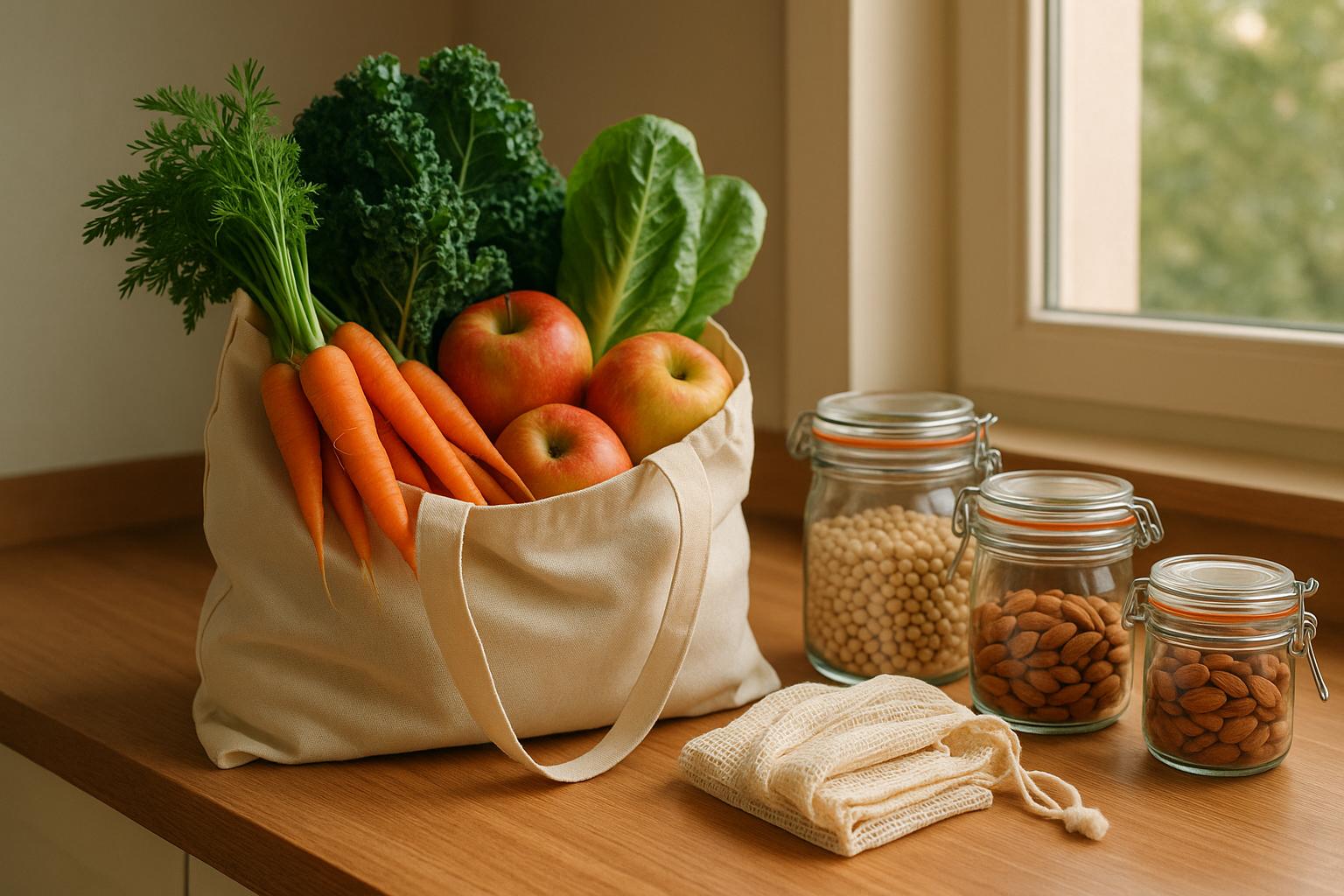
Want to shop smarter and waste less? Zero-waste grocery shopping is all about reducing waste, saving money, and helping the planet. Here’s how you can start today:
- Bring Reusable Bags & Containers: Avoid single-use plastics by using your own bags and jars. A family of four can cut plastic waste by 75% annually.
- Buy in Bulk: Skip the packaging and save up to 30% on essentials like grains, nuts, and spices.
- Shop Farmers’ Markets: Support local farmers and avoid plastic-wrapped produce.
- Plan Your Meals: Prevent food waste by shopping with a list and using what you already have.
- Pick Loose Produce: Ditch plastic packaging and choose unpackaged fruits and vegetables.
- Refill Cleaning Products: Bring your own containers to refill stations for soaps, detergents, and more.
- Compost Food Scraps: Turn waste into nutrient-rich soil instead of sending it to a landfill.
- Choose Eco-Friendly Brands: Opt for products with sustainable packaging to cut down on waste.
- Use Zero-Waste Apps: Apps like Too Good To Go help rescue surplus food and save money.
- Store Food Properly: Keep your groceries fresh longer with proper storage techniques.
Why it matters: Americans generate over 1,600 pounds of trash per person annually, and 40% of food ends up wasted. These tips can help you reduce waste, save money, and make a positive impact – starting with your next grocery trip.
30+ TIPS for How to Zero Waste Grocery Shop (even if you don’t have bulk)
1. Bring Your Own Bags and Containers
Switching to your own reusable bags and containers can help cut down on plastic waste while making your shopping trips more efficient.
How it reduces waste
Plastic bags and disposable containers have a surprisingly short life span, yet their impact on the environment lingers for centuries. Consider this: a single plastic bag is typically used for just 12 minutes but can sit in a landfill for up to 1,000 years. Disposable food containers, utensils, and packaging make up a staggering 23% of landfill waste, placing them among the top contributors to plastic pollution. By opting for reusable containers instead, families can reduce their plastic waste by as much as 75% annually. For a household of four, this could mean preventing around 1,000 pieces of plastic from entering the waste stream over five years. And given that many of these plastics take over 400 years to decompose, the impact of this small change is enormous.
Impact on the planet
The environmental benefits go well beyond reducing landfill waste. Producing plastic generates up to 3 pounds of carbon dioxide per container, contributing to climate change. Then there’s the issue of ocean pollution – every year, 8 million tons of plastic make their way into the oceans, disrupting marine ecosystems. Alarmingly, studies reveal that 90% of seabirds have ingested plastic, much of it originating from household waste.
According to ScienceDirect, "Reusable packaging can reduce the environmental impact of single-use packaging by limiting waste and conserving resources."
How easy it is to start
Adopting reusable bags and containers is simpler than you might think, and it doesn’t require much time or money. To make it a habit, keep reusable bags and containers in places you frequent, like your car, purse, or workspace. A good tip is to place tote bags near your door or set phone reminders to grab them before heading out. Once you’ve unpacked your groceries, return the bags to your car right away so they’re always ready for the next trip.
When it comes to containers, start small. Use your own clean containers or reusable bags for items like deli meats, bakery goods, and fresh produce. Cotton or hemp bags work great for fruits, vegetables, coffee beans, and bulk items like nuts, sugar, and flour. You can even request that cheese, meat, and bread be packed directly into your containers.
For convenience, choose bags with wide openings and structured, rectangular bottoms to keep items stable and avoid spills. Select sizes that suit your typical shopping needs, so you’re not left juggling overfilled bags. With just a bit of planning, you can make a big difference for the planet.
2. Buy from Bulk Bins
Shopping from bulk bins lets you purchase only what you need while cutting down on packaging waste. Instead of grabbing pre-packaged items, you can use your own containers to stock up on grains, nuts, spices, and other essentials.
How It Reduces Waste
Bulk bins help reduce single-use packaging by eliminating the plastic wrappers that often surround grocery items. Did you know that containers and packaging make up 30% of what Americans throw away every year? And with only 4% of plastic waste being recycled in the U.S., most of those pre-packaged goods end up in landfills or polluting oceans. Buying just the amount you need also helps prevent food from going to waste.
"Many demonstrate that buying in bulk is environmentally advantageous compared to purchasing the same quantity of a product in single-use containers", says Valérie Patreau, a Doctorate Student in Sustainable Innovation at Polytechnique Montreal.
This eco-friendly approach doesn’t just benefit the planet – it can also help you save money.
Money Savings
Bulk shopping often comes with significant savings. On average, shoppers save 30% when buying in bulk compared to pre-packaged options. Depending on the packaging type, savings can range from 11% (compared to clear film bags) to as much as 50% (compared to resealable printed bags).
One reason for these savings is that packaging accounts for 7–10% of the cost of most products. Without paying for labels, plastic containers, or flashy marketing, staples like spices, oats, beans, nuts, and seeds are often much cheaper. In fact, pre-packaged versions of these items can cost up to twice as much.
"This minimizes the product-to-plastic packaging ratio and saves the customer more money per pound", explains Alannah LaVergne, spokesperson for Essential Organics.
How Easy It Is to Start
Getting started with bulk bin shopping is straightforward. First, check your local store’s policies on reusable containers – most stores allow them, though they may have specific steps for weighing jars or bags .
Gather some basic supplies like clean glass jars, cotton bags, or plastic containers. Before heading to the store, weigh your empty containers at home and mark their tare weight with tape . At the store, fill your containers with the exact amount you need and note the bin number or SKU for each item . At checkout, provide the cashier with the tare weight and SKU number for each container.
Start small by purchasing a few staples, label your containers, and follow your store’s guidelines on reusable containers . Shopping at stores with high turnover rates for bulk items ensures freshness, and don’t hesitate to ask staff for help if you’re unsure about the process . Some stores even offer discounts for bringing your own containers. Bulk shopping is a simple step toward reducing waste and saving money.
3. Shop at Farmers’ Markets
If you’re looking to cut down on waste while supporting local farmers, shopping at farmers’ markets is a fantastic choice. These markets offer a way to skip the excess packaging that dominates grocery stores and opt for fresh, locally grown produce instead. No more plastic-wrapped veggies or those pesky plastic ID stickers – just fresh food with minimal waste.
How It Reduces Waste
Farmers’ markets are a simple way to tackle the mountain of plastic waste that comes with conventional grocery shopping. Single-use plastics are a major contributor to waste, but at farmers’ markets, you’ll find produce free of plastic wraps and stickers. Many vendors even sell "seconds" – those slightly imperfect fruits and veggies that are perfectly good to eat but often discarded elsewhere.
Some farmers’ markets go a step further by providing recycling and composting options, making the entire event low-waste. In fact, some markets achieve waste diversion rates of over 95%, showing their dedication to reducing environmental impact.
"Another aspect of sustainability inherent in farmer markets is the reduction of packaging waste… farmer markets encourage customers to bring their own reusable bags and containers, significantly reducing the amount of single-use plastic waste generated", says WeFill Mobile Market & Refillery.
By shopping this way, you’re not just reducing waste – you’re also lowering the carbon footprint of your food.
Impact on the Planet
The benefits of farmers’ markets go beyond just cutting waste. Consider this: the average piece of food travels over 1,000 miles to reach your grocery store. Compare that to locally sourced produce, which travels significantly less – about 27 times less, to be exact. That huge difference means a much smaller carbon footprint for your groceries.
Many farmers at these markets also use sustainable farming methods. Nearly half of them sell organically labeled products, and 81% practice soil-friendly techniques like cover cropping, reduced tillage, and on-site composting. These methods help maintain soil health, conserve water, and promote biodiversity.
"Farmers markets are the ultimate green sector of the economy. They are stand-out successes in and spurring sustainable economic development", says Bernadine Prince, Co-Director of FRESHFARM Markets in Washington, DC.
So, when you shop at farmers’ markets, you’re not just buying food – you’re supporting practices that benefit the planet.
How Easy It Is to Start
Getting started with farmers’ market shopping is super simple. Use online tools like the USDA National Farmers Market Directory or FarmersMarket.net to find a market near you. Before you go, check the seasonality of your local market and plan your meals around the produce that’s currently available. A seasonal food guide can help you figure out what’s in season.
Bring a few essentials with you: cash (small bills are handy), reusable bags, water, and a cooler for items that need to stay cold. Once you’re there, take your time exploring all the stalls. Don’t hesitate to ask the farmers for advice on picking the best produce or trying something new. Some vendors even offer samples, so you might discover a new favorite food.
Timing can make a difference, too. Arrive early for the best selection or come later in the day for possible discounts. Many markets also accept EBT and WIC/Farmers’ Market Nutrition Program checks, and some have Market Match programs to stretch CalFresh benefits. Farmers’ markets make it easy to shop sustainably while staying within your budget.
4. Plan Your Meals to Prevent Food Waste
Meal planning is one of the most effective ways to shop smarter and waste less. Instead of tossing random items into your cart, you can focus on buying exactly what you need – and only what you need. This simple habit can significantly cut down the amount of food that ends up in the trash.
How It Reduces Waste
When you plan your meals, every item you buy has a purpose. In fact, 78% of people using meal planning apps report wasting less food. Start by checking what you already have at home. Before heading to the store, take stock of your fridge, freezer, and pantry. Spot ingredients that are nearing their expiration dates and build your meals around them. This way, you avoid buying duplicates and ensure older items get used up.
A shopping list based on your meal plan acts as your guide. No more grabbing a bag of spinach with good intentions, only to find it wilted and forgotten days later. By sticking to your plan, you make sure every ingredient gets used, aligning perfectly with zero-waste efforts.
Money Savings
Meal planning doesn’t just reduce waste – it saves money too. Did you know the average American household throws away nearly $2,000 worth of food every year? For a family of four, that number can climb to $3,000 . Planning meals ahead can help you keep more of that cash in your pocket.
"By planning ahead, you can save calories, time, money and decrease the amount of food you waste", says Kara Lynch from Michigan State University Extension.
When you stick to your list, you’re less likely to make impulse buys or take extra trips to the store. Plus, planning meals with leftovers in mind lets you stretch your budget further. For example, tonight’s roast chicken can become tomorrow’s chicken salad, ensuring nothing goes to waste.
How Easy It Is to Start
You don’t need fancy tools or expertise to start meal planning. Begin by checking what’s already in your kitchen. Then, create a simple plan for the week, focusing on meals that use overlapping ingredients. Write down what you’ll need, including quantities, and make sure you’re realistic about how much your household will eat.
Keep things simple, especially on busy nights. If your stir-fry on Monday calls for bell peppers, plan another dish later in the week – like fajitas or a salad – that uses the rest. Don’t forget to schedule a night for leftovers. By reusing ingredients across multiple meals, you’ll reduce waste and make meal planning even easier.
Impact on the Planet
Food waste isn’t just a problem for your wallet – it’s a massive strain on the environment. Roughly 40% of food in the U.S. goes to waste somewhere between the farm and your plate. That waste contributes to 2.6% of the country’s annual greenhouse gas emissions. When you throw away food, you’re also wasting the water, energy, and resources that went into producing and transporting it.
Meal planning helps you avoid overbuying, which reduces the demand for food production. Every ingredient you use fully is a small victory for the planet. And as more households embrace meal planning, the ripple effect can lead to less food being produced unnecessarily, lowering the environmental toll of our food system. By making meal planning part of your routine, you’re not just helping yourself – you’re contributing to a healthier planet while sticking to the zero-waste principles we’ve discussed.
5. Pick Produce Without Plastic Packaging
As you continue your zero-waste grocery journey, it’s time to focus on produce. Many fruits and vegetables come wrapped in layers of unnecessary plastic, but opting for loose produce can help you avoid single-use plastics and cut down on waste. This small change in the produce aisle is a simple yet effective step toward more sustainable shopping habits.
How It Reduces Waste
Plastic packaging is a major contributor to environmental problems. In the U.S., packaging waste accounts for nearly a quarter of all landfill contents, and globally, only 9% of plastic actually gets recycled. By choosing loose produce, you eliminate the need for plastic wrap and bags, which not only reduces packaging waste but also helps prevent food waste – since you can buy exactly what you need.
"By eliminating plastic bags and cutting back on plastic packaging, we can reduce waste and make a positive impact on the environment", says Mudd House Mercantile.
How Easy It Is to Start
Switching to package-free produce is surprisingly easy. Bring along reusable mesh or cloth bags to carry your fruits and vegetables. These bags are lightweight, washable, and can be reused countless times. When shopping, stick to the store’s perimeter, where fresh items with minimal packaging are usually found. Farmers’ markets are another great option – vendors often skip plastic altogether, placing produce directly into your reusable bags or wrapping items in paper instead.
Impact on the Planet
This small change goes beyond reducing waste at checkout – it helps protect ecosystems worldwide. Each year, about 8.3 million tonnes of plastic waste end up in the oceans, and global plastic production is expected to surpass 1,100 million tonnes by 2050. This pollution harms wildlife: plastic has been found in 59% of seabirds, every species of sea turtle, and over 25% of fish sold in seafood markets. Some scientists even warn that microplastic pollution in soil could be an even bigger issue than in oceans.
The benefits of reducing plastic packaging are backed by research. A UK study found that selling apples, bananas, and potatoes loose could save 60,000 tonnes of food waste annually, cut 8,800 tonnes of plastic packaging, and reduce over 80,000 tonnes of CO₂e emissions. Similarly, Canadian studies show that halving plastic use doesn’t compromise the shelf life of fruits and vegetables.
"Our purchase is a vote and a clear message is communicated from the buyer to the seller", says Bea Johnson, widely regarded as the Queen of zero waste.
Every time you choose loose produce over plastic-wrapped options, you’re making a statement. You’re not only supporting a cleaner planet but also encouraging stores to embrace more sustainable practices.
6. Refill Cleaning and Personal Care Products
Reducing waste doesn’t stop at food. Another impactful way to embrace a zero-waste lifestyle is by switching to refillable cleaning and personal care products. Many stores now offer refill stations where you can bring your own containers to stock up on essentials like laundry detergent, shampoo, and dish soap. This simple change helps break the cycle of constantly buying new plastic bottles and packaging.
How It Reduces Waste
Refilling products is a practical step toward addressing the global waste crisis. With 91% of plastic never being recycled and food packaging making up 40% of plastic production, every refill makes a difference. By refilling items like hand soap or lotion in your own containers, you’re cutting down on single-use packaging that would otherwise end up polluting landfills or waterways.
"When you refill, you cut down on the need for single-use packaging, keeping unnecessary waste out of the landfill", says Bulk Refillery.
This approach not only reduces packaging waste but also helps avoid overbuying products that might expire before you use them. It’s a win-win for your home and the environment.
Money Savings
Refilling doesn’t just help the planet – it’s also easier on your wallet. You’re paying only for the product itself, not the packaging. Refills are often more affordable than buying prepackaged items. As Bulk Refillery explains:
"Refilling doesn’t just reduce waste; it also helps you save money. Without paying for extra packaging, you’re only paying for the product itself and you choose how much you need".
Take laundry detergent as an example. fulFILLed Lifestyle Co. offers liquid and powder detergent refills for $0.40 to $0.50 per ounce, which translates to about $0.12 to $0.20 per load – cheaper than most traditional detergents. Plus, buying only what you need reduces waste from unused or expired products.
How Easy It Is to Start
Switching to refills is simpler than you might think. Start small by reviewing the products you frequently use and focus on one category, like personal care items (shampoo, body wash) or cleaning supplies (dish soap, all-purpose cleaner). Invest in reusable containers made of glass or stainless steel to get started.
Finding refill stations is becoming more convenient. Many grocery stores and specialty shops now provide refill options. For example, The Unwaste Shop in Chicago offers refills on a variety of products, including Oneka shampoo and conditioner for $0.75 per ounce and Mama Suds laundry detergent for just $0.32 per ounce. Brands like Rustic Strength even provide store locators to help you find refill stations nearby, and some stores allow online ordering with in-store pickup. Before refilling, make sure your containers are empty, clean, and thoroughly dried with hot, soapy water.
Impact on the Planet
The ripple effect of choosing refills extends beyond your home. Reducing the demand for single-use packaging lowers carbon emissions tied to production and transportation. Many refill products also rely on natural, biodegradable ingredients, which are safer for you and the environment. Each refill you choose contributes to a larger movement that’s reshaping how businesses approach packaging.
"We don’t need a handful of people doing zero waste perfectly. We need millions of people doing it imperfectly", says Anne Marie Bonneau.
This small change in your shopping routine not only aligns with zero-waste principles but also has a meaningful impact on the planet. By refilling instead of buying new, you’re part of a growing effort to create a more sustainable future.
sbb-itb-593149b
7. Start Composting Food Scraps
Turning food scraps into compost is a game-changer for reducing waste. Instead of tossing out banana peels, coffee grounds, and vegetable scraps, you can repurpose them into nutrient-rich soil for your garden. This simple habit not only cuts down on landfill waste but also creates something incredibly useful for your home.
How It Reduces Waste
Did you know that food scraps and garden waste make up more than 28% of what ends up in our trash? When these materials decompose in landfills, they release methane – a greenhouse gas that’s 84 times more potent than carbon dioxide. Composting eliminates this problem by keeping organic waste out of landfills, reducing your household’s contribution to harmful emissions.
Landfills are the third-largest source of human-made methane emissions in the U.S., and wasted food alone accounts for 58% of those emissions. By composting, you’re taking a direct and impactful step to curb this issue.
"Composting is nature’s way of recycling and is one of the most powerful actions we can take to reduce trash in landfills and build healthy soil", explains the U.S. EPA.
Save Money While You Compost
Composting doesn’t just help the planet – it can help your wallet too. On average, households waste about 25% of the food they buy, which adds up to $1,350 to $2,275 per year for a family of four. By composting, you’ll likely become more aware of your food waste habits, leading to smarter meal planning and less waste overall. Plus, the compost you create can replace store-bought fertilizers, saving you even more money.
Getting Started Is Simple
Starting a composting system is easier than you might think. Depending on your space and preferences, you have several options:
- Backyard Composting: If you have outdoor space, pick a spot with good drainage and partial sunlight. Alternate layers of "green" materials (like fruit and veggie scraps) with "brown" materials (like dry leaves or shredded newspaper). Keep a 2:1 ratio of browns to greens, and turn the pile occasionally to add oxygen.
- Vermicomposting (Worm Composting): Perfect for apartments or small spaces, this method involves a ventilated bin filled with bedding like shredded paper. Add fruit and veggie scraps, coffee grounds, and tea leaves for the worms to eat, but avoid meat, dairy, and oily foods. Keep the bin moist, like a damp sponge.
- Bokashi Composting: This method uses a sealed container and a special fermentation process. Mix your kitchen waste with Bokashi bran, seal the container to create an oxygen-free environment, and transfer the fermented waste to a garden or traditional compost bin later.
If composting at home isn’t an option, check if your area has municipal drop-off sites for organic waste.
A Big Impact on the Planet
The potential global impact of composting is huge. If composting were adopted more widely, it could reduce emissions by 2.1 billion tons by 2050. Unlike landfills, where organic waste decomposes without oxygen and produces methane, composting produces carbon dioxide – a much less harmful greenhouse gas. Since food makes up 24.1% of municipal solid waste, even small changes can have a meaningful effect.
On top of that, the compost you create enriches soil, helping plants retain water and reducing the need for chemical fertilizers. This closes the loop, benefiting both your garden and the environment.
"When it comes to food, eat it – don’t throw it in the trash. When we do generate organic waste, compost it. It’s one of the best things you can do for our environment", says Aaron Hiday, EGLE compost program coordinator.
With composting in place, the next step in zero-waste grocery shopping is all about making thoughtful, sustainable purchasing decisions.
8. Choose Brands with Eco-Friendly Packaging
Opting for brands that prioritize eco-friendly packaging not only helps cut down on waste but also sends a clear message to producers about the importance of responsible manufacturing.
How It Reduces Waste
Packaging waste is a massive issue, making up nearly 25% of landfill waste in the U.S. Shockingly, 91% of plastic is never recycled, and plastic packaging alone accounts for 40% of all plastics produced. By choosing products with sustainable packaging, you take a step toward addressing this overwhelming problem.
What sets eco-friendly packaging apart is its focus on the entire lifecycle of the material. Unlike conventional plastic, which depends on non-renewable resources like crude oil, sustainable packaging often uses recycled or renewable materials that significantly lower carbon emissions. These materials are designed to be easily reused or recycled, extending their usefulness and reducing waste.
How Easy It Is to Start
Making the switch to more sustainable shopping habits is easier than you might think. Start by checking for certifications and labels on the products you already use. Certifications like BPI Compostable, FSC, USDA BioPreferred, and GreenBlue RMS can guide you toward truly sustainable options.
When it comes to plastics, prioritize items labeled with a 1 or 2, as these are widely accepted by most recycling programs. For "compostable" packaging, reach out to your local waste management to find out if commercial composting facilities are available in your area. Proper disposal ensures the packaging fulfills its environmental promise.
Many brands are already making it simple to choose sustainable options. For instance, Plaine Products offers personal care items in 100% recycled and recyclable aluminum containers. Alter Eco, a San Francisco-based chocolate company, wraps its truffles in compostable packaging and uses recyclable aluminum foil and FSC-certified paper for its chocolate bars.
Even online shopping can align with eco-friendly values. Sun & Swell, a company specializing in organic, plant-based groceries, packages over 75% of its products in compostable materials and even offers a compostable bag send-back program to close the loop.
These small shifts in your shopping habits can make a big difference for the planet.
Impact on the Planet
When you choose sustainable packaging, you’re supporting a larger movement toward zero waste. Consumer demand is already driving real change: products with sustainable packaging claims now represent a $72 billion market category. From 2018 to 2022, sales of these products grew 34% faster than those without such claims. Additionally, 95% of consumers say they’re working toward living more sustainably.
Your choices ripple through the supply chain, encouraging manufacturers to adopt environmentally responsible practices. Legislation like Extended Producer Responsibility (EPR) is also holding companies accountable for the entire lifecycle of their packaging.
Some brands have been leading the way for years. Straus Family Creamery, for example, has been selling organic milk in reusable glass bottles since 1994. Customers pay a deposit, which is refunded when they return the bottles. Each bottle is reused about five times before being recycled. This model demonstrates how sustainable packaging can be scaled effectively.
The momentum behind eco-friendly packaging is undeniable. The global sustainable packaging market is projected to surpass $400 billion within the next decade, growing at an annual rate of 7.7%. By choosing products with thoughtful packaging, you’re contributing to a transformative shift in the industry.
Incorporating brands with eco-friendly packaging into your shopping routine pairs seamlessly with other sustainable practices like buying in bulk or using refill stations, creating a well-rounded approach to reducing waste.
9. Use Apps and Digital Tools for Zero-Waste Shopping
Technology has become a powerful ally in reducing food waste. From connecting you to surplus food to helping you manage your pantry, apps and digital tools can make zero-waste shopping easier and more effective.
How It Reduces Waste
Food waste apps are designed to rescue surplus food that would otherwise be thrown away. Take Too Good To Go, for example – it offers "Surprise Bags" filled with surplus food starting at just $3. Every purchase not only saves food but also prevents 2.7 kg of CO₂ emissions from entering the atmosphere. For managing what you already have at home, apps like NoWaste and Kitche track your pantry inventory and expiration dates, addressing the staggering 63% of edible food that currently gets discarded in households. Additionally, smart shopping list apps can sync across devices and even pull ingredients directly from recipes, ensuring you only buy what you actually need. These tools work hand-in-hand with earlier strategies like using sustainable packaging and buying in bulk.
Money Savings
These apps don’t just help the planet – they also save you money. Many zero-waste apps offer features like meal planning, price comparisons, and access to coupons, all of which cut costs while reducing waste. Apps that connect you with surplus food offer instant savings on meals and groceries.
How Easy It Is to Start
Getting started with zero-waste apps is simple and convenient. Most of these apps are free to download and come equipped with user-friendly features. To begin, pick an app that addresses your specific challenges – whether it’s managing pantry inventory or finding deals on surplus food. Many apps also include tips and reminders to help you stick to your zero-waste goals. By using these tools, you can reduce packaging, avoid overbuying, and streamline your shopping habits.
Impact on the Planet
The environmental impact of these tools is significant. In the United States alone, an estimated 30–40% of food – about 133 billion pounds – ends up as waste every year. Digital tools that use AI for demand prediction and IoT for storage monitoring help streamline inventory and prevent spoilage, tackling the problem at its root.
"Too Good To Go is a social impact company on a mission to inspire and empower everyone to fight food waste together."
"Reducing food waste is the #1 action you can take to help tackle climate change"
10. Plan Your Shopping Trips and Storage
Turning grocery shopping into a well-thought-out routine can save time, money, and the planet. By combining smart planning with effective storage, you can cut down on food waste while keeping your wallet and conscience happy.
How It Reduces Waste
Start by taking stock of what you already have at home. A quick check of your fridge, freezer, and pantry can help you avoid buying items you don’t need, reducing the risk of forgotten food spoiling in the back of a shelf.
Next, create a detailed shopping list tied to your meal plans. Instead of vague terms like "vegetables" or "snacks", specify exactly what and how much you need. This avoids overbuying perishables that might not get used before your next trip.
Be realistic about your cooking habits. Brenna Ellison, an associate professor of agricultural economics, advises:
"The advice I always give is to be realistic with your planning. Are you someone who doesn’t want to cook a few times a week? If not, that’s fine. Instead of buying food like you’re going to cook every weeknight meal, give yourself some grace rather than allowing that food you thought you’d be in the mood to cook go to waste."
Once you’re back from the store, proper storage is key. Keep your fridge at 40°F or below to maximize freshness. Use the low humidity drawer for fruits and the high humidity drawer for vegetables. Also, store ethylene-producing fruits like bananas and apples separately to prevent other produce from ripening too quickly.
| Food Item | Best Storage Method |
|---|---|
| Bananas | Keep on the counter away from sunlight; wrap stems |
| Berries | Refrigerate, but wash only before eating |
| Potatoes | Store in a cool, dark place – not in the fridge |
| Poultry | Place on the bottom shelf of the fridge in small portions |
Money Savings
Poor planning can be costly. Households that shop with a list spend 23% less, saving over $2,000 a year. On average, shoppers without lists spend $2,076 more annually compared to those who plan ahead. Research from the University of Minnesota also shows that meal planning and list-making improve diet quality while lowering food costs.
Strategic storage helps you get the most out of your groceries. For example, eggs often stay good for 3-5 weeks past their printed date, and milk can remain fresh for up to a week beyond its expiration. Knowing this can prevent you from tossing perfectly good food.
How Easy It Is to Start
It doesn’t take much to get started. Begin by keeping a weekly shopping list organized by sections of the store. This not only saves time but also ensures you don’t forget key items.
Set up a designated spot in your fridge or pantry for items nearing their expiration date. This simple system makes it easier to use up food before it spoils. Clear containers for leftovers and labeled jars for grains can also help you track what needs to be eaten.
These small habits can make a big difference, reducing waste at home while contributing to broader environmental efforts.
Impact on the Planet
Strategic shopping and storage go hand-in-hand with reducing food waste, which is a major environmental issue. In the U.S., nearly 40% of food ends up wasted, contributing to greenhouse gas emissions. In 2019, about 96% of household food waste was sent to landfills, incinerated, or washed down the drain.
The U.S. EPA highlights the importance of individual actions:
"Preventing food from going to waste is one of the easiest and most powerful actions you can take to save money and lower your environmental footprint by reducing greenhouse gas emissions and conserving natural resources."
Conclusion
Zero-waste grocery shopping is within reach, and it starts with small, manageable changes. Progress matters more than perfection – every little step you take benefits the planet and strengthens your community. Whether it’s reusing bags, buying from farmers’ markets, or planning your meals more thoughtfully, these actions can spark meaningful change. Even starting with just one or two ideas from this guide can make a real difference.
Here’s a staggering fact: Americans use billions of plastic bags each year, and the average person generates over 1,600 pounds of packaging waste annually. These numbers highlight the urgency of making mindful choices. Every reusable bag or package-free product you choose contributes to reducing this overwhelming waste.
Individual actions may seem small, but they create a ripple effect. When communities come together, the impact can be transformative – less landfill waste, conserved resources, and healthier environments. As Michi Trota, Executive Editor at Green America, puts it:
"Practicing sustainability isn’t just an individual choice, it’s also a collective one, and we are all accountable to each other and the planet we call ‘home’".
Reducing single-use plastics and excessive packaging sends a strong message to companies to rethink their use of non-renewable resources. Supporting local producers and bulk stores not only reduces waste but also promotes sustainable farming and traditional practices. Plus, meal planning can save your family up to $1,500 a year while cutting down on food waste, and bulk shopping can lower costs significantly – bulk items can be up to 89% cheaper than their packaged counterparts.
The key is to start small and stay consistent. Every thoughtful choice adds up over time, creating a significant impact. This guide offers practical steps to help you reduce waste and make sustainable living a reality.
For more tips and inspiration, platforms like Inspiretopics provide valuable resources on sustainable living, health, and lifestyle topics to keep you motivated on your journey.
FAQs
How can I use my reusable containers safely and ensure they are accepted at bulk stores?
To make sure your reusable containers are safe and accepted at bulk stores, start by ensuring they’re clean and dry. Give them a thorough wash with soap and hot water, then let them air dry completely to prevent any risk of contamination.
It’s important to use containers made from food-safe materials that comply with FDA standards. Labeling your containers can also help avoid mix-ups while shopping. Before you head out, double-check the store’s policy on reusable containers. Some stores might ask you to weigh your containers before filling them or have other specific guidelines.
By taking these simple steps, you can shop with confidence, cut down on waste, and make sustainable choices!
How can I start composting in a small apartment without creating odors or mess?
Starting a composting system in a small apartment is more manageable than you might expect! Start by selecting a method tailored for tight spaces, such as vermicomposting (using worms) or Bokashi composting. Both options are efficient and odor-free, making them perfect for indoor use. Look for a compact, sealed compost bin to keep your setup neat and pest-free.
To begin, gather food scraps like vegetable peels, coffee grounds, and eggshells. Steer clear of adding meat or dairy, as they can lead to unpleasant smells. Maintain a healthy compost balance by mixing ‘green’ materials (nitrogen-rich items like food scraps) with ‘brown’ materials (carbon-rich items like shredded paper or dry leaves). With just a bit of effort, you can cut down on waste and produce nutrient-packed compost to nourish your plants!
How can zero-waste apps help reduce food waste and save money?
How Zero-Waste Apps Help You Save Money and Reduce Food Waste
Zero-waste apps are a handy way to cut down on food waste while keeping your wallet happy. These apps help you stay organized by letting you track what’s in your pantry, set alerts for expiration dates, and even suggest recipes based on the ingredients you already have. This means less food going to waste and fewer trips to the store for things you don’t actually need.
Some of these apps go a step further by connecting you to local businesses offering surplus food at discounted prices. This gives you the chance to "rescue" perfectly good food that might otherwise end up in the trash. By using these tools, you can develop smarter grocery habits, reduce waste, and stick to your budget – all at the same time.
