

Think eating plant-based is expensive? It doesn’t have to be. In fact, a plant-based diet can save you money – up to 25% less than a meat-based diet. Here’s how you can eat healthy and save cash:
- Plan Meals: Avoid impulse buys with meal plans and shopping lists. Cooking at home is 5x cheaper than takeout.
- Focus on Staples: Affordable plant proteins like beans, lentils, and tofu cost a fraction of meat prices.
- Buy in Bulk: Stock up on grains, legumes, and nuts to cut costs by up to 50%.
- Choose Seasonal Produce: Seasonal fruits and vegetables are cheaper and fresher.
- Use Frozen Options: Frozen produce is affordable, lasts longer, and retains nutrients.
- Cook in Batches: Prep meals ahead to save time, reduce waste, and lower energy use.
- Grow Your Own: Herbs and sprouts are easy to grow and save money.
- Avoid Processed Foods: Skip pricey vegan substitutes and stick to whole foods.
- Repurpose Leftovers: Turn yesterday’s meals into new dishes to cut food waste.
- Shop Smart: Compare prices, use store brands, and take advantage of discounts.
Quick Tip: A vegan diet can save you over $500 a year, while also being better for your health and the environment. Ready to start saving? Let’s dive in.
How To Eat Plant Based On A Budget For $3 Per Meal
1. Plan Your Meals and Make Shopping Lists
Meal planning is a game-changer when it comes to trimming the cost of plant-based groceries. By planning your meals ahead of time, you can avoid those spur-of-the-moment purchases that often inflate your grocery bill. Instead, you’ll shop with a clear purpose, focusing only on what you truly need.
Allie Petersen, the creator of Naturallie Plant-Based, highlights the financial perks of this approach: "By planning meals, you can buy ingredients in bulk, which are generally cheaper per ounce. You can also reduce your food waste".
The numbers back this up. Cooking at home is nearly five times cheaper than ordering delivery. Plus, meal planning helps you avoid overbuying, which is a major factor in food waste. On average, American households toss out $2,000 worth of food annually. When you plan your meals, you’re buying only what you’ll actually use, keeping both your wallet and your trash can lighter.
To get started, take a quick inventory of your pantry and fridge. Identify what ingredients you already have and build your meals around those items. This not only prevents duplicate purchases but also ensures that nothing in your kitchen goes to waste. Stretching what you already own is a simple yet effective way to lower your meal costs.
Make the Most of Your Budget
Meal planning doesn’t just help you avoid unnecessary purchases – it also allows you to stretch your grocery budget further. By planning meals that share common ingredients, you can make the most out of bulk purchases. For instance, a large bag of quinoa can serve as the foundation for grain bowls, soups, and salads throughout the week.
Organizing your shopping list by store sections – like produce, pantry staples, and frozen foods – can also save you time and keep you focused. This method minimizes the temptation to grab items you don’t need, helping you stick to your budget.
Start Small and Keep It Simple
Ease into meal planning by starting with three to four meals per week. List only the ingredients you need for those meals, and double-check your kitchen before heading to the store. This approach ensures you’re not buying items you already have.
Smart ingredient pairing is another way to simplify the process. For example, if you’re using bell peppers in Monday’s stir-fry, plan to include them in Tuesday’s salad as well. These small adjustments not only save money but also make cooking more efficient.
Reduce Waste and Help the Planet
Meal planning isn’t just good for your wallet – it’s also good for the environment. Cutting down on food waste helps address the 8% of global greenhouse gas emissions linked to discarded food.
Planning meals around seasonal and locally available produce can amplify these benefits. Seasonal items are often cheaper and require less transportation, which reduces emissions. For example, Tuesday’s roasted vegetables can double as toppings for Wednesday’s grain bowls, while leftover quinoa from Thursday can be repurposed into stuffed bell peppers on Friday.
2. Focus on Whole Plant Proteins
Whole plant proteins are a powerhouse of nutrition that won’t break the bank. Unlike pricey processed vegan alternatives, these natural sources of protein deliver outstanding value. For instance, while 3.5 ounces of raw ground beef contains 26 grams of protein and costs $3.99 per pound, dried split peas provide 23 grams of protein for just $0.28. Similarly, dried lentils offer 23 grams of protein for $0.35, and canned black beans pack 13 grams of protein for only $0.18 per serving.
"We knew that a vegan diet significantly reduces your risk of conditions like heart disease, diabetes, and obesity – and now we have proof that opting for beans instead of beef will also lead to significant savings on your grocery bill".
Cost-Effectiveness
Switching to a vegan diet can save you up to 16% on grocery bills, translating to over $500 in annual savings. This is largely due to the reduced cost of meat and dairy products. For example, tofu costs just $0.56 per 3.5-ounce serving and provides 11 grams of protein. Frozen edamame offers 11 grams of protein for $0.53 per serving, while canned chickpeas deliver 8 grams of protein for only $0.28 per serving.
"I definitely agree that cutting down your meat, or cutting it out completely, will save you money….without doubt vegan and vegetarian meals consistently come in at a much lower price than recipes with meat".
These affordable options make plant proteins an easy addition to your daily meals without compromising nutrition or taste.
Ease of Implementation
Beyond the savings, whole plant proteins are incredibly easy to incorporate into your routine. Preparing large batches of beans, lentils, or tofu can simplify meal prep for the week. For example, a single batch of cooked lentils can be transformed into soups, salads, grain bowls, or wraps, providing versatility and convenience.
Combining different plant proteins can also help create well-rounded, satisfying meals. Pairing beans with whole grains like quinoa or brown rice forms a complete protein. You can also sprinkle hemp seeds into smoothies for a quick protein boost or use nutritional yeast on pasta to add flavor and extra protein.
Nutritional Value
Whole plant proteins are packed with more than just protein – they’re loaded with essential nutrients. Legumes alone account for 57% of the global protein supply and are rich in fiber, iron, vitamins, minerals, and complex carbohydrates. Unlike meat, beans and lentils are virtually fat-free and provide long-lasting energy.
Hemp seeds, for example, are a nutritional goldmine, offering magnesium, iron, calcium, zinc, selenium, and essential omega-3 and omega-6 fatty acids. Half a cup of dry oats delivers about 5 grams of protein and 4 grams of fiber, along with magnesium, zinc, phosphorus, and folate. These nutrient-dense, budget-friendly options make it easier to support your health while keeping costs low.
Sustainability
Embracing plant proteins doesn’t just benefit your wallet – it also has a positive impact on the environment. Lentils, for instance, produce only 0.84 kg of carbon dioxide equivalents per 100 grams of protein, and peas generate just 0.44 kg. In stark contrast, beef emits over 50 times more greenhouse gases than nuts per the same amount of protein.
Plant-based proteins also use far less water during production – about 100 times less than animal proteins – making them a more eco-friendly choice. Additionally, hemp farms absorb more carbon dioxide from the atmosphere than forests, further contributing to environmental sustainability.
3. Buy in Bulk and Stock Basic Pantry Items
Buying in bulk is a game-changer for anyone on a plant-based budget. This strategy helps you build a pantry filled with versatile, long-lasting staples without breaking the bank.
Cost-Effectiveness
Bulk buying is a straightforward way to save money. For instance, purchasing grains in bulk can slash costs by up to 50% compared to pre-packaged alternatives. Take oats as an example: a 25-pound bag of organic oats costs $48, which comes out to $1.92 per pound. Compare that to $8.99 for a 2.6-pound package at the supermarket – that’s $3.46 per pound. Similarly, buying organic coconut oil in bulk costs $30.75 per gallon, while the same amount in smaller jars would set you back $71.15.
The savings don’t stop with grains. A family of four can save nearly $80 annually by choosing dry beans over canned, according to the Northarvest Bean Growers Association. Mung beans are another good example: a 25-pound bag costs $71.75, saving you $78.13 compared to buying the same amount in 2-pound bags.
"You’re able to purchase as much or as little as you like without paying for fancy and unnecessary packaging that advertises a particular brand." – Robin D. Everson, executive director of the North Texas Community Health Collaborative
Packaging alone adds about 8% to food costs, so buying in bulk helps eliminate this hidden expense.
Ease of Implementation
Getting started with bulk shopping is simpler than you might think. Look for stores with bulk sections or membership programs like Costco, which often has excellent deals on staples like almond butter, peanut butter, and organic oats. Many grocery stores now offer bulk bins stocked with grains, legumes, nuts, and seeds.
To keep your bulk purchases fresh, store them in airtight containers. Glass jars are perfect for everyday items like nuts and seeds, while Mylar bags or pail containers work well for larger quantities of beans, grains, or flour. Keep these items in a clean, dark, dry place with a temperature between 50–70°F.
If buying in bulk feels like too much for one household, team up with a friend or family member to split the cost and variety. This way, you can enjoy the savings without worrying about spoilage. Plus, bulk buying isn’t just economical – it’s also better for the planet.
Sustainability
Beyond saving money, bulk buying is an environmentally friendly choice. It reduces packaging waste and lowers material and delivery costs by an average of 54%. This efficiency helps cut down on waste and carbon emissions. Considering that only 4% of plastic waste in the US is recycled, opting for bulk can significantly reduce the demand for single-use packaging.
"An increasing number of scientific studies employing life-cycle assessment methods are evaluating bulk purchasing scenarios. Many demonstrate that buying in bulk is environmentally advantageous compared to purchasing the same quantity of a product in single-use containers." – Valérie Patreau, Doctorate Student in Sustainable Innovation at Polytechnique Montreal
Bulk shopping also means fewer trips to the grocery store, which saves time, reduces transportation costs, and further lowers your carbon footprint.
Nutritional Value
A well-stocked bulk pantry ensures you always have nutritious ingredients on hand. Staples like rice, oats, quinoa, and barley are rich in complex carbohydrates, fiber, and essential minerals. These ingredients serve as the base for a wide variety of plant-based meals.
Dried lentils and beans purchased in bulk are excellent sources of protein and fiber, with the added benefit of long shelf lives. Unlike canned options, you can control the sodium content and customize how they’re prepared. Bulk nuts and seeds also provide healthy fats, protein, and key nutrients.
To maintain freshness and avoid waste, practice FIFO (First In, First Out). Place newly purchased items at the back of your pantry and use older ones first. This ensures your pantry stays organized, and you always have fresh, nutrient-packed ingredients ready to go.
4. Choose Seasonal and Local Produce
Choosing seasonal and local produce is a smart way to save money and enjoy tastier, fresher ingredients. When fruits and vegetables are in season, farmers have an abundance to sell, which naturally drives prices down. Plus, eating locally sourced produce supports your community while reducing environmental impact.
Cost-Effectiveness
Seasonal produce is often cheaper. As registered dietitian Natalie Rizzo explains, "When a piece of produce is in season, farmers have a lot of it to sell at one time. That’s why you’ll see it on sale". On the other hand, out-of-season produce can cost two to three times more due to transportation, storage, and import fees.
Buying local also helps cut costs by eliminating many of those fees. Farmers’ markets are excellent spots to find affordable, fresh produce. Sharon Palmer, RDN and author of Plant-Powered for Life, notes, "I like to go to farmers markets to see what is seasonal – often you can find good deals on produce there". And here’s a tip: shop near closing time to snag marked-down deals as vendors prefer selling off their remaining stock rather than packing it up.
Here’s a fun fact: if every household in Georgia spent just $10 of their weekly food budget on Georgia-grown products, nearly $2 billion would be reinvested back into the state. That kind of local spending keeps prices competitive and benefits everyone.
Ease of Implementation
Switching to seasonal eating doesn’t mean overhauling your entire diet. Start small by planning meals around what’s on sale or in season instead of rigidly sticking to a shopping list. Weekly grocery ads can guide your planning, and being flexible with recipes lets you take advantage of the best deals.
Community Supported Agriculture (CSA) programs make it even easier. These programs deliver fresh, seasonal produce straight from local farms to your door or a nearby pickup spot. It’s a convenient way to ensure you’re eating what’s in season without extra effort.
Farmers’ markets are also great resources for learning about seasonal produce. Vendors are often happy to share tips on storage, preparation, and even their growing practices.
Here’s a quick seasonal guide to get you started:
| Season | Fruits | Vegetables |
|---|---|---|
| Spring | Strawberries, Pineapples, Apricots | Asparagus, Spinach, Peas |
| Summer | Watermelon, Peaches, Berries | Tomatoes, Zucchini, Corn |
| Fall | Apples, Grapes, Pomegranates | Pumpkins, Sweet Potatoes, Broccoli |
| Winter | Oranges, Kiwis, Persimmons | Carrots, Brussels Sprouts, Kale |
For grocery store shopping, look for origin labels or ask staff where the produce comes from. Many stores now clearly label local and seasonal items, making it easier to make informed choices.
Sustainability
Choosing local produce isn’t just good for your wallet – it’s also better for the planet. Transportation accounts for nearly 20% of food production emissions, with fruits and vegetables contributing around 36% of those emissions. By buying locally, you help cut down on these transport-related emissions.
Chef Pinky Maruping sums it up well: "Locally sourced ingredients reduce transport emissions vs foods that travel thousands of kilometers to reach our plates. Seasonal ingredients taste better, are less expensive, more nutritious, and help fight illnesses the new seasons might bring".
Local produce also requires less packaging and preservatives since it doesn’t need to endure long-distance shipping. This means fewer resources are used, further reducing the environmental footprint of your meals.
Supporting local farms has an added benefit: it helps preserve farmland and open spaces in your community. When you buy from local growers, you’re investing in the future of agricultural land, ensuring it isn’t lost to development.
Nutritional Value
Seasonal produce isn’t just fresher – it’s also more nutrient-packed. Fruits and vegetables picked at their peak ripeness have better flavor, texture, and nutritional content. For example, fall apples are juicier and more flavorful compared to those stored for months, which can lose their crispness and sweetness.
Buying directly from local farmers also gives you transparency into growing practices, so you can feel confident about the quality of your food. Plus, eating seasonally encourages variety in your diet, as different fruits and vegetables come into season throughout the year. It’s an easy way to ensure you’re getting a diverse range of nutrients while keeping your meals exciting and budget-friendly.
5. Cook at Home and Prepare Meals in Batches
Cooking at home, especially in batches, is a smart way to cut costs while keeping your meals healthy. It puts you in charge of the ingredients and portions, helping you avoid pricey takeout and stick to a budget. Pair this with smart shopping and meal planning, and you’ll save both time and money.
Cost-Effectiveness
Home cooking offers a clear financial advantage, particularly if you lean toward a plant-based diet. Research published in Public Health Nutrition found that people following plant-based diets spent about $23 less per week on food compared to those who eat meat.
Batch cooking takes this a step further by letting you buy ingredients in bulk, which reduces the cost per serving. Staples like grains, beans, and vegetables are perfect for preparing in large quantities, slashing expenses even more. Plus, you’ll avoid the higher costs of processed foods and takeout.
Miguel Barclay, author of the One Pound Meals cookbook series, highlights this benefit:
"I definitely agree that cutting down your meat, or cutting it out completely, will save you money. I’ve written seven budget cookbooks and have costed up hundreds of recipes, and without doubt vegan and vegetarian meals consistently come in at a much lower price than recipes with meat."
Ease of Implementation
Starting with batch cooking is easier than you might think – no fancy gadgets or advanced skills required. Dedicate a few hours each week to preparing meals like stews, soups, curries, and pasta bakes. Store them in the fridge or freezer for quick access throughout the week. This approach not only saves time but also cuts down on food waste.
David Beaver from Root Kitchen UK explains:
"Batch cooking allows you to make large quantities of food at once, which you can then store and use throughout the week. This strategy is not only cost-effective but also saves you time, reduces food waste, and makes sure that you always have a healthy meal on hand."
Stick to versatile ingredients like grains, roasted vegetables, and stews. Portion and freeze your meals to ensure nothing goes to waste and to always have something nutritious ready to eat.
Sustainability
Batch cooking also has environmental benefits. Cooking in bulk reduces energy use since you’re not preparing meals every day. Plus, it minimizes food waste because everything is planned and portioned in advance.
As Live Simply Natural points out:
"Meal prep cuts grocery costs and minimizes waste since everything is already ready to eat. And if planned properly you only buy exactly what you’re going to eat, meaning you’ll throw away less food and help your budget go further."
Freezing fresh produce when it’s on sale is another great tip. It extends the shelf life of seasonal items, letting you take advantage of discounts without worrying about spoilage.
Nutritional Value
Batch cooking isn’t just budget-friendly – it’s also a great way to ensure your meals are packed with nutrients. Plant-based staples like beans and lentils are rich in fiber, protein, and essential vitamins. Ingredients such as tofu and tempeh offer versatile sources of protein, while chickpeas provide fiber and iron. Quinoa, a complete protein, contains all nine essential amino acids.
Dark-colored beans like black and kidney beans add phytonutrients to your diet, and root vegetables or winter squashes provide carotenoids and can be stored for weeks, making them ideal for batch cooking.
Cooking at home also gives you the flexibility to include a variety of nutrient-dense foods. Whole grains deliver vital vitamins and minerals, and frozen vegetables retain most of their nutrients while being affordable. A plant-based diet is naturally high in fiber and lower in calories, offering nutrition without the saturated fats found in animal products.
For the best results, mix things up during your batch cooking sessions. Use different legumes, grains, and vegetables to ensure a diverse range of nutrients throughout the week. This way, healthy eating becomes both simple and affordable.
6. Use Frozen Fruits and Vegetables
Frozen fruits and vegetables are a smart, budget-friendly option for anyone following a plant-based diet. They’re not only easy on your wallet but also pack a nutritional punch, making them a practical choice for maintaining a healthy lifestyle.
Why Frozen Produce Saves Money
Frozen produce often costs less than fresh, especially when certain fruits and vegetables are out of season. Plus, there’s little to no waste – what you buy is what you use.
"Frozen produce is typically cheaper than its fresh equivalent, especially out of season. There is minimal wastage and you can use the exact amount you need – all of which makes frozen produce more cost effective and accessible to more people."
- bbcgoodfood.com
The financial advantage becomes even clearer when you look at yields. Fresh produce like corn, asparagus, and broccoli often includes inedible parts, meaning you’re paying for waste. For example, fresh corn has a yield of just 36%, so its actual cost per pound is nearly triple the sticker price. Frozen corn, on the other hand, is fully processed, giving you 100% usable product.
Here’s a quick breakdown of fresh produce yields:
- Asparagus: 53% usable
- Broccoli: 61% usable
- Cauliflower: 55% usable
By choosing frozen, you’re only paying for what you can eat, making it a more economical option.
Convenience and Versatility
Frozen fruits and vegetables are incredibly easy to use and store. They can last up to two years in the freezer, so you can stock up during sales without worrying about spoilage. This flexibility also means you can use just the amount you need, reducing waste.
To keep things healthy, always check the labels. Look for options without added sugars, salt, or artificial flavorings. Products with minimal additives are not only better for your health but also help you stick to your budget.
Reducing Food Waste
Frozen produce also helps combat food waste, which is a major issue in the United States. About 31% of food goes unsold or uneaten, and 80% of that waste comes from perishable items like fresh fruits, vegetables, and dairy. In contrast, frozen foods account for just 2% of food waste.
"In the United States, 31% of food goes unsold or uneaten. Of all that uneaten food, 80% comes from perishable items, including fruits, vegetables, meats, and dairy. But only 2% comes from frozen food – so there is a lot less waste of frozen food than fresh."
- Nate Clark, communications manager at ReFed
Frozen foods also generate 47% less waste compared to fresh foods consumed at home. For households relying on programs like SNAP, where every dollar counts, the ability to store food long-term without spoilage can make a big difference.
Nutritional Benefits
Don’t let the “frozen” label fool you – these fruits and vegetables are just as nutritious as fresh ones. Frozen produce is typically picked at peak ripeness and flash frozen to lock in nutrients. For example, fresh green peas can lose up to 51% of their vitamin C within days, but freezing preserves most of their nutritional value. Vitamins like A, E, and carotenoids, along with minerals and fiber, remain intact.
"Frozen fruits and vegetables are picked at the peak of ripeness and then flash frozen to preserve optimal nutrition."
"When you consider all of the variables, the health benefits of fresh and frozen fruit are very similar."
- WebMD Editorial Contributors
sbb-itb-593149b
7. Compare Prices and Shop Smart
Once you’ve mastered meal prep, the next step to saving money is comparing prices and shopping wisely. Combining thoughtful planning with bulk buying and price comparisons can significantly lower your plant-based grocery bill – without compromising on quality or nutrition. Smart shopping isn’t just about sticking to your regular grocery store; it’s about exploring all your options to get the most for your money.
Stretching Your Budget
Price comparisons can lead to big savings. Research indicates that vegans already spend about $34.23 less per month on groceries compared to omnivores. By actively comparing prices, you can stretch those savings even further.
Store prices vary widely. For instance, discount retailers like Grocery Outlet offer well-known vegan brands at 50-80% off their usual prices. You might snag Beyond Meat burgers (10-count) for just $7.99 or non-dairy milks for as low as $0.98 to $1.99. These deals can make a big difference when compared to traditional grocery store pricing.
Another way to save is by opting for store brands. Generic items often match the quality of name-brand products but come at a much lower cost. Considering that switching to a plant-based diet can trim grocery bills by around 14%, combining this with smart shopping makes for an effective money-saving strategy.
Not only does this approach benefit your wallet, but it also reinforces the affordability of plant-based eating.
Making It Simple
Technology makes price comparison easier than ever. Apps like Cheapify help users save up to 30% weekly on vegan groceries by comparing prices at multiple local stores in real time. Simply create your shopping list within the app, and it will guide you to the most affordable options nearby.
Platforms like Thrive Market take a different approach, offering organic and sustainable groceries at up to 30% less than traditional retail prices through a membership model. With over 90 filters for diet and lifestyle preferences, including plant-based options, it’s a convenient way to shop for specific needs.
Weekly circulars and store apps are also helpful tools for finding current deals. Many stores have rewards programs that stack discounts on top of sale prices. Planning meals around these discounted items keeps your diet varied while maximizing savings.
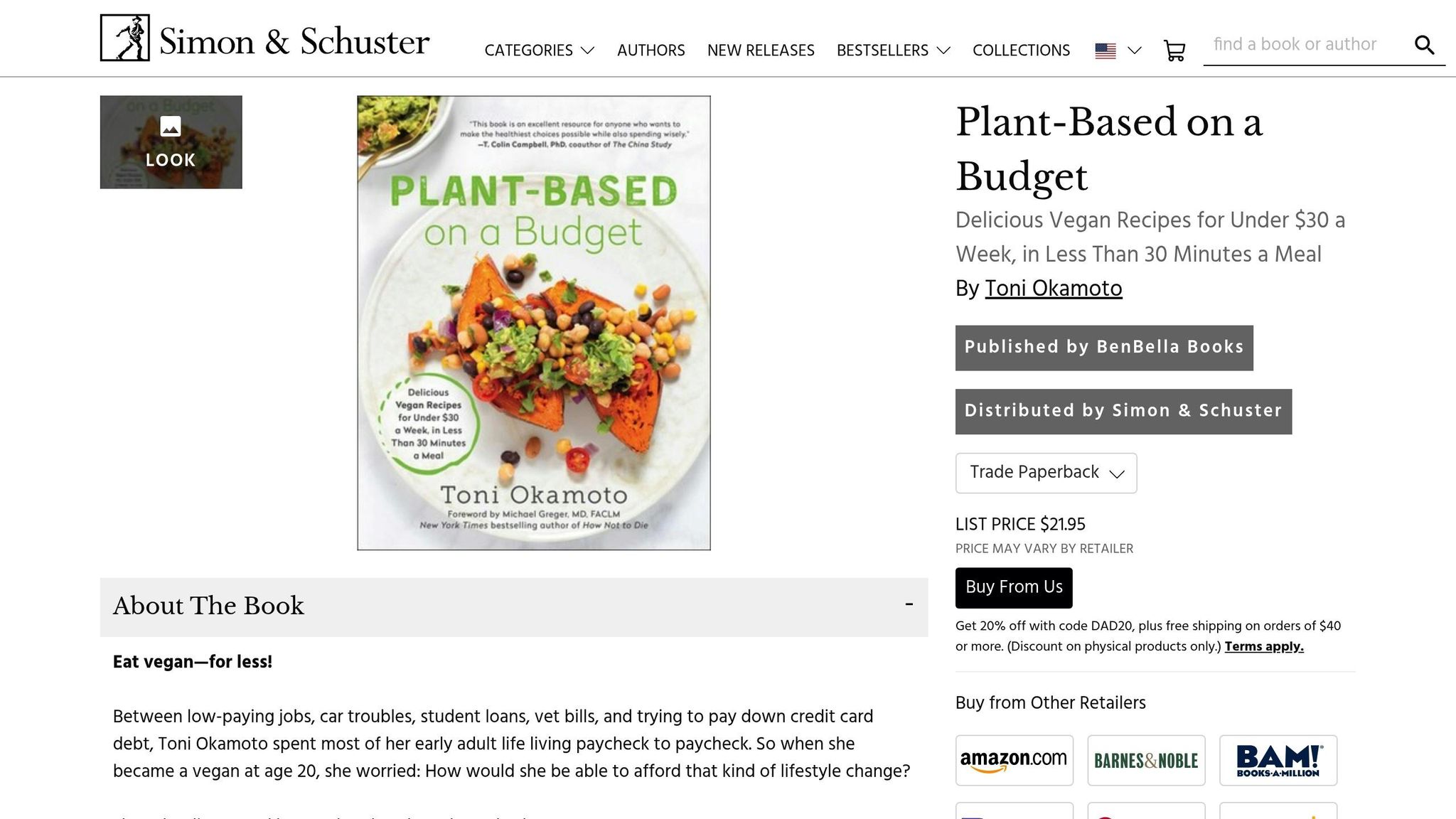
As Toni Okamoto, author of Plant Based on a Budget, advises: "When you go to the section where those products belong, you’ll often find that there are cheaper options". This means looking beyond the specialty vegan aisle to find budget-friendly staples in their usual spots.
These tools and strategies make saving money easier and pave the way for even greater savings, as we’ll see in the upcoming cost comparison table.
Supporting Sustainability
Shopping smart doesn’t just save money – it also promotes sustainability. Discount retailers like Grocery Outlet operate similarly to outlets like Marshall’s, selling overproduced items or products with minor packaging flaws. This reduces food waste while offering steep discounts.
Choosing seasonal produce and shopping sales aligns with natural growing cycles, reducing the environmental impact of out-of-season imports. Sharon Palmer, RDN and author of Plant-Powered for Life, shares: "I like to go to farmers markets to see what is seasonal – often you can find good deals on produce there".
Buying in bulk is another eco-friendly strategy. It minimizes packaging waste and lowers costs. Robin D. Everson, executive director of the North Texas Community Health Collaborative, explains: "You’re able to purchase as much or as little as you like without paying for fancy and unnecessary packaging that advertises a particular brand".
Finally, the ever-changing inventory at discount retailers encourages flexibility in meal planning. This reduces food waste by inspiring you to work with what’s available rather than sticking rigidly to a set menu.
8. Turn Leftovers into New Meals
Turn yesterday’s dinner into today’s fresh creation. Just like meal planning or batch cooking, reimagining leftovers is a smart way to stretch ingredients further while keeping your meals exciting and diverse.
Saving Money
Repurposing leftovers can have a big impact on your wallet. Did you know the average U.S. family loses about $1,500 annually due to food waste and spoilage?. By giving leftovers a second life, you skip the need to buy extra ingredients for new meals. For example, roasted vegetables can become the base of a hearty grain bowl, or last night’s soup can transform into a flavorful pasta sauce. It’s like getting two meals for the price of one.
"Leftovers get a bad rep. They save time, money, cleanup, and most importantly, food waste." – Sun & Swell Foods
Each time you repurpose leftovers, you’re not just saving food – you’re saving cash. And it doesn’t take much effort to make this habit part of your routine.
Simple and Practical
Making new meals from leftovers is easier than you might think. Start by cooking larger portions intentionally, then store the extras in labeled, airtight containers to keep them fresh.
Here are a few quick ideas:
- Freeze leftover chopped onions for soups, salsas, or chili.
- Pour extra broth into ice cube trays for sautéing vegetables or adding flavor to dishes.
- Use canned tomato leftovers to whip up salsa or tomato soup in no time.
Roasted veggies are especially versatile – they’re delicious cold or reheated, and ingredients like sweet potatoes or carrots often taste even better the next day. For heartier options, slice plant-based roasts thinly for sandwiches with cranberry sauce and stuffing. Or shred the roast, season it with cumin, smoked paprika, and chili powder, and serve it in tacos with avocado and salsa.
Helping the Planet
Repurposing leftovers isn’t just good for your budget – it’s good for the environment. Globally, about one-third of all food produced is wasted. In the U.S., a third of food goes uneaten. When food rots in landfills, it releases methane, a greenhouse gas that’s more potent than carbon dioxide. In fact, food waste is responsible for 58% of methane emissions from landfills, making them the third-largest source of human-related methane emissions in the country.
By reusing leftovers, you’re also saving the resources – like water, land, and energy – that went into producing that food. Every meal you repurpose reduces the demand for new ingredients, helping to conserve these valuable resources.
"Preventing food from going to waste is one of the easiest and most powerful actions you can take to save money and lower your environmental footprint by reducing greenhouse gas emissions and conserving natural resources." – US EPA
With a little creativity, leftovers can become something new and exciting, offering surprising flavors and endless possibilities.
9. Grow Your Own Herbs and Sprouts
Taking your smart shopping habits a step further, starting a small herb and sprout garden can be an excellent way to cut down on your plant-based food expenses. With minimal effort and a small initial investment, you can enjoy fresh, nutritious ingredients while significantly lowering your grocery bills.
Savings That Add Up
Let’s talk numbers. A $4 basil plant can provide about ½ cup of basil weekly for 4–5 months. That’s roughly $253.44 worth of basil compared to spending $15.84 on four ounces of organic basil at Walmart.
Perennial herbs like rosemary take the savings even further. A single $4 rosemary plant can supply fresh rosemary for years, whereas buying just one ounce at the store costs about the same. Similarly, growing cilantro or parsley from a $2–$3 seed packet can save you around $50 annually if you usually buy these herbs every week.
Sprouts are another money-saver. Growing your own costs about $2 for 40–50 grams, while store-bought sprouts typically cost $5 or more for the same amount. Organic seeds for sprouting are generally 2–3 times cheaper than buying pre-grown sprouts at the store.
Easy to Start, Easy to Maintain
You don’t need a green thumb to grow your own herbs and sprouts. Getting started is straightforward and affordable. Herb plants cost around $4 each, and seed packets are usually $2–$4. For sprouting, you’ll need a tray, seeds, and a growing medium – plus an optional light setup – for about $35 total.
"Herbs are some of the easiest plants to grow. Their needs are few, which means there’s not much tending required of you." – Nicole Burke
Chives are a great choice for beginners. As Nicole Johnsey Burke explains, "the easiest, most forgiving herb to grow, chives can flourish in almost any soil no matter if you under- or overwater". Basil is another beginner-friendly option and a good starting point for learning how to grow other herbs like rosemary, thyme, sage, and oregano. Just be mindful with mint – it’s best grown in a container to keep it from taking over your garden.
Sprouting is equally simple. All it takes is soaking seeds, rinsing them regularly, and ensuring proper ventilation. Most sprouts are ready to eat in just a few days:
| Sprout Type | Soak Time | Days to Harvest |
|---|---|---|
| Lentils | 8–12 hours | 2–3 days |
| Quinoa | 2–4 hours | 1–2 days |
| Mung Beans | 8–12 hours | 3–4 days |
| Chickpeas | Overnight | 2–4 days |
| Alfalfa | Overnight | 5–7 days |
A Greener Way to Eat
Growing your own herbs and sprouts is not just good for your wallet – it’s also better for the environment. You’ll cut down on plastic packaging from store-bought herbs and reduce the carbon emissions associated with transporting them long distances. Plus, home gardening gives you full control over what goes into your food, letting you avoid harmful pesticides and stick to organic growing methods. And since the average American family wastes about $1,600 worth of food annually – including herbs that spoil before use – harvesting only what you need helps eliminate waste.
Packed with Nutrition
Home-grown herbs and sprouts aren’t just fresher – they’re also more nutritious. Fresh herbs have a brighter flavor compared to dried ones, and those grown at home are often tastier than store-bought options that may have been harvested days earlier.
Sprouts, in particular, are nutrient-dense. Within their first week of growth, they can contain nearly 20 times more nutrients than their mature counterparts. Some studies even suggest sprouts pack up to 18 times the nutrients of fully grown vegetables.
Whether you’re cultivating herbs on your windowsill or sprouting seeds in a small container, you’re making a smart investment in your health and your budget. This simple step not only slashes grocery costs but also adds fresh, flavorful ingredients to your meals, making it a win-win for your plant-based lifestyle.
10. Skip Expensive Processed Vegan Products
If you’re aiming to stick to a budget-friendly plant-based diet, steer clear of pricey processed vegan products. Items like vegan cheeses, meat substitutes, and superfood powders may look appealing but can quickly eat into your budget. Pre-packaged vegan meals, frozen plant-based options, and snack bars often cost more and deliver less nutrition than homemade alternatives. The secret to saving money? Focus on whole, unprocessed foods.
Cost-effectiveness
Processed vegan products can be surprisingly expensive. Studies show that ultraprocessed foods cost over 2.5 times more per kilocalorie than whole foods. Popular vegan substitutes like tofurkey, vegan cheese, and plant-based butters are generally pricier than fresh, whole ingredients.
Interestingly, plant-based diets are often linked to lower food expenses compared to omnivorous diets. However, this cost advantage disappears when your shopping cart is filled with expensive processed alternatives. In high-income countries, a vegan diet can cut food costs by up to one-third – but only if you avoid those pricier items.
Ease of implementation
Switching from processed options to whole foods is easier than you might think. For instance, you can replace vegan butter with vegetable oil, use beans as a meat substitute, or whip up a homemade cheese sauce instead of buying a pre-made one. Even plant-based milk is simple to make at home – try blending almonds with water for fresh almond milk. Want vegan mayo? Blend silken tofu with vinegar, lemon juice, and Dijon mustard for a quick and affordable alternative. These swaps require little effort and can lead to big savings.
Nutritional value
Whole foods not only save money but also pack a nutritional punch. Compared to their processed counterparts, whole foods are nutrient-dense, offering plenty of fiber, vitamins, and antioxidants while being free of unnecessary additives. On the other hand, processed vegan products often contain high levels of saturated fats, salt, and preservatives.
To put it simply, whole foods support better health. They’re minimally processed, rich in nutrients, and promote digestive health, while processed options can include added sugars, unhealthy fats, and artificial ingredients that may increase health risks.
| Feature | Whole, Unprocessed Plant-Based Foods | Processed Vegan Products |
|---|---|---|
| Cost | Lower | Higher due to processing and specialty ingredients |
| Nutritional Value | High in fiber, vitamins, and antioxidants | Often lower in nutrients, higher in sugars, fats, and sodium |
| Additives | Minimal or none | Often includes artificial flavors, colors, and preservatives |
| Health Benefits | Supports heart health, reduces risk of chronic diseases | May contribute to obesity and other health concerns due to processing |
Sustainability
Choosing whole, plant-based foods isn’t just good for your wallet and health – it’s better for the environment too. Even the least harmful red meats generate more greenhouse gas emissions than any plant-based food for the same protein intake.
Dr. Marco Springmann, a researcher with the Oxford Martin Programme on the Future of Food, explains it best:
"When scientists like me advocate for healthy and environmentally-friendly eating, it’s often said we’re sitting in our ivory towers promoting something financially out of reach for most people. This study shows it’s quite the opposite. These diets could be better for your bank balance as well as for your health and…the planet."
Stick to whole foods like grains, legumes, fruits, and vegetables. Cooking from scratch lets you save money while giving you full control over your ingredients. This approach ensures you get the most nutrition for every dollar spent, making it a win-win for both your budget and your health.
Cost Comparison Table
Switching to plant-based staples isn’t just good for your health – it can also save you a significant amount on groceries. Research from the Physicians Committee for Responsible Medicine found that adopting a vegan diet can reduce grocery bills by 16%, translating to over $500 in annual savings for individuals. For families, these savings grow even more substantial.
Here’s a breakdown of how plant-based alternatives stack up against traditional options in terms of cost:
| Food Category | Traditional Option | Cost per Pound | Plant-Based Alternative | Cost per Pound | Annual Savings* |
|---|---|---|---|---|---|
| Protein Sources | Ground Beef | $4.00–$20.00 | Dried Beans | $1.50 | $520–$2,600 |
| Pork | $4.00–$7.00 | Canned Beans | $1.10 (15 oz) | $390–$780 | |
| Chicken | $1.50–$5.00 | Tofu | $2.50 | $130–$520 | |
| Processed Alternatives | N/A | N/A | Impossible Burger | $9.00 | –$650** |
| Beyond Meat Sausages | $11.00 | –$780** | |||
| Quorn Chicken Nuggets | $8.50 | –$520** |
*Calculations are based on an average family consuming 2 pounds of protein weekly.
**Negative savings indicate that some processed plant-based options are more expensive than traditional whole food options.
These insights highlight how thoughtful shopping and meal planning can make a plant-based diet not just healthier but also more affordable. For example, buying dry beans instead of canned ones can stretch your dollar further, and seasonal produce often costs 20–40% less than out-of-season options. Additionally, batch cooking and planning meals around peak harvest times can make homemade dishes far cheaper than pre-packaged alternatives.
Dr. Hana Kahleova, Director of Clinical Research at the Physicians Committee for Responsible Medicine, summed it up well:
"We knew that a vegan diet significantly reduces your risk of conditions like heart disease, diabetes, and obesity – and now we have proof that opting for beans instead of beef will also lead to significant savings on your grocery bill."
Research from Oxford adds to this, showing that vegan diets can cut grocery costs by up to one-third, while flexitarian diets could reduce expenses by 14%. People following a Standard American Diet might save over $650 annually by transitioning to vegan staples, and those on a Mediterranean diet could save even more – up to $870 a year. With U.S. meat eaters spending roughly $1,000 annually on meat, adopting plant-based staples could save households anywhere from $520 to $2,600 per year. It’s a win-win for your wallet and your well-being.
Conclusion
By using the ten tips outlined earlier, you can see real savings on your grocery bills. For instance, meal planning can slash grocery costs by up to 70%, while opting for generic brands instead of name brands can save as much as 30%. Small changes, like choosing dry beans over canned ones, could save a family of four nearly $80 a year. Buying staples in bulk? That alone can reduce monthly food expenses by up to 20%.
Key practices such as meal planning, bulk buying, and picking seasonal produce can make a big difference. Even cutting back on meat just one day a week could save you $400 annually. When you combine strategies like meal planning, shopping seasonally, buying in bulk, and cooking at home, you not only save money but also enjoy healthier meals.
These methods work together to create a budget-friendly lifestyle that benefits both your wallet and your health.
Pro tip: Start small. Try one or two strategies first, like planning meals around weekly sales or visiting local farmers’ markets. Once you’ve mastered those, gradually incorporate more.
For more tips on living well without breaking the bank, check out Inspiretopics. You’ll find plenty of resources to help you save money and improve your well-being.
FAQs
What are some practical ways to plan meals on a plant-based diet to save money and reduce food waste?
Planning meals on a plant-based diet not only helps you stick to your budget but also reduces food waste. A smart way to start is by putting together a weekly meal plan that makes use of ingredients you already have on hand. Focus on versatile staples like beans, grains, and vegetables. For instance, a bag of spinach can go a long way – it works in salads, adds a boost to smoothies, and can be tossed into stir-fries.
Buying pantry essentials like rice, lentils, and nuts in bulk can stretch your dollar further while also cutting down on packaging waste. Another tip? Build your meals around seasonal produce. It’s often less expensive, tastes better, and is fresher. And don’t forget to give leftovers a second life – roasted veggies can morph into a hearty soup, a topping for grain bowls, or even a filling for wraps. These small tweaks can go a long way in making plant-based eating both affordable and sustainable.
What are some affordable and nutritious plant-based protein options to replace meat?
There are plenty of affordable, protein-rich plant-based alternatives to meat that are both tasty and nutritious. Here are some popular choices:
- Lentils: With about 18 grams of protein per cooked cup, lentils are a versatile option. They work wonderfully in soups, stews, or tossed into salads.
- Chickpeas: These budget-friendly legumes pack around 15 grams of protein per cooked cup. They’re great in curries, roasted for snacks, or blended into creamy hummus.
- Tofu and Tempeh: Both of these soy-based staples are protein powerhouses. Tofu offers about 20 grams of protein per cup, while tempeh boasts an impressive 31 grams per cup. Perfect for stir-fries, sandwiches, or even grilling.
- Beans: Whether it’s black beans, kidney beans, or pinto beans, a cooked cup delivers roughly 15 grams of protein. They’re ideal for chilis, burritos, or hearty salads.
- Quinoa: This grain is a complete protein, providing about 8 grams per cooked cup. It’s an excellent base for bowls or as a side dish.
These options are not only packed with nutrients but are also easy to add to your meals without breaking the bank. Buying in bulk and using seasonal ingredients can stretch your dollar even further!
What’s the easiest way to grow herbs and sprouts at home, and why should I try it?
Growing your own herbs and sprouts at home is an easy, budget-friendly way to bring fresh, nutrient-packed ingredients into your plant-based meals. For herbs, all you need is a sunny spot – whether indoors or out – and a few beginner-friendly options like basil, parsley, or chives. You can start with seeds or small starter plants, planting them in well-draining soil. These herbs are low-maintenance, needing just occasional watering and a bit of light fertilizer. Plus, they not only add flavor but can also support digestion and strengthen your immune system.
Sprouts are even easier! All it takes is a jar or sprouting tray. Soak the seeds overnight, rinse them daily, and keep them moist. In just 5–7 days, you’ll have a fresh batch of sprouts loaded with vitamins and enzymes. Whether you have a small apartment or a spacious garden, growing herbs and sprouts is a simple way to save money while making your meals more flavorful and nutritious.
