
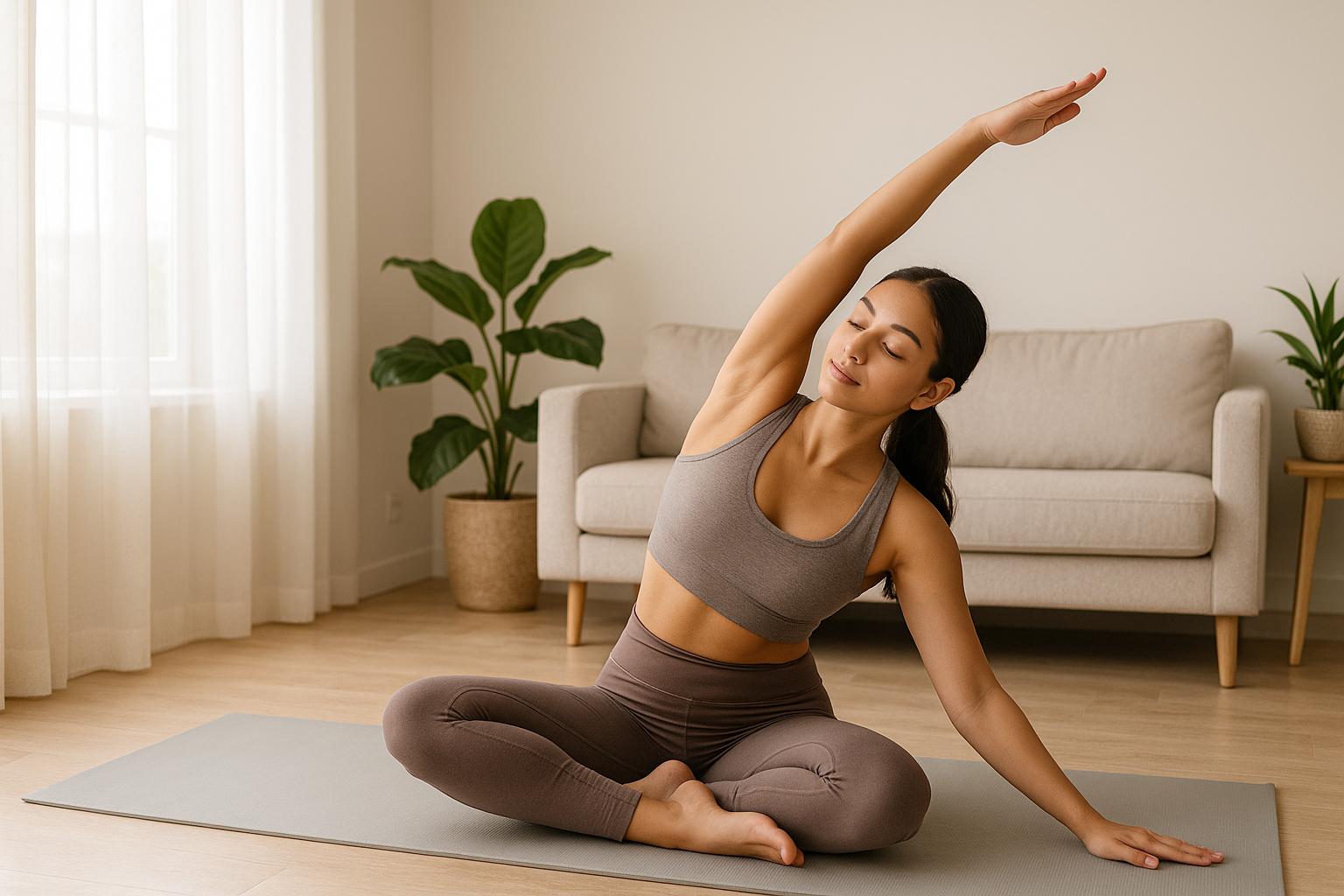
Feeling stressed? Here’s the good news: You don’t need hours at the gym or fancy equipment to feel better. Just 10 minutes a day of focused movement can reduce stress, improve your mood, and boost overall well-being. Here’s a quick rundown of the best stress-busting workouts:
- HIIT (High-Intensity Interval Training): Quick bursts of activity paired with rest for maximum efficiency and endorphin release.
- Yoga Flow: Gentle poses and deep breathing to calm the mind and improve flexibility.
- Bodyweight Circuits: Strength and cardio exercises using only your body weight – perfect for home or office.
- Dance Cardio: Fun, rhythmic movements to lift your mood and get your heart pumping.
- Pilates Core Workouts: Controlled movements and breathing to strengthen your core and relax your mind.
- Guided Breathing Exercises: Simple techniques like box breathing to calm your nervous system.
- Tai Chi & Qigong: Flowing movements combined with mindful breathing for relaxation and balance.
- Foam Rolling: Relieve muscle tension and reduce cortisol with self-myofascial release.
- Desk Stretches: Quick stretches to combat the effects of sitting and improve focus.
- Progressive Muscle Relaxation (PMR): Tense and release muscle groups to ease stress and improve sleep.
Why it works: Exercise lowers stress hormones like cortisol and releases endorphins, the “feel-good” chemicals in your brain. Even 5–10 minutes of movement can make a noticeable difference in your day.
Ready to start? Pick one routine, set aside 10 minutes, and see how small steps can lead to big improvements in managing stress.
10 Minute Stress Relief Exercises – Pilates Workout for Stress and Anxiety
1. High-Intensity Interval Training (HIIT)
High-Intensity Interval Training, or HIIT, is a workout style that alternates quick bursts of intense activity with short recovery periods. It’s a practical choice for busy Americans looking to relieve stress in a short amount of time. A typical session might involve 20 seconds of all-out effort followed by 10 seconds of rest, repeated in cycles. This method not only challenges your body but also offers mental benefits.
Time Efficiency (10 Minutes or Less)
One of the biggest advantages of HIIT is how quickly it delivers results. Research shows it burns 36.34% more calories than moderate, steady-paced workouts, all within a much shorter time frame. A complete session, including warm-up and cool-down, can take as little as 8–10 minutes.
"I recommend interval training for people who are busy but still want to get fit, because it gets great results in a fraction of the amount of time compared to more traditional cardio workouts. Interval training can be a powerful tool in a well-rounded fitness plan."
- Anne Friedlander, PhD, exercise physiologist and assistant director of Stanford Lifestyle Medicine
For example, a 10-minute HIIT session could include alternating 20 seconds of jumping jacks with 10 seconds of rest, followed by 20 seconds of burpees and another 10 seconds of rest, repeated for several rounds. The beauty of HIIT lies in its flexibility – you can pick exercises that suit your preferences and fitness level.
Stress-Relief Effectiveness
HIIT isn’t just good for your body; it’s also a powerful way to improve mental health. In fact, it’s 1.5 times more effective than cognitive behavioral therapy or medication for mental well-being. The intense bursts of activity trigger the release of endorphins, lifting your mood and helping you disconnect from daily stressors.
"In just minutes, you’ll feel lighter, happier, and more clear-minded. Plus, focusing on a more rigorous workout style can keep your mind off your to-do list, which relieves stress and anxiety."
Easy to Do Anywhere
One of the best things about HIIT is its adaptability. You don’t need a gym – or even equipment. Exercises like mountain climbers, high knees, and bodyweight squats can be done in a small space at home. At the office, you can try desk push-ups, chair dips, or even stair climbing. Start with movements you’re comfortable with and focus on proper form. If joint pain is a concern, stick to lower-impact options like modified jumping jacks or seated exercises. The key is alternating short, intense bursts with brief recovery periods, making it a versatile option for any environment.
Physical and Mental Health Benefits
HIIT offers more than just stress relief. It keeps your metabolism elevated for hours after you finish, helping you burn extra calories. Plus, it boosts cardiovascular health, improves oxygen consumption, and supports fat loss. Mentally, it sharpens focus, builds resilience, and enhances cognitive function. A 2014 study from Hong Kong revealed that runners who incorporated HIIT three to four times a week for six weeks saw better cardiovascular health and running performance than those who stuck to steady treadmill workouts. It even improves sleep quality, which plays a crucial role in managing stress and regulating mood.
To get started, try a few cycles twice a week and gradually increase the intensity as you build confidence. HIIT is a quick, effective way to manage stress while improving both physical and mental health. Up next, discover how Yoga Flow can bring mindfulness into your routine.
2. Yoga Flow for Mindfulness
Yoga flow combines gentle movements with deep, intentional breathing to help ease stress. Unlike the fast-paced intensity of HIIT, yoga focuses on mindful motion, offering a calming effect for both the body and mind. This ancient practice blends physical postures, meditation, and breathwork to encourage relaxation while also building strength and flexibility.
"Yoga encourages mental and physical relaxation, which helps reduce stress and anxiety. The physical postures promote flexibility, relieve tension, and alleviate pain."
- Emily Cronkleton, Writer
Time Efficiency (10 Minutes or Less)
Even a quick 10-minute yoga session can boost energy, improve flexibility, and sharpen focus, all while nurturing the connection between your mind and body. Starting your day with a short yoga routine can set a positive tone that lasts for hours. Yoga fits easily into your schedule, whether it’s morning, midday, or evening. For instance, a simple flow might include:
- Child’s Pose: Encourages grounding and relaxation
- Cat-Cow Stretches: Improves spinal mobility
- Corpse Pose: Ends the session with full-body relaxation
Hold each pose for 30 seconds to 2 minutes, adjusting the practice to suit your time constraints.
Stress-Relief Effectiveness
Research shows that even short yoga practices can significantly lower stress and elevate mood . For example, a 2018 study found that women practicing Hatha yoga three times a week over a month saw reductions in stress, depression, and anxiety. Similarly, a 2020 study revealed that participants who performed an 11-minute yoga nidra meditation for 30 days experienced less stress, better sleep, and enhanced overall well-being.
Yoga activates the parasympathetic nervous system, which is responsible for your body’s relaxation response. Deep, measured breaths calm the mind and help lower your heart rate.
"When we take longer, deeper breaths, as we are asked to in a typical yoga class, this slows down our heart rate and sends signals from the body to the brain, instructing it to relax."
- Anouska Shenn, Certified Yoga Instructor and Founder of The Office Yoga Company
Ease of Performing at Home or the Office
Yoga is incredibly adaptable, requiring minimal space and no special equipment. At home, a yoga mat or even a towel will do. In an office setting, many poses can be done in your work attire without needing to lie down.
| Yoga Pose | Key Stress-Relief Benefit |
|---|---|
| Child’s Pose (Balasana) | Quiets a busy mind and soothes the adrenals |
| Standing Forward Fold | Promotes calmness and balances the nervous system |
| Easy Pose with Forward Fold | Triggers relaxation through extended exhalation |
| Legs-Up-the-Wall Pose | Provides deep relaxation and calms the brain |
For office-friendly options, try seated spinal twists, gentle neck rolls, or desk-supported forward folds. The key is to synchronize your movements with deep, intentional breathing, allowing you to create a moment of calm no matter where you are.
Physical and Mental Health Benefits
Yoga doesn’t just relax you – it strengthens the brain areas responsible for memory, attention, and awareness. It also boosts levels of gamma-aminobutyric acid (GABA), a neurotransmitter linked to better mood and reduced anxiety. A 2020 study further highlighted that adult men practicing yoga stretches experienced lower cortisol levels and improved parasympathetic nerve activity, promoting a deeper state of relaxation.
"Yoga has to do with moving and breathing with intention and presence. Our breathing influences our emotional state and our emotional state influences breathing."
- Anouska Shenn, Certified Yoga Instructor and Founder of The Office Yoga Company
On top of these mental benefits, yoga improves flexibility, balance, posture, and overall strength. It also enhances body awareness, helping you recognize stress signals before they escalate. This mindful approach can break reactive stress cycles, leaving you feeling calm and in control.
Next, we’ll dive into how structured bodyweight circuits can further alleviate stress.
3. Bodyweight Circuit Training
Bodyweight circuit training is a practical and effective way to combine strength and cardio exercises without needing any equipment. By using your own body weight as resistance, this workout targets multiple muscle groups while keeping your heart rate up. Plus, it’s incredibly flexible – you can do it almost anywhere, making it perfect for busy lifestyles.
Time Efficiency (10 Minutes or Less)
Pressed for time? A 10-minute bodyweight circuit can deliver impressive results. For example, alternating 30 seconds of work with 15 seconds of rest can be just as effective as a 20-minute CrossFit AMRAP (5 pull-ups, 10 push-ups, 15 squats). Even a short five-minute session of aerobic activity has been shown to reduce anxiety. A simple routine could include exercises like squats, push-ups, mountain climbers, and burpees. The beauty lies in how quickly you can fit this into your day without sacrificing effectiveness.
Stress-Relief Effectiveness
Exercise isn’t just great for your body – it’s a proven stress reliever. Physical activity reduces stress hormones like adrenaline and cortisol while boosting endorphins, the feel-good chemicals in your brain. It also improves oxygen flow and circulation, which enhances mental clarity. The repetitive nature of these movements can even mimic the calming effects of meditation, helping you shift focus away from stress and toward your body.
"Exercise will activate the stress system, but then there’s this beautiful after period, the aftermath of exercise, where the stress system deactivates from not just exercise stress, but all stresses in our life. So we get this reprieve that can last hours after the exercise."
- Jennifer Heisz, Ph.D., associate professor in kinesiology at McMaster University
In fact, 62% of adults who use exercise or walking to manage stress report it as very or extremely effective. After working out, 53% feel better about themselves, 35% experience a mood boost, and 30% feel less stressed.
Ease of Performing at Home or the Office
Bodyweight circuits are as convenient as they come. No equipment, no gym membership, and no fancy setup required. Whether you’re in your living room, at the office, or traveling, you can perform these exercises with minimal space. At work, you can adjust moves to fit your attire by doing desk push-ups, chair squats, or standing calf raises. At home, you can ramp things up with high-energy exercises like burpees, jumping jacks, or high knees. Keeping it simple is key to reducing stress and staying consistent.
"Overthinking and overcomplicating exercises will add to more stress."
- Jacqueline Kasen, certified personal trainer and senior director of group fitness at Anatomy in Miami
As Kasen suggests, sticking to basic moves – like squats, push-ups, lunges, and planks – can maximize results while keeping things stress-free.
Physical and Mental Health Benefits
Bodyweight training isn’t just convenient – it’s incredibly effective. A 2022 study found that regular sessions improve muscular endurance, strength, cardiovascular health, and even mood, while also promoting weight loss. These exercises mimic everyday movements, reducing the risk of injury and boosting both physical confidence and mental clarity. By elevating your heart rate, they help sustain endorphin release, leading to longer-lasting mood improvements. To keep things challenging and engaging, try varying the tempo, intensity, or type of exercises you include.
Up next, learn how dance cardio can bring energy and fun to your stress-relief routine.
4. Dance Cardio Routines
Dance cardio is where fitness meets fun. By combining heart-pumping moves with rhythmic dance steps, this workout transforms exercise into an enjoyable and expressive way to relieve stress.
Quick and Energizing (10 Minutes or Less)
Got 10 minutes? That’s all you need for a dance cardio session that includes a warm-up, an upbeat dance routine, and a cool-down. Choose lively tracks to keep your energy high and your mood lifted. These short sessions can easily fit into your day – whether it’s a morning pick-me-up, a midday break, or an evening stress-buster.
A Natural Stress Reliever
Dance cardio isn’t just about moving your body – it’s about shifting your mindset. As you dance, your body releases endorphins that elevate your mood and help regulate cortisol levels. It’s like a moving meditation, pulling your focus away from daily worries and into the rhythm of the moment. In fact, studies show that 98% of dancers report an improvement in their mood after dancing.
Perfect for Home or Office
One of the best things about dance cardio? You can do it almost anywhere. No special equipment is required – just enough space to move freely. Online classes and YouTube videos make it easy to follow along right from your living room. For beginners, starting at home can feel more comfortable and boost confidence. Even in an office setting, you can incorporate small, simple moves like shoulder rolls or seated hip sways to sneak in some stress relief without disrupting your workday.
Benefits for Body and Mind
The perks of dance cardio go far beyond stress relief. Physically, it improves muscle tone, boosts circulation, strengthens your heart and lungs, and enhances flexibility, posture, and coordination. It may also reduce the risk of heart disease, osteoporosis, and other health issues. Mentally, dancing sharpens your mind, lifts your self-esteem, and can even help combat feelings of loneliness or anxiety. Studies suggest it may reduce depression, repetitive negative thoughts, and even lower the risk of dementia. Plus, the endorphins released during dancing can increase your pain threshold and lessen discomfort.
If you’re new to dance cardio, start with just one session a week and gradually add more as you get comfortable. Ready for the next step? Take a look at Pilates core workouts for another great way to manage stress.
5. Pilates Core Workouts
Pilates core workouts blend core-strengthening exercises with intentional breathing, offering a calming way to relieve stress. Unlike high-intensity workouts, Pilates emphasizes controlled movements and focused breathing, helping both your body and mind find balance.
Quick and Effective (10 Minutes or Less)
You don’t need hours to feel the benefits of Pilates. A 10-minute session can work wonders for your core while also helping you relax. These short workouts are designed to target your core muscles and even give your metabolism a boost. A typical routine might include moves like the Hundred, Single-leg stretch, Crisscross, Plank to pike, and Side kick. Perform each for 45 seconds, rest for 15 seconds, and repeat the circuit twice.
If stress relief is your main goal, try a sequence like Elbow to knee, Seated spinal twist, Scissors, Bridge, Child’s pose, Figure-4 stretch, and Supine spinal twist. Treat these 10 minutes as a non-negotiable part of your day, making it easier to stay consistent.
Why Pilates Works for Stress Relief
Pilates has a unique way of calming the mind and body. By emphasizing deep, controlled breathing, it activates the parasympathetic nervous system – the part of your body responsible for relaxation. This helps lower cortisol levels, the hormone linked to stress, and promotes a sense of calm.
"Pilates emphasizes the connection between the mind and body through focused movements and controlled breathing techniques. By paying attention to proper form and alignment during exercises, you develop a heightened awareness of your body, which can help you better manage stress and anxiety by staying present in the moment." – Elma Panagaki, RYT-500, certified yoga and Pilates instructor at Bay Club
Science backs this up. A 2015 study highlighted Pilates’ ability to ease anxiety by increasing blood and oxygen flow to the brain, relaxing muscles, and improving sleep quality. The growing interest in Pilates – floor Pilates searches have surged by 37% in the past year – shows how many people are turning to it as a tool for wellness.
Perfect for Home or Office
One of the best things about Pilates is how easy it is to do anywhere. You don’t need fancy equipment – just a yoga mat or even a soft carpeted surface. Moves like the Hundred, bridges, or spinal twists can be done in your living room, bedroom, or even a quiet corner of your office.
Focus on quality over quantity. Controlled, deliberate movements are key, and engaging your core during every exercise will provide the stability and support you need. Since Pilates doesn’t require much space, it’s perfect for small areas or professional environments.
Benefits for Both Body and Mind
Pilates is not just about building core strength – it also improves posture, focus, and overall well-being. Research suggests it can help lower BMI, body weight, and body fat in individuals dealing with obesity or overweight.
Beyond physical benefits, Pilates has been shown to reduce anxiety, fatigue, and depressive symptoms while improving cognitive function and regulating stress hormones . A 2019 study even found Pilates to be more effective than yoga or no exercise in enhancing functional movement and overall health, including mental and emotional well-being. It’s also been linked to better sleep, particularly in people under 40.
To maximize your Pilates practice, focus on your breathing. Inhale deeply through your nose and exhale fully through your mouth, letting your breath guide your movements. This simple technique helps you stay grounded and present. Next, we’ll explore how guided breathing exercises can further deepen your mind-body connection.
sbb-itb-593149b
6. Guided Breathing Exercises
Your breath is one of the most accessible tools for managing stress. Guided breathing exercises offer a simple yet effective way to calm both your mind and body in just a few minutes. Unlike other stress-relief methods, these exercises don’t require any special equipment or a dedicated space, making them perfect for busy lifestyles.
Quick and Convenient (10 Minutes or Less)
You don’t need to spend hours meditating to experience the benefits of controlled breathing. Research shows that practicing deep breathing for just 10 minutes twice a day over nine months can significantly reduce stress levels. Even a few focused minutes can make a noticeable difference in your mood.
Several techniques are particularly effective for quick stress relief:
- Box breathing: Inhale for 4 seconds, hold for 4 seconds, exhale for 4 seconds, and hold again for 4 seconds.
- 4-7-8 breathing: Inhale for 4 seconds, hold for 7 seconds, and exhale forcefully through your mouth for 8 seconds.
- Diaphragmatic breathing: Focus on slow, deep breaths through your nose, allowing your stomach to expand outward rather than your chest.
- Alternate nostril breathing: Close one nostril and alternate between inhaling and exhaling through each side.
How Breathing Reduces Stress
Controlled breathing activates your parasympathetic nervous system, which promotes relaxation, while calming the "fight or flight" response triggered by the sympathetic nervous system. This shift has measurable effects on your body.
"Taking slow, deep breaths can prompt several positive responses within your body." – American Heart Association
For example, a 2017 study found that participants who practiced diaphragmatic breathing for eight weeks experienced lower cortisol levels and improved focus compared to those who didn’t. These techniques can lower your heart rate, reduce stress hormones, and help balance oxygen and carbon dioxide levels. They also pair well with practices like Tai Chi and Qigong, which combine movement with mindful breathing.
Easy to Do Anywhere
Breathing exercises can be practiced almost anywhere, whether you’re at home, at work, or even on the go. At your desk, try inhaling for 4 counts and exhaling for 8 counts to reset your focus. At home, you might lie down and practice diaphragmatic breathing for deeper relaxation.
"Take a deep breath" might be some of the best advice around. It’s one of the easiest and most effective ways to relieve stress, and has been for thousands of years." – Headspace Mindfulness & Meditation Experts
Experimenting with different techniques will help you discover what works best for your routine and preferences.
Benefits for Body and Mind
Practicing controlled breathing regularly offers a range of physical and mental health benefits. Physically, it can lower blood pressure, slow your heart rate, reduce stress hormones, and even boost your immune system and energy levels. Mentally, it helps ease anxiety and depression, improves focus and creativity, and enhances sleep quality.
Breathing exercises send signals to your brain that you’re safe and calm, even in stressful moments. A recent study involving COVID-19 patients found that yoga-based breathing exercises significantly improved scores for depression, anxiety, stress, and fear compared to a control group. With anxiety disorders affecting over 30% of adults and 40% of adults reporting stress on any given day, these techniques offer a practical, effective way to manage mental health challenges.
Over time, regular practice builds resilience to stress. Even when you’re not feeling overwhelmed, consistent breathing exercises prepare your body and mind to handle future challenges more effectively. Practices like Tai Chi and Qigong offer additional ways to combine mindful breathing with gentle movement for even greater stress relief.
7. Tai Chi and Qigong Movements
Tai Chi and Qigong take the concept of controlled breathing a step further by incorporating smooth, flowing movements. These ancient Chinese practices blend mindful breathing with gentle motions, offering a calming yet energizing way to relax your mind and strengthen your body. They’re especially well-suited for those with packed schedules.
Quick and Effective (10 Minutes or Less)
You don’t need hours to experience the benefits of Tai Chi or Qigong. A simple 10-minute Qigong routine can help restore balance, boost energy, and bring a sense of calm to your day. Even just five to ten minutes of daily practice can make a noticeable difference in managing stress. These short sessions are easy to maintain and won’t leave you feeling drained.
Proven Stress Relief
Studies show that practicing Tai Chi regularly can significantly improve mental health by reducing stress, anxiety, and depression. In fact, its effects on anxiety are comparable to those of general exercise. Harvard Health Publishing describes its impact perfectly:
"Tai Chi is often described as ‘meditation in motion,’ but it might well be called ‘medication in motion.’"
By calming the sympathetic nervous system, Tai Chi and Qigong promote relaxation and can help lower blood pressure, ease depression, and reduce anxiety. EEG studies reveal that these practices enhance relaxation and focus, while the body responds with improved immune function and a boost in endorphins.
Easy to Practice Anywhere
One of the best things about Tai Chi and Qigong is how accessible they are. You don’t need any special equipment – just comfortable clothing and a bit of space, either indoors or outdoors. The basic movements are simple to learn and require minimal effort, making it easy to fit them into your daily routine, whether at home or even in the office.
Holistic Health Benefits
Beyond stress relief, these low-impact exercises offer a range of physical and mental health benefits. They can improve sleep quality, strengthen the immune system, and enhance overall mental clarity and well-being. As their popularity grows in the U.S., research continues to highlight their positive outcomes.
Ruth Taylor-Piliae, Ph.D., R.N., from the University of Arizona College of Nursing, emphasizes their versatility:
"Tai Chi is a flexible, adaptable form of exercise for anyone."
Qigong, in particular, helps harmonize the mind and body, making it a unique way to address both physical tension and mental stress. Start with a few simple movements and gradually work your way up to more advanced forms to build confidence, coordination, and effective stress management.
8. Foam Rolling and Mobility Drills
Foam rolling offers a practical way to ease stress and tension through targeted, self-guided movements. This technique, often referred to as self-myofascial release, works by addressing muscle tightness and trigger points, delivering both physical relief and a sense of calm. Beyond loosening stiff muscles, foam rolling can also help reduce stress hormone levels, making it a dual-purpose tool for body and mind.
The best part? It doesn’t take much time. Focus on just a few key areas – like your quads, hamstrings, calves, and upper back. For example, spend 30 seconds on each leg and about a minute on your upper back. Repeat the process three times for maximum effect. When you hit a particularly tender spot, pause and breathe deeply for a few seconds to help the muscle release tension properly.
Stress-Relief Effectiveness
Foam rolling isn’t just about physical benefits – it also has a calming effect on the mind. Studies suggest that myofascial release can lower cortisol levels, helping to reduce stress. This practice promotes relaxation, making it a great way to unwind after a long day and prepare for better sleep.
Maya Jocelyn, founder of Studio Maya, highlights the positive effects:
"Self-myofascial release increases blood flow to the muscles and gives a gentle stretch to the fascia, which can help you feel more open, free, and energized."
Easy to Do Anywhere
One of foam rolling’s biggest advantages is its convenience. All you need is a foam roller or a small massage ball, both of which are affordable and easy to store. Basic foam rollers range from $7.99 to $49.95, while a massage ball costs around $12.99. Their compact size means they can easily be tucked under a desk or into a drawer, making them ideal for home or office use.
Nicole Davis, an ACE-certified personal trainer, emphasizes its benefits for desk workers:
"Foam rolling is great for people who sit at a desk all day, have poor posture, joint issues, or bad form while exercising."
You can incorporate foam rolling into your routine at any time. Davis suggests using it as part of your warmup before workouts or afterward to reduce soreness. For those with sedentary lifestyles, focusing on areas like hip flexors and hamstrings can bring quick relief.
Benefits for Body and Mind
Foam rolling does more than just loosen muscles. It can increase blood flow by 75% and temporarily improve your range of motion by 10–15%. Start with light pressure, rolling tender spots for 10–30 seconds, then gradually extend to 30–60 seconds. It’s effective for reducing soreness, relieving inflammation, and improving joint mobility.
For the best results, aim to foam roll about three times a week. However, this can vary based on your needs – some may benefit from daily sessions, while others might find a few times a week sufficient. Be sure to stay hydrated afterward to aid recovery, and consider pairing foam rolling with stretching for even greater benefits.
The beauty of foam rolling lies in its simplicity and effectiveness. It’s a hands-on way to relax, recover, and feel more in control of your well-being.
Next, let’s look at other ways to improve flexibility and reduce stress.
9. Desk Stretching Routines
Sitting at a desk for hours on end can take a toll on your posture, muscles, and even your mental focus. The average office worker spends around 1,700 hours seated each year, which often leads to tight muscles, poor posture, and increased stress. Desk stretches provide a simple way to counteract these effects. They require no equipment and can be done right at your workstation, making them an easy addition to your daily routine.
Time-Efficient and Easy to Incorporate
Desk stretching doesn’t have to be time-consuming. In fact, you can complete an effective routine in just 5 to 10 minutes spread throughout your day. Breaking it into smaller sessions each hour is more effective than doing one long stretch session.
A great strategy is to set hourly reminders to move and rotate through a few quick stretches. For example:
- Spend 2 minutes on neck rolls.
- Take 3 minutes for desk squats.
- Do a 2-minute spinal twist.
Hold each stretch for 15–30 seconds, repeating 2–4 times, and take slow, deep breaths to enhance relaxation. These short bursts of movement help keep your body loose and your mind sharp without interrupting your workflow.
Reducing Stress and Muscle Tension
Desk stretches do more than just loosen tight muscles – they can significantly reduce stress. Studies show that workplace stretching programs can reduce pain by up to 72%. Stretching encourages the release of feel-good hormones while reducing stress hormones.
"Stretching and movement provide proper circulation, increase oxygen, and release tension in your muscles", says Kelsey Decker, personal trainer and Manager of Training for StretchLab.
Regular stretching breaks also improve focus and mood. Even light movement every 30–60 minutes can stabilize your emotions and reduce anxiety. Jessica Matthews, Assistant Professor of Kinesiology at Point Loma Nazarene University, highlights the connection between physical and mental well-being:
"Restriction in range of motion caused by tight, stiff muscles not only negatively affects how you move when exercising and when going about everyday activities, but it also negatively affects how you feel physically and mentally".
Convenient and Discreet
One of the best things about desk stretches is how easy they are to do, whether you’re at home or in the office. They’re quiet, don’t require special clothing, and can be done right at your workstation. Everyday office items like chairs, desks, and walls can even support your stretches.
Try the seated spinal twist: Sit at the edge of your chair with your feet flat on the floor. Place your right hand on the back of the chair and your left hand on your right thigh. Inhale to lengthen your spine, then exhale and gently twist your torso to the right, looking over your shoulder.
For upper body relief, the overhead reach is a great option. Raise one arm overhead, stretch to the opposite side, and hold for 10–30 seconds before switching sides. Another simple move is the shoulder shrug: Lift both shoulders toward your ears, then release. Repeat this 10 times for quick tension relief.
Long-Term Physical and Mental Benefits
Desk stretching doesn’t just offer immediate relief – it also supports long-term physical and mental health. Regular stretching boosts blood flow to muscles and joints, which can help fight fatigue and increase energy levels. It also improves posture, increases range of motion, and reduces muscle tension and pain.
To get the most out of your routine, focus on stretches that target common problem areas for desk workers. These include:
- Neck rotations for better cervical spine mobility.
- Wrist stretches to ease repetitive strain.
- Hip flexions to counteract prolonged sitting.
Stretch to the point of mild tightness – not pain – and maintain steady breathing throughout each movement. By paying attention to proper form and listening to your body, you can make each stretch more effective while avoiding injury.
Desk stretches are a quick and convenient way to refresh both your body and mind, all without stepping away from your workspace.
10. Progressive Muscle Relaxation
Progressive Muscle Relaxation (PMR) takes the idea of stress relief a step further by combining physical relaxation with mental calmness – all without needing any special tools or equipment. This technique involves systematically tensing and then relaxing different muscle groups, helping to release physical tension while easing mental stress. Unlike exercises aimed at building strength or endurance, PMR focuses on strengthening the connection between your mind and body, creating a deeply relaxing experience.
"Progressive relaxation is like a body scan that has a mental component and a physiological component. It involves using breathing and visualization to help you acknowledge and release the tension you hold in every area of your body."
– Matthew Kampert, DO, Sports Medicine Physician
Time-Saving Relaxation: 10 Minutes or Less
A full PMR session typically takes 10–20 minutes, but it’s easy to adapt for a busy schedule. Instead of working through every single muscle, you can focus on major groups like your lower body (toes, calves, thighs), upper body (hands, shoulders, arms), and head (jaw, neck, forehead). If you’re even more pressed for time, try targeting just a few key areas, such as your hands or facial muscles, for a quick stress relief session.
How PMR Helps Ease Stress
PMR isn’t just about feeling relaxed – it’s backed by research showing its effectiveness in reducing stress and improving mental health. For example, a 2019 study found that PMR significantly eased symptoms of depression, anxiety, and stress in unemployed individuals. Similarly, a 2016 study revealed that PMR was just as effective as acupuncture in reducing anxiety, tension, and even anger.
The technique works by shifting your body from the high-alert "fight-or-flight" mode into the calming "rest-and-digest" state. Beyond immediate stress relief, PMR also offers longer-term health benefits. A study published in the Journal of Headache Pain showed that daily PMR practice cut the number of migraine days per month in half, from six to three. Additionally, a 2023 study found that by the fourth week of PMR practice, participants experienced an average drop of 6 mmHg in systolic blood pressure and 4 mmHg in diastolic blood pressure.
Easy to Do Anywhere
"The beauty of PMR is that it’s self-guided, and you can do it just about anywhere."
– Matthew Kampert, DO, Sports Medicine Physician
While PMR works best when lying down, it’s flexible enough to fit into almost any setting. Whether you’re sitting at your desk, stuck in traffic, or preparing for a big event, you can still benefit. For instance, at the office, you can sit comfortably, close your eyes, and focus on relaxing specific muscle groups.
Benefits for Both Body and Mind
The advantages of regular PMR practice go beyond stress relief. Studies suggest it can help alleviate chronic pain, such as nonspecific neck or low back pain, leading to better physical function and quality of life.
PMR can also improve sleep. During the COVID-19 pandemic, a study found that practicing PMR for just 30 minutes a day over five days led to a 30% improvement in sleep quality and a 15% reduction in anxiety levels. Another study, published in Evidence-Based Complementary and Alternative Medicine, showed that individuals with pulmonary arterial hypertension who practiced daily PMR for 12 weeks reported nearly a 50% decrease in anxiety and depression compared to those who didn’t use the technique.
"When we’re relaxed, we are able to regain self-control. Our insight and judgment improve, so we’re able to make better decisions. We can pause and take time to respond to others in a kinder, more helpful way."
– Vicki Kamhi, Counselor at Saint Francis Medical Center College of Nursing
For the best results, sync your breathing with your movements – inhale as you tense each muscle group and exhale as you relax it. Pay extra attention to areas where you tend to hold stress, and over time, you’ll likely notice significant improvements in both your mental and physical well-being.
Conclusion
The quick workouts outlined above offer an effective and manageable way to ease stress. Forget lengthy gym sessions or overly complicated routines – just 10 minutes of movement each day can make a noticeable difference in how you manage stress and boost your overall well-being. Research backs this up: as little as five minutes of aerobic exercise can begin to reduce anxiety, and sticking with it consistently can lead to lasting benefits.
These workouts stand out for their flexibility. Whether you prefer high-energy intervals, calming yoga flows, or progressive muscle relaxation, each option brings its own set of advantages for both your body and mind. Physical activity naturally lowers stress hormones like adrenaline and cortisol while releasing endorphins, which are your body’s built-in mood enhancers. Plus, regular exercise improves self-esteem, sleep, and mood – all areas that stress often disrupts.
"Research shows that when it comes to using exercise to support our mental health, every step counts."
- Jennifer Heisz, Ph.D., Associate Professor in Kinesiology at McMaster University
The key to success lies in experimenting with different exercises to find what works best for you. Everyone responds differently – some might love the energy boost from dance cardio, while others find calm in tai chi or even a few stretches at their desk. The focus should always be on consistency, not perfection.
Start small with a 10-minute daily routine, and as it becomes a habit, you can gradually increase the duration. Even splitting workouts into smaller chunks – like three 10-minute sessions throughout the day – can be just as effective as a single 30-minute session. Long-term, these small efforts pay off with benefits like improved mood, sharper focus, and stronger mental resilience. For instance, just 20 to 30 minutes of cardio has been shown to reduce stress significantly, while 30 minutes of moderate exercise can lower cortisol levels by about 15%.
Your journey to better stress management can begin with just one 10-minute commitment. Pick one workout from this guide and try it for a week. Notice how you feel before, during, and after each session to discover what fits your lifestyle and helps you manage stress most effectively.
For more inspiration and resources on health and wellness, check out Inspiretopics. This platform offers a wide range of guides, from self-care tips to creative workout ideas, to help you stay on track with your stress-relief goals.
Stress relief doesn’t have to be complicated or time-consuming. With just 10 minutes a day, you can build resilience, lift your mood, and develop a healthier relationship with stress. There’s no better time to start – your daily investment in movement will benefit both your mind and body.
FAQs
What’s the best way to pick a 10-minute workout for stress relief?
Choosing a 10-minute workout for stress relief comes down to finding something you enjoy that helps you unwind. Activities like yoga, stretching, or even a quick walk work well because they combine gentle movement with mindfulness, helping you relax and ease tension. For instance, stepping outside for a few minutes to stretch and take deep breaths can help lower cortisol levels and leave you feeling more centered.
If you’re drawn to something more energetic, try short bursts of aerobic activity like jogging in place or dancing. These can trigger the release of endorphins, boosting your mood and reducing stress. The most important thing is choosing an activity you like and can easily fit into your schedule, making it a regular part of your routine.
What precautions should I take to stay safe during 10-minute stress-relief workouts?
To stay safe during quick 10-minute workouts, begin with a 5-minute warm-up to get your muscles and joints ready. This could include light cardio, like jogging in place, or dynamic stretches such as arm circles or leg swings to ease into the activity.
Throughout your workout, prioritize proper form to prevent strain or injury. Listen to your body – if you experience pain or discomfort, stop immediately. Steer clear of high-impact or rapid twisting movements unless you’re well-prepared for them. As you build strength, gradually increase the intensity to give your body time to adjust. Wrap up your session with a cool-down to help your muscles relax and recover. By keeping these steps in mind, you can enjoy the benefits of exercise while staying safe.
How can I fit 10-minute stress-relief workouts into my busy day?
Fitting a 10-minute workout into your busy day might be simpler than you think. With a bit of planning and some creativity, it’s entirely doable. Start by spotting those small windows of time – like your lunch break, the minutes before work, or even while waiting for dinner to finish cooking. Treat these workouts like any other important appointment by adding them to your daily schedule. This can help turn them into a regular habit.
You can also pair workouts with activities you’re already doing to maximize your time. For instance, sneak in some quick stretches during virtual meetings (as long as your camera is off!) or jump into a fast high-intensity interval training (HIIT) session right after you wake up. These short bursts of exercise not only fit seamlessly into your day but also help ease stress and lift your mood, making your day feel more productive and enjoyable.
