
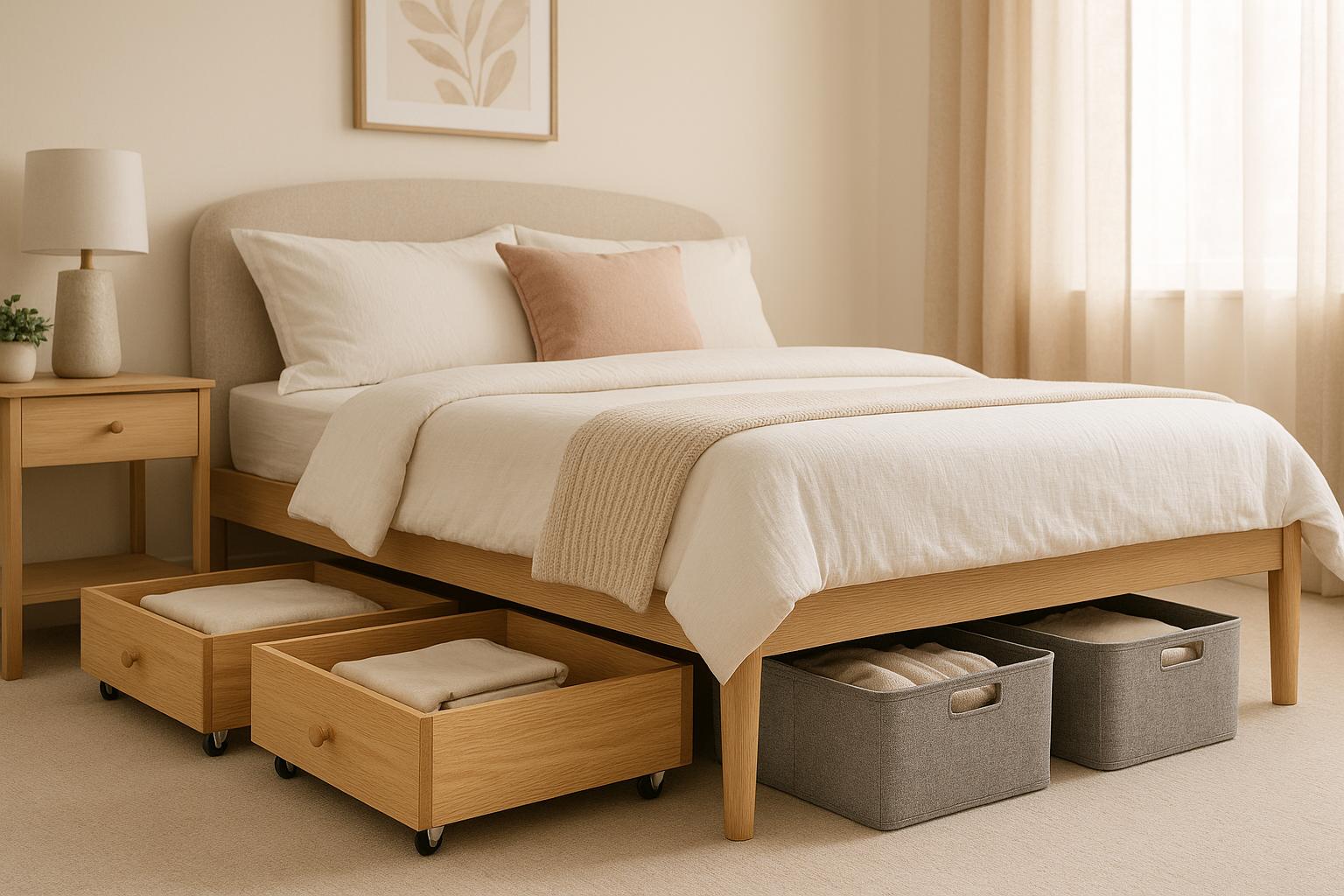
Looking to maximize storage in a small bedroom? The often-overlooked space under your bed can be a game-changer. From rolling drawers to vacuum-sealed bags, there are plenty of DIY solutions to help you declutter and organize without breaking the bank. Here’s a quick rundown of 10 under-bed storage ideas:
- Rolling Drawers: Easy to access and perfect for clothes, toys, or shoes.
- Upcycled Dresser Drawers: Repurpose old furniture for a budget-friendly solution.
- Shoe Organizer: Keep your footwear tidy and save closet space.
- Fabric Bins: Lightweight and flexible for storing soft items like bedding.
- Storage Carts: Mobile and great for craft supplies or toys.
- Toy Carts: Perfect for kids’ rooms to manage toys like Legos.
- Wrapping Supplies Storage: Organize gift wrap and ribbons in one spot.
- Vacuum-Sealed Bags: Shrink bulky items like comforters or coats.
- Sliding Trays: Easy access to items stored deep under the bed.
- Luggage Storage: Use suitcases to store seasonal clothes or extra linens.
Each option caters to specific needs, such as frequent access, seasonal storage, or space constraints. Whether you’re reusing old items or starting a DIY project, these ideas can help you make the most of your bedroom space. Simple tools and materials are often all you need to get started. Want to keep your room tidy and functional? These under-bed storage hacks are worth trying.
How To Make Under Bed Storage Drawers – On A Budget
1. Rolling Under-Bed Storage Drawers
Rolling under-bed storage drawers are a practical way to make the most of limited bedroom space. These wheeled containers slide effortlessly in and out, giving you quick and easy access to whatever you’ve tucked away beneath your bed.
As AverageJoesJoinery notes:
"I went with really simple construction for these under bed drawers with wheels. I hope it inspires you to make some for yourself."
These drawers are incredibly versatile, offering storage for everything from clothes to toys. They’re especially handy in kids’ rooms, where the fun of rolling crates can encourage children to tidy up on their own.
Space Efficiency
Rolling drawers are a clever way to reclaim the often-overlooked space under your bed. By utilizing this area, you free up floor space that would otherwise be consumed by extra furniture or clutter.
To keep things organized, consider using dividers or smaller containers inside the drawers. Labeling these containers makes it easier to find exactly what you need without rummaging through everything.
Easy to Build or Set Up
Creating your own rolling under-bed drawers is surprisingly simple, even if you’re new to DIY projects. All you need are some basic materials like 1/2-inch MDF or plywood, wheels, screws, wood glue, and 1/4-inch dowels. Essential tools include a drill, saw, and sandpaper.
The process is straightforward: measure the space under your bed, cut the wood to size, assemble the box using glue and screws, and attach the wheels. If you’re worried about cutting the wood yourself, many home improvement stores offer cutting services.
A quick tip: Measure your bed’s height before starting to ensure the drawers fit perfectly. Pre-drill holes to avoid splitting the wood, and don’t hesitate to use a table saw or cutting service for precise results.
Budget-Friendly Option
Building your own rolling drawers is an economical alternative to buying pre-made ones. Materials like plywood and caster wheels are affordable, and you can save even more by repurposing old dresser drawers – just add wheels to them!
Mindi Carwin shares her experience:
"Too bad I only found four drawers, I could use some more of these. Of course it would be easy to make from scratch too, but repurposing is so much better!"
For those on a tight budget, inexpensive furniture dollies from Harbor Freight can be used as wheels. Scrap plywood and old fence boards are other cost-saving options that can be turned into functional storage.
Durable and Functional
When built with care, rolling drawers can last for years. Use high-quality materials, reinforce joints with dowels, glue, and screws, and finish the drawers with durable paint or sealant to protect them over time.
These drawers don’t just store your items – they help keep your bedroom neat and organized. By having a designated spot for everything, you can avoid clutter piling up on floors and furniture. Regularly revisiting and reorganizing your storage system will ensure it stays effective.
For added durability, consider using eggshell wood paint for a sturdy finish and line the drawer bottoms with shelf liner to protect both the wood and your belongings.
2. Upcycled Dresser Drawers
Upcycled dresser drawers are a clever way to transform unused furniture into practical storage, especially for small spaces. By repurposing old drawers, you can create custom under-bed storage that reduces clutter and makes the most of your space.
Cost-Effectiveness
If you’re on a budget, upcycling dresser drawers is a fantastic option. Take Mindi Carwin, for example – she turned four old drawers into under-bed storage in March 2025. Using scrap plywood, spray paint, and $1 casters from Harbor Freight, she created a functional and affordable solution.
The best part? Finding old drawers is often free. Check online marketplaces, garage sales, or ask friends who are renovating. When buying supplies, keep an eye out for deals – casters can cost as little as $1 each, making the total hardware cost for most projects under $5.
Ease of Construction or Setup
Turning dresser drawers into under-bed storage is a straightforward project. All you need are a few basic tools and some creativity. Start by cleaning the drawers and adding a bottom panel if necessary. Then, attach swivel casters to the bottom corners to make the drawers rollable.
Measure the height under your bed to ensure the drawers will fit. For a polished look, you can attach a front panel made from reclaimed wood or plywood. This not only enhances the appearance but also provides a surface for decorative touches. A Loverly Life blog demonstrated this approach in February, using reclaimed drawers from an antique dresser to create rollable shoe storage.
Durability and Functionality
These upcycled drawers are both sturdy and versatile. Made from solid wood, they’re perfect for storing everything from seasonal clothing and bedding to shoes and toys.
"One of the most forgotten storage spaces in our homes is under our beds." – A Loverly Life
To protect the contents, you can line the interior with fabric. Adding dividers helps keep items organized and easy to find. These drawers can also serve multiple purposes, like holding craft supplies, holiday decorations, or even acting as toy boxes that kids can access and manage on their own.
Space Efficiency
Unlike many store-bought storage containers, dresser drawers utilize the full depth and width of the space under your bed. Their rectangular shape fits neatly under most bed sizes, from kids’ twin beds to king-size frames in master bedrooms.
For added organization, label each drawer to identify its contents at a glance. This way, you won’t have to pull out multiple drawers when searching for something, keeping your space tidy and saving time.
3. Under-Bed Shoe Organizer
Transform the often-overlooked space beneath your bed into a practical shoe storage solution. A DIY under-bed shoe organizer not only keeps your footwear neatly arranged but also frees up precious closet space, making your room feel more organized. This project is especially handy in smaller spaces where every square inch counts.
Space Efficiency
Under-bed shoe organizers are a smart way to utilize space that would otherwise go unused. By storing your shoes horizontally, you can reclaim closet space for other essentials like clothes or accessories. Different designs cater to various needs – rolling organizers let you access all your shoes effortlessly, while stackable plastic bins make the most of the limited height under your bed.
Before you start, measure the clearance under your bed and assess your shoe collection. Most beds provide 6–10 inches of height, which works well for flat shoes, sneakers, and low-profile boots.
Ease of Construction or Setup
Building your own under-bed shoe organizer is a straightforward project requiring basic tools and materials. You’ll need a circular saw, miter saw, cordless drill, and a Kreg pocket hole jig. The main materials include a half-sheet of 3/4-inch plywood, along with 1×6 and 1×4 boards. Adding a plexiglass lid ensures visibility, while adjustable dividers let you customize the layout. To avoid cracking the plexiglass, drill slowly and use masking tape over the cut lines.
"Build a simple under-bed shoe storage with a plexiglass cover so you can see inside and moveable dividers to keep the shoes organized." – Anika’s DIY Life
The process involves cutting the wood to size, creating pocket holes for assembly, and attaching the plexiglass top with hinges for easy access. Stick to the carpenter’s golden rule: measure twice, cut once.
Cost-Effectiveness
This DIY project is both budget-friendly and adaptable. By using durable materials and a modular design, you can ensure the organizer meets your needs now and in the future without breaking the bank.
Durability and Functionality
Built with sturdy 3/4-inch plywood and solid joinery, this organizer is designed to handle daily use. Adding casters makes it easy to roll out when needed while protecting your floors from scratches. For added convenience, consider using clear plastic boxes for shoes you don’t wear often and breathable fabric organizers for everyday pairs like sneakers, sandals, or flip-flops. Boots can be stored in ventilated plastic boxes with boot shaper inserts to maintain their form.
To extend the life of your shoes and the organizer, always clean your footwear before storing them. This helps prevent dust and debris from accumulating.
4. Fabric Storage Bins with Handles
Fabric storage bins with handles bring a stylish and practical solution to under-bed storage. Unlike rigid plastic containers, these bins are lightweight, flexible, and perfect for storing items like clothing, bedding, or anything that benefits from breathable storage. They make use of every inch under your bed, even in tight or awkward spaces.
Space Efficiency
Thanks to their flexible design, fabric bins can fold flat when not in use, making them easy to store during off-seasons. Many options include thoughtful features like clear lids or label pockets, allowing for quick and easy identification of the contents. This design not only saves space but also keeps soft items in great condition.
Professional organizer Alex Rush, founder of Spruce NYC, emphasizes their practicality:
"If you live in a small space, you sometimes will need to utilize that extra space under your bed for things you’d typically keep in a chest of drawers or wardrobe – this is the case with many of my clients who are dwellers of teeny New York City apartments."
Ease of Construction or Setup
If you’re on a budget or enjoy hands-on projects, DIY fabric storage bins are a great option. With just a few materials and basic sewing skills, you can create custom bins that fit perfectly under your bed. For example, you can upcycle cardboard boxes, resize them to your needs, and wrap them in sturdy upholstery fabric. The process involves measuring your space, cutting the fabric to size, and securing it with fabric glue or simple stitching. It’s a straightforward project that delivers big savings.
Cost-Effectiveness
Whether you buy ready-made bins or create your own, fabric storage bins are an affordable storage solution. Here’s a quick look at some popular options:
| Product | Price | Features |
|---|---|---|
| Rebrilliant Fabric Underbed Storage | $6.00 | Basic fabric construction |
| Wayfair Basics Under-the-Bed Storage Bag | $11.99 | Affordable with sale pricing |
| Brightroom Underbed Fabric Bin (Target) | $15.00 | Available at major retailers |
| Capsule Under-Bed Fabric Organizer (2-Pack) | $44.00 | Premium features at a sale price |
For DIY enthusiasts, the cost of materials is typically under $20, making it an even cheaper alternative to purchasing multiple bins.
Durability and Functionality
Fabric bins are not only affordable but also durable. High-quality fabrics, reinforced handles, and optional cardboard inserts ensure they can handle regular use while remaining easy to carry . Many designs are collapsible, saving space when not in use. However, if you need a more structured option for stacking, consider bins with reinforced frames.
As Alex Rush suggests:
"For higher beds where the under-bed storage is more visible, prioritize a clean and structured look. Sturdy bins, or even drawers, add a polished touch. And you can have fun with it! Choose bins that reflect your personal style and make you happy when you look at them."
5. Storage Carts with Wheels
Storage carts with wheels are a game-changer for under-bed storage. Unlike stationary bins that require awkward pulling and tugging, these carts glide effortlessly in and out, making it easy to access your items without straining your back or disrupting other belongings.
Organization expert Leslie Lehr highlights the benefits of this storage solution:
"One of my favorite places to store essentials is to use the space under the bed. Using this unused area for storage will not only clear the clutter, it will create a welcoming retreat for you to peacefully sleep."
Here’s what makes these carts an excellent choice for under-bed storage.
Space Efficiency
Rolling storage carts make the most of your under-bed area. The wheels allow you to pull the entire cart out, giving you full access to everything inside – no more reaching into dark corners or shuffling other containers around. Many models come with compartments, drawers, or even hooks, offering flexible storage options for various needs.
Easy DIY Setup
If you’re handy, building your own wheeled storage cart is a simple project. With basic woodworking tools and materials, you can create a cart tailored to your space. Here’s a quick rundown of what you’ll need:
| Material | Purpose |
|---|---|
| 3/4" Plywood | Shelves, base, sides |
| 1x Lumber | Framing, handles, legs |
| Wood Glue | Securing joints |
| 1 1/4" Screws | Attaching components |
| Caster Wheels | Mobility |
Make sure to choose high-quality plywood that’s flat and free of defects. Adding a middle shelf can increase storage capacity, and handles make moving the cart even easier. For heavier loads, consider reinforcing the structure with cross members to prevent sagging over time.
Affordable Options
Whether you opt for a ready-made cart or a DIY approach, these storage solutions are budget-friendly. Retail carts typically range from $28.00 to $37.99 at stores like Walmart. For example:
- Yecaye 2 Pack Underbed Storage Containers with Wheels: Starts at $29.99
- Single Unit Under Bed Storage Container with Wheels: Priced at $37.99
If you’re building your own, expect to spend between $51 and $100, depending on the size and materials you choose.
Durability and Functionality
A well-made storage cart doesn’t just improve organization – it also stands up to regular use. Hard plastic carts are great for heavy items, while lighter materials work well for things like clothing and linens. The wheels are a critical component; they should roll smoothly without leaving marks or getting stuck.
Customer reviews back this up. The FOUKUS Under Bed Storage with Wheels has a stellar 4.8 out of 5 stars from 624 reviews, and the Under Bed Storage with Wheels 2 Pack maintains a solid 4.3 out of 5 stars from 349 reviews.
In a March 2025 test by Better Homes & Gardens, the Better Homes & Gardens Rolling Underbed Zippered Storage Bin performed exceptionally well. The wheels moved smoothly on hard floors, making it easy to access stored blankets. Originally priced at $22, the bin was available for $17 during testing.
For the best experience, look for carts with sturdy handles and reliable wheels. If you’re storing heavy or bulky items, these features become even more important to ensure smooth maneuvering and easy access.
6. DIY Under-Bed Lego or Toy Cart
If you’re tired of stepping on scattered Legos or constantly searching for missing toys, a DIY under-bed toy cart might be the answer. This clever project turns unused space into a practical storage solution, keeping playtime essentials neat and within easy reach.
Making the Most of Space
Under-bed toy carts are a smart way to use the often-overlooked area beneath the bed, especially in smaller bedrooms. For instance, The Happy Housie tackled Lego clutter in a shared bedroom by designing a rolling cart that fit perfectly under the bed.
"So I decided to utilize the space under the bed with a rolling cart. It was the perfect solution for our Lego problem!"
The first step is measuring the dimensions under your bed to ensure a snug fit. Most twin beds provide around 24" x 24" of usable space, but your measurements might vary. Adding dividers inside the cart is an excellent way to separate different toys, like Legos, action figures, or craft supplies, keeping everything organized and easy to find.
Simple to Build
Constructing an under-bed toy cart is a straightforward project that requires only basic woodworking skills. You’ll need 1" x 6" lumber for the frame, 1/4" plywood for the base, and 1.5" rolling wheels for mobility.
Start by cutting the lumber to match the space beneath your bed. Assemble the frame using wood glue and reinforce it with screws for extra strength. Attach the plywood base, then add caster wheels to the corners for easy movement. If you want to make it kid-friendly, consider adding a rope pull or handle so children can access their toys independently. A coat of paint not only personalizes the cart but also protects the wood.
Budget-Friendly Option
One of the best parts about this project is how affordable it is. DIY toy carts can cost as little as $10 each, compared to store-bought versions that often start at $40 or more. Jenna Burger Design LLC shared her experience building carts for just $10 apiece.
"They are really easy & super inexpensive. Actually after making them, I did a quick search online (not thinking I’d find anything similar) and saw similar styles for a minimum of $40… Crazy that mine cost about $10/each to make."
The affordability comes from the simplicity of the materials. Lumber and wheels are the main expenses, and even quality casters typically cost under $15 for a set of four.
Built to Last
A well-made toy cart isn’t just functional – it’s durable enough to handle daily use by energetic kids. To ensure longevity, reinforce the frame with wood glue and screws, paying special attention to the corners, which bear the most stress. Nails alone might loosen over time, so combining methods is key.
Caster wheels make the cart mobile, turning it from a simple box into a versatile storage solution. Choose wheels that can handle the weight of your toys. Even though Legos and small items are light, they can add up quickly. Opt for wheels that roll smoothly on both carpet and hard floors without leaving marks or getting stuck.
For added protection, line the cart’s interior with shelf liner to prevent toys from sliding around and to protect the base. If you have multiple kids, building a cart for each one can help keep their belongings separate and organized.
Jenna from Jenna Burger Design LLC summed it up perfectly after completing her project:
"Pretty + Functional! I’m in heaven."
With this DIY solution, you’ll not only declutter the room but also create a more organized and enjoyable space for your kids to play.
sbb-itb-593149b
7. Under-Bed Storage for Wrapping Supplies
Gift wrapping supplies have a knack for creating chaos. Rolls of wrapping paper, tangled ribbons, and scattered bows can quickly take over closets and spill into other areas of your home. Under-bed storage offers a practical way to keep everything neat and in one place.
Space Efficiency
Using the space under your bed for wrapping supplies is a clever way to store seasonal items while keeping them out of sight. Some under-bed storage containers can hold up to 27 rolls of wrapping paper, along with ribbons, bows, and other essentials, all in one compact unit. This means no more hunting through multiple closets to find what you need.
Before purchasing or building a storage solution, measure the space under your bed – height, width, and length. Most containers are designed to fit rolls up to 40 inches long, making them suitable for both standard and oversized wrapping paper [48, 50]. Many options also include dividers, pockets, and adjustable straps to keep everything secure and organized . This simple solution transforms unused space into a convenient home for all your gift-wrapping supplies.
Ease of Construction or Setup
If you’re into DIY, creating your own under-bed storage for wrapping supplies is straightforward and budget-friendly. In July 2019, Sara Miller shared how she crafted custom storage bins using old moving boxes and contact paper. After measuring the space under her bed and sketching out a plan, she assembled the bins and finished them with contact paper for a polished look.
"These bins definitely get the job done! They look nice and are very affordable."
For those who prefer ready-made options, there are plenty of choices that require little to no assembly. For example, the IKEA SKUBB Storage case is a fabric option that sets up in minutes and has a 4.6-star rating from 55 reviewers.
Cost-Effectiveness
Under-bed storage solutions for wrapping supplies can suit any budget. DIY options are often the most affordable, especially if you repurpose materials you already have. Ready-made containers range in price: the Room Essentials 28qt Clear Under Bed Storage Box costs just $6, while the IKEA SKUBB Storage case is priced at $12.99. On the higher end, premium containers with added features like reinforced fabric and dividers can cost up to $87.99. For instance, the Premium Wrapping Paper Storage Container, made with durable 600D fabric, is priced at $29.99 (down from $33.99) and boasts a 4.7-star rating from thousands of reviewers.
Durability and Functionality
The materials used in your storage solution will determine how well it holds up over time. Hard plastic containers offer excellent durability and protection, while fabric options are lightweight and easier to maneuver. Premium fabric options, such as 600D material, are tear-resistant and keep your supplies safe from dust and debris.
Customer reviews often highlight the importance of quality construction. Vienna, a satisfied customer, shared:
"Fits everything you could need easy! Also easy to carry and store. Who knew I needed this to stay organized?"
Another customer, Carissa Mausteller, noted:
"Great organizer. Glad to finally have something to fit all my Christmas wrapping supplies! I even have the extra long rolls and they fit."
Features like handles and wheels can make accessing your supplies even easier. For example, the Storage Lab Underbed Storage Containers, priced at $38, come with durable zipper closures and clear lids with handles. However, some users have mentioned they may not be as sturdy as other options. To ensure longevity, look for containers with reinforced seams and high-quality hardware.
W.H., a Hold N’ Storage customer, summed it up perfectly:
"This is so handy and holds all of our wrapping supplies in one neat space. This makes it easier to store in a more concise space."
With your wrapping supplies neatly stored, you’ll have one less clutter zone to worry about, leaving you free to tackle other organization projects around the house.
8. Vacuum-Sealed Storage Bags
Bulky comforters, heavy coats, and seasonal clothing can quickly take over your under-bed storage space. Vacuum-sealed storage bags are a practical fix for this issue, shrinking the size of soft items while shielding them from dust, moisture, and pests. By sucking out air, these bags flatten bulky items into slim, easy-to-store packages that slide neatly under your bed.
Space Efficiency
Vacuum-sealed bags can shrink items to as little as 20% of their original size, freeing up significant room for storage . This means you can fit multiple comforters, pillows, or even an entire off-season wardrobe into the space that might otherwise hold just one bulky item. For instance, a thick comforter can be compressed to a fraction of its original size, making it much easier to store under the bed.
Ease of Setup
Setting up vacuum-sealed storage bags is straightforward and doesn’t require any special tools – just a regular household vacuum cleaner. Start by selecting the right bag size: flat bags are great for clothes, while cube-shaped ones work better for larger items like blankets. Before packing, ensure everything is clean and completely dry to avoid mildew .
To use, place your clean and dry items in the bag, filling it to the marked line. Seal the zipper by sliding it back and forth a couple of times, attach the vacuum to the valve, and let it remove the air until the bag stops shrinking. For down-filled items, only compress them to about 50% of their original size to maintain their fluffiness . This simple process makes these bags an affordable and practical storage option.
Cost-Effectiveness
Vacuum-sealed bags are a budget-friendly way to maximize your under-bed storage. They don’t require any special equipment beyond a standard vacuum cleaner and help protect your belongings from dust, moisture, and pests, saving you money on cleaning or replacing damaged items over time.
Durability and Functionality
Made from thick plastic, vacuum-sealed bags are designed to last, but their effectiveness depends on the quality of their seals and valves. Opt for high-quality bags to ensure they remain airtight for several months. Some bags even offer waterproof protection, adding an extra layer of defense against dampness.
"Vacuum storage bags are a great way to protect items in long-term storage, make the most of your storage space, and even prepare for an upcoming move." – Dena Ogden, Associate Editor, The Spruce
These bags create a sealed environment that prevents musty odors by controlling humidity and keeping out dust and debris. However, they are best suited for short-term storage – no longer than six months – to avoid potential fabric damage. Items made from cotton, spandex, or polyester can handle extended storage without issues, but natural fibers like wool are better stored in traditional containers.
For seasonal items, vacuum-sealed bags strike a great balance between saving space and offering protection. To get the most out of them, store the bags on a flat, smooth surface away from sharp edges, and consider re-sealing every few months to maintain their performance.
9. Sliding Storage Trays
Sliding storage trays are a clever way to make the most of the space under your bed while keeping everything accessible. Instead of struggling to reach items stored deep underneath, these trays slide out smoothly, giving you easy access to things like shoes, books, or craft supplies that you don’t use every day.
Space Efficiency
Making the most of your under-bed storage starts with accurate measurements and smart organization. First, measure the height from the floor to the bottom of your bed frame to figure out how much vertical space you have. Once you know your dimensions, you can organize strategically: store items you use less often in the center and keep frequently accessed things near the edges. This way, you won’t have to slide out multiple trays every time you need something.
Ease of Construction or Setup
If you’re handy with tools, building sliding storage trays can be a straightforward project. You’ll need some basic materials like 3/4-inch plywood for the base, pine 1×2 boards for the sides, drawer slides, wood glue, and brad nails. Essential tools include a saw, drill, brad nailer, and measuring tape.
To build, cut the plywood to size, attach the sideboards with wood glue and nails, and then install drawer slides on both the tray and the bed frame. Make sure the slides are aligned properly for smooth operation.
Want a simpler option? Convert plastic storage bins into sliding trays by attaching caster wheels. Tutorials like those from Pins and Procrastination show how easy this transformation can be.
Cost-Effectiveness
DIY sliding trays can save you a lot of money compared to buying pre-made ones. For example, a single pre-made sliding shelf can cost around $104, but building your own is far more budget-friendly, especially if you need multiple trays. The biggest expense is usually the drawer slides, which are about $16 per pair for 22-inch slides. By using plywood, lumber, and basic hardware, you can create several trays for less than the cost of one store-bought unit. If you go with the caster wheel method, the cost drops even further, as simple swivel casters only cost a few dollars each.
Durability and Functionality
The longevity of your sliding trays depends largely on the quality of the drawer slides. Ball-bearing slides are a great choice for heavier items, offering smoother movement and better durability. Euro slides are a more affordable option that still performs well. Adding wheels to your trays not only makes them easier to move but also helps protect your floors from scratches.
These trays are perfect for storing items you don’t need every day, like off-season clothing, wrapping supplies, blankets, or games. They keep your space neat and clutter-free while pairing well with other under-bed storage ideas, such as luggage storage or custom compartments. Sliding trays are a practical, cost-effective way to maximize unused space while keeping everything organized.
10. Under-Bed Luggage Storage
Turn unused suitcases into practical storage by filling them with seasonal clothes, spare bedding, or items you rarely use, and sliding them under your bed. This simple trick keeps your belongings organized without the need for extra storage containers.
Space Efficiency
Under-bed luggage storage is a clever way to utilize space that often goes unused. Your suitcases double as storage containers, helping you avoid adding bulky drawers, boxes, or shelves to your bedroom. This is especially handy for those living in apartments or homes where space is tight.
To make the most of your under-bed area, measure the available space before choosing which luggage to use. For standard bed heights, a carry-on suitcase usually fits well, while larger suitcases work better if your bed has higher clearance or if you use bed risers. To keep everything neat, consider adding storage bins or vacuum-sealed bags inside the luggage. This approach not only reduces clutter but also puts your existing suitcases to good use.
Ease of Setup
This method is as simple as it gets – and budget-friendly too. There’s no need for tools or construction skills. Start by cleaning and drying your suitcase, then pack and organize your items before sliding it under the bed. If your bed is too low, bed risers can create the extra space you need.
For a more compact setup, fold down any inner pockets and zip up expandable sections of your suitcase. To keep your space looking tidy, you can use a bed skirt to hide the storage area.
Cost-Effectiveness
Under-bed luggage storage is an affordable solution since it repurposes something you already own. You won’t need to spend money on specialized storage containers. The only optional costs might include accessories like luggage covers ($10–$20), vacuum-sealed bags ($15–$25 for a set), or bed risers ($20–$40) if you need additional clearance. Even with these small add-ons, the overall cost is minimal compared to other storage options.
Durability and Functionality
Luggage is built to endure the rigors of travel, making it a sturdy choice for storage. Hard-shell suitcases are great for protecting fragile items, while soft-sided luggage offers flexibility for bulkier things like comforters or pillows.
To ensure your storage lasts, keep your luggage in a cool, dry spot away from direct sunlight. Use a dust cover or bed skirt for added protection, and fill the suitcase with soft items like blankets to help it retain its shape. Adding moisture-absorbing packets can also safeguard your belongings from humidity. This method works particularly well for items like seasonal clothing, extra linens, or holiday decor that you don’t need to access frequently.
Tips for Better Under-Bed Storage
Making the most of your under-bed storage starts with a little planning and some key measurements. First, measure the total height of your bed – from the floor to the top of the mattress – to find storage options that fit snugly. Most beds range from 18 to 25 inches in height, with an average of about 24 inches when you include the mattress. These measurements are essential, especially if you’re tackling a DIY storage project.
If your bed sits low, bed risers can add extra clearance. A good rule of thumb: when you sit on the bed, your knees should form a 90-degree angle, ensuring the height is comfortable.
"Complete bed height (the total elevation of your mattress and bed frame) matters because it impacts the overall sleeping experience."
Since dust tends to gather under beds, opt for sealed containers to keep your belongings clean. Karin Socci, founder of The Serene Home, highlights this common issue:
"It gets dusty under the bed in the cleanest of homes."
To combat this, use lidded or airtight storage bins to protect items from dust, mildew, and odors. Vacuum-sealed bags are another great option for compressing and safeguarding clothing and linens.
Don’t forget to include your under-bed area in your regular cleaning routine. Vacuum the space and wipe down containers periodically. Rotating stored items occasionally can also help reduce dust buildup. Avoid overpacking containers – not only does this make items easier to access, but it also helps minimize dust collection.
Labeling your containers makes finding what you need a breeze. For clothing storage, adding dryer sheets or scented sachets can keep everything smelling fresh.
Here’s a quick comparison of some popular under-bed storage solutions:
| Storage Type | Best For | Pros | Cons |
|---|---|---|---|
| Rolling Drawers | Frequently accessed items | Easy to access; smooth movement | Requires side clearance |
| Storage Bins | Seasonal clothing, linens | Affordable; stackable | Can collect dust if not sealed |
| Vacuum Bags | Bulky bedding, winter clothes | Saves space; compresses items | Items may wrinkle; bags can tear |
| Storage Carts | Craft supplies, toys | Mobile; offers compartments | May not fit under all bed heights |
| Luggage Storage | Rarely used items | Sturdy; repurposes existing luggage | Heavy when full; limited access |
This table can help you decide which storage method works best for your needs and available space.
Accessibility is another key consideration. Store frequently used items in rolling drawers or bins with handles near the foot of the bed. Save harder-to-reach areas for seasonal or less-used items. Professional organizer Jeanie Engelbach, founder of Apartmentjeanie, suggests:
"Consider what you want vs. need to store underneath – the frequency of use, accessibility, and space constraints."
For long-term storage, choose containers made from durable materials. Hard plastic bins are better at resisting moisture than cardboard, while breathable options like compressed felt or zippered canvas are ideal for items that need air circulation. If you’re storing shoes, placing them in cloth bags before putting them in bins adds an extra layer of protection.
Start by using what you already have, like repurposed containers or vacuum bags. Over time, you can upgrade to sturdier, more specialized storage solutions as needed.
Conclusion
DIY under-bed storage turns an often-overlooked spot in your home into a practical and efficient storage area. These ten ideas show that you don’t need pricey furniture or major renovations to make the most of your space – all it takes is a little creativity and some basic materials.
Whether you’re in a compact apartment, a dorm room, or just looking to tidy up, these DIY projects can adapt to your unique needs and space limitations. As mentioned earlier, the space beneath your bed is full of untapped potential. Organization expert Leslie Lehr highlights this perfectly:
"One of my favorite places to store essentials is to use the space under the bed. Using this unused area for storage will not only clear the clutter, it will create a welcoming retreat for you to peacefully sleep."
For items you need to access regularly, rolling drawers or bins with handles are a great choice. On the other hand, vacuum-sealed bags or repurposed luggage are ideal for seasonal clothes or things you don’t use often. Professional organizer Alex Rush from Spruce NYC underscores the importance of tailoring your solution to your lifestyle:
"If you live in a small space, you sometimes will need to utilize that extra space under your bed for things you’d typically keep in a chest of drawers or wardrobe – this is the case with many of my clients who are dwellers of teeny New York City apartments."
Before diving in, measure your space and think about whether the storage will be visible. If it’s exposed, opt for tidy, structured solutions that match your style. Don’t overlook practical details like dust protection, clear labeling, and regular maintenance to keep everything running smoothly.
Start by repurposing what you already have – old dresser drawers, storage bins, or even luggage can serve as the base for your under-bed storage system. Once you figure out what works best, you can always upgrade to more specialized options. The ultimate goal is to simplify your daily routines while keeping your bedroom neat and spacious.
At Inspiretopics, we believe even small changes can transform how your home functions. These under-bed storage ideas show that a little ingenuity can make a big difference in creating a more organized and comfortable living space.
FAQs
What’s the best way to choose an under-bed storage solution that works for my space and needs?
To pick the best under-bed storage, start by figuring out what you want to store – whether it’s seasonal clothing, shoes, or extra bedding. Next, measure the space under your bed, paying attention to both height and width. If the clearance is tight, you might want to use bed risers to create more room.
Think about factors like how sturdy the storage needs to be, how easy it is to access, and how much you’re willing to spend. Look for storage options that fit your space and make it simple to grab what you need. Clear bins, rolling drawers, or fabric bags are great choices for keeping everything neat, accessible, and making the most of that hidden space under your bed.
What are some affordable and easy DIY under-bed storage solutions using items I already have at home?
Affordable DIY Under-Bed Storage Ideas
Creating under-bed storage on a budget is easier than you might think, especially when you use items you already have at home. For instance, you can transform old dresser drawers into storage containers. Whether you keep them as is or give them a fresh coat of paint to match your room’s decor, they’re a functional solution. Want to make them even handier? Attach wheels to the bottom so they slide in and out effortlessly.
Another simple idea is to use bed risers to elevate your bed. This extra height gives you room for larger storage bins or containers. You can also get creative by repurposing household items like wrapping paper boxes or adding casters to existing bins for smoother access. These ideas are not only budget-friendly but also a smart way to make the most of limited space.
What are some tips for keeping under-bed storage clean and organized?
To keep your under-bed storage tidy and manageable, make it a habit to vacuum or sweep the area regularly to clear out dust and debris. Opt for storage bins with lids or dust-proof bags to shield your belongings and keep everything clean. Every so often, go through the stored items to declutter and confirm you’re only keeping what you actually need.
Adding labels to your containers can save time when you’re searching for specific items. With a consistent cleaning and organizing routine, your under-bed storage can stay both practical and clutter-free.